
How Often Should You Service Your Automatic Watch? (Complete Maintenance Guide)
⏳ Introduction: Why Servicing Matters
An automatic watch is a masterpiece of engineering — a delicate balance of gears, springs, and precision. If you’re new to automatic or quartz watches, you might want to read our Mechanical vs Quartz Watches: A Beginner’s Guide first.
That’s why regular servicing is essential — it keeps your watch accurate, prevents damage, and extends its lifespan.
But how often do you really need to service it? Let’s find out.
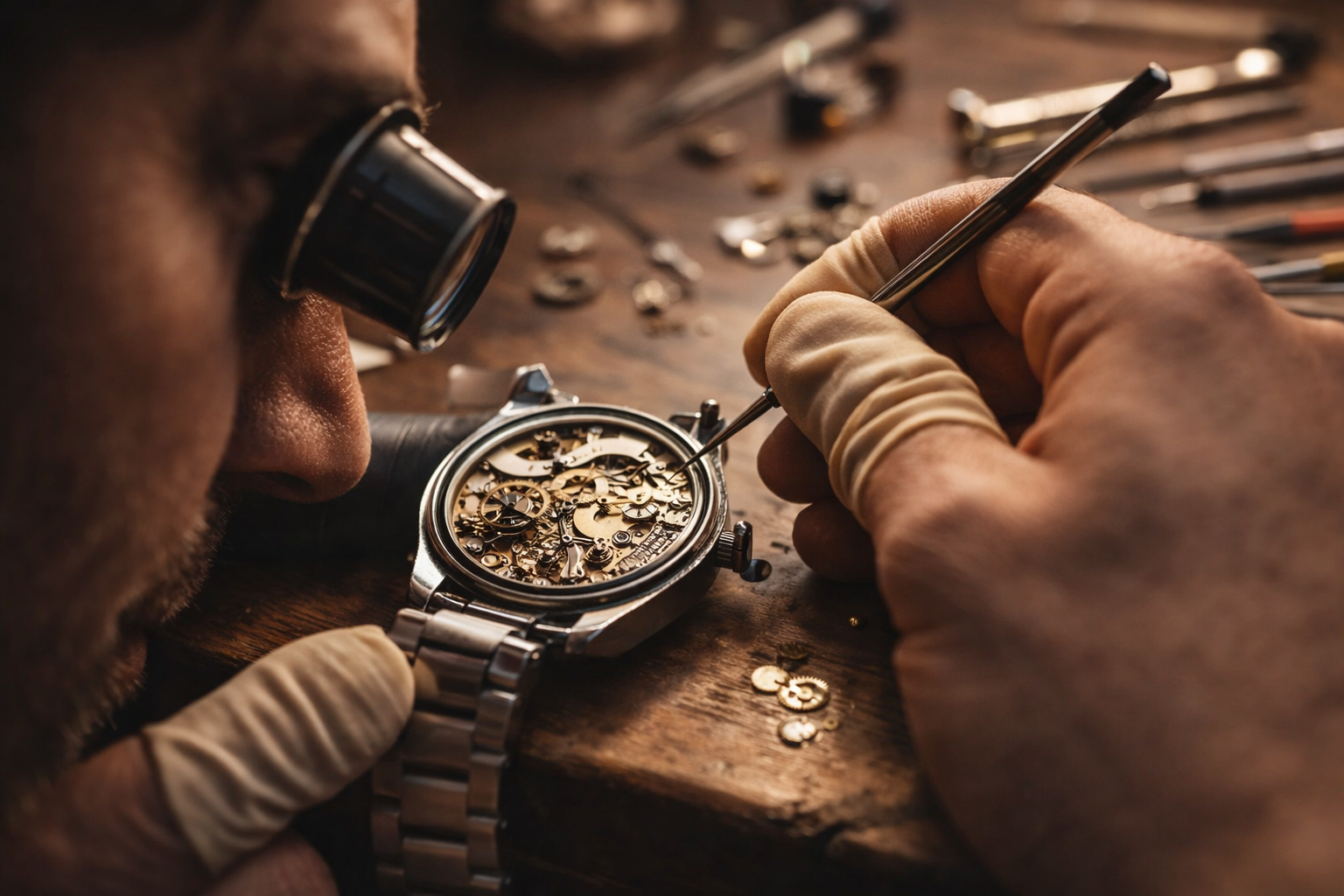
⚙️ How Often Should You Service an Automatic Watch?
Most experts recommend servicing your automatic watch every 3 to 5 years, depending on how often you wear it and under what conditions.
Here’s a simple breakdown:
| Usage Frequency | Recommended Servicing Interval | Notes |
|---|---|---|
| Daily wear | Every 3 years | More exposure to moisture, dust, and friction |
| Occasional wear | Every 4–5 years | Less wear, but oils can still dry out |
| Vintage watches | Every 2–3 years | Older parts need extra care and lubrication |
Think of it like a car — even if it runs fine, the internal components need maintenance to keep performing at their best.
🪛 Signs That It’s Time for a Service
Even if it hasn’t been 3 years yet, look out for these warning signs:
-
⏱️ The watch is running fast or slow (beyond ±20 seconds/day) — this could also relate to natural movement differences explained in our guide on Watch Accuracy Explained.
-
🔋 The power reserve is shorter than usual
-
⚙️ You hear unusual sounds when winding or moving it
-
💧 There’s condensation under the crystal
-
🧭 Crown feels stiff when setting time or date
If any of these happen, it’s time to visit a certified watchmaker.
💧 What Happens During a Watch Service
A professional watch service typically includes:
-
Complete disassembly of the movement
-
Ultrasonic cleaning of all components
-
Lubrication of moving parts with special watch oils
-
Replacement of worn-out gaskets or parts
-
Reassembly and timing test (for precision)
The result: your watch will function like new, with restored accuracy and extended longevity.
🧴 How to Take Care of Your Watch Between Services
You don’t have to wait years to care for your timepiece.
Here are easy habits that help prolong its life:
-
Avoid magnetic fields (speakers, laptops, phone cases)
-
Keep it dry and clean after wear
-
Wind your watch regularly (even if not wearing)
-
Store it in a watch box or winder
-
Wipe the strap and case with a soft microfiber cloth
👉 Tip: Check out our guide on Water Resistance in Watches Explained to protect your timepiece from accidental damage.
🧠 Related Reading
If you’re new to mechanical watches, these guides can help you understand your watch better:
-
Mechanical vs Quartz Watches: A Beginner’s Guide to Choosing the Right Movement
-
Watch Accuracy Explained: Why Some Watches Are More Accurate Than Others
💬 Conclusion
Servicing your automatic watch every few years is not just maintenance — it’s preservation.
A well-maintained timepiece can last generations, continuing to tick with the same precision and charm as the day it was made.
So, whether it’s your first automatic watch or a treasured heirloom, remember:
consistent care equals lasting performance.
Curious how automatic watches compare to quartz models in terms of maintenance?
Read our latest guide — Automatic vs Quartz Watch Maintenance — to understand which one truly requires more care.
