
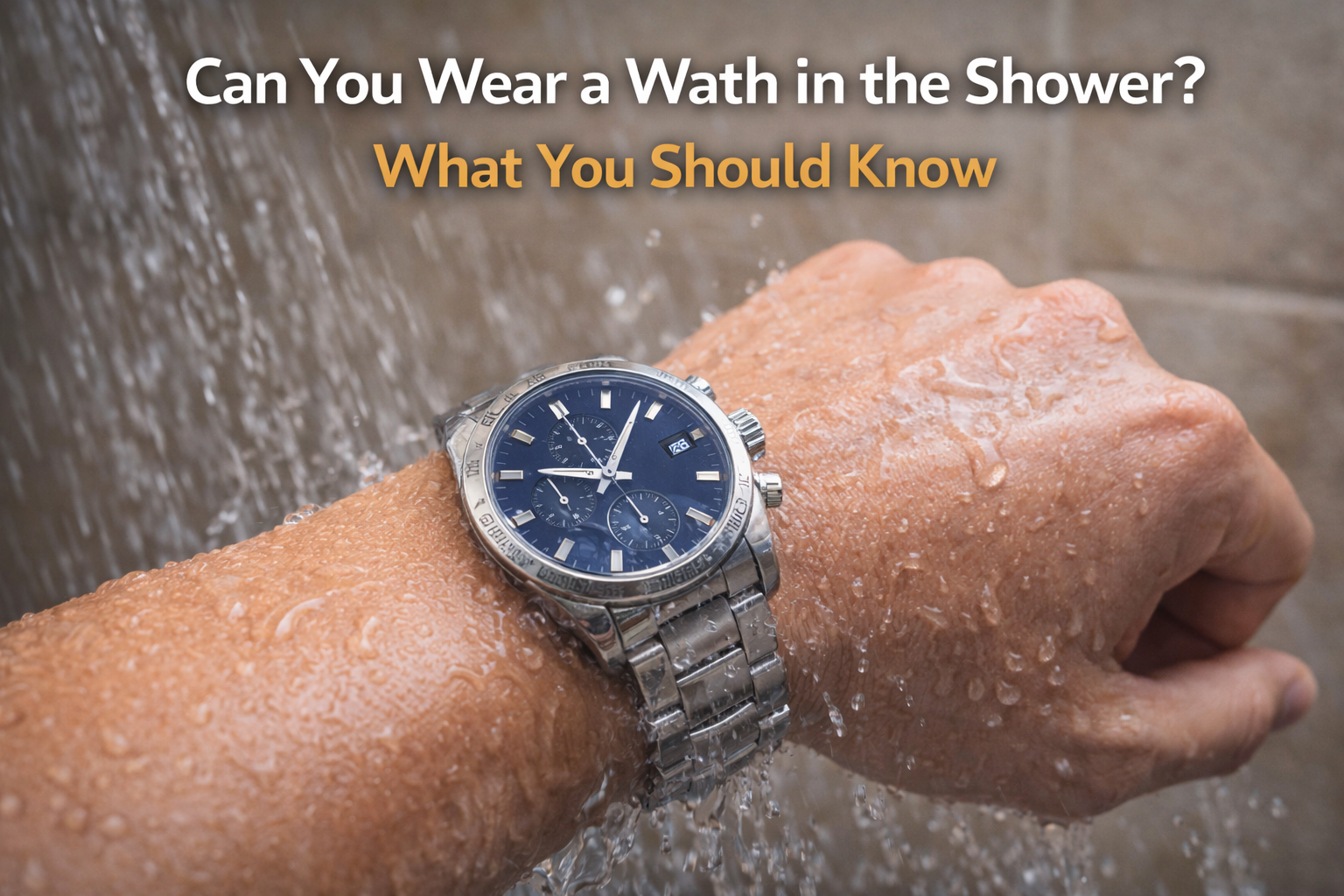
Can You Wear a Watch in the Shower? What You Should Know
Can You Wear a Watch in the Shower? What You Should Know
Introduction
Many people assume that if a watch is water-resistant, it can safely be worn in the shower. However, shower conditions are very different from normal water exposure.
Hot water, steam, soap, and pressure changes can all affect your watch in ways that are not immediately visible.
So, can you wear a watch in the shower?
The short answer: Usually, it's not recommended.
Let’s explain why.
1️⃣ Water Resistance Is Not the Same as Waterproof
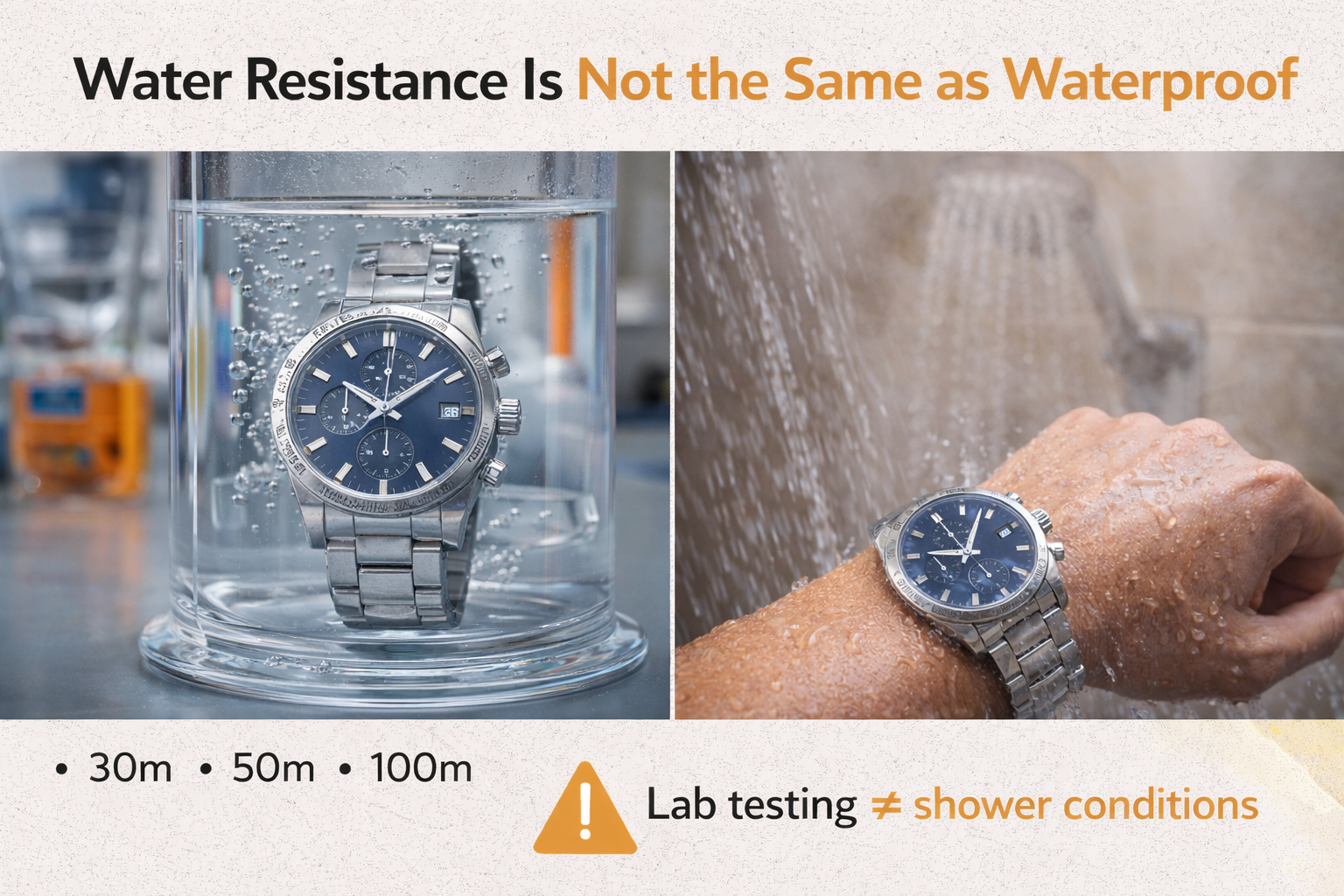
A common misunderstanding is that water resistance equals full protection.
Most watches are rated at:
-
30m
-
50m
-
100m
These ratings are tested under controlled conditions — not hot, steamy shower environments.
If you're not familiar with how these ratings work, you may want to read our detailed guide on
👉 Water Resistance in Watches Explained
That article explains the difference between testing conditions and real-world use.
2️⃣ Steam Is More Dangerous Than Water
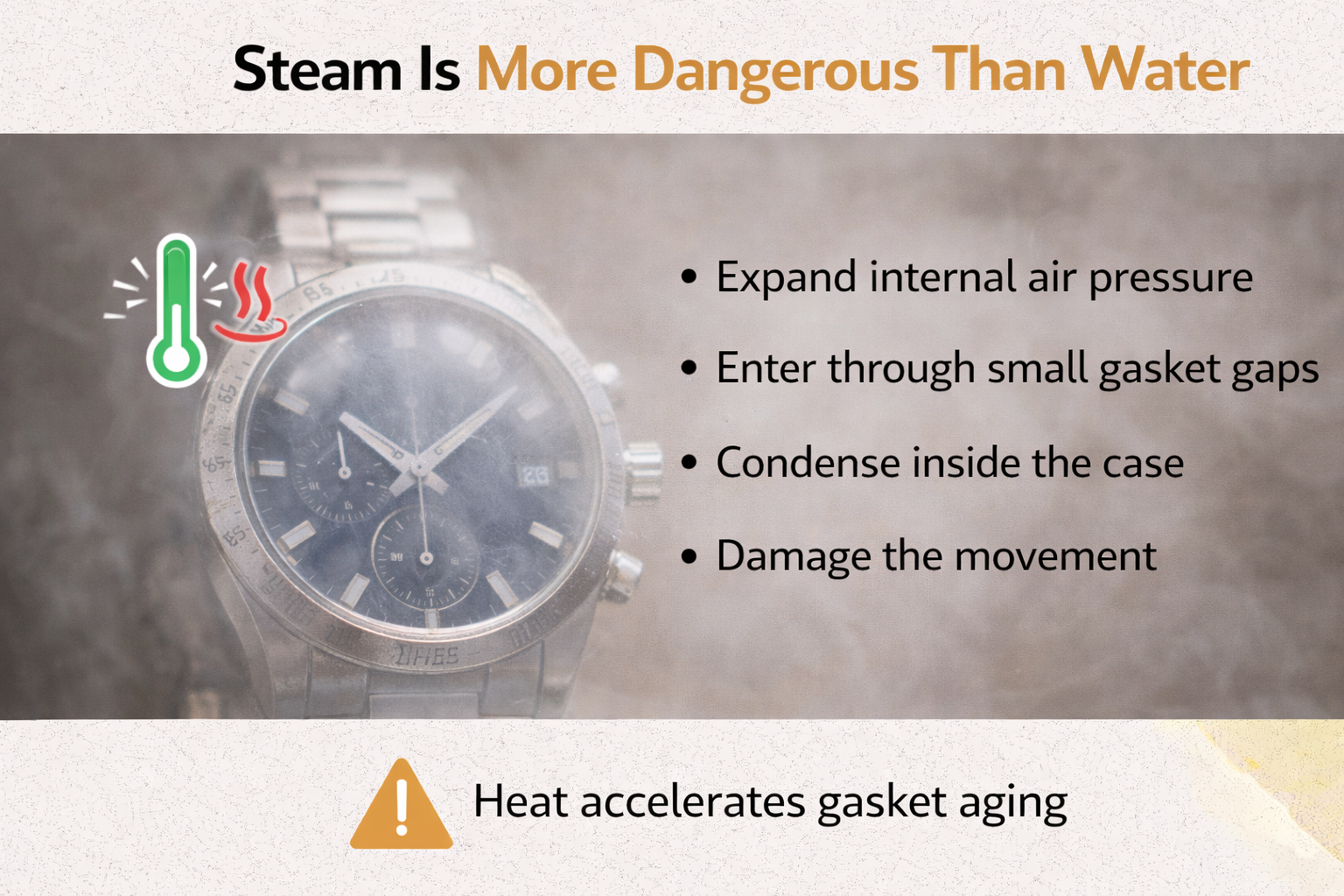
Shower steam is hot and penetrates faster than cold water.
Steam can:
-
Expand internal air pressure
-
Enter through small gasket gaps
-
Condense inside the case
-
Damage the movement
This is especially risky for mechanical watches.
Heat accelerates gasket aging and reduces long-term sealing ability.
3️⃣ Soap and Shampoo Can Damage Seals
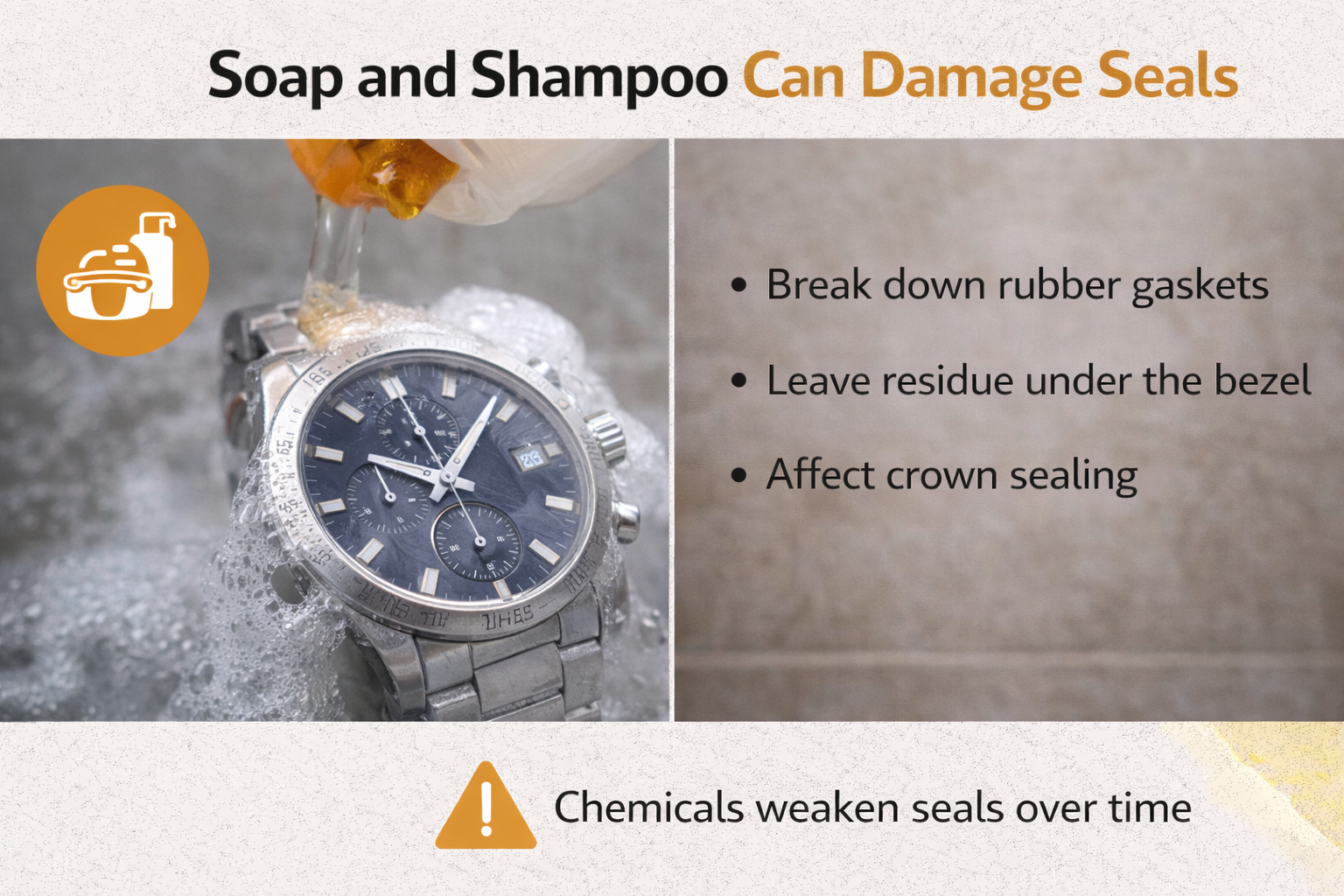
Soap and shampoo contain chemicals that:
-
Break down rubber gaskets
-
Leave residue under the bezel
-
Affect crown sealing
Even if your watch survives water exposure, chemical damage may weaken it over time.
4️⃣ What About 100m or Diver Watches?
Technically, a diver watch rated 200m can handle water pressure.
However:
-
Shower water is hot
-
Steam is unpredictable
-
Temperature shifts stress seals
Even strong watches are not designed for repeated hot steam exposure.
For daily protection tips, you can also check our guide on
👉 How to Protect Your Watch from Daily Wear and Damage
5️⃣ When Is It Safe?
It may be safer if:
-
The watch is rated 100m+
-
The crown is fully secured
-
The watch is recently serviced
-
The gasket is in good condition
But even then, avoiding shower use is the safest option.
6️⃣ Best Practice
The safest habit:
✔ Remove your watch before showering
✔ Dry it if exposed to moisture
✔ Service regularly
✔ Avoid heat exposure
If you want to extend your watch’s lifespan, prevention is easier than repair.
Conclusion
While many watches are water-resistant, showering introduces:
-
Heat
-
Steam
-
Chemicals
-
Seal stress
Even a high-rated watch can suffer long-term damage from repeated exposure.
When in doubt, remove it.
Your watch will last longer.
FAQ
❓ Can I wear a 50m water-resistant watch in the shower?
Not recommended. 50m rating does not guarantee protection against hot steam.
❓ Is a 100m watch safe for showering?
Technically stronger, but steam and heat still pose risks.
❓ Why is steam worse than water?
Steam penetrates seals faster and condenses inside the case.
❓ Can showering once damage my watch?
Probably not immediately, but repeated exposure increases long-term risk.
