
How to Protect Your Watch from Daily Wear and Damage
Introduction
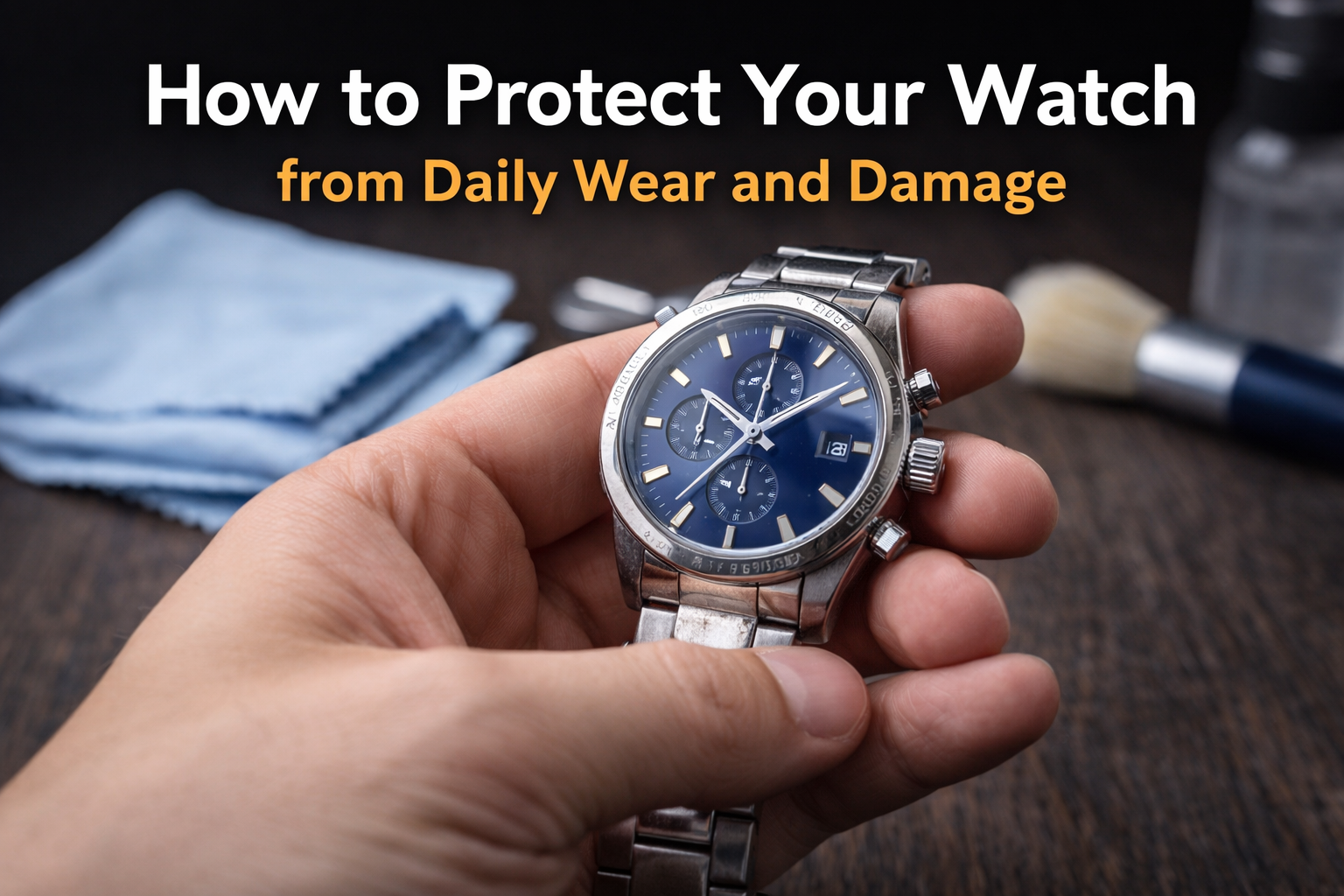
A quality watch is more than just a timekeeping tool — it's an investment. Whether you wear a mechanical or quartz watch, daily use can expose it to scratches, moisture, shocks, and long-term wear.
Understanding how to protect your watch from everyday damage can significantly extend its lifespan and preserve its value.
1️⃣ Avoid Unnecessary Impact and Shock
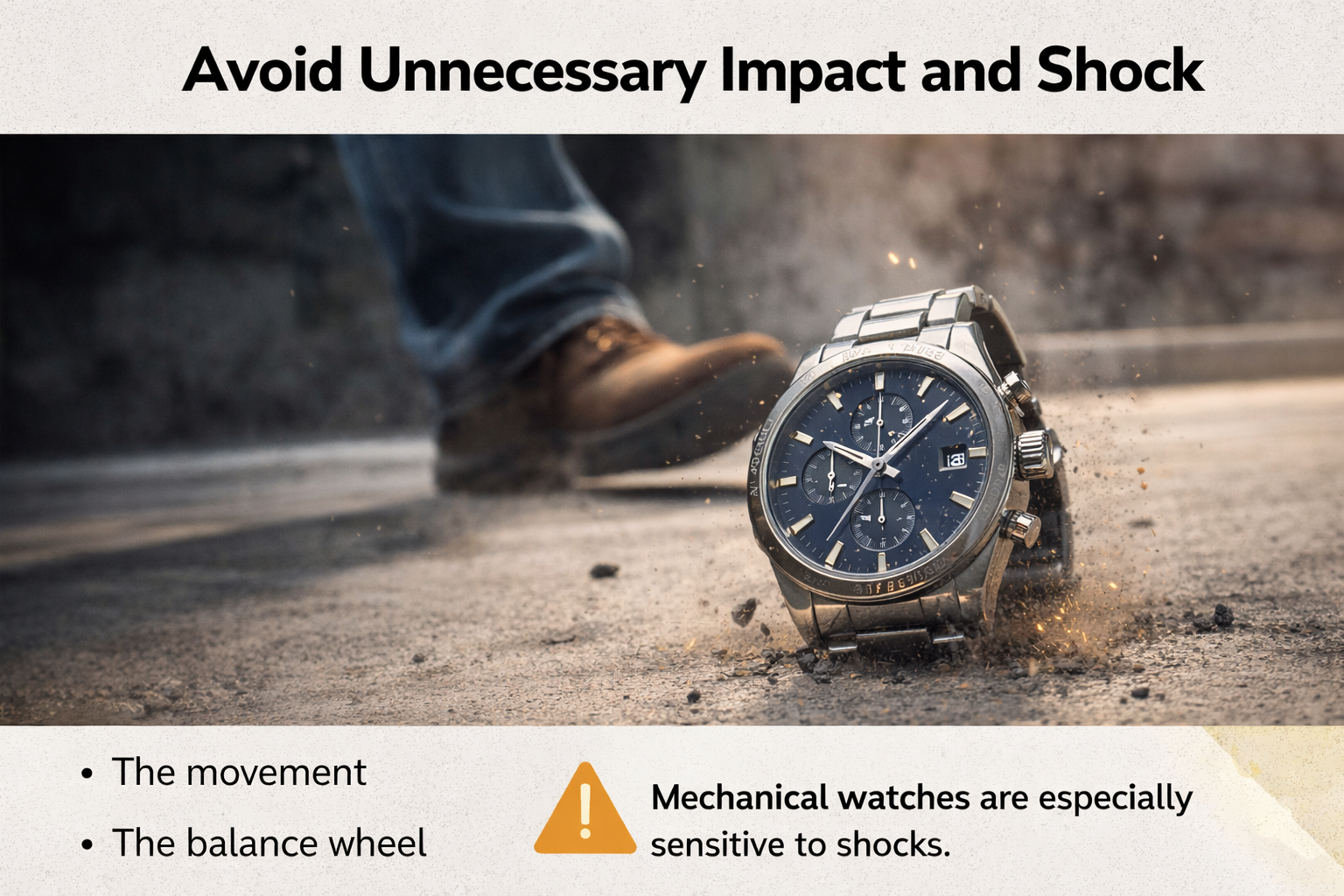
Even though many modern watches are built with durability in mind, repeated impact can affect:
-
The movement
-
The balance wheel
-
The accuracy
-
The case structure
Mechanical watches are especially sensitive to shocks.
If you're unsure about movement durability, you may want to read our detailed guide on
👉 Mechanical vs Quartz Watches: Which One Is Right for Everyday Wear?
That article explains how different movements handle daily stress.
2️⃣ Protect Your Watch from Scratches
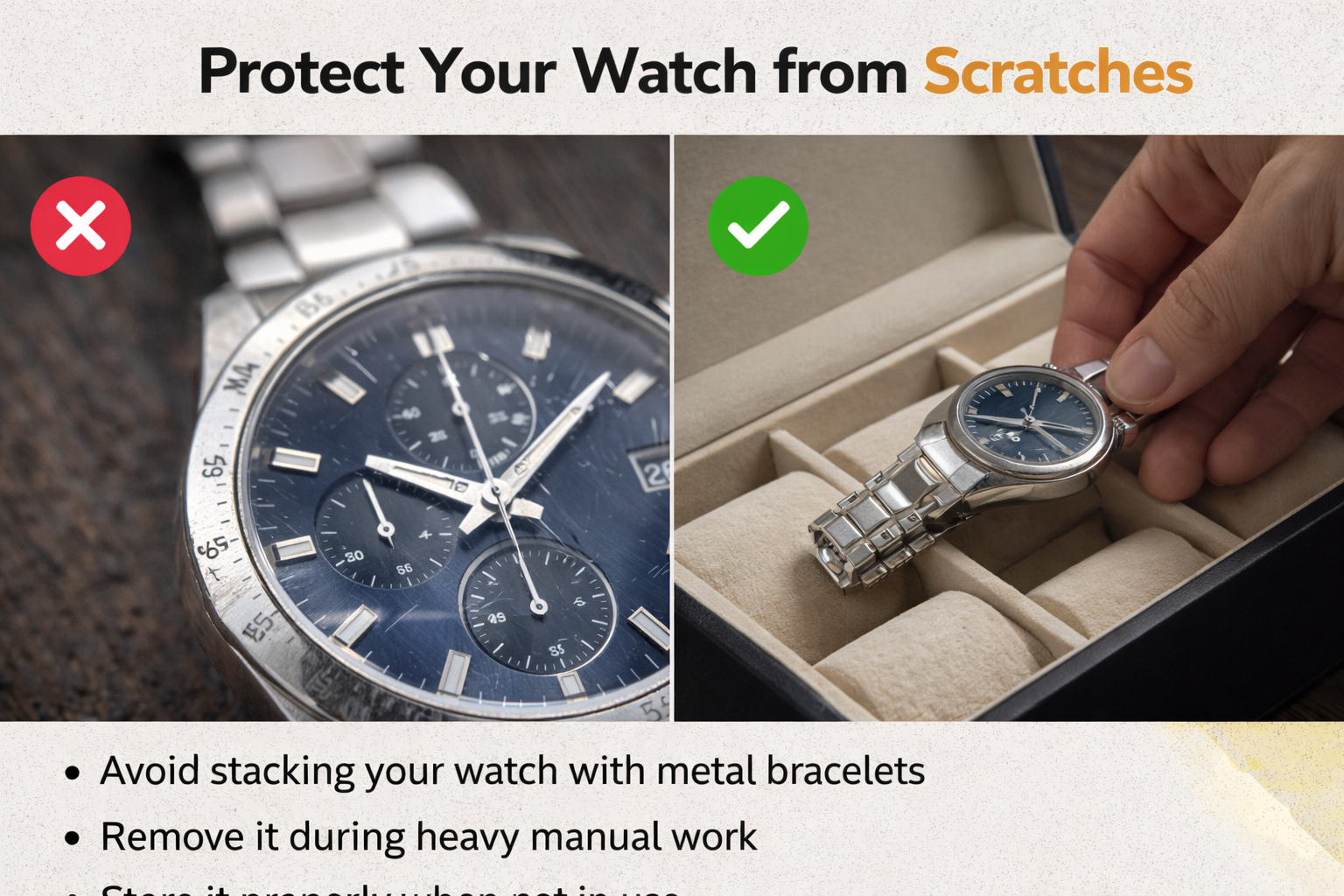
Scratches are the most common issue with daily wear.
Common scratch points:
-
Bezel
-
Case sides
-
Bracelet links
-
Clasp
How to minimize scratches:
✔ Avoid stacking your watch with metal bracelets
✔ Remove it during heavy manual work
✔ Store it properly when not in use
For proper storage techniques, check our guide:
👉 How to Store Your Watch Properly
Proper storage alone can dramatically reduce cosmetic damage.
3️⃣ Keep It Away from Excess Moisture
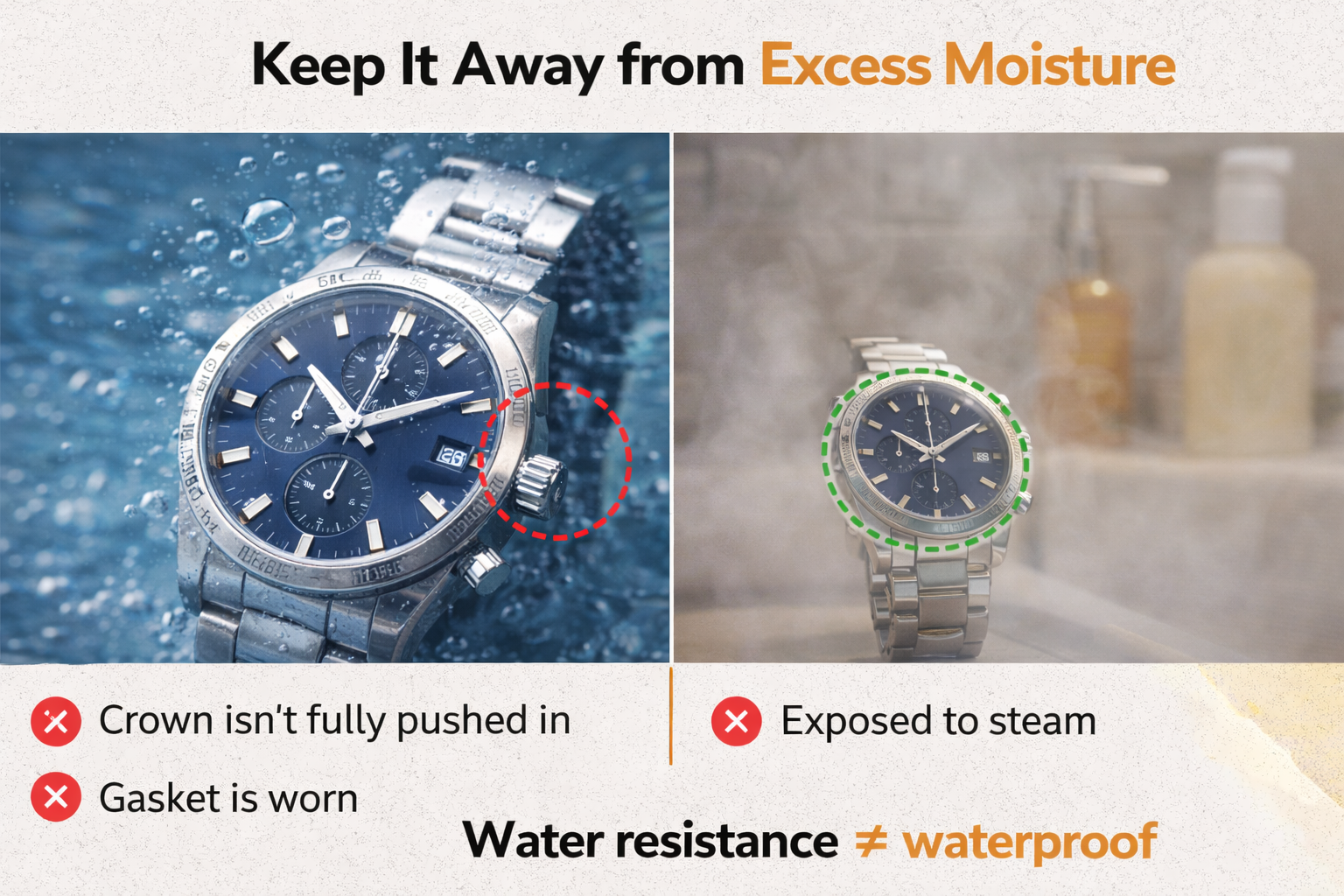
Water resistance does not mean waterproof.
Even a watch rated at 50m or 100m can suffer if:
-
Crown isn't fully pushed in
-
Gasket is worn
-
Exposed to steam
If you're not sure about your watch’s water resistance level, you may find this helpful:
👉 Water Resistance in Watches Explained
That guide explains ratings and real-world use.
4️⃣ Clean Your Watch Regularly
Dust, sweat, and skin oils accumulate over time.
Cleaning tips:
-
Use a soft microfiber cloth
-
Use mild soap for stainless steel bracelets
-
Avoid chemicals
-
Dry thoroughly
Routine cleaning prevents corrosion and maintains appearance.
5️⃣ Service Your Watch on Time
Protection isn't only external.
Internal maintenance matters.
Automatic watches typically need servicing every 3–5 years.
If you're unsure about service intervals, read:
👉 How Often Should You Service Your Automatic Watch?
Timely servicing prevents long-term damage.
6️⃣ Rotate Your Watches (If You Own Multiple)
If you own more than one watch, rotating them helps:
-
Reduce wear
-
Extend strap life
-
Maintain movement longevity
Overwearing a single watch increases stress on components.
Conclusion
Protecting your watch doesn't require complex tools or expensive equipment.
Simple habits like:
-
Avoiding impacts
-
Cleaning regularly
-
Storing properly
-
Servicing on time
can dramatically extend your watch’s lifespan.
A watch is built to last — but proper care makes the difference.
FAQ Section
❓ How can I prevent scratches on my watch?
Avoid contact with hard surfaces, remove it during physical work, and store it separately from other metal objects.
❓ Is it safe to wear a watch every day?
Yes, but daily wear increases cosmetic wear. Proper care reduces damage.
❓ Does water resistance last forever?
No. Gaskets wear out over time. Regular servicing helps maintain water resistance.
❓ Should I remove my watch while sleeping?
It depends on comfort, but removing it can reduce strap wear and accidental impact.
