
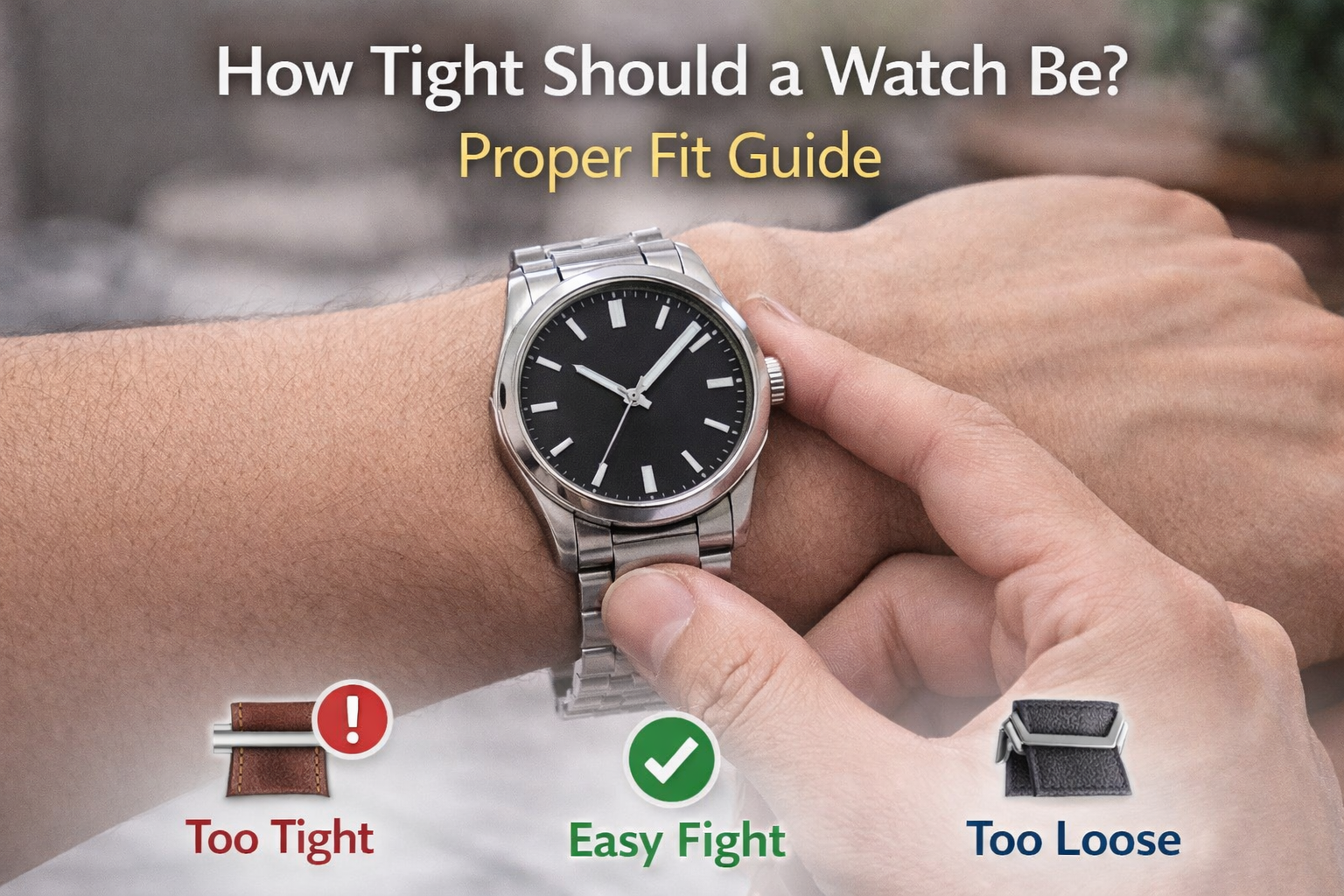
How Tight Should a Watch Be? Proper Fit Guide
How Tight Should a Watch Be? Proper Fit Guide
+ Introduction
Many people wear their watch either too tight or too loose without realizing it.
An incorrect fit can cause:
-
Skin irritation
-
Circulation discomfort
-
Watch movement instability
-
Premature strap wear
So how tight should a watch be?
The short answer:
It should feel secure but comfortable — not restrictive.
Let’s explain in detail.
1️⃣ The One-Finger Rule
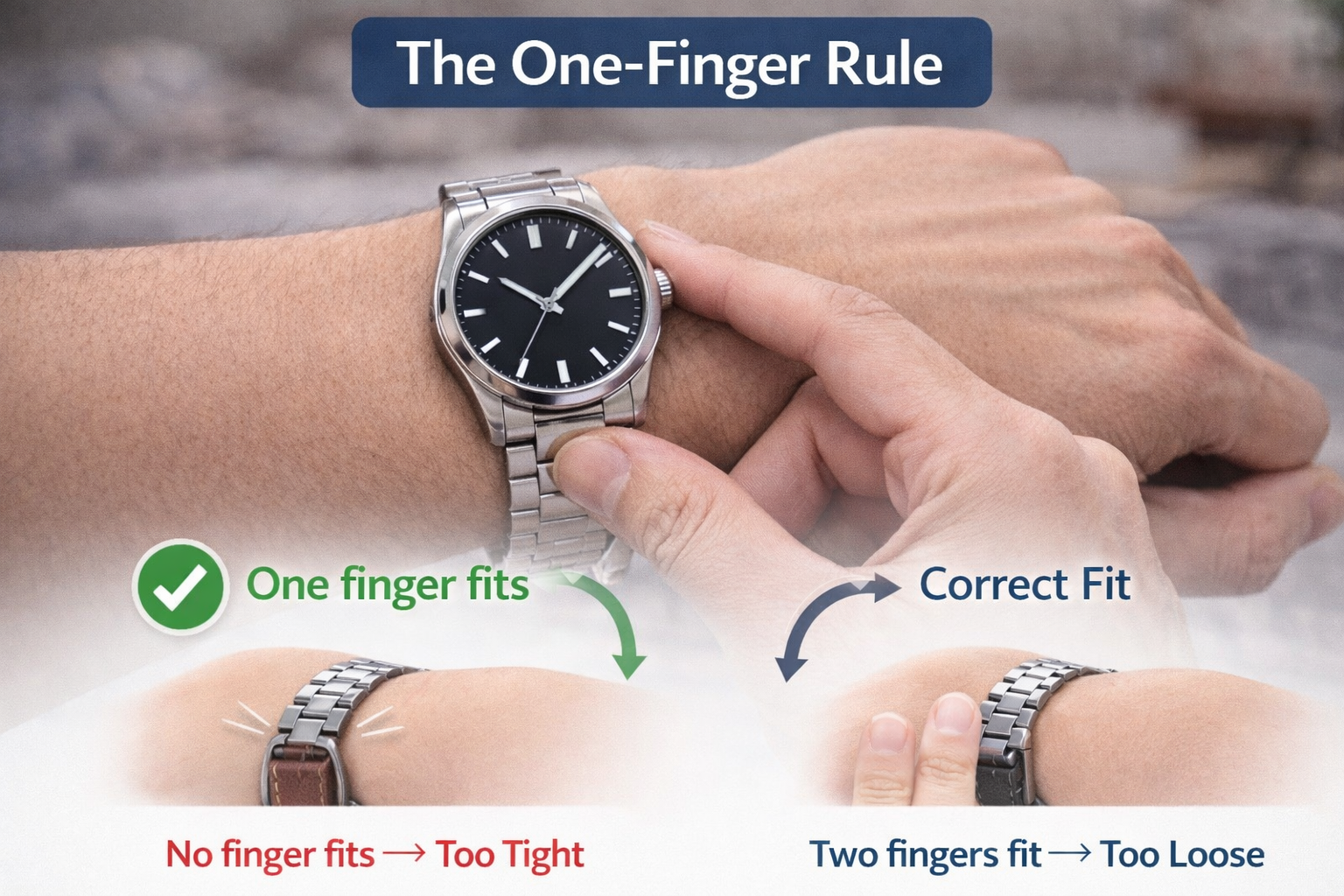
A simple guideline:
👉 You should be able to slide one finger between your wrist and the strap.
If:
-
You cannot insert a finger → Too tight
-
You can insert two or more fingers → Too loose
A proper fit keeps the watch stable without cutting circulation.
2️⃣ Signs Your Watch Is Too Tight
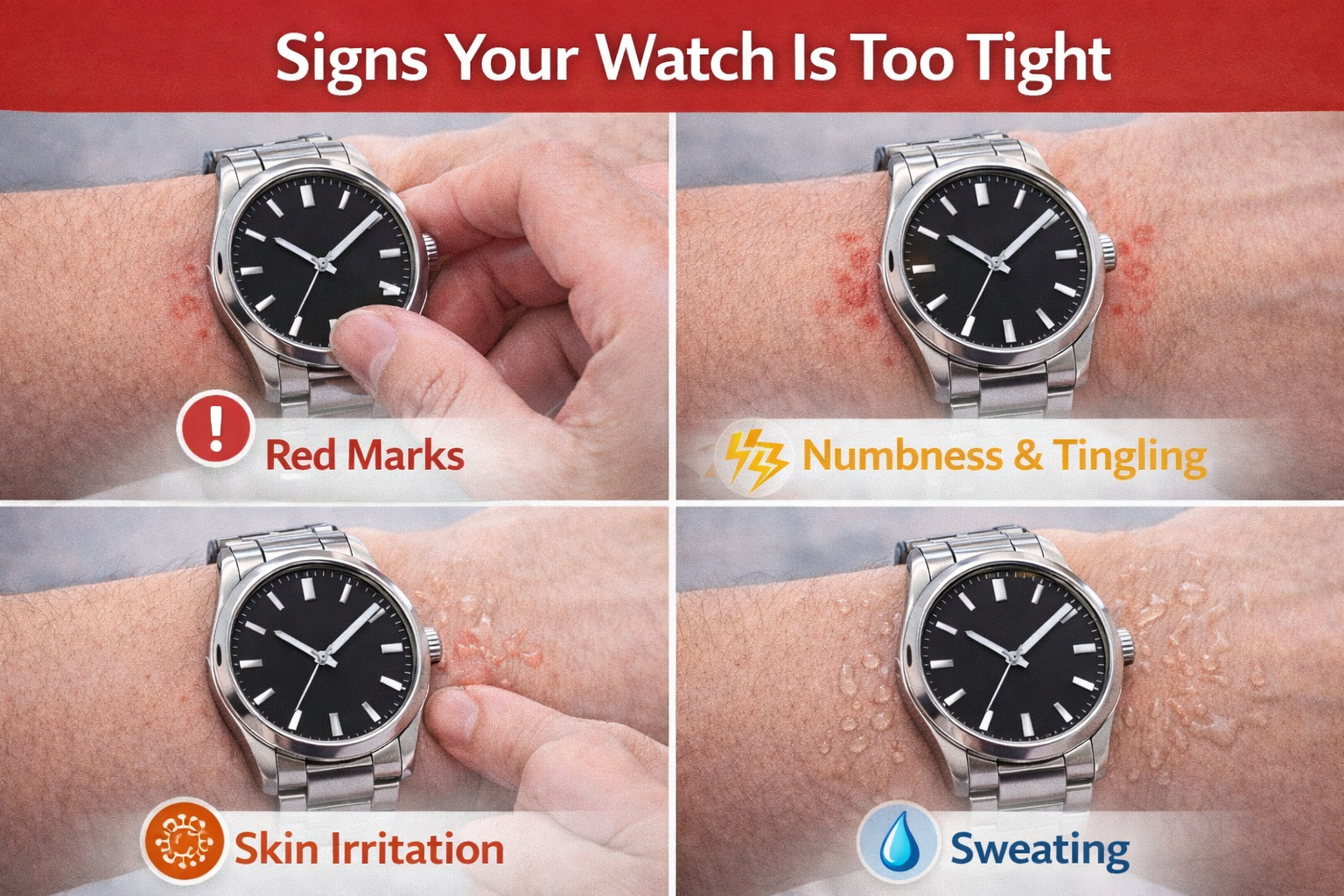
A watch that is too tight may cause:
-
Red marks after removal
-
Numbness or tingling
-
Skin irritation
-
Excessive sweating
Over time, tight wearing can also damage leather straps faster.
If you're unsure how strap condition affects comfort, you may also read:
👉 How to Clean a Watch Strap Properly
3️⃣ Signs Your Watch Is Too Loose
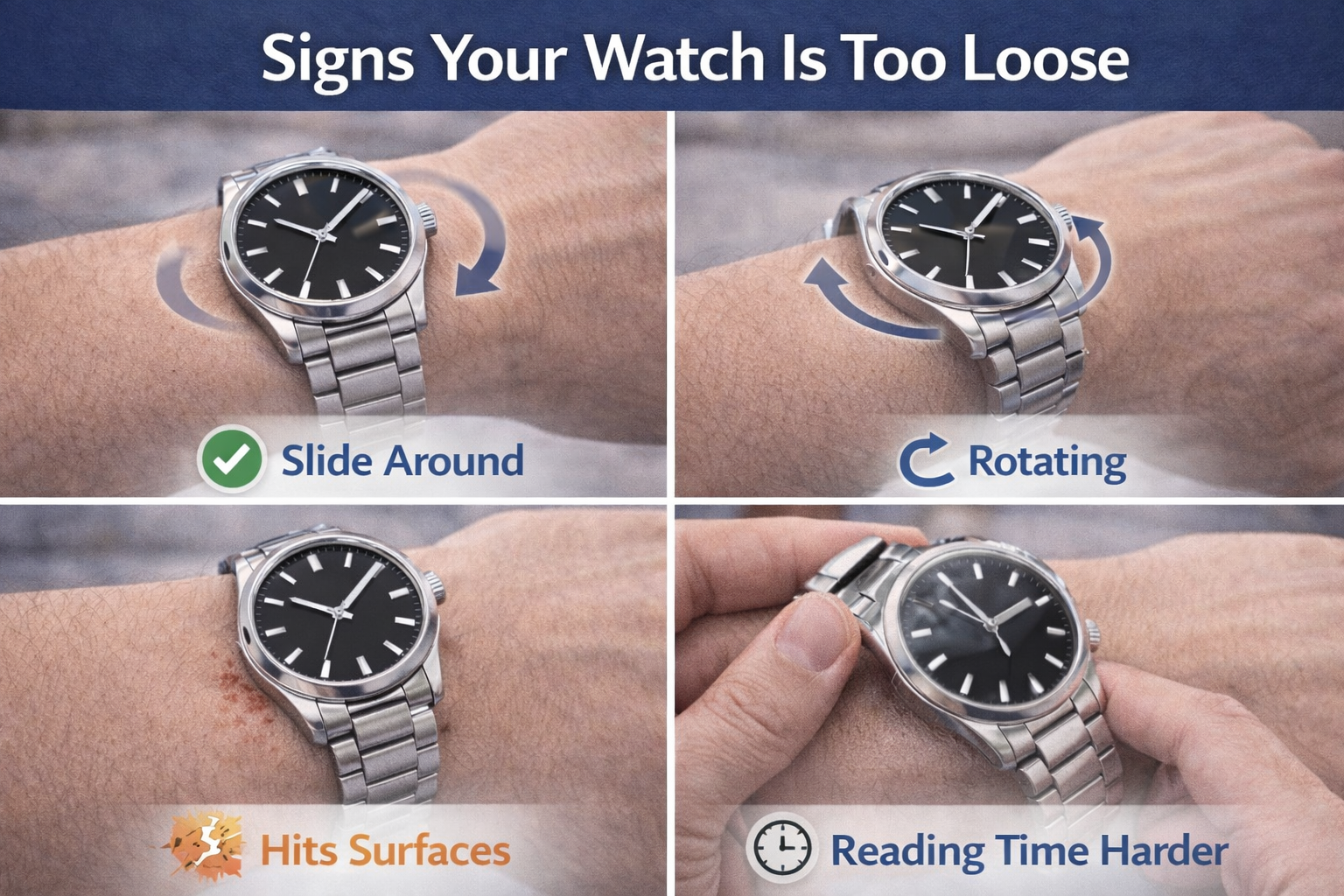
A loose watch may:
-
Slide excessively
-
Rotate around the wrist
-
Hit surfaces more often
-
Affect time reading accuracy
Loose metal bracelets can also stretch faster.
If you want to understand strap lifespan differences, check:
👉 Watch Strap Lifespan Comparison Guide
4️⃣ Should a Watch Move on the Wrist?
Yes — slightly.
A properly fitted watch should:
✔ Stay in position most of the time
✔ Move slightly when you rotate your wrist
✔ Not spin freely
For sports or daily active wear, a slightly tighter fit may provide better stability.
5️⃣ Fit Differences by Strap Type
Leather Straps
-
Should feel snug
-
Loosen slightly over time
Rubber / Silicone
-
Can be slightly tighter
-
Better grip during activity
Stainless Steel Bracelets
-
Should allow minor movement
-
Avoid excessive link compression
If you’re unsure which strap type suits daily use, see:
👉 Can You Wear a Watch Every Day?
6️⃣ When to Adjust Your Watch Fit
You may need adjustment if:
-
Your wrist size changes
-
Weather causes swelling
-
Strap stretches
-
You switch from winter to summer wear
Even a small adjustment improves comfort significantly.
Conclusion
A properly fitted watch should:
-
Feel secure
-
Allow one finger space
-
Avoid red marks
-
Not spin freely
Too tight causes discomfort.
Too loose causes instability.
Comfort and balance are key.
A well-fitted watch not only feels better — it also lasts longer.
FAQ
❓ Should a watch leave a mark?
Light marks are normal. Deep red lines mean it's too tight.
❓ Is it bad to wear a watch tightly?
Yes, it can restrict circulation and cause skin irritation.
❓ Should sports watches be tighter?
Slightly, especially during activity.
❓ Do metal bracelets stretch over time?
Yes, especially if worn too loose.
