
Can You Wear a Watch Every Day? Pros, Cons & How to Make It Last Longer
Can You Wear a Watch Every Day? Pros, Cons & How to Make It Last Longer
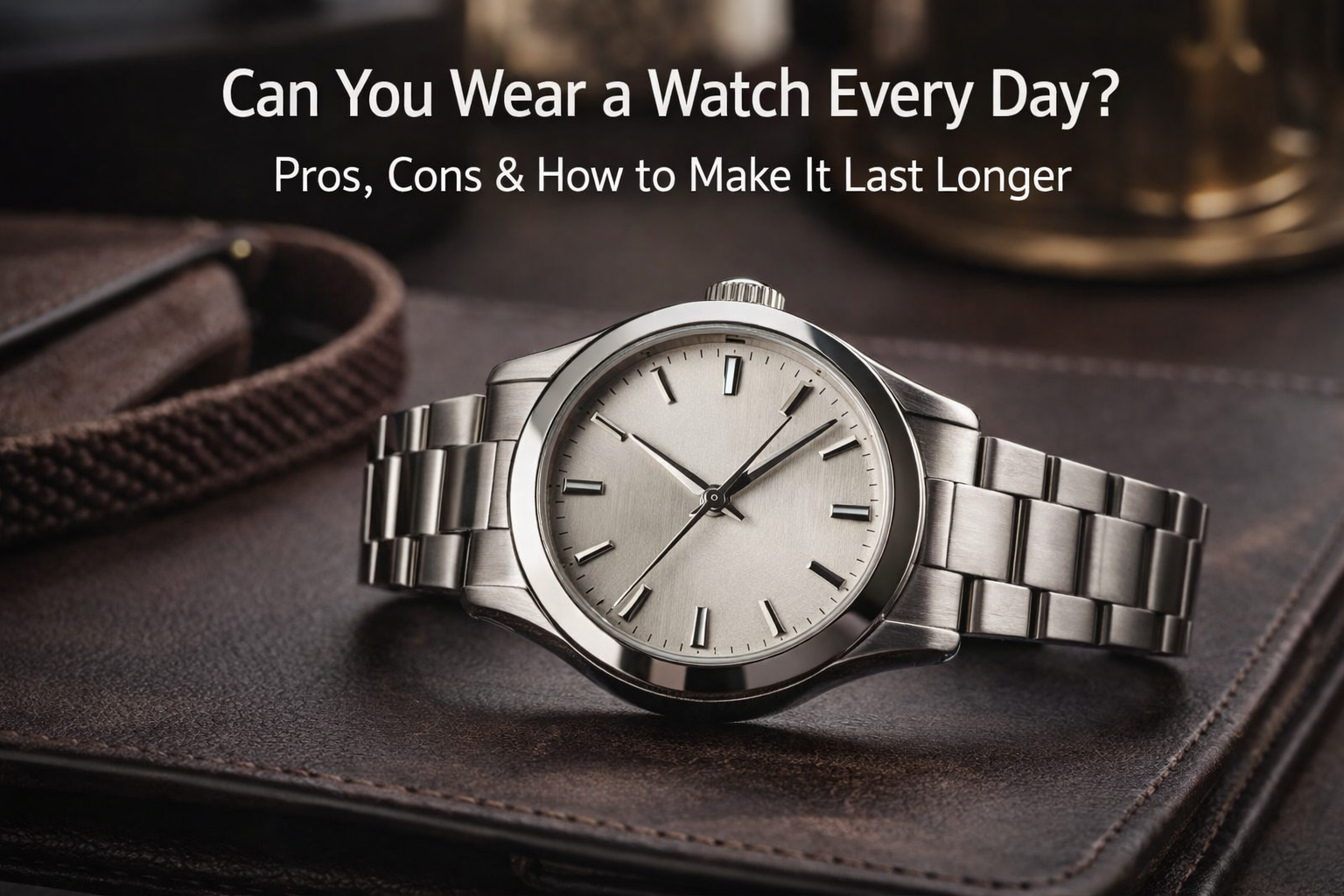
Many people wonder whether wearing the same watch every day is a good idea.
Will it wear out faster? Does it affect accuracy? And is it bad for the movement over time?
The short answer is: yes, you can wear a watch every day—but how you wear it and care for it makes a big difference.
In this guide, we’ll explain the pros and cons of daily watch wear, what happens to your watch over time, and how to make it last as long as possible.
Is It Okay to Wear a Watch Every Day?
Watches are designed to be worn. In fact, most modern watches—especially everyday watches—are built to handle daily use.
Wearing your watch every day is generally safe if:
-
The watch fits your lifestyle
-
It has adequate water resistance
-
You maintain it properly
Problems usually come from misuse, not daily wear itself.
Pros of Wearing a Watch Every Day
1. Keeps Automatic Watches Running
If you wear an automatic watch daily, it stays wound naturally through wrist movement. This helps maintain consistent timekeeping and reduces the need for frequent resetting.
👉 Related reading: Mechanical vs Quartz Watches: A Beginner’s Guide
2. Builds a Comfortable Fit
Daily wear allows the strap or bracelet to adjust to your wrist shape, improving comfort over time—especially with leather straps or metal bracelets.
3. Encourages Proper Use
Watches that sit unused for long periods are more likely to develop issues such as dried lubricants or stopped movements. Regular wear can actually help mechanical watches stay healthy.
Cons of Wearing a Watch Every Day
1. Increased Wear and Tear
Daily use means more exposure to:
-
Scratches
-
Moisture
-
Dust
-
Accidental impacts
This is normal, but it’s something to be aware of.
2. Strap Degradation
Leather straps, in particular, can wear out faster with daily use, especially in humid environments or during physical activity.
3. Water and Shock Risks
Not all watches are designed for constant exposure to water or sudden shocks.
Does Daily Wear Affect Watch Accuracy?
For quartz watches, daily wear has almost no impact on accuracy.
For automatic watches:
-
Regular wear helps maintain stable performance
-
Sudden shocks or magnetism can affect accuracy
How to Make a Watch Last Longer with Daily Wear
If you plan to wear one watch every day, follow these best practices:
1. Choose the Right Watch
A good everyday watch should have:
-
Durable case material (stainless steel or titanium)
-
At least 50 meters of water resistance
-
Comfortable case size and thickness
👉 Helpful guide: How to Choose the Right Watch for Everyday Wear
2. Maintain It Regularly
-
Quartz watches: replace batteries on time
-
Automatic watches: service every 3–5 years
👉 Related reading: How Often Should You Service Your Automatic Watch?
3. Avoid Extreme Conditions
Remove your watch during:
-
Heavy sports
-
Swimming (if not rated)
-
High-impact activities
-
Strong magnetic environments
4. Clean Your Watch
Regular cleaning removes sweat, dust, and oils that can damage seals and straps over time.
Should You Rotate Watches Instead?
Rotating watches can reduce wear, but it’s not required.
If you only own one watch and it suits your lifestyle, wearing it every day is perfectly fine.
Many people wear the same watch daily for years without issues—proper care matters more than rotation.
Final Thoughts
Wearing a watch every day is not harmful when done correctly. In fact, many watches are designed specifically for daily use.
The key is choosing a watch that matches your lifestyle and maintaining it properly. With the right care, an everyday watch can last for decades and become a trusted part of your daily routine.
