
- Home
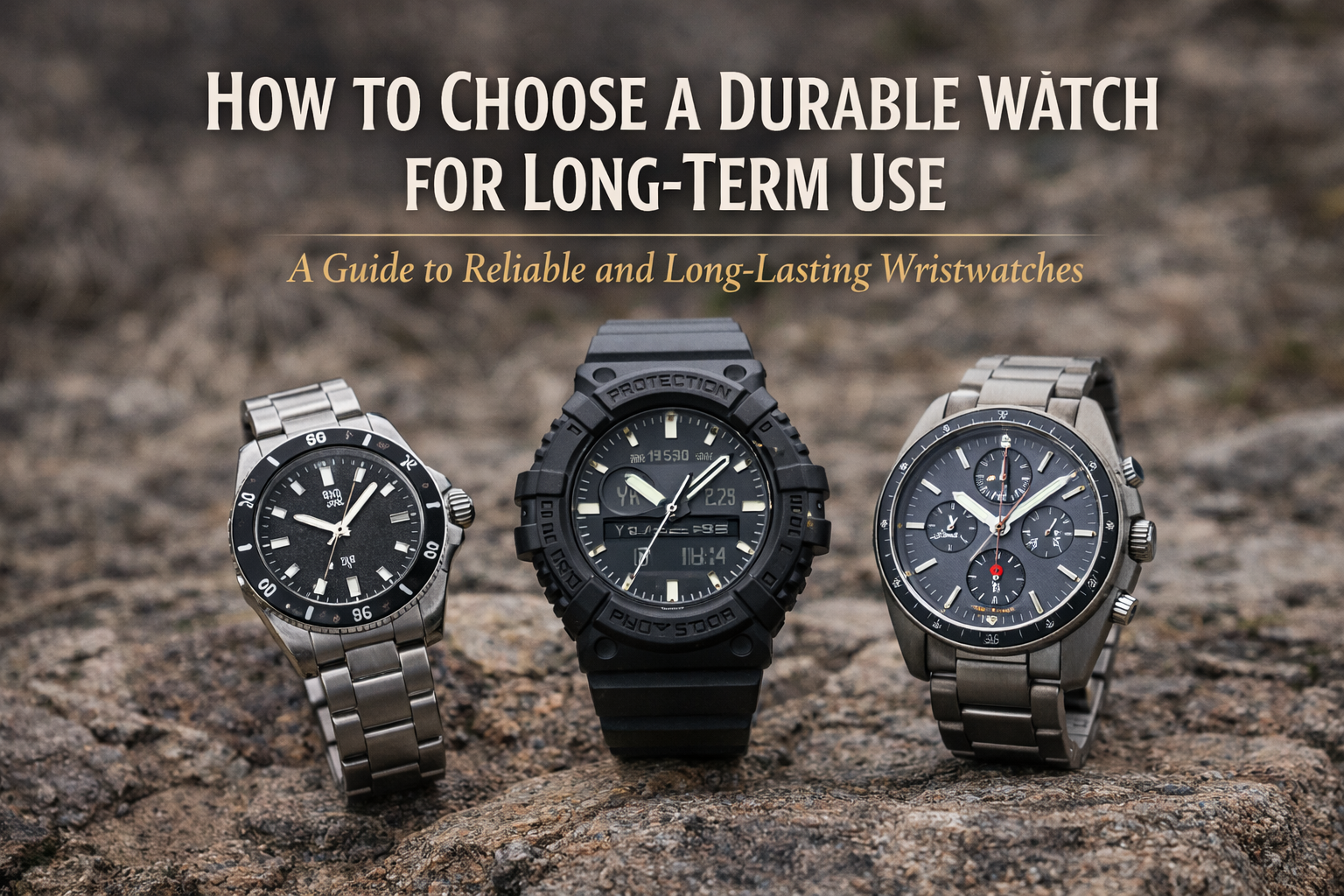
- How to Choose a Durable Watch for Long-Term Use
How to Choose a Durable Watch for Long-Term Use
Introduction
When buying a watch, many people focus on design and brand.
But durability is what truly determines long-term value.
A durable watch should:
-
Handle daily wear
-
Resist scratches and moisture
-
Maintain accurate time
-
Last for years with proper care
In this guide, we’ll explain how to choose a watch built for long-term use.
1️⃣ Movement Matters: Quartz vs Automatic
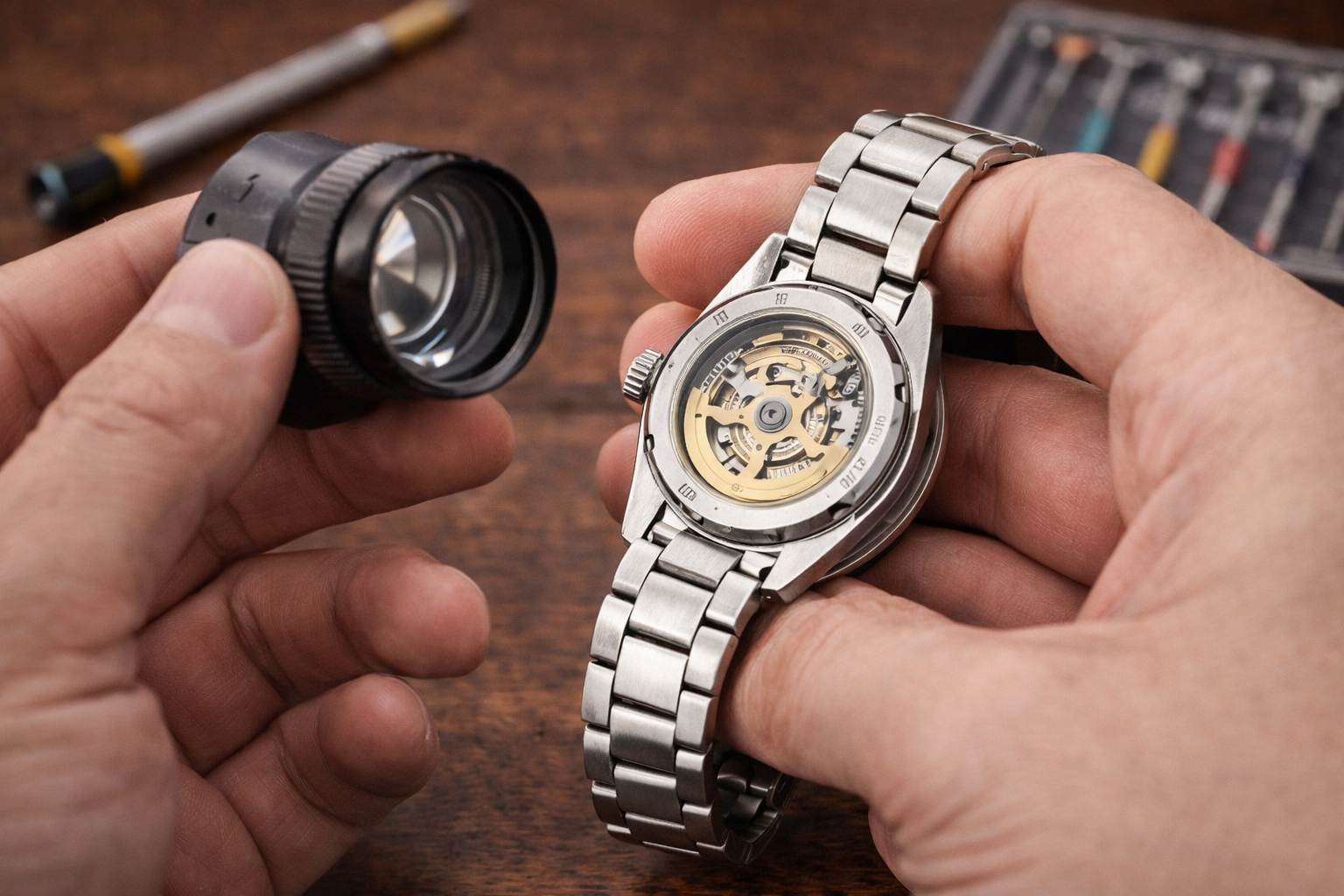
The movement plays a major role in durability.
Quartz watches:
-
Fewer moving parts
-
More resistant to shock
-
Lower maintenance
Automatic watches:
-
Mechanical craftsmanship
-
Designed for regular use
-
Require servicing over time
If you're unsure which suits your lifestyle, read:
👉 Mechanical vs Quartz Watches: Which Is More Reliable?
2️⃣ Case Material: Steel, Titanium, or Something Else?
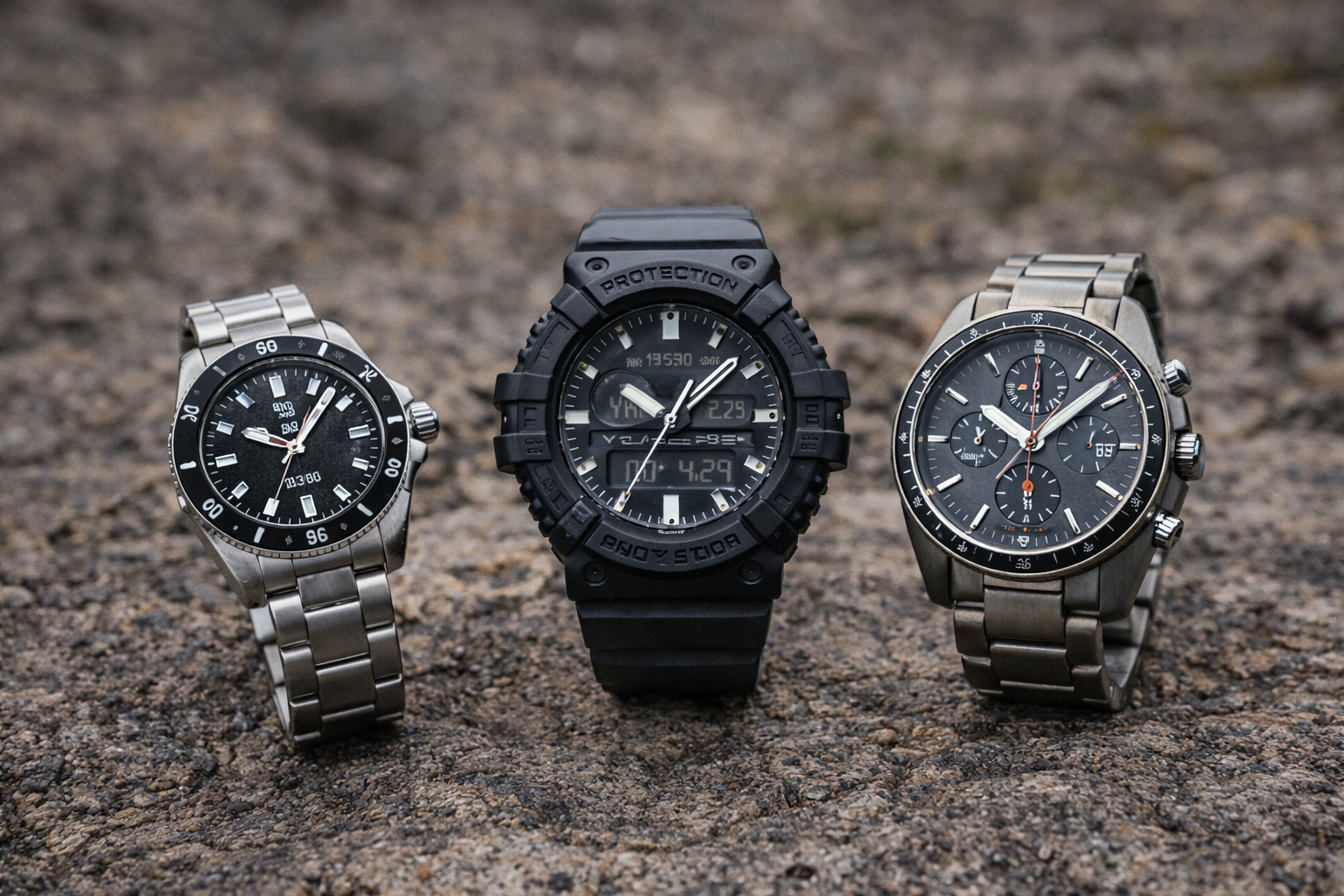
A durable watch often uses:
✔ Stainless steel
✔ Titanium
✔ Sapphire crystal
Stainless steel is strong and scratch-resistant.
Titanium is lighter and corrosion-resistant.
Sapphire crystal protects against scratches.
Avoid:
-
Low-grade plated materials
-
Plastic cases for long-term wear
3️⃣ Water Resistance and Everyday Protection
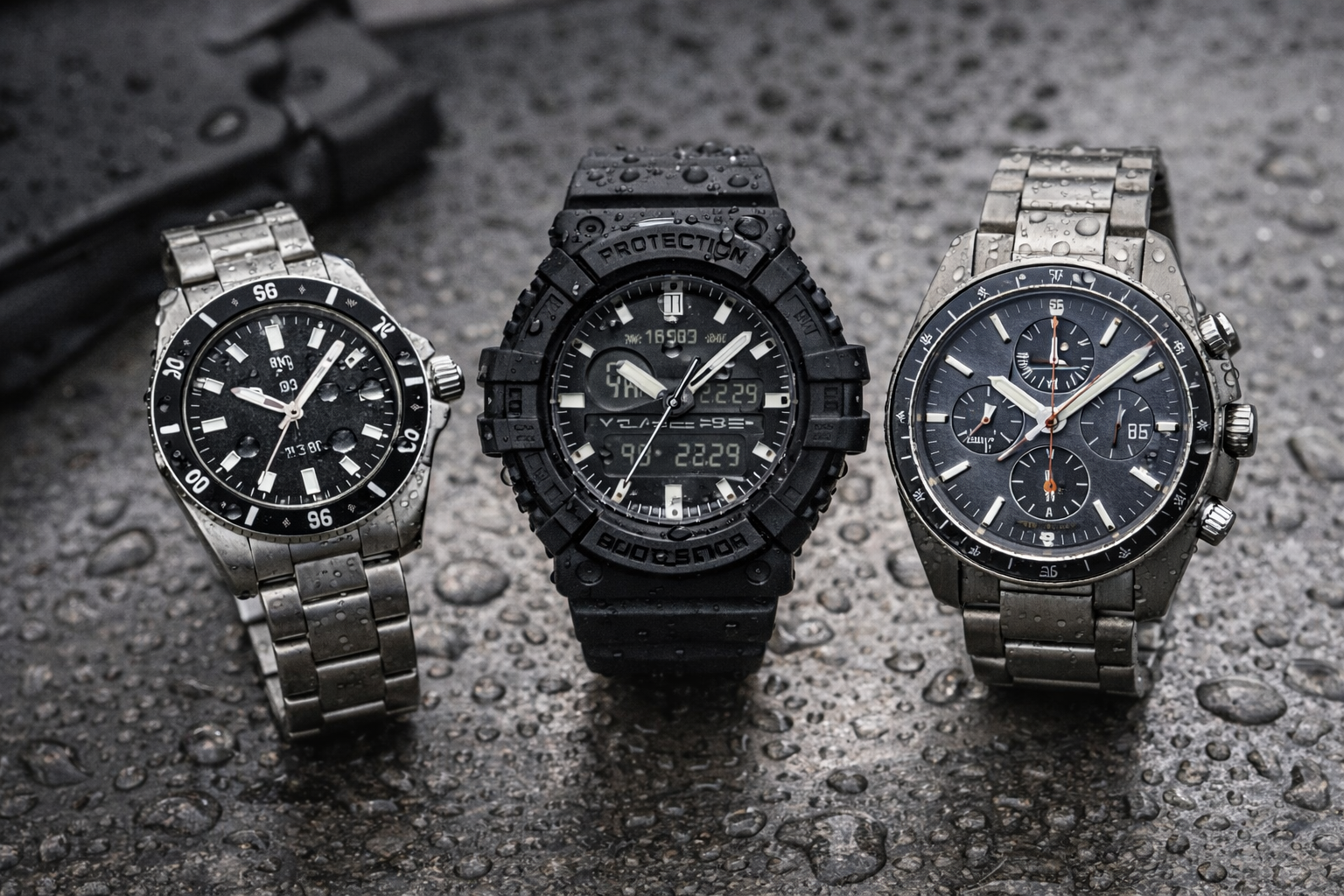
Even if you don’t swim regularly, water resistance matters.
For daily wear, look for:
-
At least 50 meters water resistance
-
Proper crown sealing
-
Quality case construction
To understand water ratings, see:
👉 Water Resistance in Watches Explained
4️⃣ Strap and Bracelet Durability
Straps affect longevity more than most people realize.
Metal bracelets:
-
Long-lasting
-
Resistant to sweat
Leather straps:
-
Comfortable
-
Require replacement over time
Rubber straps:
-
Sport-friendly
-
Water resistant
Choosing the right strap improves overall durability.
5️⃣ Build Quality and Finishing
Durability isn’t just about materials.
Check for:
-
Solid caseback
-
Secure crown
-
Smooth finishing
-
Tight bracelet links
A well-built watch will feel sturdy in hand.
6️⃣ How Long Should a Durable Watch Last?
With proper care:
-
Quartz watches can last 10–20 years
-
Automatic watches can last decades
-
Servicing extends lifespan
If you're curious about lifespan, read:
FAQ Section
❓ What makes a watch durable?
Material quality, movement reliability, water resistance, and build quality all contribute.
❓ Is stainless steel durable enough?
Yes. Stainless steel is one of the most reliable materials for daily wear.
❓ Are automatic watches less durable?
Not necessarily, but they require maintenance.
❓ Does sapphire crystal scratch easily?
Sapphire crystal is highly scratch-resistant and ideal for long-term use.
