
How Long Does a Watch Last? Lifespan of Quartz vs Automatic Watches
How Long Does a Watch Last? Lifespan of Quartz vs Automatic Watches
If you’re planning to buy a watch for long-term use, one of the most common questions is: how long does a watch actually last?
The answer depends heavily on the type of watch you choose, how it’s used, and how well it’s maintained.
In this guide, we’ll break down the real lifespan of quartz and automatic watches, what affects their longevity, and how you can make any watch last as long as possible.
How Long Does a Watch Typically Last?
A well-made watch is not a disposable item. With proper care, most watches can last many years—or even decades.
General lifespan expectations:
-
Quartz watches: 10–20 years
-
Automatic watches: 20–50 years (or longer with servicing)
The difference comes down to movement type, wear habits, and maintenance, which we’ll explain below.
Quartz Watch Lifespan: What to Expect
Quartz watches are powered by a battery and a quartz crystal oscillator. Their simplicity makes them reliable and accurate.
Average lifespan of quartz watches
-
Movement: 10–20 years
-
Battery life: 2–3 years per replacement
High-quality quartz movements can last even longer if the battery is changed on time and internal corrosion is avoided.
What shortens a quartz watch’s life?
-
Letting a dead battery leak inside the case
-
Poor water resistance
-
Cheap internal components
Quartz watches are ideal for people who want low maintenance and consistent accuracy.
👉 Related reading: Mechanical vs Quartz Watches: A Beginner’s Guide to Choosing the Right Movement
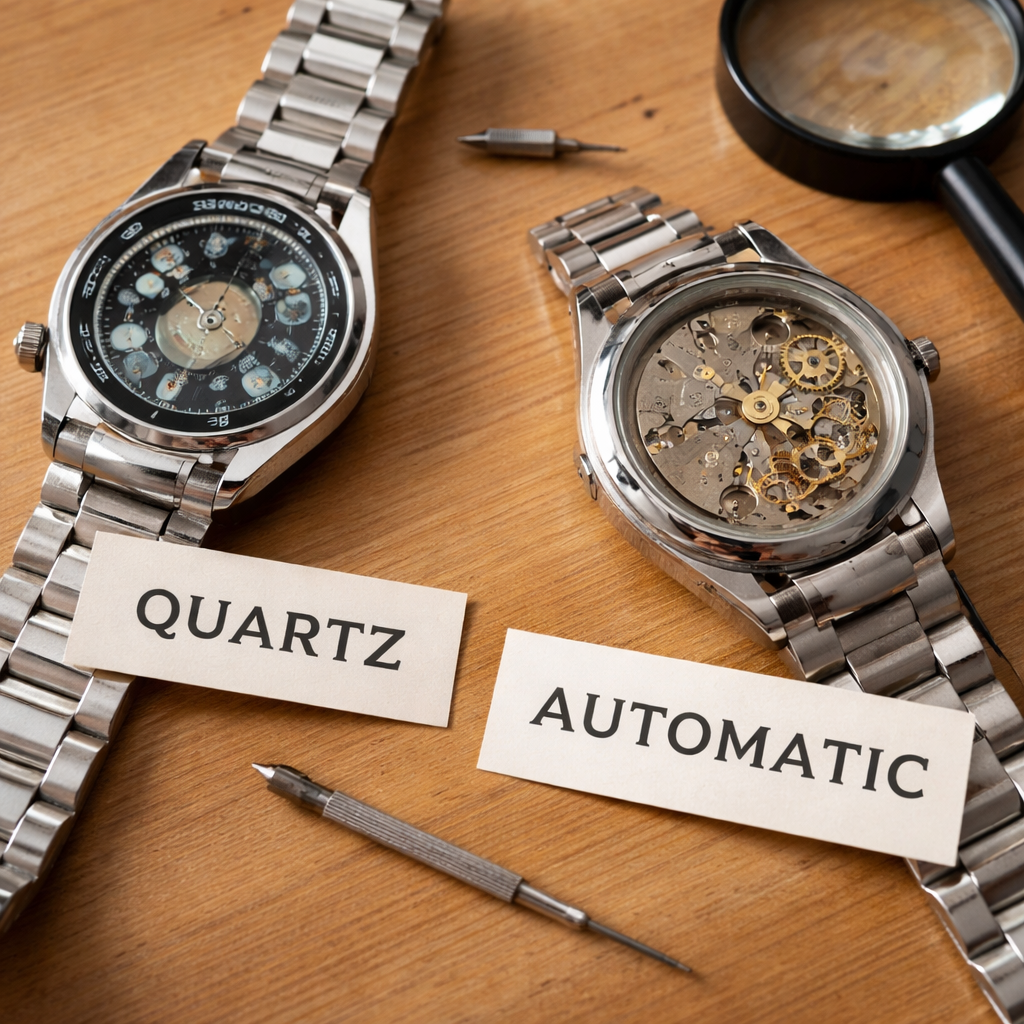
Automatic Watch Lifespan: Built for the Long Term
Automatic watches use mechanical parts powered by wrist movement. Unlike quartz, they don’t rely on batteries.
Average lifespan of automatic watches
-
Movement: 20–50 years
-
With proper servicing: potentially lifetime use
Many vintage automatic watches from the 1950s–1970s still work perfectly today.
Why automatic watches last longer
-
No electronic components to fail
-
Parts can be cleaned, repaired, or replaced
-
Designed for long-term mechanical use
However, they require regular servicing to stay reliable.
👉 Related reading: How Often Should You Service Your Automatic Watch? (Complete Maintenance Guide)
Factors That Affect Watch Longevity
Regardless of movement type, these factors play a major role in how long your watch lasts:
1. Maintenance
-
Quartz: battery changes + occasional gasket replacement
-
Automatic: full service every 3–5 years
2. Water Resistance
Moisture is one of the fastest ways to damage a watch.
👉 Learn more: Water Resistance in Watches Explained: What You Really Need for Daily Wear
3. Daily Usage
Wearing a watch every day is not a problem—but extreme shocks, magnetism, and poor storage can reduce lifespan.
4. Build Quality
Case materials, seals, movement quality, and assembly standards all matter.
Which Watch Lasts Longer: Quartz or Automatic?
There’s no universal “better” choice—it depends on how you plan to use the watch.
| Feature | Quartz | Automatic |
|---|---|---|
| Accuracy | Very high | Slightly less |
| Maintenance | Low | Moderate |
| Lifespan | Long | Very long |
| Repairability | Limited | High |
| Mechanical appeal | Low | High |
If you want a set-and-forget daily watch, quartz is practical.
If you want a watch that can last decades and be passed down, automatic watches are hard to beat.
👉 Related reading: Watch Accuracy Explained: Why Some Watches Are More Accurate Than Others
Can a Watch Last a Lifetime?
Yes—especially automatic watches.
With proper servicing and care:
-
A quartz watch can last decades
-
An automatic watch can last generations
The key is understanding what your watch needs and not ignoring maintenance.
Final Thoughts
A watch is more than just a timekeeping tool—it’s a long-term companion. Whether you choose quartz or automatic, understanding their lifespan helps you make a smarter decision and avoid unnecessary replacements.
If you’re still deciding which watch suits your lifestyle, start with the basics and build from there.
👉 Recommended next read: How to Choose Your First Watch: A Complete Beginner’s Guide
