
How to Choose the Right Watch for Everyday Wear (Beginner’s Guide)
How to Choose the Right Watch for Everyday Wear
If you’re buying your first watch, this complete beginner guide will help you choose the right option before focusing on everyday wear.
Introduction
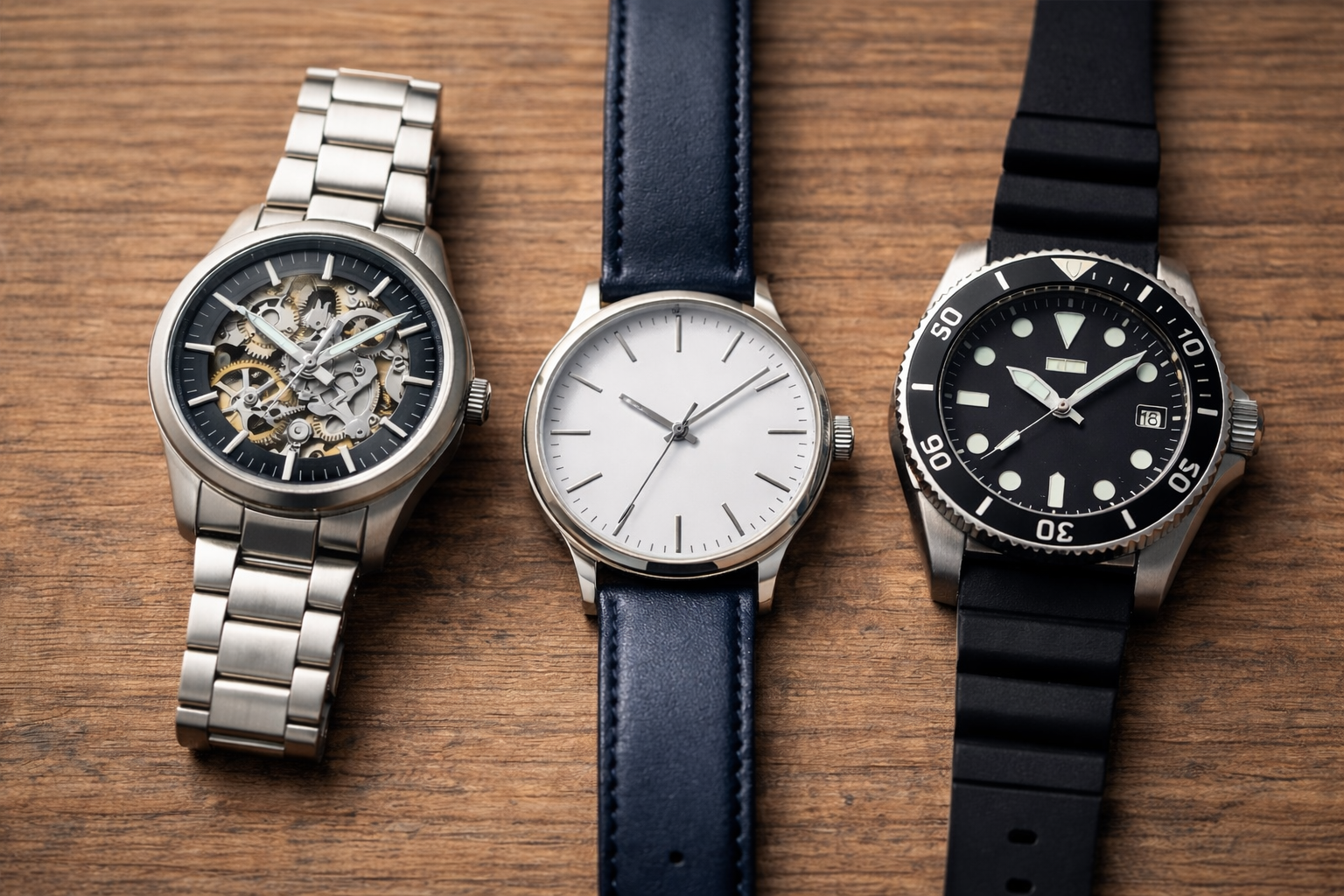
Choosing the right watch for everyday wear is not as simple as it seems. A watch is something you wear daily, often for many hours, so comfort, durability, and practicality matter just as much as design. For beginners and experienced buyers alike, understanding what makes a good everyday watch can save time, money, and regret.
In this guide, we’ll break down how to choose a watch that fits your daily lifestyle, from movement types and materials to size, comfort, and long-term usability.
What Is an Everyday Watch?
An everyday watch is a timepiece designed to be worn regularly without feeling uncomfortable or out of place. It should match most outfits, handle daily activities, and require minimal maintenance.
A good everyday watch should be:
-
Comfortable for long hours
-
Durable enough for daily use
-
Easy to read
-
Versatile in style
1. Choose the Right Watch Movement
The movement is the heart of a watch and plays a major role in convenience and maintenance.
Automatic Watches
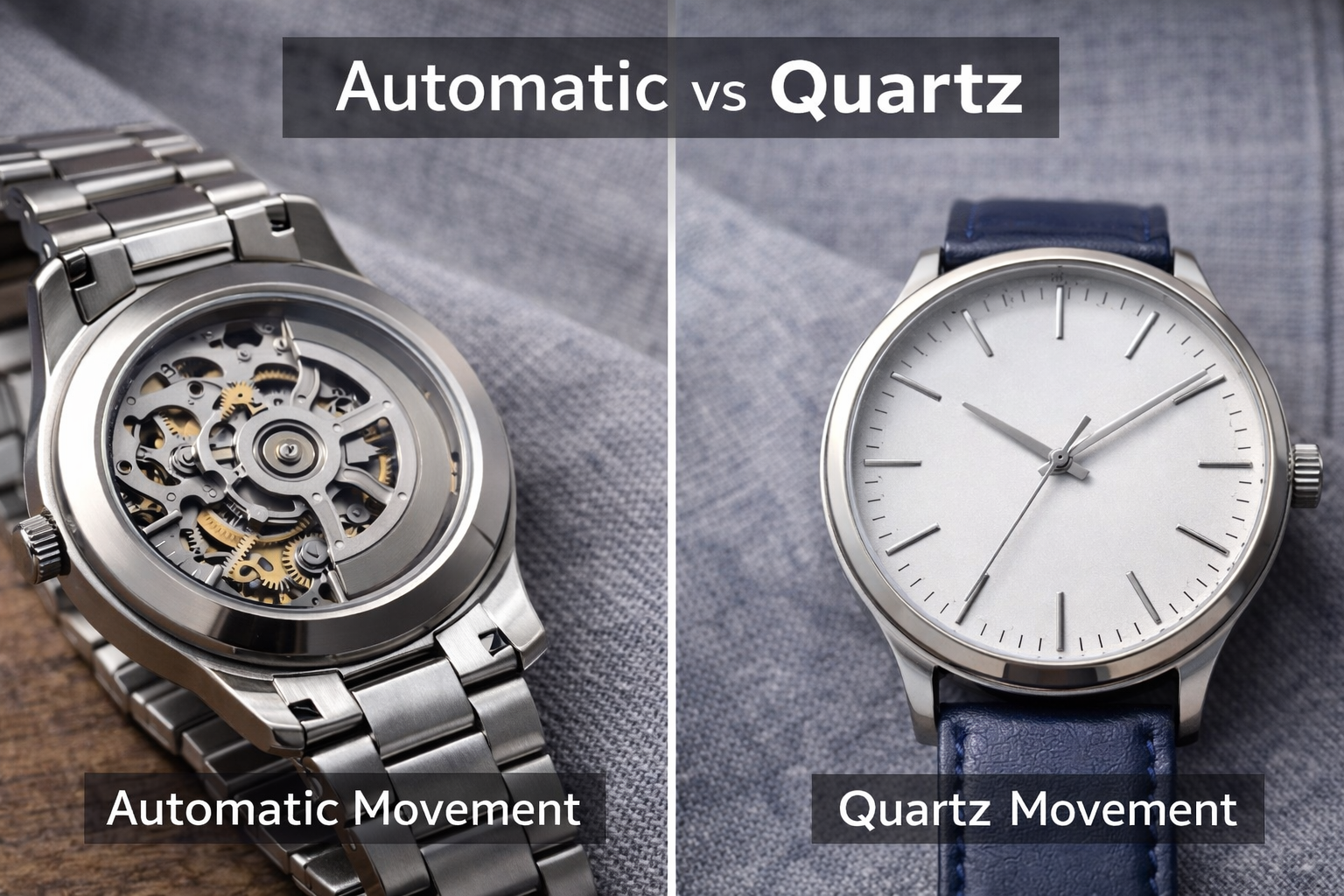
Automatic watches are powered by wrist movement and do not require batteries. Many people choose them for everyday wear because they combine craftsmanship with practicality.
Pros:
-
No battery replacement
-
Smooth sweeping second hand
-
Mechanical appeal
Cons:
-
Needs regular wear or a watch winder
-
Slightly less accurate than quartz
Automatic watches are ideal for people who wear their watch daily and enjoy traditional watchmaking.
Quartz Watches
Quartz watches run on batteries and are known for their accuracy and low maintenance.
Pros:
-
Highly accurate
-
Affordable
-
Minimal upkeep
Cons:
-
Requires battery replacement
-
Less mechanical character
For beginners or people who want a worry-free daily watch, quartz is often the best choice.
2. Watch Size Matters More Than You Think
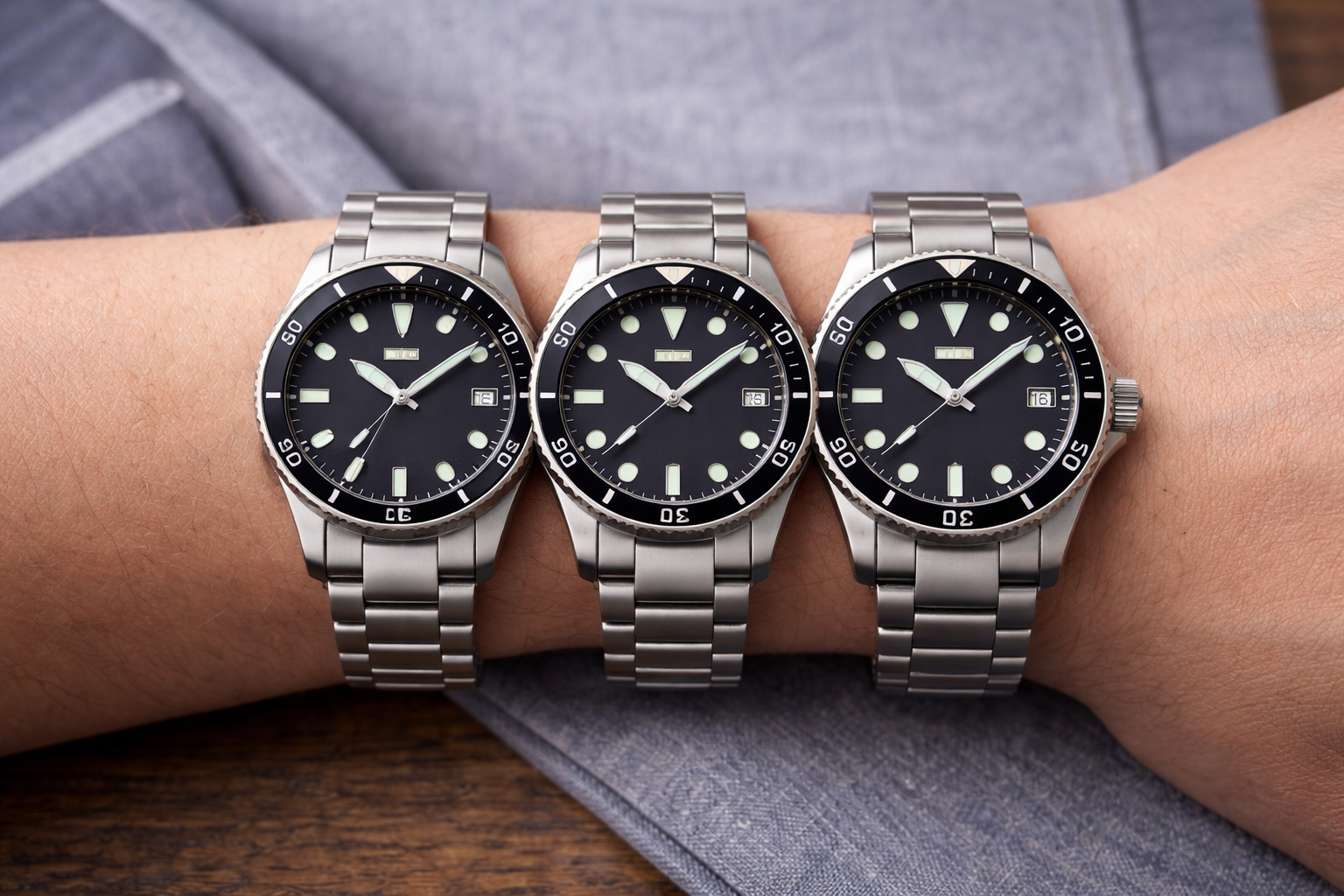
A watch that looks good online may feel uncomfortable in real life. Case size and thickness play a big role in daily comfort.
Recommended Sizes for Everyday Wear
-
38mm–40mm: Classic and comfortable for most wrists
-
41mm–42mm: Modern look without being oversized
-
Below 38mm: Minimal and vintage style
-
Above 42mm: Best reserved for sports or statement watches
A watch that fits well will feel natural on your wrist and won’t distract you throughout the day.
3. Case Material and Durability
Since an everyday watch is worn often, durability is crucial.
Stainless Steel
-
Strong and scratch-resistant
-
Suitable for work and casual wear
-
Easy to maintain
Titanium
-
Lighter than steel
-
Hypoallergenic
-
Great for long-term comfort
Gold or Plated Cases
-
Elegant appearance
-
Better for occasional or office use
-
Requires more care
For daily use, stainless steel or titanium is usually the safest option.
4. Strap Choice: Comfort Comes First
The strap affects comfort more than most people expect.
Leather Straps
-
Comfortable and stylish
-
Best for office and casual wear
-
Not ideal for water or sports
Metal Bracelets
-
Durable and versatile
-
Suitable for all seasons
-
Slightly heavier
Rubber or Nylon Straps
-
Lightweight and flexible
-
Ideal for active lifestyles
-
Easy to clean
If you’re choosing one watch to wear every day, a metal bracelet or high-quality leather strap is often the most practical choice.
5. Water Resistance for Daily Life
You don’t need a diving watch, but basic water resistance is important.
Minimum Recommendations
-
30 meters: Splash-resistant (hand washing, rain)
-
50 meters: Suitable for daily use
-
100 meters: Safe for swimming
An everyday watch should have at least 50 meters of water resistance to handle real-life situations comfortably.
6. Style: Keep It Versatile
An everyday watch should match multiple outfits and occasions.
Best Styles for Daily Wear
-
Simple dial designs
-
Neutral colors (black, white, silver, navy)
-
Minimal complications
Avoid overly complex dials or extreme designs if you want a watch that works everywhere.
Common Mistakes When Choosing an Everyday Watch
Many buyers make the same mistakes:
-
Choosing looks over comfort
-
Buying a watch that’s too large
-
Ignoring water resistance
-
Overpaying for features they don’t use
Taking time to evaluate how you’ll actually use the watch helps avoid disappointment.
How Long Should an Everyday Watch Last?
With proper care, a good everyday watch can last 10–20 years or more. Regular cleaning, occasional servicing, and proper storage all help extend a watch’s lifespan.
Final Thoughts
The best everyday watch is not the most expensive or the most complex—it’s the one that fits your lifestyle. Whether you prefer an automatic or quartz movement, the key is balance: comfort, durability, and timeless design.
If you’re building a watch collection or searching for a reliable daily timepiece, focusing on these fundamentals will help you make a confident choice that you’ll enjoy wearing every day.
