
How to Choose Your First Watch: A Complete Beginner’s Guide
How to Choose Your First Watch: A Complete Beginner’s Guide
Buying your first watch can feel confusing. With so many styles, movements, sizes, and price ranges, it’s easy to feel overwhelmed — especially if you’re new to watches.
This beginner-friendly guide will walk you through everything you need to know to choose your first watch, step by step, without technical jargon or unnecessary complexity.
By the end of this article, you’ll know exactly what kind of watch fits your lifestyle, budget, and personal taste.
1. Start With Your Lifestyle (This Matters More Than Brand)
Before thinking about movements or materials, ask yourself one simple question:
How will you actually wear this watch?
Most beginners fall into one of these categories:
-
Everyday wear – Work, casual outings, daily use
-
Office / business – Clean, simple, professional look
-
Active lifestyle – Walking, light sports, travel
-
Occasional use – Events, dinners, special occasions
- For beginners, choosing a watch you can wear every day is often the safest and most practical option.
👉 If you plan to wear your watch daily, comfort and versatility matter more than luxury or complexity.
For most first-time buyers, an everyday watch is the best starting point.
2. Quartz or Mechanical? Choose Simplicity First
One of the most common beginner questions is whether to choose a quartz or mechanical watch.
Quartz Watches
-
Battery-powered
-
Extremely accurate
-
Low maintenance
-
Usually more affordable
Mechanical Watches
-
Powered by springs and gears
-
No battery required
-
Appreciated for craftsmanship
-
Require more care and attention
💡 Beginner recommendation:
If this is your first watch, quartz is usually the smarter and stress-free choice. Mechanical watches are great, but they shine more when you already enjoy the hobby.
(You can dive deeper into this topic in your quartz vs mechanical guide.)
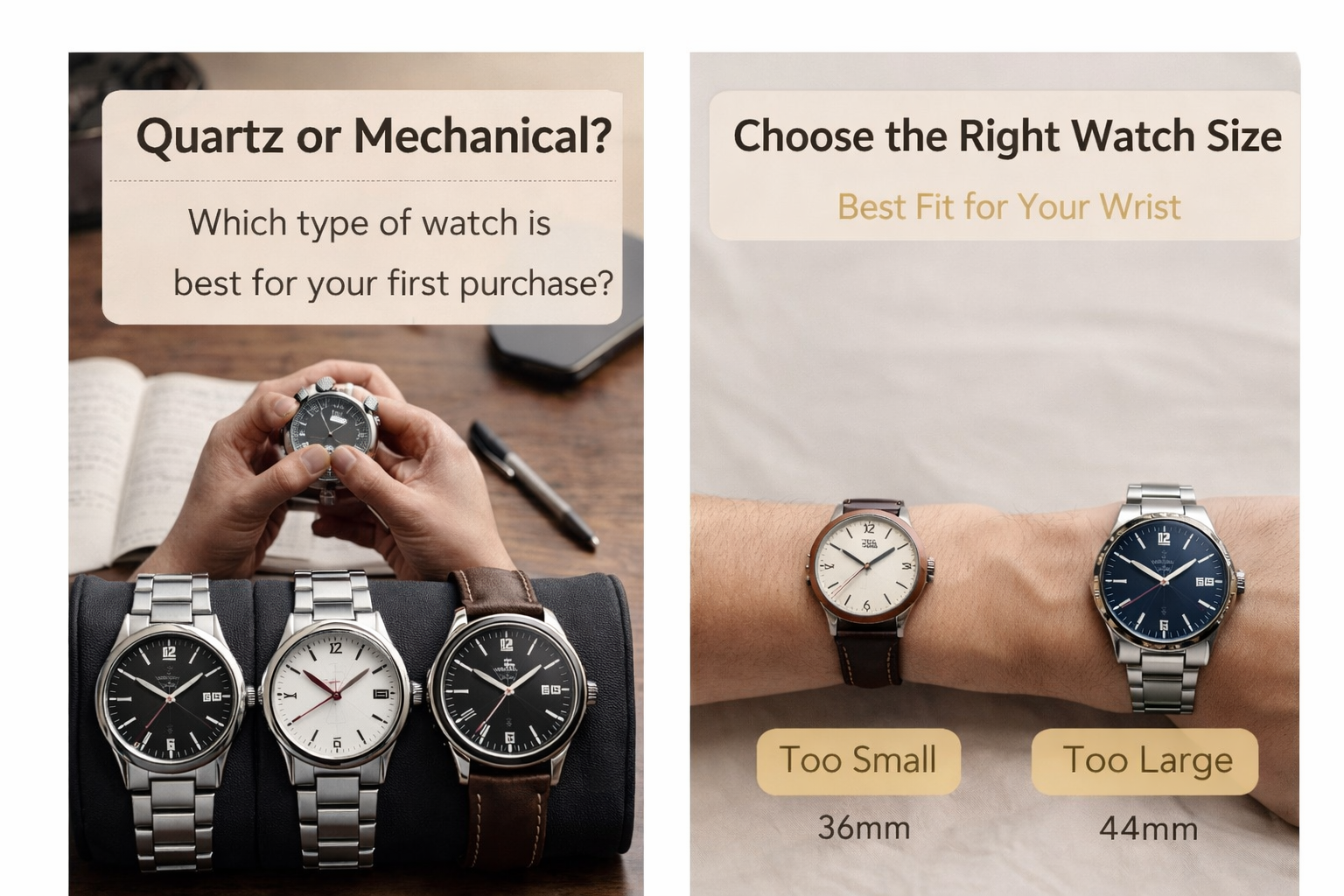
3. Choose the Right Watch Size (Avoid the #1 Beginner Mistake)
A beautiful watch can look completely wrong if the size doesn’t fit your wrist.
Here are simple guidelines:
Case Diameter (Most Important)
-
Small wrists: 36–38mm
-
Average wrists: 38–41mm
-
Large wrists: 42–44mm
Case Thickness
-
Thinner watches feel more comfortable and look cleaner
-
8–11mm thickness is ideal for everyday wear
👉 When in doubt, go smaller. Oversized watches are the most common beginner mistake.
(You already cover this well in your watch size guide — link it here.)
4. Pick a Style That Matches Everything
For your first watch, versatility is key.
Best Styles for Beginners
-
Simple dress watches – Clean dial, minimal design
-
Everyday casual watches – Neutral colors, easy to match
-
Field-style watches – Practical, readable, timeless
What to Avoid (For Now)
-
Very flashy designs
-
Extremely large cases
-
Complex dials with too many functions
💡 A watch with a white, black, or dark blue dial will match almost any outfit.
5. Decide on Strap Type: Comfort Over Fashion
Your watch strap affects comfort more than you might expect.
Common Options
-
Leather straps – Comfortable, classic, great for daily wear
-
Stainless steel bracelets – Durable, versatile, slightly heavier
-
Fabric / NATO straps – Casual, lightweight, affordable
Beginner tip:
👉 Leather or steel are the easiest choices for a first watch.
You can always change straps later — many people refresh their watch just by swapping the strap.
6. Set a Realistic Budget (You Don’t Need to Overspend)
A great first watch doesn’t have to be expensive.
Reasonable Beginner Budget
-
$50–$150 – Reliable, simple, great value
-
$150–$300 – Better finishing, materials, brand options
At this stage, focus on:
-
Comfort
-
Readability
-
Reliability
Luxury brands and high-end mechanical watches can always come later.
7. Common Beginner Mistakes to Avoid
Before you buy, double-check that you’re not making one of these mistakes:
❌ Buying too large
❌ Choosing style over comfort
❌ Overpaying for brand name alone
❌ Buying a complex mechanical watch without understanding maintenance
A simple, comfortable, well-sized watch will always beat a flashy one you don’t enjoy wearing.
8. Final Recommendation: What Makes a Perfect First Watch?
Your first watch should be:
✅ Comfortable for daily wear
✅ Easy to read
✅ Simple in design
✅ Low maintenance
✅ Versatile with most outfits
If a watch meets these five criteria, you’re already making a great choice.
Final Thoughts
Choosing your first watch doesn’t have to be complicated. Focus on fit, comfort, and practicality, and you’ll end up with a watch you actually enjoy wearing — not one that stays in a drawer.
Once you gain experience, you can explore mechanical movements, different styles, and higher-end options with confidence.
