
How to Choose the Right Watch Size for Your Wrist
How to Choose the Right Watch Size for Your Wrist
Introduction
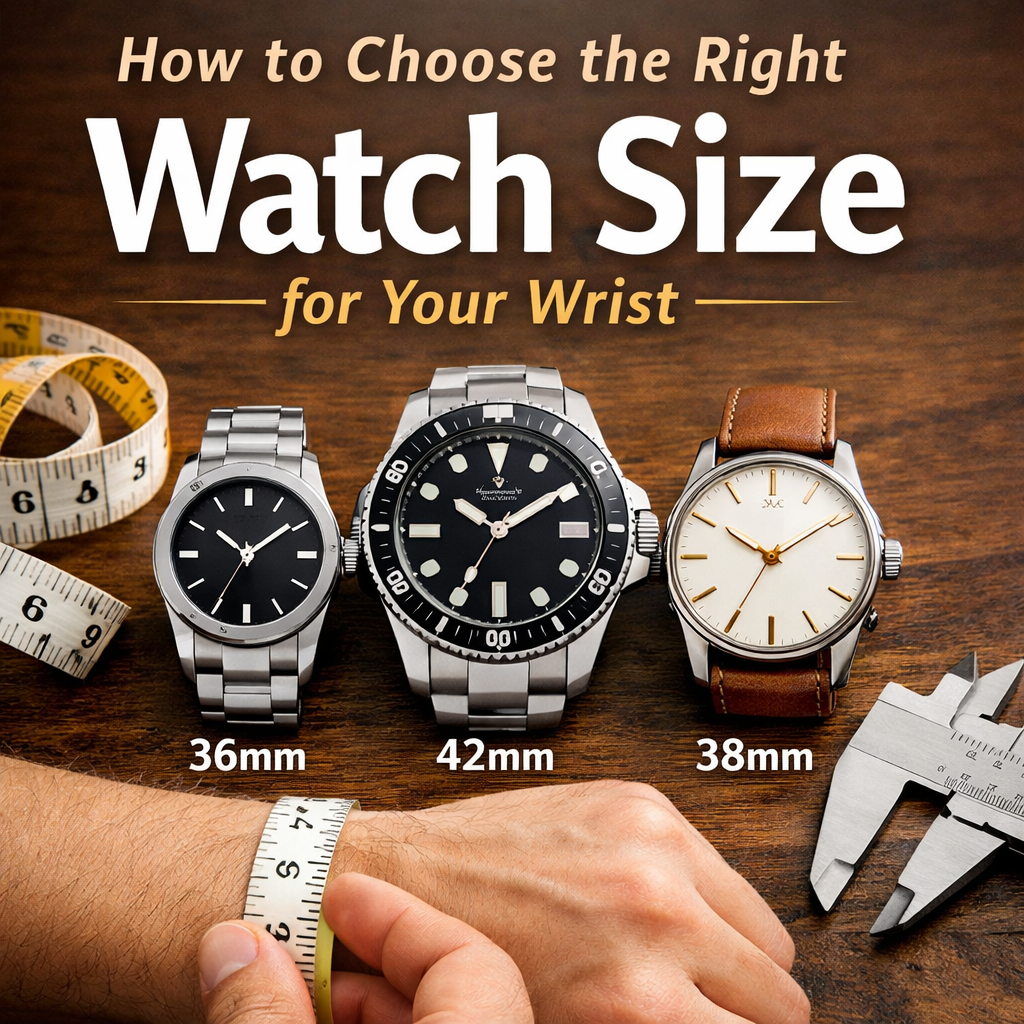
Choosing the right watch size is one of the most important decisions when buying a watch. Even a beautifully designed timepiece can look awkward if the proportions do not match your wrist.
Many people only focus on brand or style, but understanding case diameter, lug-to-lug distance, and thickness makes a major difference in both comfort and appearance.
So how do you choose the correct watch size for your wrist?
Let’s break it down step by step.
1️⃣ Measure Your Wrist First
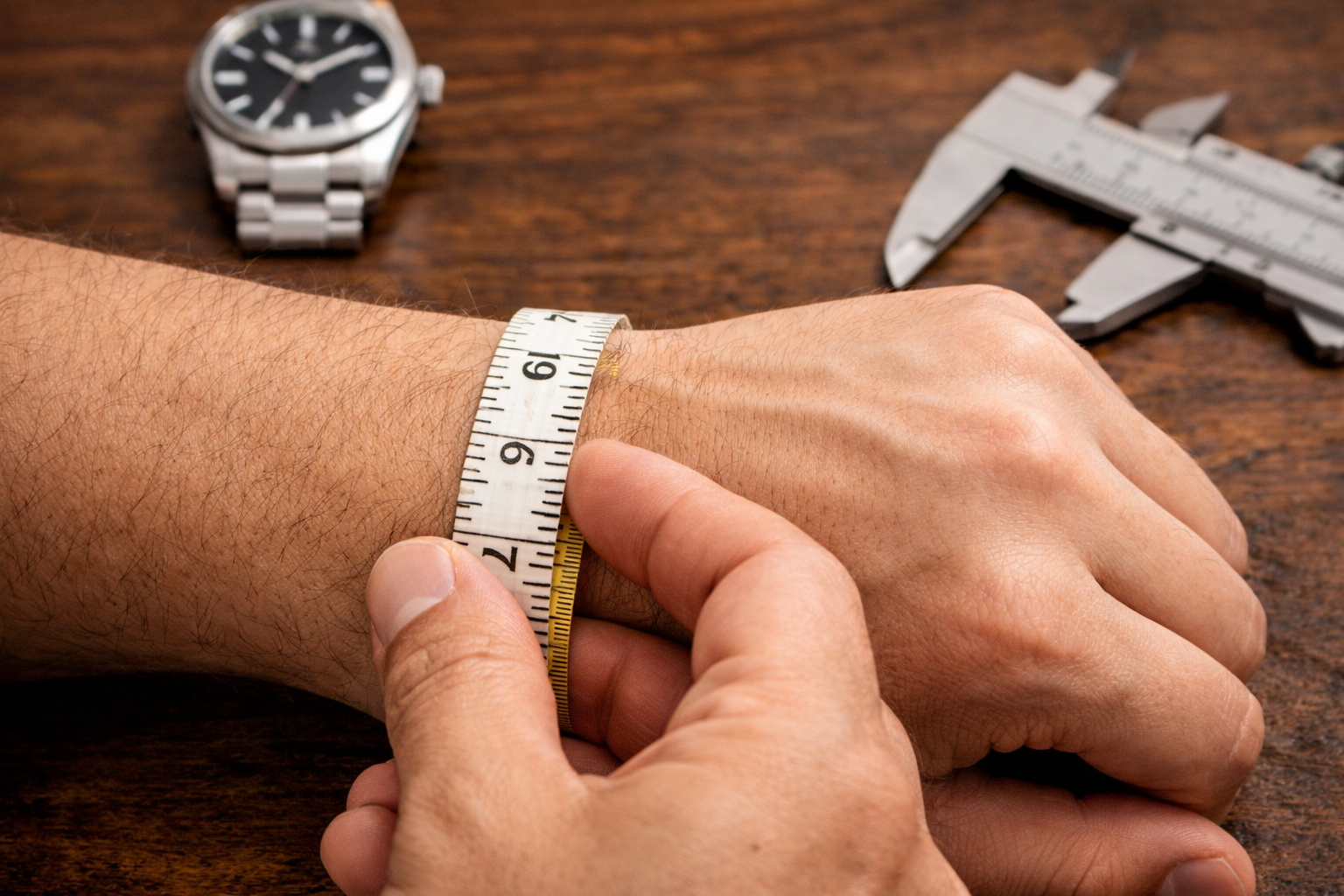
Before choosing a case size, you need to measure your wrist.
Use a flexible measuring tape and wrap it just below your wrist bone. Record the measurement in inches or millimeters.
General Watch Size Guide
-
6–6.5 inch wrist → 36–38mm case
-
6.5–7 inch wrist → 38–40mm case
-
7–7.5 inch wrist → 40–42mm case
-
7.5+ inch wrist → 42mm+
If you're new to watch basics, you may also find our guide on
👉 How to Choose Your First Watch helpful, as it explains foundational sizing principles.
2️⃣ Case Diameter Is Only Part of the Story
Many buyers only look at case diameter (e.g., 40mm), but that number alone does not determine fit.
Two watches with the same diameter can wear very differently depending on:
-
Lug shape
-
Bezel width
-
Dial design
-
Case thickness
A slim 40mm dress watch may feel smaller than a bulky 40mm dive watch.
If you want a deeper comparison between different watch types, you can read our article on
👉 Mechanical vs Quartz Watches Explained
to understand how design affects case proportions.
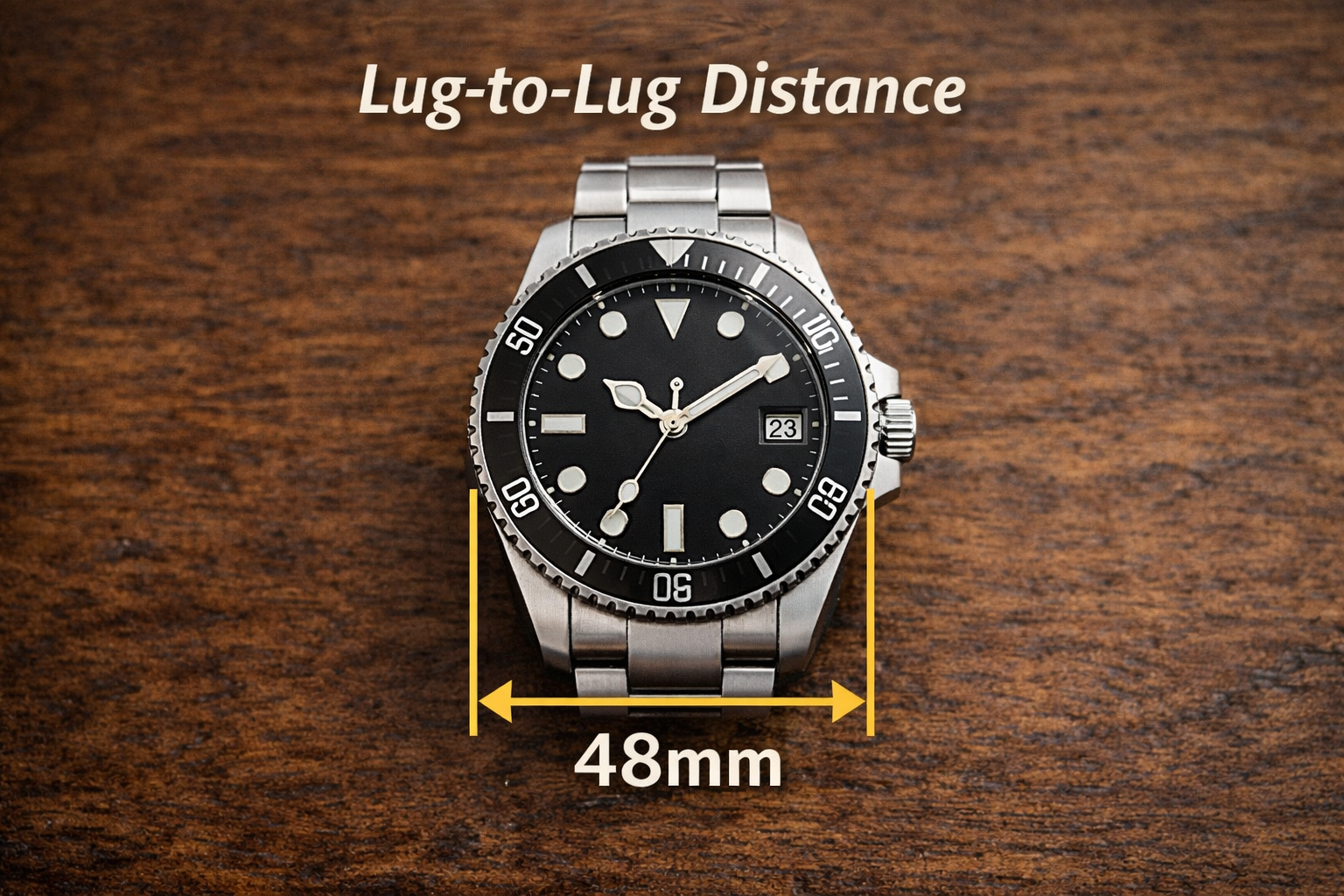
3️⃣ Lug-to-Lug Distance Matters More Than You Think
Lug-to-lug distance measures the length from the top lug to the bottom lug of the case.
If this measurement exceeds the width of your wrist, the watch will appear oversized and may overhang.
This is especially important for sport watches and diver-style watches.
When comparing sport watches, understanding case structure and water resistance design can also help. Our guide on
👉 Water Resistance in Watches Explained
covers how case construction affects durability and sizing.
4️⃣ Watch Thickness and Comfort
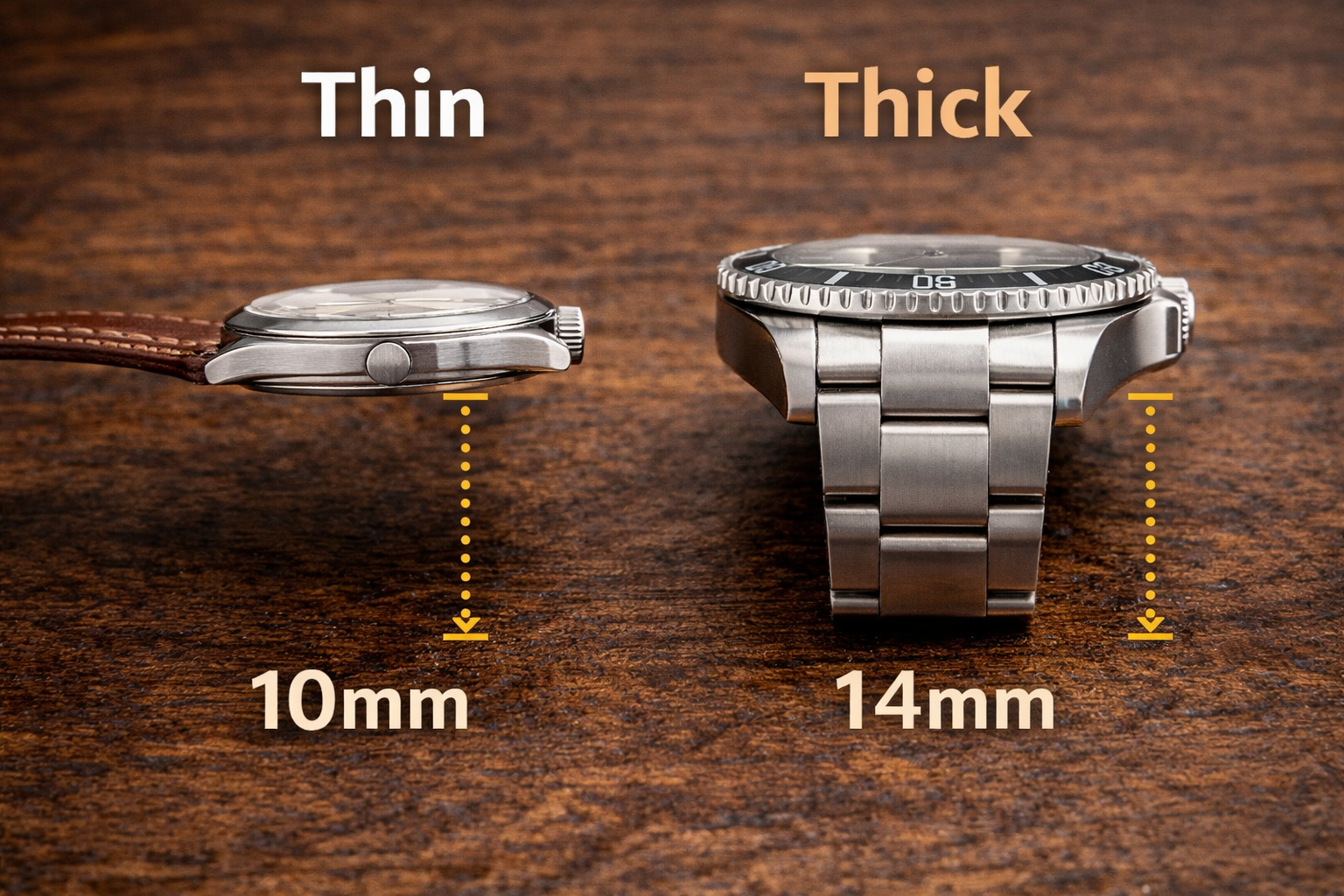
Thickness directly affects daily comfort.
Thin watches (8–10mm):
-
Slide easily under sleeves
-
Look elegant
-
Feel lightweight
Thicker watches (12–15mm):
-
Feel substantial
-
Often used in dive watches
-
More durable appearance
A watch that is too thick for your wrist may feel unbalanced even if the diameter is correct.
5️⃣ Strap Width and Proportion
Strap width usually equals about half the case diameter.
Example:
-
40mm case → 20mm strap
-
42mm case → 22mm strap
Balanced proportions create a more natural appearance on the wrist.
6️⃣ Common Mistakes to Avoid
-
Choosing oversized watches just because they are trendy
-
Ignoring wrist measurement
-
Not considering thickness
-
Forgetting comfort for daily wear
The right watch size should look balanced and feel comfortable throughout the day.
Conclusion
Choosing the right watch size is about balance, comfort, and proportion.
By understanding:
-
Wrist measurement
-
Case diameter
-
Lug-to-lug distance
-
Thickness
You can confidently select a watch that complements your wrist instead of overwhelming it.
When in doubt, slightly smaller is often more versatile and timeless.
FAQ
❓ Is 42mm too big for a small wrist?
For wrists under 6.5 inches, 42mm may appear oversized unless the lug-to-lug distance is short.
❓ Does watch thickness matter more than diameter?
Thickness significantly affects comfort and how bulky a watch feels on the wrist.
❓ What is the safest watch size for most men?
38–40mm is considered the most universally balanced size.
❓ Can smaller watches look modern?
Yes. Many modern collections now favor 36–39mm for a refined and versatile look.
