
How to Store Watches Properly: Daily Use vs Long-Term Storage
How to Store Watches Properly: Daily Use vs Long-Term Storage
Proper watch storage is often overlooked, but it plays a major role in how long a watch lasts and how well it performs over time.
Whether you wear your watch every day or only occasionally, storing it the right way can prevent unnecessary damage, accuracy issues, and costly repairs.
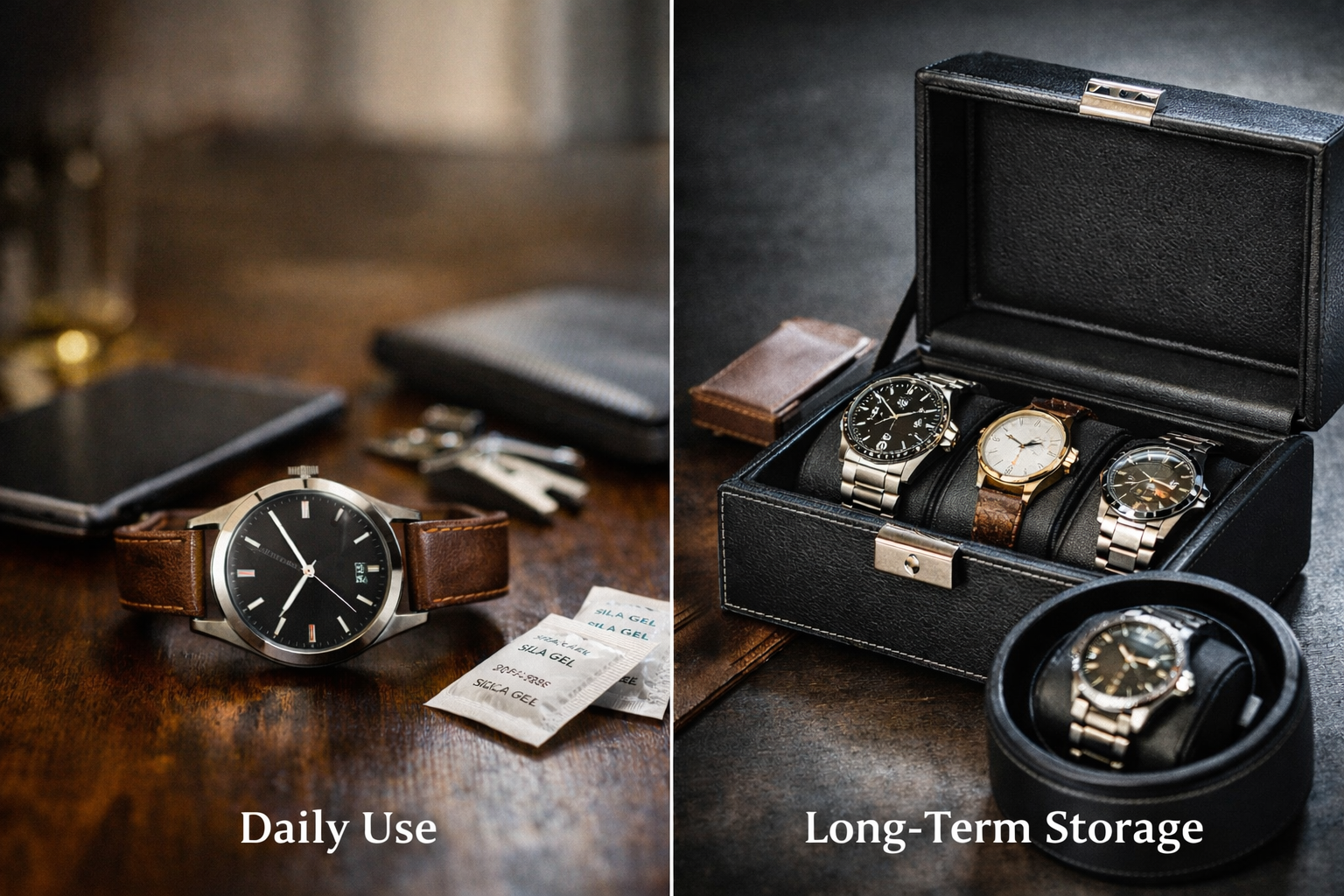
In this guide, we’ll explain how to store watches properly for daily use and long-term storage, common mistakes to avoid, and practical tips for keeping your watch in excellent condition.
Why Proper Watch Storage Matters
Watches are precision instruments. Even when not being worn, they are affected by:
-
Dust and moisture
-
Temperature changes
-
Magnetism
-
Physical impact
Incorrect storage can lead to:
-
Reduced accuracy
-
Degraded lubricants
-
Strap damage
-
Moisture buildup
Good storage habits protect both the movement and the exterior of your watch.
How to Store a Watch for Daily Use
If you wear your watch frequently, storage is simple—but still important.
1. Choose a Safe, Stable Surface
Place your watch on a soft, flat surface away from edges where it could fall. Avoid leaving it near sinks, windows, or electronics.
2. Avoid Magnetism
Magnetic fields can affect mechanical and automatic watches.
Keep your watch away from:
-
Speakers
-
Phones
-
Laptops
-
Wireless chargers
👉 Related reading: Watch Accuracy Explained: Why Some Watches Are More Accurate Than Others
3. Keep It Clean
Before storing your watch at the end of the day:
-
Wipe the case and bracelet with a soft cloth
-
Remove moisture and sweat
This simple habit helps preserve seals and materials over time.
How to Store Watches for Long-Term Storage
If you rotate watches or won’t wear one for weeks or months, long-term storage becomes more important.
1. Use a Watch Box or Case
A proper watch box:
-
Protects against dust and scratches
-
Keeps watches separated
-
Helps control humidity
Avoid stacking watches directly on top of each other.
2. Store in a Dry Environment
Humidity is one of the biggest threats to watches.
Best practices:
-
Store watches in a cool, dry place
-
Avoid bathrooms and basements
-
Use silica gel packs if needed
👉 Related reading: Water Resistance in Watches Explained: What You Really Need for Daily Wear
3. Should You Wind Automatic Watches in Storage?
For automatic watches:
-
Short-term storage: no need to wind
-
Long-term storage: occasional winding (once every 1–2 months) can help keep lubricants distributed
👉 Related reading: How Often Should You Service Your Automatic Watch?
4. Store Watches Flat or Upright
Both positions are acceptable, but consistency matters.
-
Flat storage reduces pressure on straps
-
Upright storage is fine in watch boxes with cushions
Avoid hanging watches or placing pressure on the crown.
How to Store Watches with Leather Straps
Leather requires extra care.
Best practices:
-
Store away from moisture and heat
-
Loosen the strap slightly
-
Avoid airtight plastic containers
Leather straps last longer when allowed to breathe.
Common Watch Storage Mistakes to Avoid
Many watch owners unknowingly damage their watches through poor storage habits:
-
Leaving watches in direct sunlight
-
Storing near magnets
-
Keeping watches in humid rooms
-
Letting dead batteries sit inside quartz watches
Should You Use a Watch Winder?
Watch winders are optional, not essential.
They can be useful if:
-
You own multiple automatic watches
-
You want them ready to wear
However, manual winding and proper storage work just as well for most people.
Final Thoughts
Proper watch storage is about consistency, not complexity.
Whether for daily use or long-term storage, a few simple habits can significantly extend the life and performance of your watch.
By protecting your watch from moisture, magnetism, and unnecessary stress, you ensure it remains reliable for years to come.
