
How to Tell If a Watch Is High Quality: 10 Signs You Should Know Before Buying
Introduction
Buying a watch is more than choosing a style. Whether you're new to watches or already own a few pieces, knowing how to identify a high-quality watch can save you money and prevent disappointment.
In this guide, we’ll break down the most important signs of a well-made watch and explain what truly separates a quality timepiece from a cheap one.
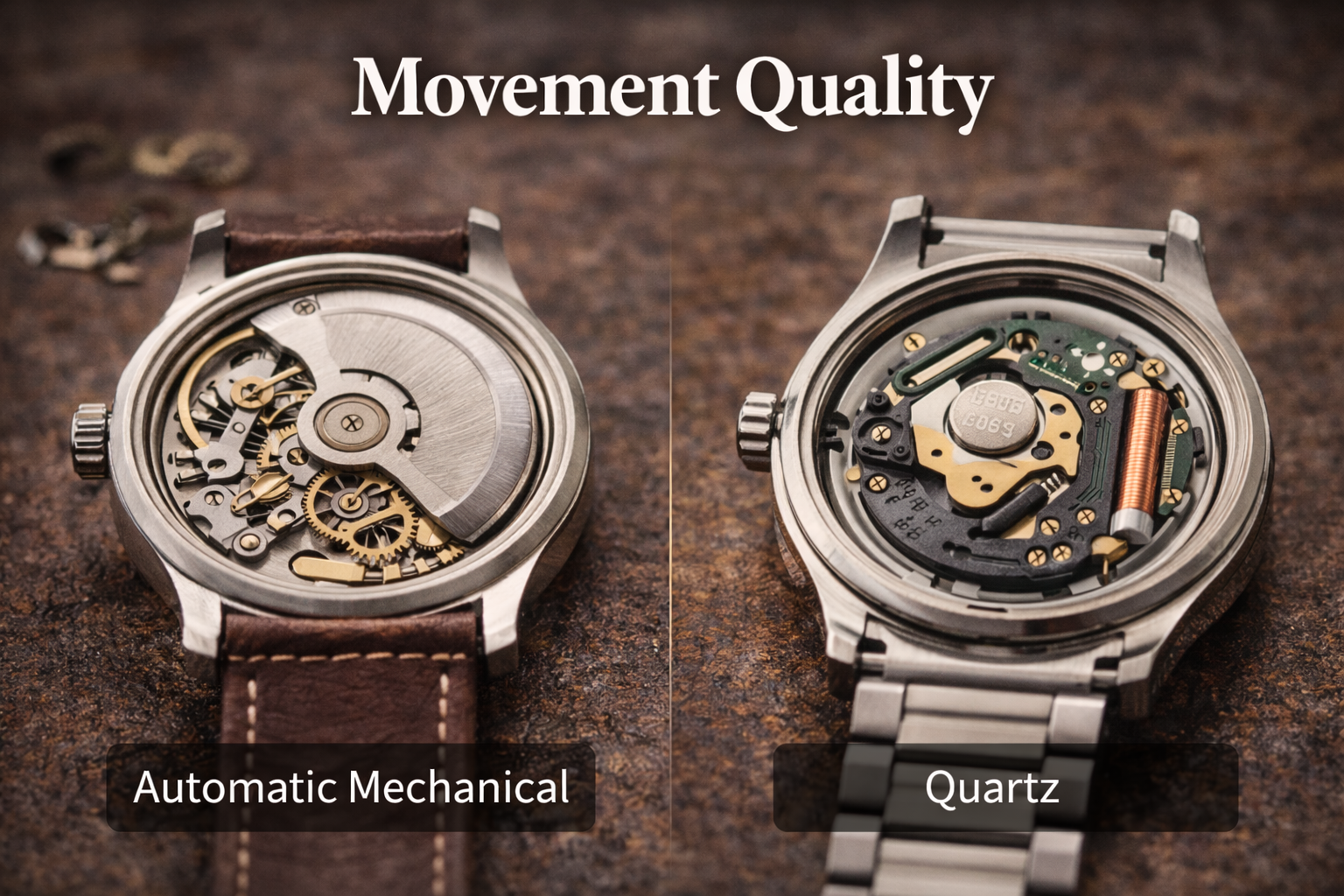
1. Movement Quality
The movement is the heart of the watch.
Mechanical watches offer craftsmanship and smooth sweeping seconds, while quartz watches provide high accuracy and low maintenance.
If you're unsure about the difference, read our detailed comparison:
Mechanical vs Quartz Watches: A Beginner’s Guide
2. Case Material
High-quality watches often use:
-
316L stainless steel
-
Sapphire crystal
-
Solid case back
-
Ceramic bezel
Avoid watches that feel hollow or use low-grade mineral glass if durability matters to you.
3. Weight and Balance
A quality watch should feel solid and balanced on the wrist.
Extremely light watches often indicate cheaper internal components.
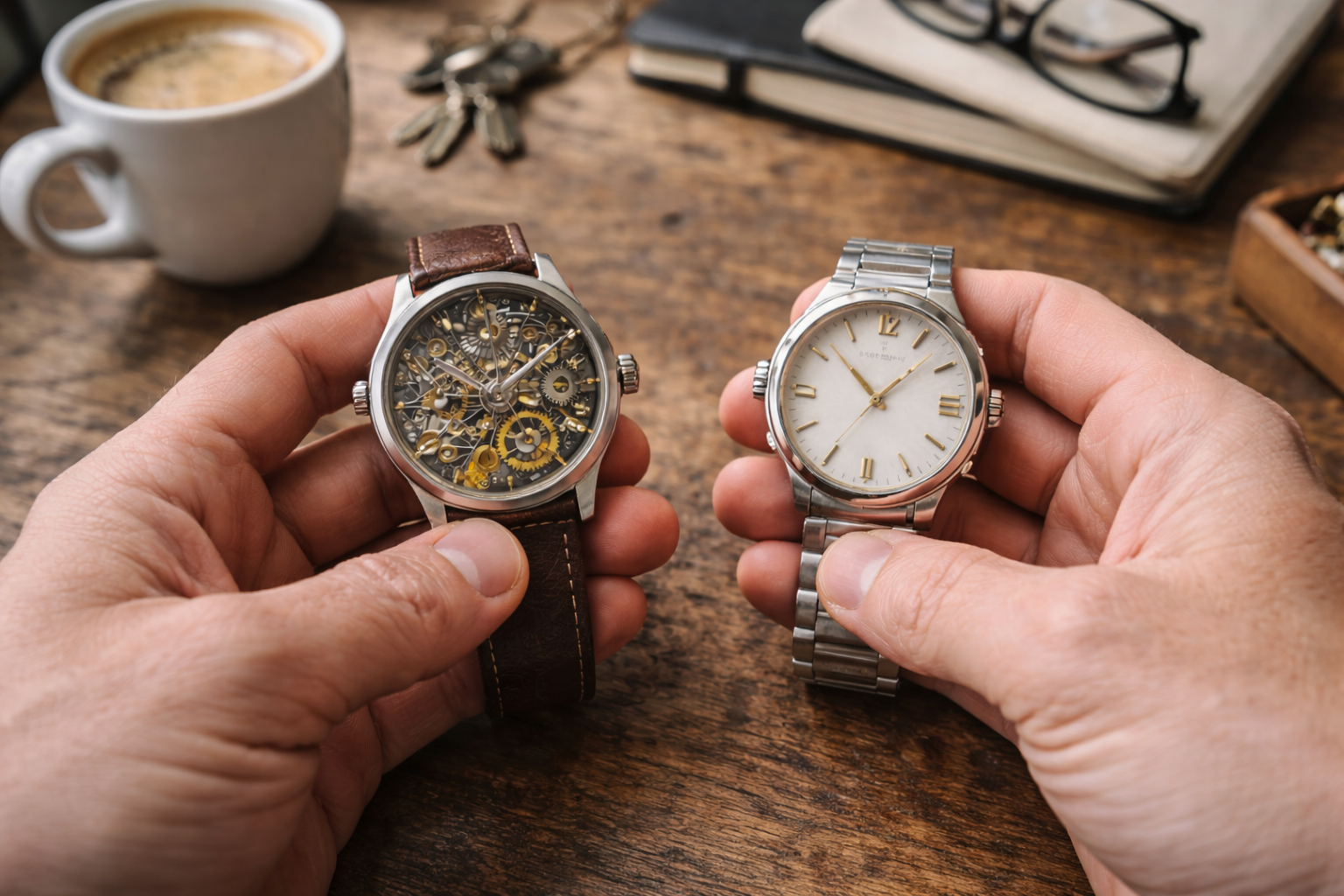
4. Finishing and Detail Work
Check:
-
Even brushing and polishing
-
Clean dial printing
-
Properly aligned indices
-
Sharp but smooth case edges
Fine finishing is one of the biggest quality indicators.
5. Water Resistance
Proper water resistance reflects good sealing and case construction.
Learn more in:
Water Resistance in Watches Explained
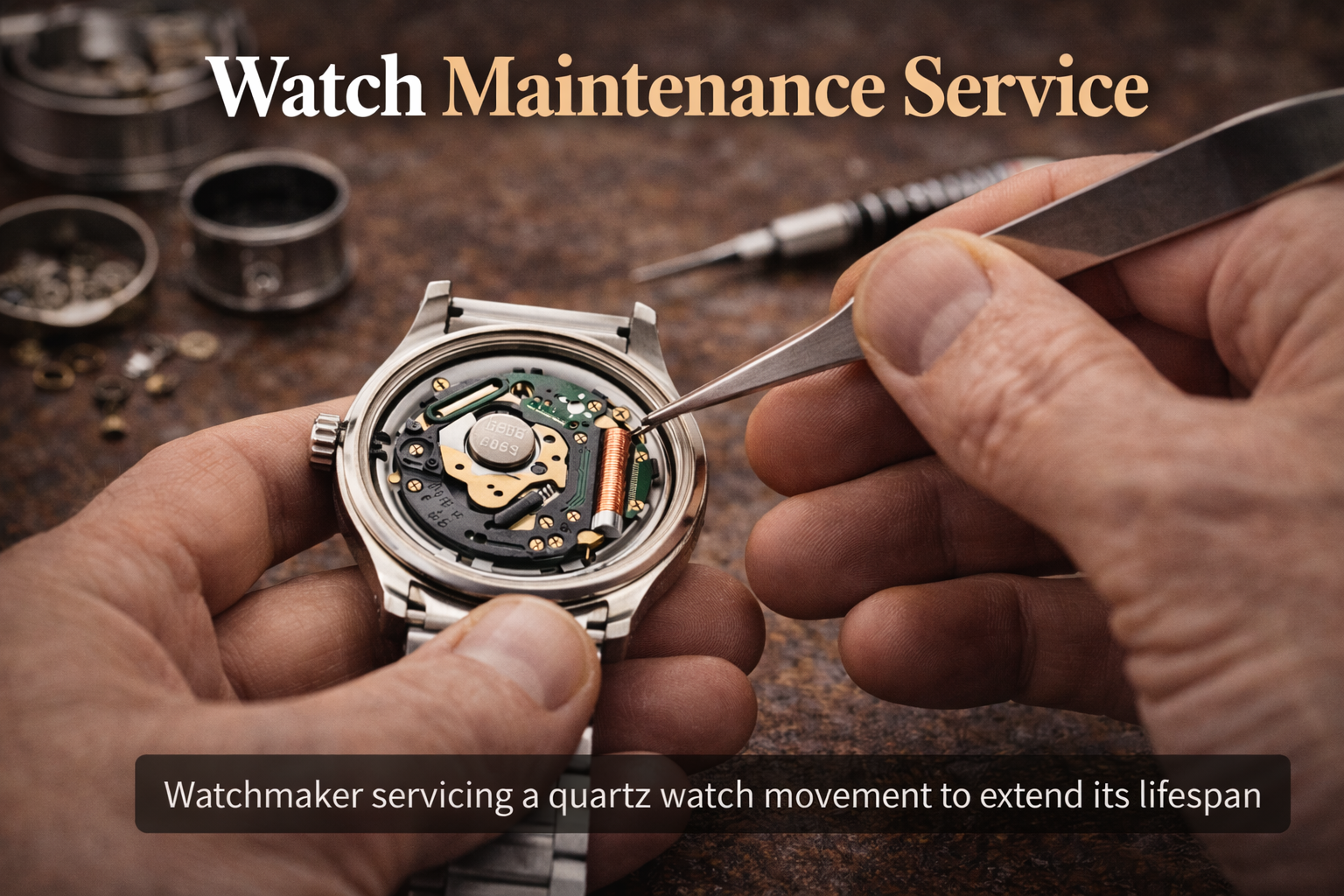
6. Serviceability
A well-built watch should be serviceable for years.
Read:
How Often Should You Service Your Automatic Watch?
7. Bracelet and Strap Quality
Look for:
-
Solid end links
-
Smooth clasp operation
-
Strong stitching (leather straps)
-
No sharp edges
Bracelet quality often reveals overall build quality.
8. Accuracy
Mechanical watches usually vary ±5–20 seconds per day.
Quartz watches are typically within ±15 seconds per month.
For deeper explanation, see:
Watch Accuracy Explained
9. Brand History and Reputation
Established brands usually maintain better quality control and consistency.
10. Overall Feel and Experience
A quality watch feels refined:
-
Smooth crown operation
-
No rattling
-
Balanced proportions
-
Crisp dial details
Quality is something you can often feel instantly.
FAQ Section
Frequently Asked Questions
1. How can you tell if a watch is good quality?
Check the movement type, case material, finishing details, weight, and brand reputation. Sapphire crystal and solid steel cases usually indicate better quality.
2. Is a heavier watch always better quality?
Not necessarily. Weight can indicate solid materials, but finishing, movement quality, and craftsmanship matter more.
3. Are mechanical watches better than quartz?
Mechanical watches offer craftsmanship and tradition, while quartz watches provide superior accuracy and lower maintenance. The better choice depends on your needs.
4. What material is best for a watch case?
316L stainless steel is widely used for durability and corrosion resistance. Sapphire crystal is preferred for scratch resistance.
5. How long should a quality watch last?
With proper maintenance, a high-quality watch can last decades. Mechanical watches require servicing every 3–5 years.
6. Is water resistance important for everyday wear?
Yes. Even daily wear exposes watches to moisture. At least 50 meters water resistance is recommended for daily use.
