
Replica vs Genuine Watches: What Differences Are Actually Noticeable in Daily Life?
Replica vs Genuine Watches: What Differences Are Actually Noticeable in Daily Life?
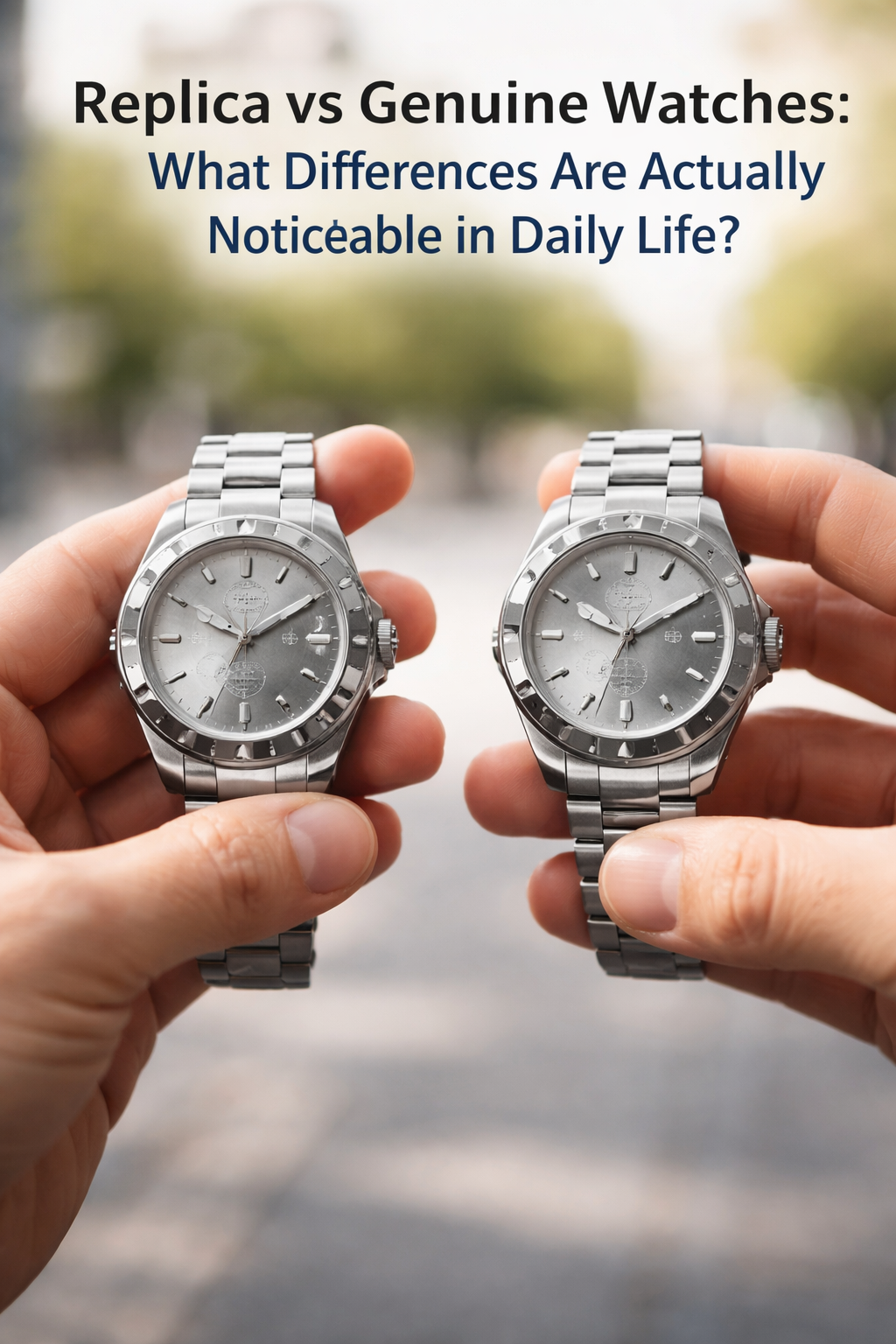
A lot of people talk about replica watches and genuine watches as if the difference is always immediate and obvious. In real life, it usually is not that simple.
Most people are not inspecting a watch under bright studio lights or zooming in on macro photos. They notice it across a desk in the office, during a handshake, while waiting for coffee, while commuting, or when it catches light outdoors for a second. That is why this question matters more than many beginners expect: what differences are actually noticeable in normal daily life, and what only becomes obvious when someone looks much more closely?
This is where many first-time buyers get the wrong idea. Some assume every flaw will stand out instantly. Others assume nobody will ever notice anything at all. The truth is somewhere in the middle. Some differences stay subtle in normal wear, while others become easier to notice once the watch is worn regularly in office light, summer heat, travel, or formal settings.
If you have already read our watch accuracy explained article or gone through a guide to choosing the right watch size, you probably already know that the real wearing experience is not decided by one detail alone. Fit, thickness, bracelet feel, dial sharpness, light reflection, and balance on the wrist often matter much more than people expect at first.
Quick Answer
In daily life, the most noticeable differences between a replica watch and a genuine watch are usually bracelet feel, case finishing, dial sharpness, crystal clarity, weight balance, and overall refinement on the wrist. From a normal social distance, many tiny details are less obvious than people think. But once the watch is worn in office light, sunlight, hot weather, or close conversation, build quality and finishing often become easier to notice.
Why Daily Life Matters More Than Close-Up Photos
One reason people get confused is that online comparisons often rely on extreme close-up photos. Those images can be useful, but they do not always reflect how a watch feels in the real world.
In daily life, people usually notice a watch in situations like these:
- while typing at work
- when a shirt cuff moves during conversation
- under restaurant lighting
- during a normal commute
- while walking outside in daylight
- when the bracelet shifts on the wrist in warm weather
A watch may look impressive in a still image, but feel less convincing after a full day of wear. That is exactly why learning how to choose the right watch for everyday wear matters so much. A watch is not judged only by the dial or bezel. It is judged by how everything comes together once it is actually worn.
This is also why real-world use matters more than many online comparisons suggest. A watch can look strong in isolation and still feel wrong after several hours on the wrist.
1. Bracelet and Strap Feel Are Often Noticed First
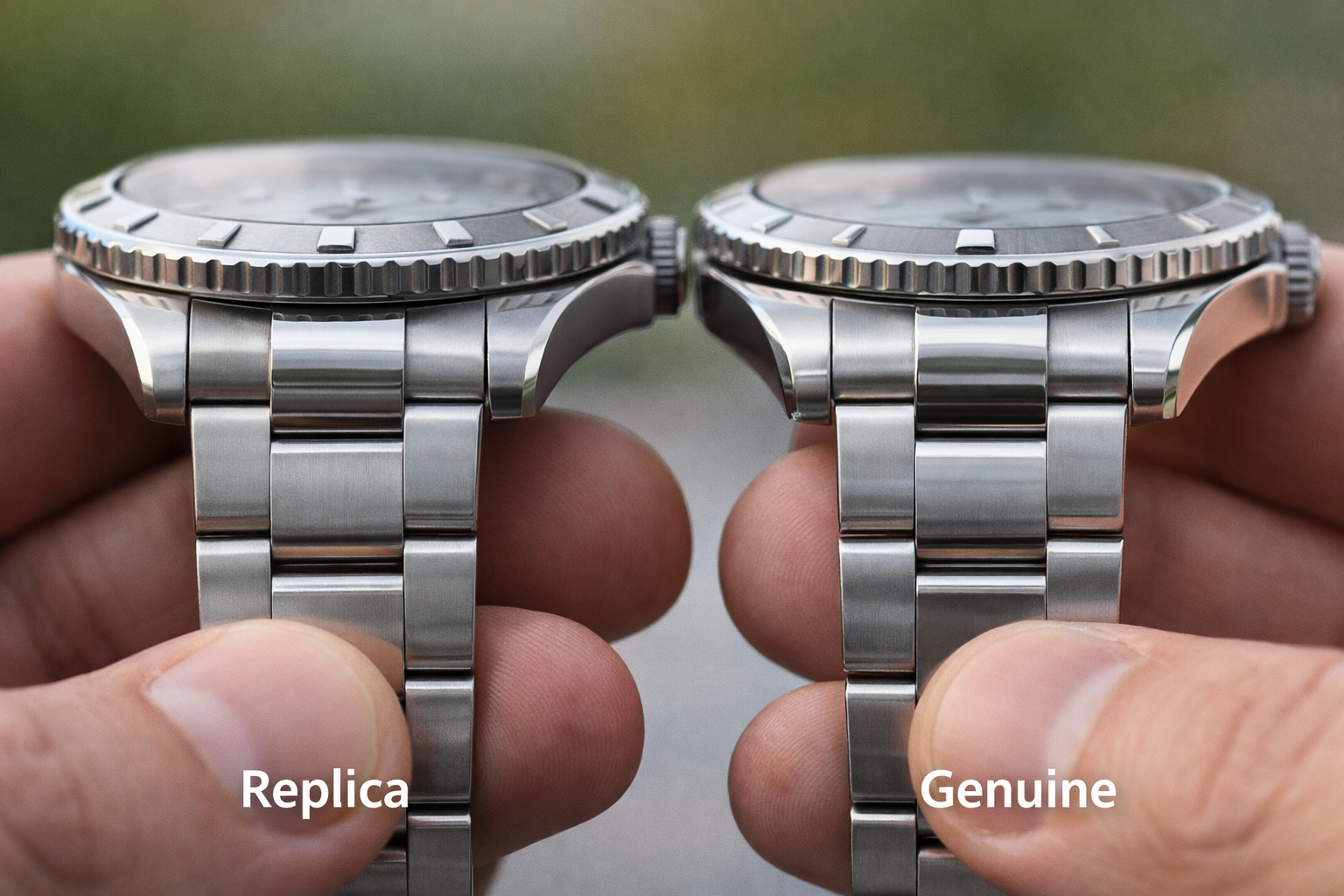
For many people, the bracelet or strap is the first real difference they notice in daily wear.
This is not always about appearance. It is often about movement, comfort, and overall feel.
A bracelet that feels too light, too stiff, too sharp around the edges, or too noisy when it moves can change the whole impression of the watch very quickly. Even when the case shape and dial layout look close from a distance, the way the bracelet drapes over the wrist can make the watch feel either refined or disappointing.
In real life, people often notice:
- whether the bracelet sits smoothly or feels rigid
- whether the clasp closes with confidence or feels hollow
- whether the edges stay comfortable during all-day wear
- whether the watch shifts too much while walking or commuting
- whether the strap style matches the watch naturally
In an office setting, a bracelet that constantly slides or pinches the wrist becomes obvious faster than a tiny dial detail. In summer, sweat makes this even more noticeable. A bracelet that seems fine indoors can feel very different during a hot day outside or while traveling.
That is one reason bracelet quality affects the wearing experience more than many beginners expect. Comfort affects confidence, and confidence affects how premium a watch feels on the wrist.
2. Case Finishing Becomes More Obvious in Natural Light
Case finishing is one of those details that may not stand out immediately indoors, but becomes easier to notice once the watch is worn under different lighting conditions.
Under direct sunlight or near a window, polished and brushed surfaces begin to reveal how cleanly the watch has been finished. This includes:
- the sharpness of transitions between brushed and polished areas
- how evenly the surfaces reflect light
- whether edges look crisp or soft
- whether the case shape feels clean and intentional
A genuine watch often feels more visually settled. The finishing usually works together in a more controlled way. On the wrist, this does not always mean the difference is dramatic from far away, but it can create a stronger overall impression.
A very common example is someone wearing a watch to work and feeling good about it indoors, then stepping outside and noticing that the case reflects light in a flatter or harsher way than expected. That is often when finishing starts to matter more.
A watch does not need to be flashy to look expensive, and that is one of the biggest lessons behind understanding what makes a watch look expensive in real life. In many cases, it is the quality of surface transitions and the way the case handles light that creates that feeling.
3. Dial Sharpness Is More Noticeable Than Many People Think
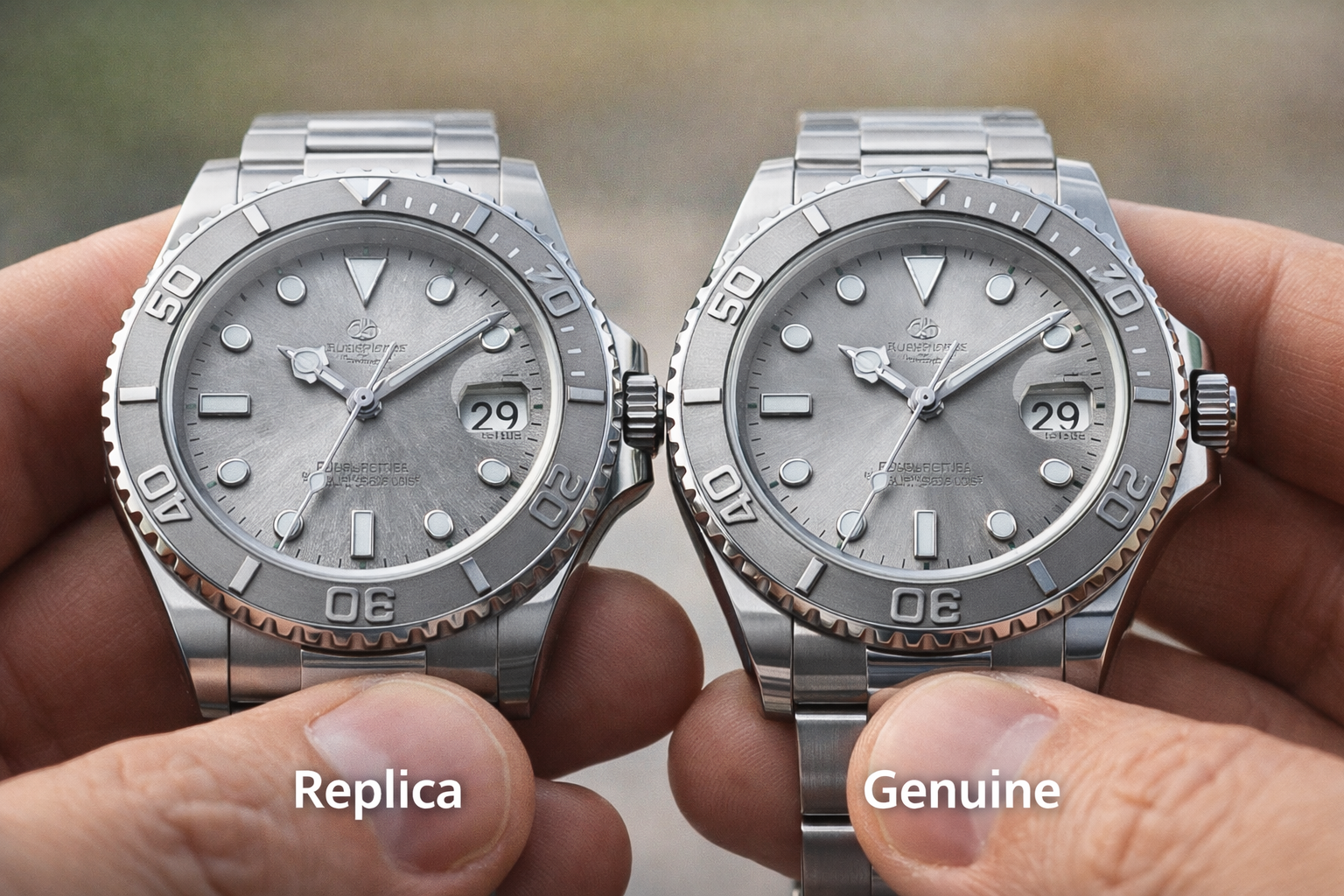
Not everybody notices dial details from across the room. But at closer social distance, dial sharpness matters.
This includes:
- marker alignment
- printing clarity
- hand shape and proportion
- date window framing
- texture consistency on the dial
- how clean the text appears under light
At first glance, many watches can look similar. But once someone is sitting across a table or looking during a conversation, the dial starts to communicate quality. A cleaner dial usually feels calmer and more expensive. A dial with softer printing, uneven spacing, or weaker textures may still look good overall, but not as convincing up close.
This becomes especially relevant in formal situations. If you are wearing the watch with a shirt or jacket, the watch often becomes visible at a closer angle when your hand moves. In those moments, dial sharpness contributes a lot to the first impression.
That is why dial design is not only about style. It is also about execution. Sometimes a simpler dial with cleaner finishing feels more premium than a busier one with more details but less control, which also connects closely to a practical watch dial color and readability guide.
4. Crystal Clarity Quietly Changes the Whole Watch
This is one of the most underrated differences in daily wear.
A watch crystal changes how the dial is seen. If the crystal has stronger glare, less clarity, or weaker viewing angles, the whole watch can feel less sharp even if the dial itself is decent.
In normal life, this shows up when:
- checking the time outdoors
- sitting under bright office lights
- moving between indoor and outdoor spaces
- glancing at the watch from an angle instead of straight on
A better crystal helps the dial feel more open and cleaner. A weaker crystal can make the watch feel more reflective, cloudy, or visually closed. Beginners often focus heavily on case shape or dial color, but crystal performance quietly changes the overall wrist impression more than expected.
When people say a watch looks more premium in person, crystal clarity is often part of that reaction, even if they do not describe it directly.
5. Weight Balance Matters More Than Total Weight
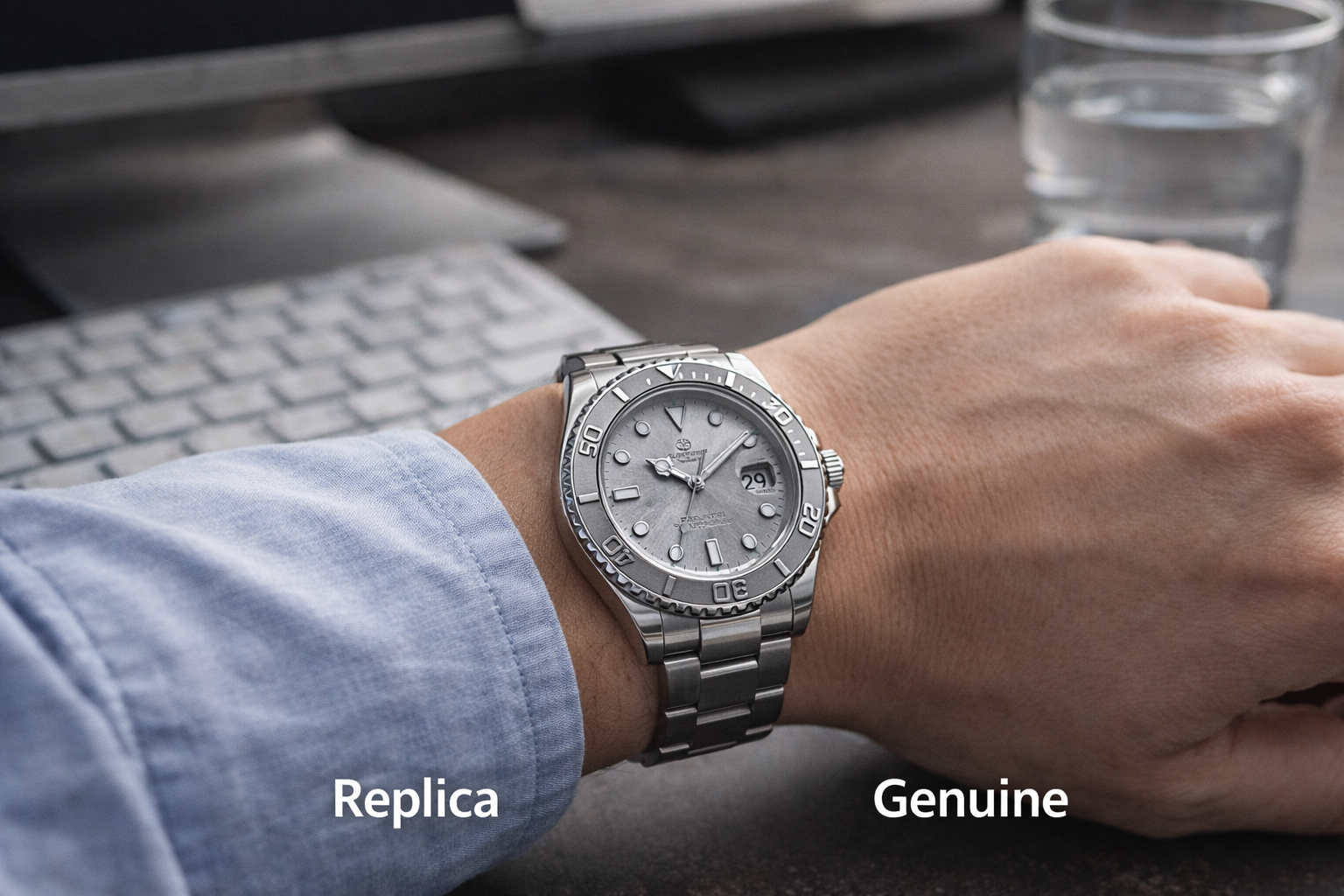
A lot of people assume a heavier watch automatically feels better. That is not always true.
What often matters more is weight balance.
A watch can have satisfying weight and still feel awkward if:
- the case feels too top-heavy
- the bracelet does not balance the head properly
- the watch shifts too much during movement
- the overall size does not suit the wrist
This becomes more obvious during long office hours, commuting, or travel. A watch that feels impressive for five minutes can become inconvenient after several hours if the balance is wrong.
This is one reason proportions matter so much, especially if you have already gone through a full watch size guide: case diameter, lug-to-lug, and thickness. A watch that sits properly usually feels more refined, regardless of whether it is sporty, dressy, or more design-driven.
6. The Overall Feel Sometimes Matters More Than One Detail
Interestingly, the difference is not always about one obvious flaw. Sometimes it is about the whole feeling on the wrist.
Some watches look visually correct, but still do not create the same wrist presence. They may feel:
- slightly flat
- too bright in the wrong way
- too sharp in some areas and too soft in others
- lacking depth on the dial
- less natural in the way they catch light
This is difficult to explain in photos, but easier to feel during regular wear. A watch can be close in design and still feel less convincing because the finishing, proportions, or visual depth do not come together naturally.
That is why people often say, “It looked good online, but different in person.” In many cases, that feeling comes from overall refinement rather than one single visible defect.
7. Most Casual Observers Notice Less Than Enthusiasts Think
This point matters because many people overestimate how closely others pay attention.
In daily life, most casual observers do not analyze:
- exact dial print thickness
- minor bezel details
- tiny font differences
- movement decoration
- small finishing issues only visible from very close distance
What they are more likely to notice is:
- whether the watch suits the wearer
- whether it looks balanced on the wrist
- whether it appears clean and refined
- whether it works with the outfit and setting
- whether it feels natural for everyday use
So yes, enthusiasts can notice far more. But in normal situations, overall impression usually matters more than microscopic detail.
That is why a watch that fits the wrist properly and suits the wearer’s lifestyle often creates a better impression than one with the “right” technical details but the wrong proportions, which is also a core idea in how to choose your first watch.
8. Where the Differences Become Easier to Notice
Not every environment reveals the same things. Some settings make differences easier to see.
Office lighting
Dial clarity, crystal glare, and bracelet comfort become more noticeable during long desk hours.
Outdoor daylight
Case finishing, crystal reflections, and dial texture are easier to judge.
Hot weather
Bracelet comfort, clasp feel, and how the watch sits on sweaty skin matter much more.
Formal wear
Dial sharpness, proportion, and how neatly the watch fits under a cuff become more important.
Travel
Weight balance, comfort, and versatility are noticed more than tiny visual details.
This is why daily life is a better standard than close-up photography alone. A watch is experienced across many situations, not just one angle.
So, What Differences Really Matter Most?
If we reduce the question to practical reality, the most noticeable day-to-day differences are usually these:
Most noticeable in real life
- bracelet or strap comfort
- clasp feel
- case finishing in natural light
- crystal clarity
- weight balance
- overall refinement on the wrist
Less noticeable for most people in daily life
- very small dial print differences from far away
- tiny dimensional variations
- hidden technical details
- microscopic finishing issues only visible under close inspection
That does not mean those smaller details are meaningless. It simply means they are often less important than wearability, balance, comfort, and visible finishing in normal daily use.
How to Judge a Watch More Realistically
If you want to think about this topic in a more practical way, ask these questions instead of only looking at close-up photos:
1. How does it look in normal lighting?
Not studio lighting. Regular room light, daylight, and office light tell you much more.
2. How does it sit on the wrist?
A watch can look visually similar but wear very differently.
3. Does the bracelet or strap feel natural all day?
Comfort problems usually show up faster than tiny cosmetic flaws.
4. Does the crystal help or hurt the dial?
Too much glare changes the watch more than many people expect.
5. Does the watch still feel convincing after hours of wear?
First impression and long-term impression are not always the same thing.
This practical approach usually tells you more than technical comparison lists alone.
Final Thoughts
The difference between a replica watch and a genuine watch is not always something people instantly notice from across the room. In real daily life, the most noticeable differences are usually not the tiny details people obsess over online. They are the details that affect wearing experience and overall wrist impression: bracelet feel, finishing, crystal clarity, balance, and visual refinement.
That is why this question matters to so many watch buyers. They are not only asking whether two watches look similar in photos. They are really asking what feels different once the watch is worn to work, on a commute, during travel, in summer weather, or at a formal dinner.
And in most cases, that is where the real answer appears.
FAQ
Do most people notice the difference between a replica and a genuine watch?
Most casual observers notice much less than enthusiasts think. In daily life, people are more likely to notice overall appearance, fit, and refinement than tiny technical details.
What part of a watch usually gives away lower quality first?
Bracelet feel, clasp quality, crystal glare, and case finishing are often noticed before small dial details.
Are dial differences obvious in daily wear?
Sometimes, but usually only at closer social distance or under good lighting. From farther away, overall impression matters more.
Does watch weight always make a watch feel more premium?
No. Good weight balance matters more than total weight. A heavy watch can still feel awkward if it does not sit properly on the wrist.
Is lighting important when judging a watch?
Yes. Outdoor light, office light, and angled viewing can reveal much more than studio photos.
