
Replica vs Genuine Watches: Which Details Are Easier to Notice in Sunlight?
Replica vs Genuine Watches: Which Details Are Easier to Notice in Sunlight?
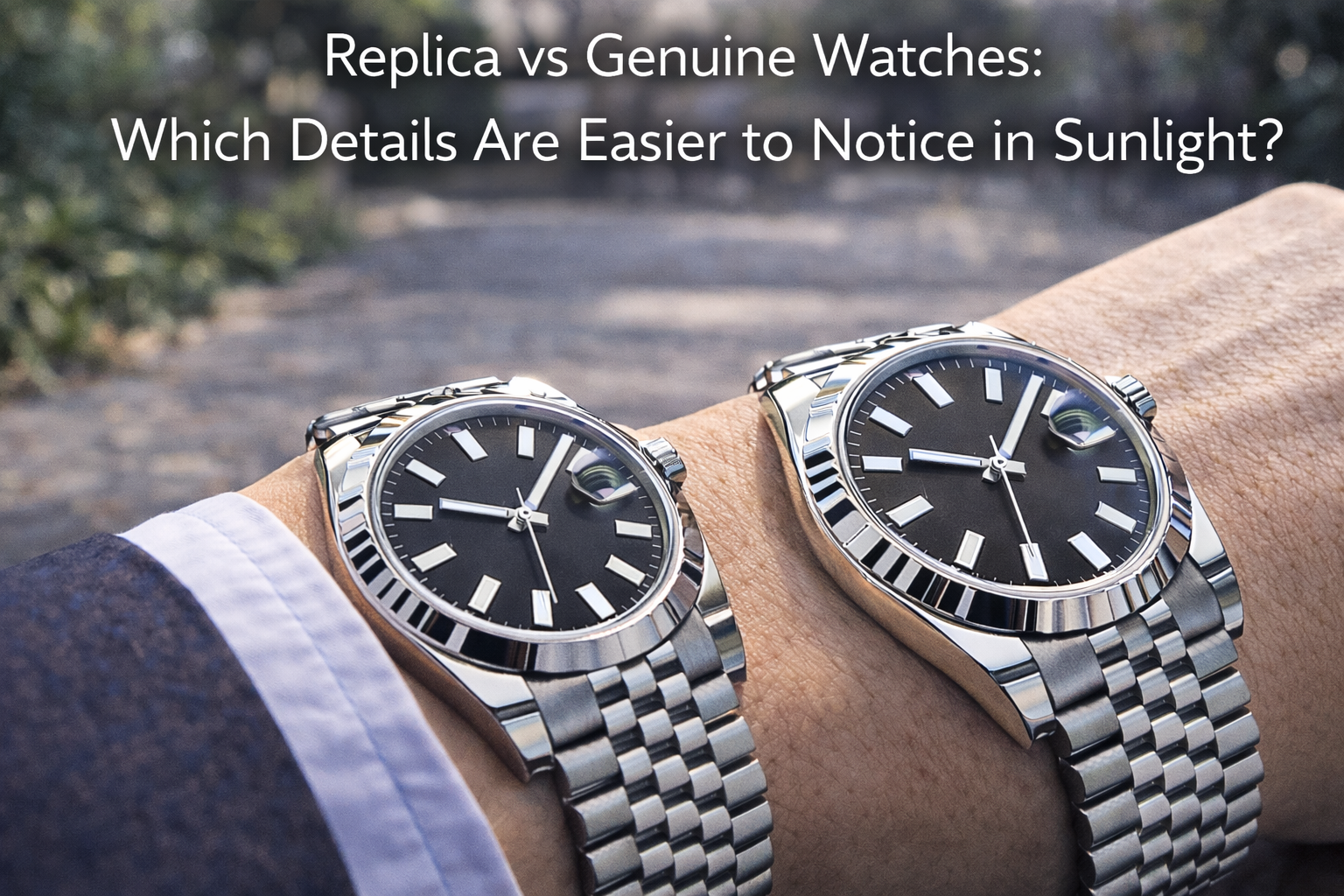
A lot of watch comparisons happen indoors.
People look at watches under soft room lighting, office light, or dim café lighting and come away thinking two pieces look very similar. Then they step outside, sunlight hits the wrist, and suddenly the watch feels different.
Not always dramatically different.
Not always in a way casual observers can explain.
But different enough that many buyers notice it almost immediately.
That is why sunlight matters so much.
Strong natural light reveals things that softer indoor conditions often hide. Surface transitions become clearer. The crystal behaves differently. Dial textures either come alive or fall flat. Polished areas may start looking sharper, harsher, cleaner, or more uneven depending on how well the watch is made.
So this is the real question: when a replica watch and a genuine watch are seen in sunlight, which differences actually become easier to notice?
This matters because most buyers are not only thinking about close-up comparison photos. They are wondering what happens in real life — during commuting, while walking outside, near a window, during travel, or when the watch catches daylight for a moment under normal use.
If you have already read our article on what makes a watch look expensive or our earlier guide on replica vs genuine watches in daily life, you already know that the biggest visible differences are usually not the most talked-about details online. They are the details that affect how the whole watch behaves on the wrist.
Quick Answer
In sunlight, the differences that usually become easier to notice between replica and genuine watches are case finishing, crystal glare, dial texture, edge sharpness, bracelet reflections, and the overall way the watch handles light. From normal distance, many small technical details still remain subtle, but natural light often makes build quality and visual refinement much easier to judge.
Why Sunlight Changes the Comparison
Indoor light hides a lot.
Soft lighting tends to flatten reflections and reduce contrast between surfaces. A polished edge may look smoother than it really is. A dial texture may appear deeper than it actually feels in person. Crystal glare may not show up until the watch is tilted outdoors.
Sunlight does the opposite.
It tends to reveal:
- sharper reflections
- uneven finishing
- dial depth or lack of it
- strong or weak crystal clarity
- how cleanly the case transitions between surfaces
- how the bracelet catches and breaks light
This is why some watches look very convincing indoors but less refined outside. It is also why sunlight is one of the most honest ways to judge whether a watch really feels expensive on the wrist.
1. Case Finishing Becomes Easier to Read
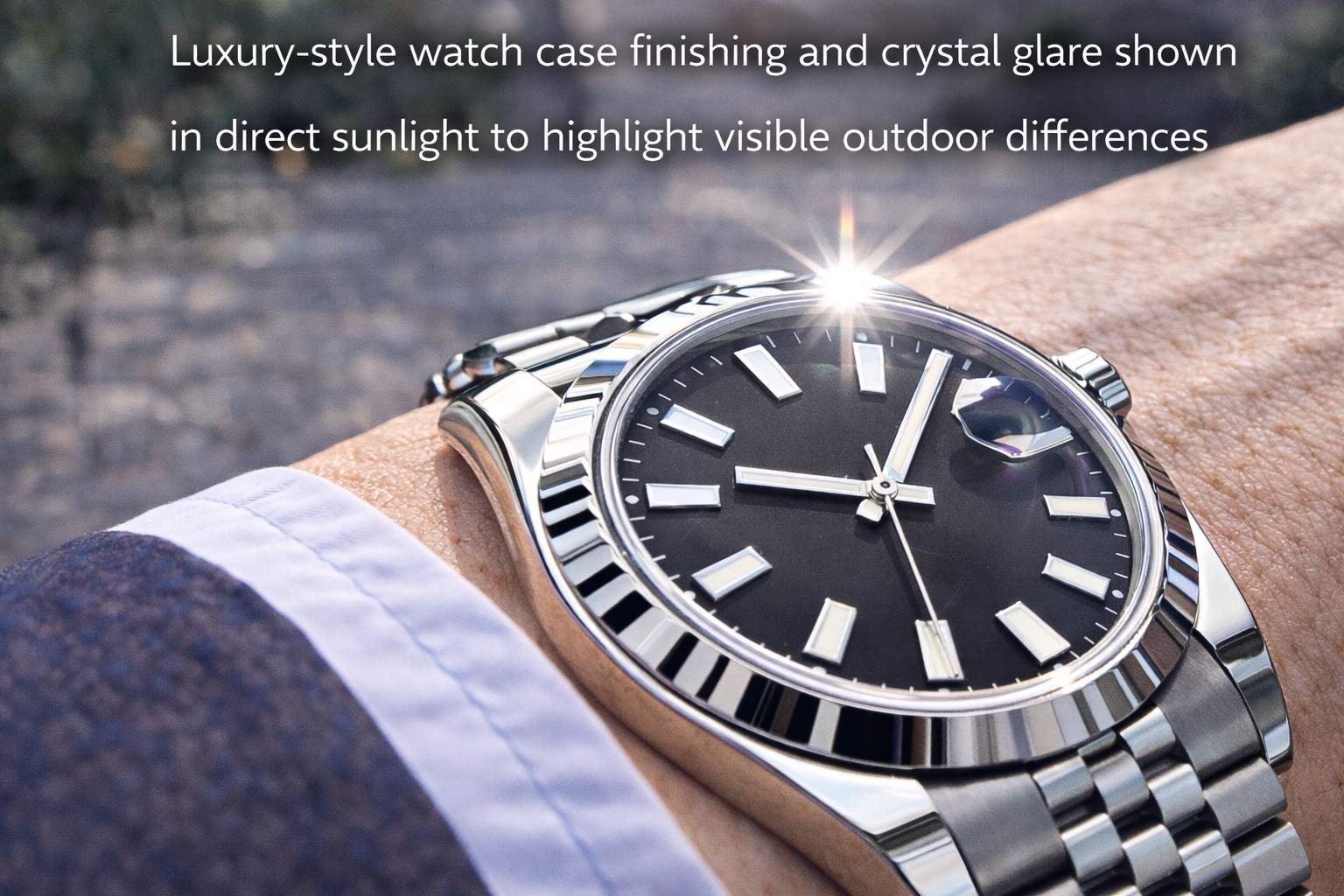
One of the first things sunlight reveals is case finishing.
When a watch is outside, the transitions between brushed and polished surfaces become more visible. This includes:
- whether the brushing looks clean and directional
- whether polished edges feel crisp or soft
- whether the case flanks reflect evenly
- whether corners look deliberate or slightly rounded off
- whether the whole case feels sharp or slightly undefined
A genuine watch often feels more controlled here. The surfaces usually look more settled under strong light. A replica may still look good overall, but sunlight can make small finishing inconsistencies more noticeable.
This is especially obvious on watches with:
- polished bezel edges
- fluted bezels
- brushed upper lugs
- polished case sides
- integrated bracelet shapes where the case transitions matter a lot
This is one reason people sometimes feel a watch looks “better indoors than outside.” It is often the finishing, not the design, that changes the impression.
2. Crystal Glare Often Gives Away More Than People Expect
Crystal performance is one of the most underrated parts of this comparison.
Under indoor light, many crystals seem acceptable. But in sunlight, the difference between a cleaner crystal and a weaker one can become much easier to notice.
What usually shows up outdoors:
- stronger glare across the dial
- more distortion at certain angles
- reduced clarity when glancing quickly
- a dial that feels more closed or cloudy
- inconsistent visibility depending on wrist position
A better crystal usually keeps the dial feeling more open and legible in motion. A weaker one may suddenly create too much reflection, making the watch feel less refined even if the dial design itself is strong.
This is one of those details casual observers may not describe directly, but they often react to it. A watch with better crystal performance tends to look calmer and more expensive in natural light.
3. Dial Texture Either Comes Alive or Falls Flat
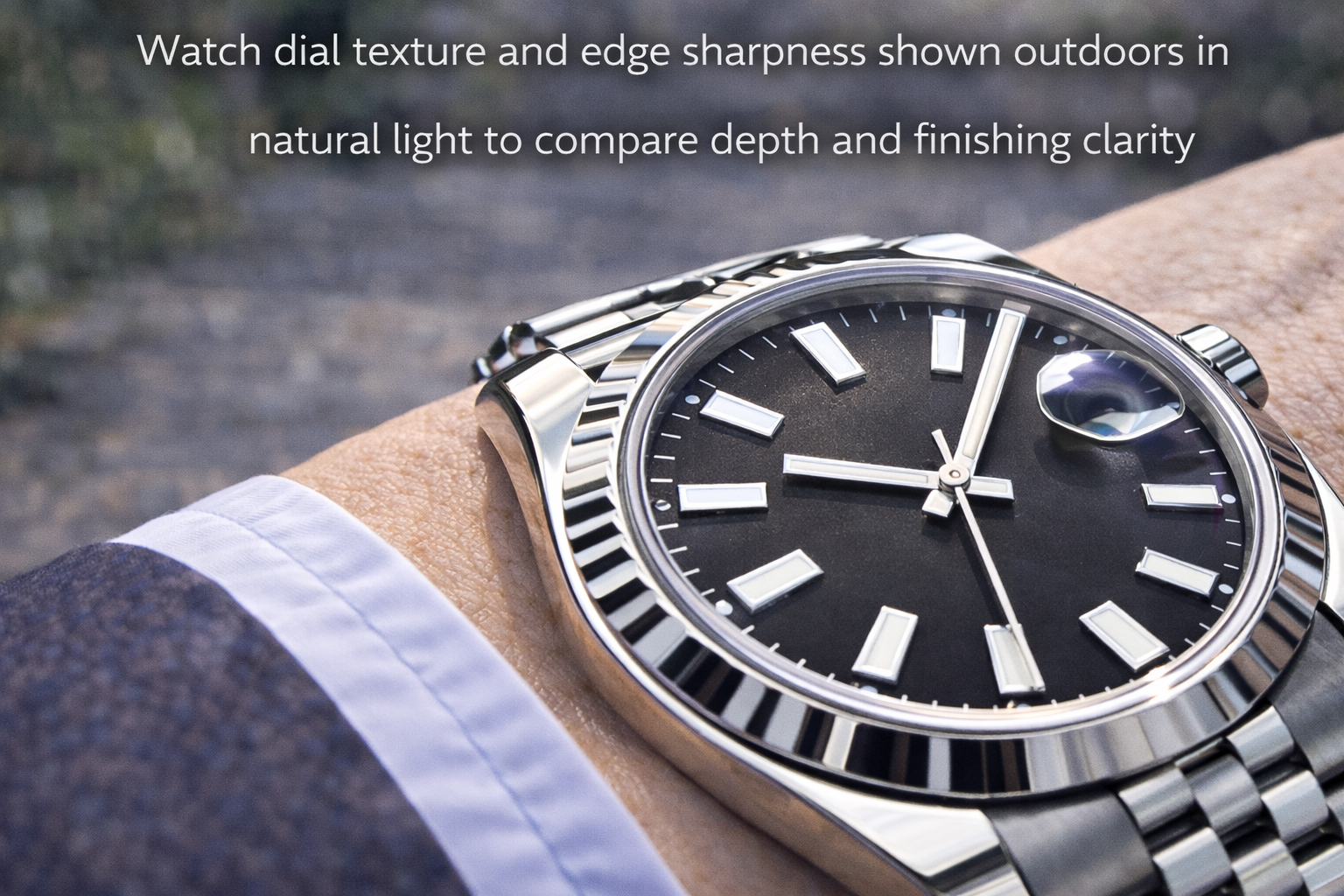
Sunlight is also where dial texture starts telling the truth.
Some dials become richer outdoors. Others become flatter than expected.
This is especially noticeable on:
- sunburst black dials
- textured blue dials
- matte surfaces
- patterned or stamped dials
- watches where the dial is supposed to create depth
In natural light, you start noticing:
- whether the dial texture feels deep or shallow
- whether the color has life or just darkness
- whether the pattern looks controlled or slightly dull
- whether the hands and markers sit cleanly against the dial
- whether the dial changes beautifully with angle or just looks inconsistent
That is why sunlight often changes how premium a watch feels. A dial that looks sophisticated indoors may feel surprisingly flat outdoors if the texture is weaker than expected.
This is also very closely tied to a practical watch dial color and readability guide. Color is not the only issue. Depth and light response matter just as much.
4. Edge Sharpness Becomes More Visible
Edge quality is another detail that becomes easier to notice outside.
This includes:
- the crispness of the lugs
- the sharpness of bezel edges
- the way polished lines are defined
- how cleanly the bracelet meets the case
- whether the watch looks architecturally precise or slightly softened
Sunlight exaggerates these transitions.
A genuine watch often feels cleaner here because the edges look more intentional. A replica may still be visually close in overall design, but strong daylight can make the whole watch feel a little softer or less resolved.
This is not always something people spot consciously from across the street. But at closer distance or normal social interaction outdoors, edge definition contributes a lot to whether the watch feels truly refined.
5. Bracelet Reflections Change the Whole Wrist Presence
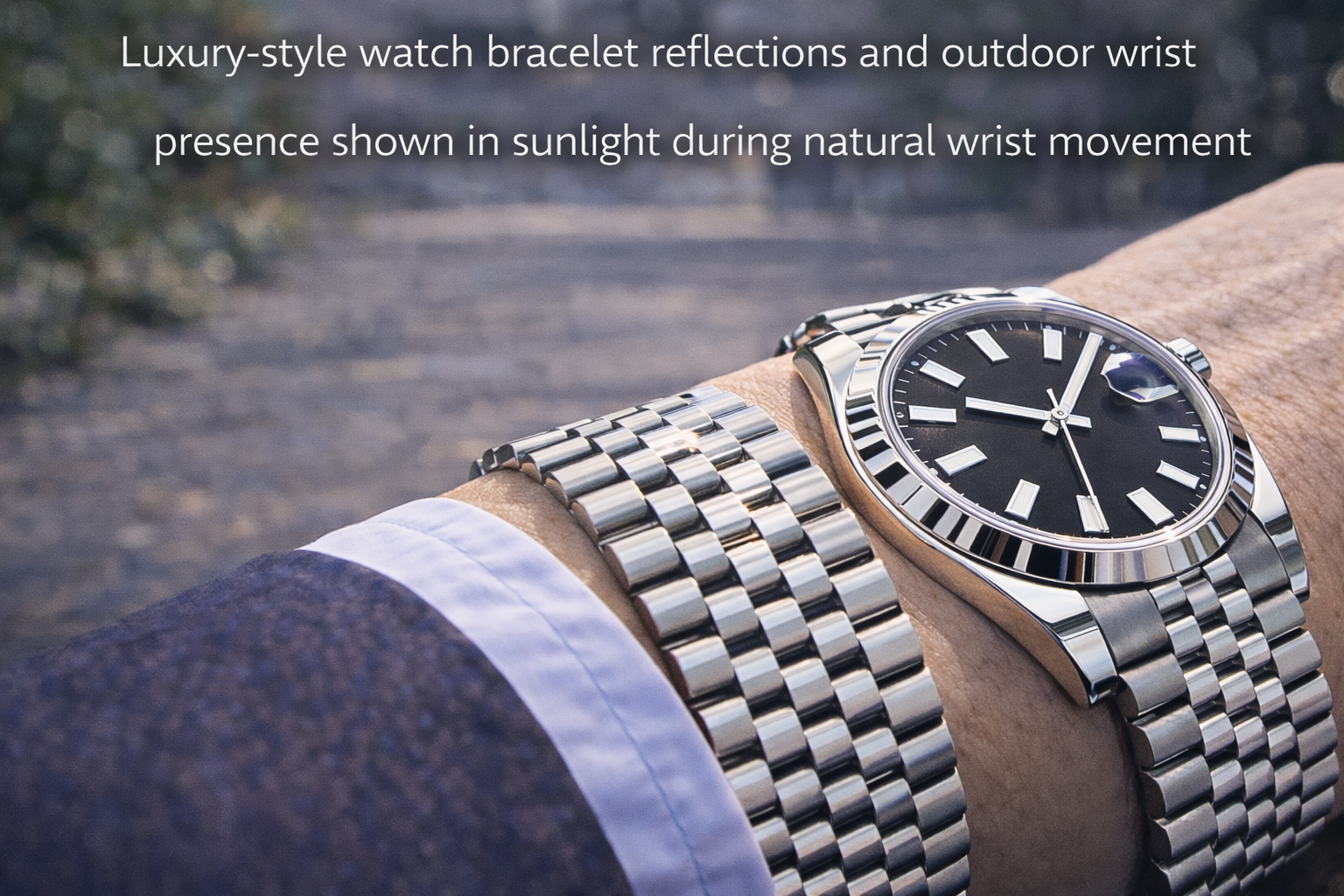
Bracelet behavior in sunlight matters more than many people think.
Because the bracelet moves constantly, it keeps catching and releasing light across a much larger area than the case alone. That means even small differences in finishing, brushing, and polish become easier to notice during real movement.
What tends to stand out in sunlight:
- whether the brushing looks smooth or dull
- whether polished links feel controlled or too bright
- whether the bracelet reflects as one coherent surface or feels visually noisy
- whether center links seem refined or slightly harsh
- whether the bracelet helps the watch feel expensive or overly shiny
This is especially obvious when walking, driving, or moving the wrist naturally. A bracelet that looked great sitting still indoors may feel too reflective or less refined outside. A stronger bracelet often feels more fluid and more expensive under daylight.
6. The Dial-Hand-Marker Balance Becomes Easier to Judge
Indoors, a dial may look clean just because the lighting is forgiving. Outdoors, the actual balance between the hands, markers, and dial becomes easier to judge.
This includes:
- whether the hands stand out clearly against the dial
- whether the markers feel properly proportioned
- whether polished markers catch light evenly
- whether the handset looks elegant or slightly too plain
- whether the date window breaks the balance awkwardly
Sunlight is often where a watch either feels visually complete or slightly off.
This is because daylight does not just brighten the watch. It increases the amount of visual information the eye receives. If the design is well balanced, the watch feels more refined. If the execution is weaker, the imbalance becomes easier to notice.
7. Fluted Bezels and Polished Details Get Exposed Fast
If a watch has a fluted bezel, polished bezel, or very reflective outer surfaces, sunlight becomes one of the fastest honesty tests.
These parts catch light immediately, so they reveal:
- how cleanly the cuts or ridges are defined
- whether the polish feels crisp or slightly soft
- whether reflections look elegant or overly harsh
- whether the bezel adds richness or visual noise
This is why some bezel-heavy designs can look very strong indoors but less convincing outdoors if the finishing quality is not at the same level.
For buyers comparing designs that rely on polished details for their character, sunlight often shows more than indoor conditions ever will.
8. Casual Observers Still Notice the Overall Effect, Not Every Detail
This point matters because people often overestimate how much others will analyze a watch outdoors.
Most casual observers still will not notice:
- small font differences
- tiny alignment issues
- subtle case dimension changes
- microscopic detail variation
What they are more likely to notice is:
- whether the watch feels sharp or slightly flat
- whether it looks clean in the light
- whether it appears balanced on the wrist
- whether the bracelet feels refined or too shiny
- whether the dial stays readable and attractive outdoors
So even in sunlight, the biggest change is usually not that everyone suddenly spots technical flaws. It is that the overall impression becomes easier to judge.
That is the part buyers care about most in real life anyway.
9. Where Sunlight Makes the Biggest Difference
Not all situations reveal the same things. These are the moments where sunlight tends to matter most:
Walking outdoors
Natural movement plus changing angle reveals bracelet and crystal behavior.
Sitting near a window
Side light makes case edges, polish, and dial texture easier to judge.
Commuting
Quick glances outdoors show how readable and controlled the watch feels.
Travel
Open daylight reveals whether the watch still feels versatile and refined.
Casual conversation outside
Closer social distance plus natural light make finishing differences more obvious.
That is why daylight is such a practical test. It reflects how a watch is actually seen in normal life, not just how it looks in product photography.
What Sunlight Usually Does Not Reveal Clearly
Even though sunlight is useful, it still does not magically expose everything.
It usually does not make these instantly obvious for most people:
- small movement differences
- hidden internal construction
- tiny text variations unless viewed closely
- microscopic dial print imperfections
- very small case dimension changes
So sunlight helps, but it mainly reveals the parts that influence overall visual quality. It is not the same as magnified inspection.
How to Judge This More Realistically
If you want to think about sunlight differences in a more practical way, ask questions like:
1. Does the watch still look balanced outdoors?
Not just indoors or in photos.
2. Does the crystal help or hurt the dial?
Glare changes more than many buyers expect.
3. Do polished parts feel refined or too bright?
Controlled reflection usually looks more premium.
4. Does the dial gain depth or lose it in natural light?
This is where texture tells the truth.
5. Does the bracelet still feel expensive while moving?
Outdoor light often reveals whether the bracelet is really carrying the watch well.
This kind of practical judgment usually tells you more than technical comparison lists alone.
Final Thoughts
Sunlight does not suddenly make every difference between a replica watch and a genuine watch obvious. But it does make some of the most important real-life differences easier to notice.
Case finishing, crystal glare, dial texture, bracelet reflections, edge sharpness, and overall light behavior all become easier to judge outdoors than they are in soft indoor conditions.
That is why so many watches feel different the moment they leave the room.
And for buyers thinking about real-world wear, that difference matters much more than perfect macro photos ever will.
FAQ
Are replica and genuine watches easier to tell apart in sunlight?
Often yes, especially when it comes to finishing, crystal glare, dial texture, and bracelet reflections.
What part becomes most obvious in daylight?
Case finishing and crystal behavior are often among the first things people notice more clearly outdoors.
Does sunlight make small flaws easy to see?
It makes some quality differences easier to notice, but not every tiny flaw. Most casual observers still react more to the overall impression than to microscopic details.
Why do some watches look better indoors than outdoors?
Indoor light can hide glare, soften reflections, and make finishing look more even than it really is.
Is bracelet quality easier to judge in natural light?
Yes. Because the bracelet moves and catches light constantly, sunlight often reveals whether it feels refined or overly shiny.
