
What Size Watch Should You Wear? A Complete Guide to Finding the Perfect Fit
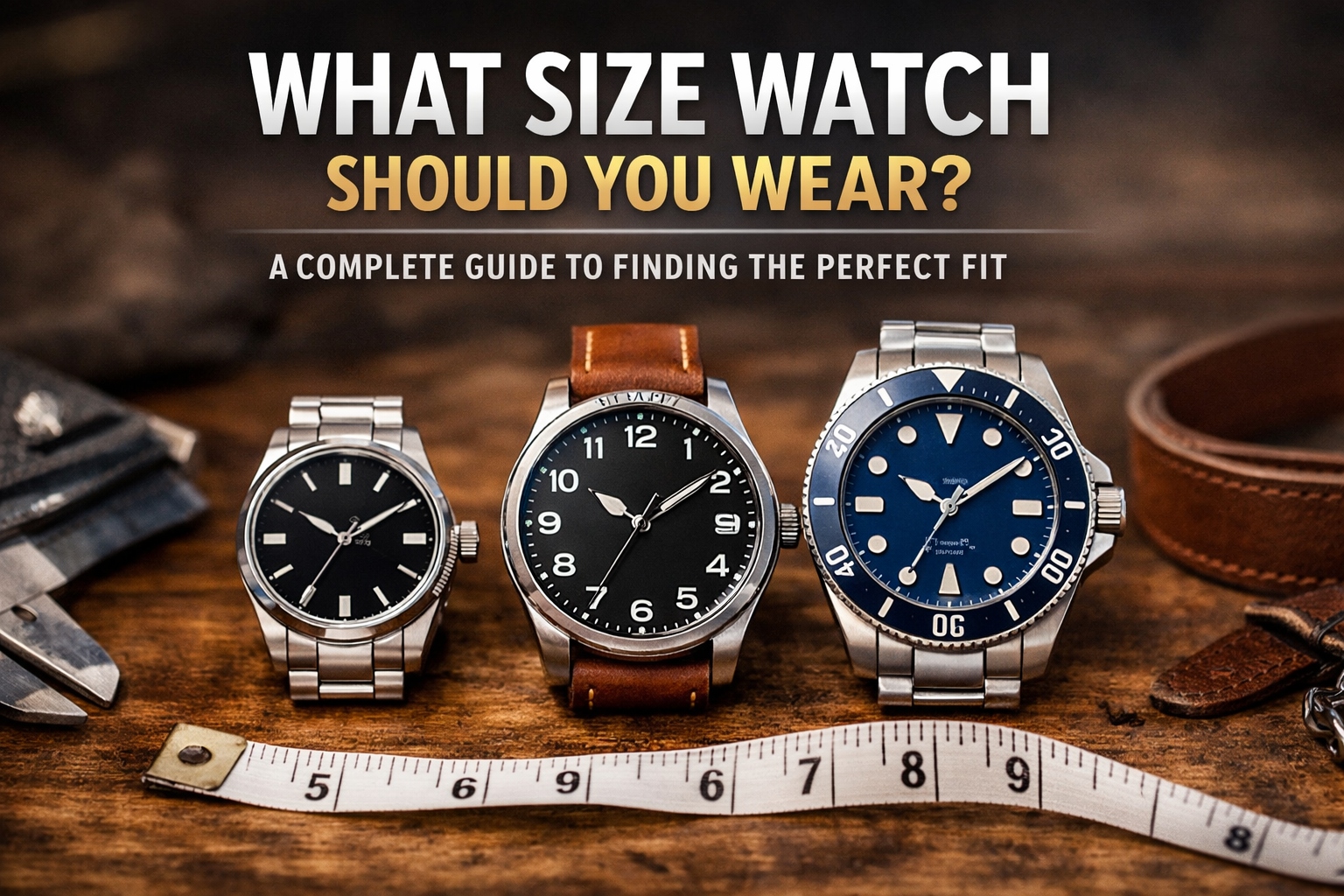
Introduction
Choosing the right watch size is just as important as choosing the right movement or design. A watch that is too large can feel uncomfortable and overpowering, while a watch that is too small may look out of proportion.
In this guide, we’ll explain how to determine the right watch size based on wrist measurement, case diameter, thickness, and personal style.
Why Watch Size Matters
Watch size affects:
-
Comfort
-
Visual balance
-
Daily wearability
-
Overall appearance
Even a high-quality watch can feel wrong if the size doesn’t match your wrist.
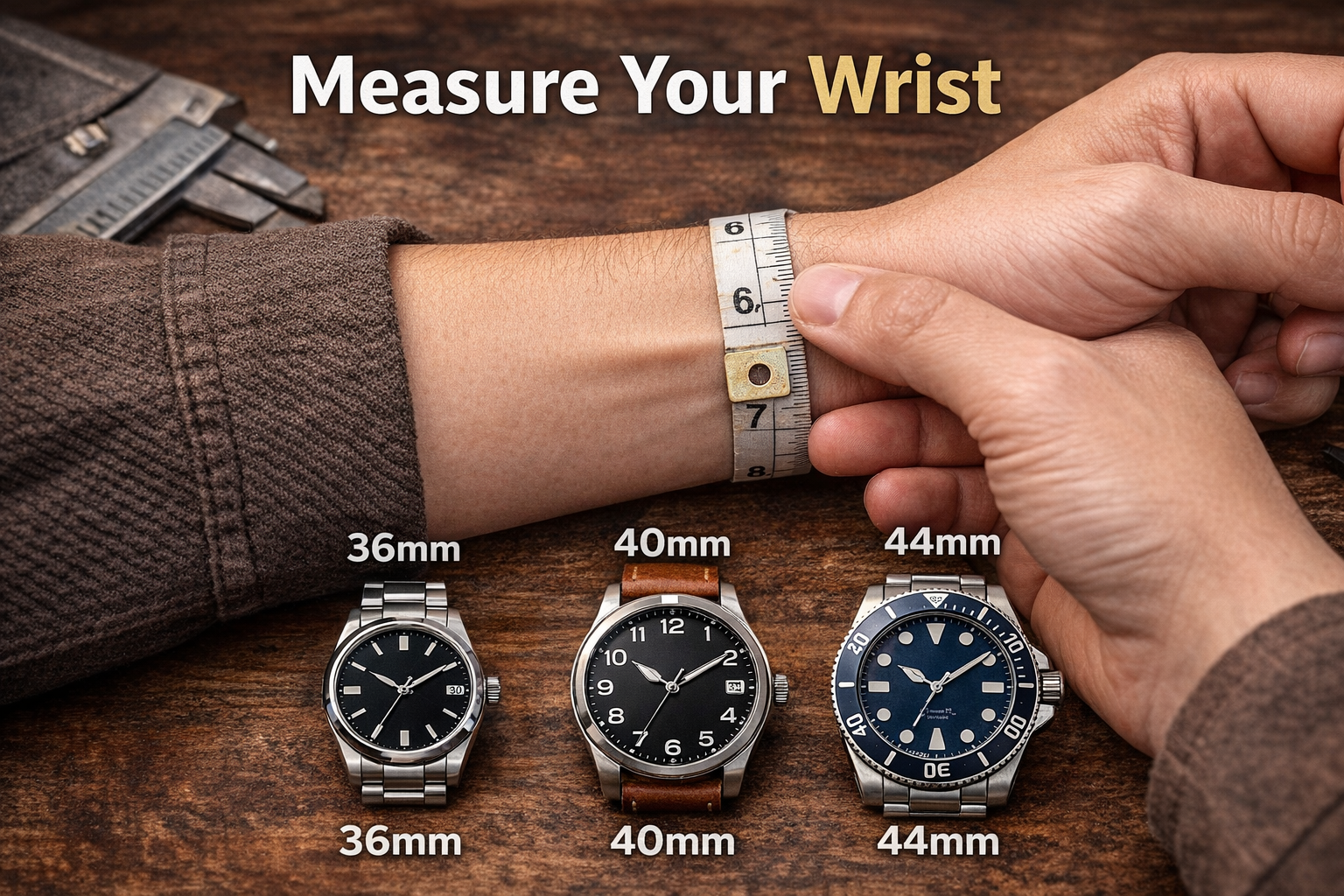
Step 1: Measure Your Wrist Size
Use a soft measuring tape and measure around your wrist just above the wrist bone.
General Wrist Size Guide
-
6 inches (15 cm) – Small wrist
-
6.5–7 inches – Medium wrist
-
7.5+ inches – Large wrist
Your wrist size determines which case diameter will look balanced.
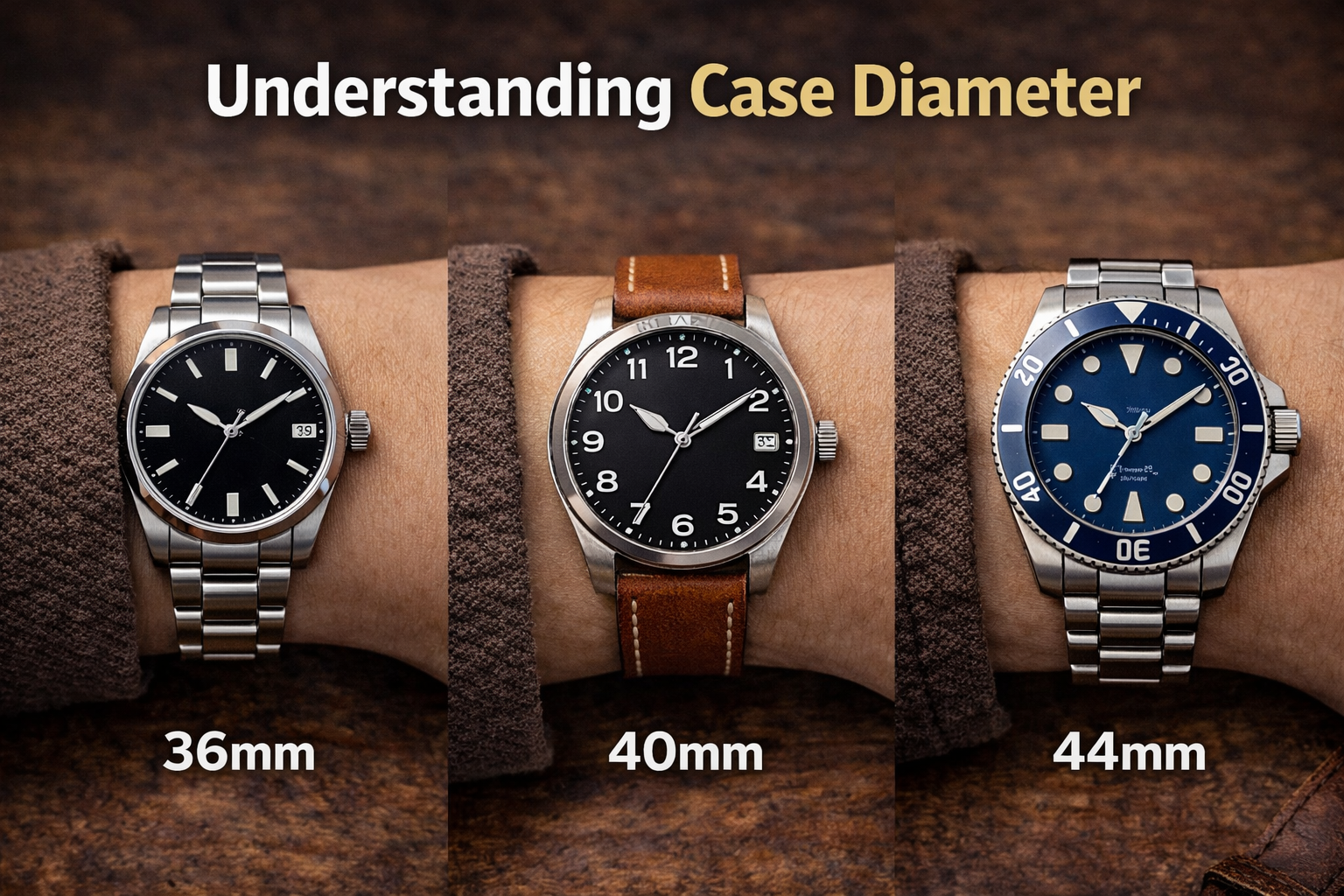
Step 2: Understanding Case Diameter
Case diameter is measured in millimeters (mm).
Common Watch Sizes
-
36–38mm → Classic & smaller wrists
-
39–41mm → Most versatile size
-
42–44mm → Larger wrists or sporty look
If you're new to watches, our guide on
How to Choose Your First Watch
can help you understand basic sizing principles.
Step 3: Watch Thickness Matters Too
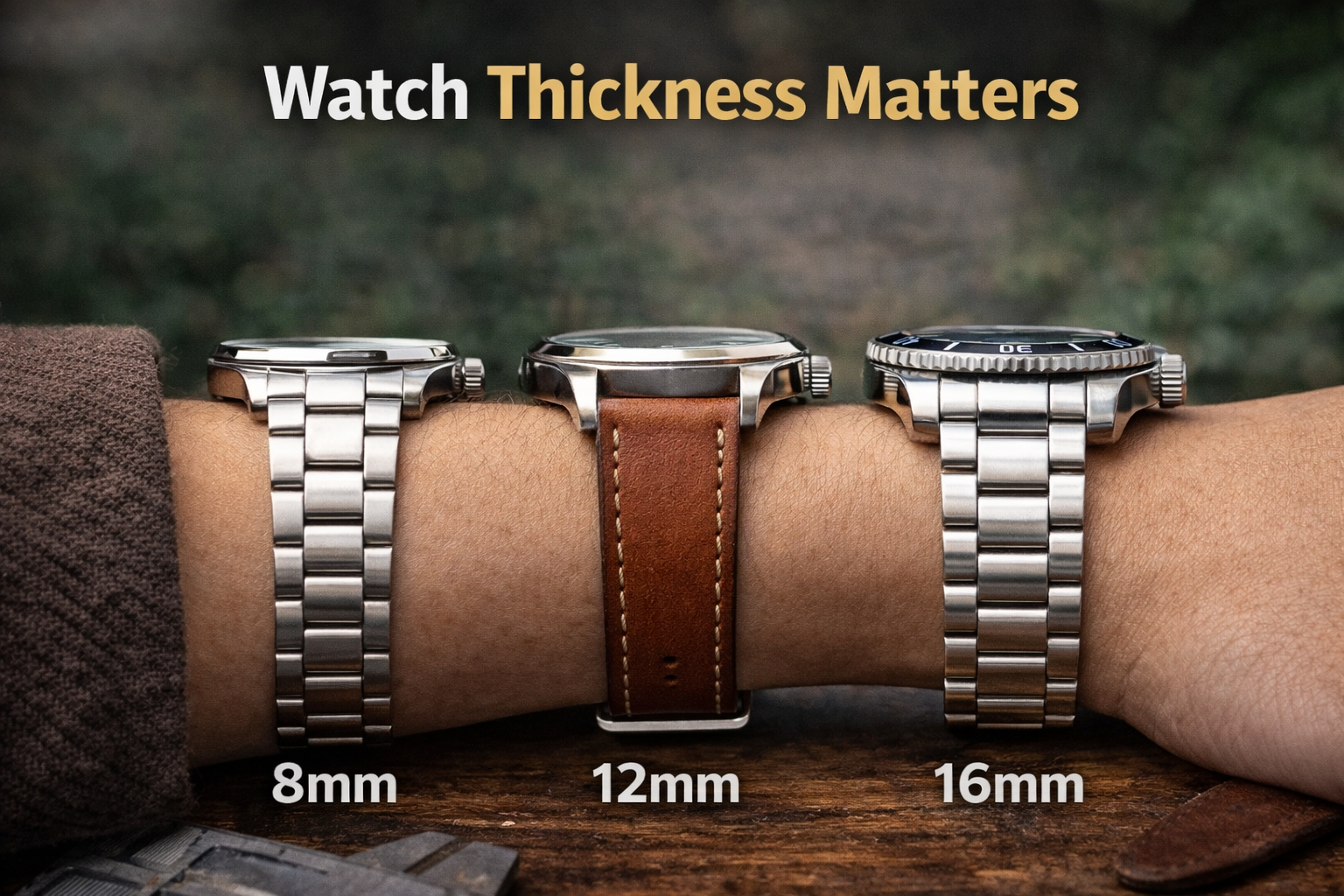
A watch may have the right diameter but still feel bulky if it's too thick.
-
Under 11mm → Slim and comfortable
-
12–14mm → Sporty but noticeable
-
15mm+ → Bold and heavy
Thickness becomes especially important for automatic watches due to the movement.
Learn more about movement differences in
Mechanical vs Quartz Watches: A Beginner’s Guide
Step 4: Lug-to-Lug Distance
Lug-to-lug refers to the total length from one end of the watch case to the other.
The watch should not extend beyond the width of your wrist.
This measurement often affects comfort more than diameter.
Step 5: Style and Personal Preference
Minimal watches often look better in smaller sizes.
Sport watches can look balanced in larger sizes.
There is no universal “perfect size” — only what fits your wrist and style.
Common Watch Size Mistakes
-
Choosing oversized watches because they look bold online
-
Ignoring thickness
-
Not measuring wrist size
-
Following trends instead of proportions
Final Thoughts
The right watch size depends on:
-
Wrist measurement
-
Case diameter
-
Thickness
-
Lug-to-lug distance
-
Personal style
Finding the perfect fit ensures comfort and confidence in everyday wear.
FAQ Section
Frequently Asked Questions
1. What is the most popular watch size?
39–41mm is currently the most versatile and widely worn size for most wrist types.
2. Is a 42mm watch too big?
It depends on wrist size. For smaller wrists under 6.5 inches, 42mm may feel oversized.
3. Does watch thickness matter?
Yes. A thick watch can feel heavy and may not slide easily under sleeves.
4. How do I measure my wrist for a watch?
Use a soft measuring tape and wrap it around your wrist just above the wrist bone.
5. Are smaller watches more elegant?
Generally, smaller watches are considered more classic and formal.
