
Why Do Some Watches Tick Loudly While Others Are Almost Silent?
Why Do Some Watches Tick Loudly While Others Are Almost Silent?
Quick Answer
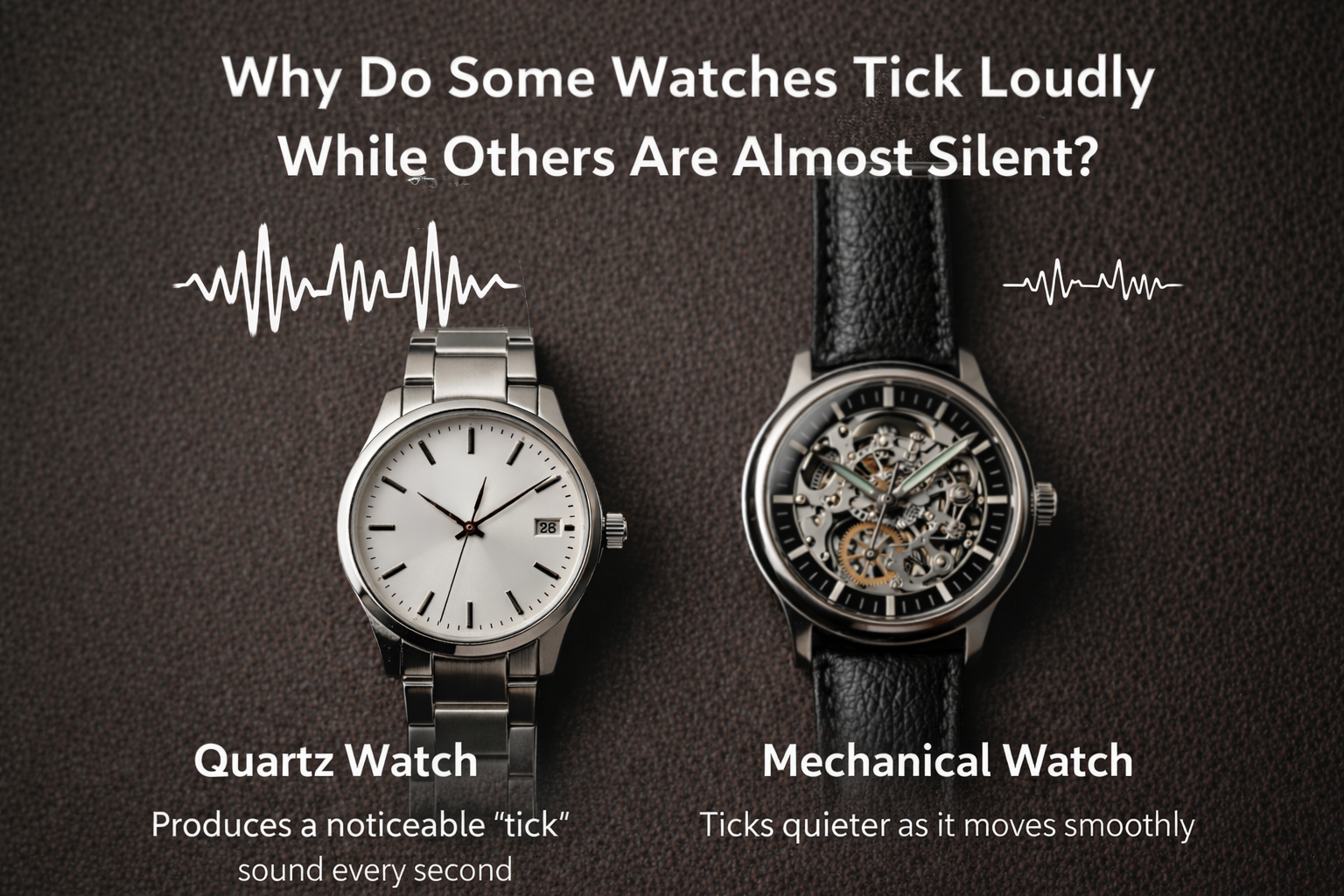
Some watches tick loudly because of their movement design. Quartz watches usually produce a noticeable ticking sound because the second hand moves once per second. Mechanical and automatic watches often appear quieter because their second hand moves in multiple smaller steps, creating a smoother motion.
Introduction
If you have ever worn different watches, you may have noticed that some make a noticeable ticking sound while others seem almost silent.
For some people, the ticking sound is comforting and traditional. For others, especially in quiet environments, it can be distracting. The sound level of a watch depends on several factors including the movement type, the case design, and even how the watch is worn.
Understanding why watches tick differently can help you choose a watch that better matches your comfort preferences.
1️⃣ Quartz Watches Usually Tick Louder
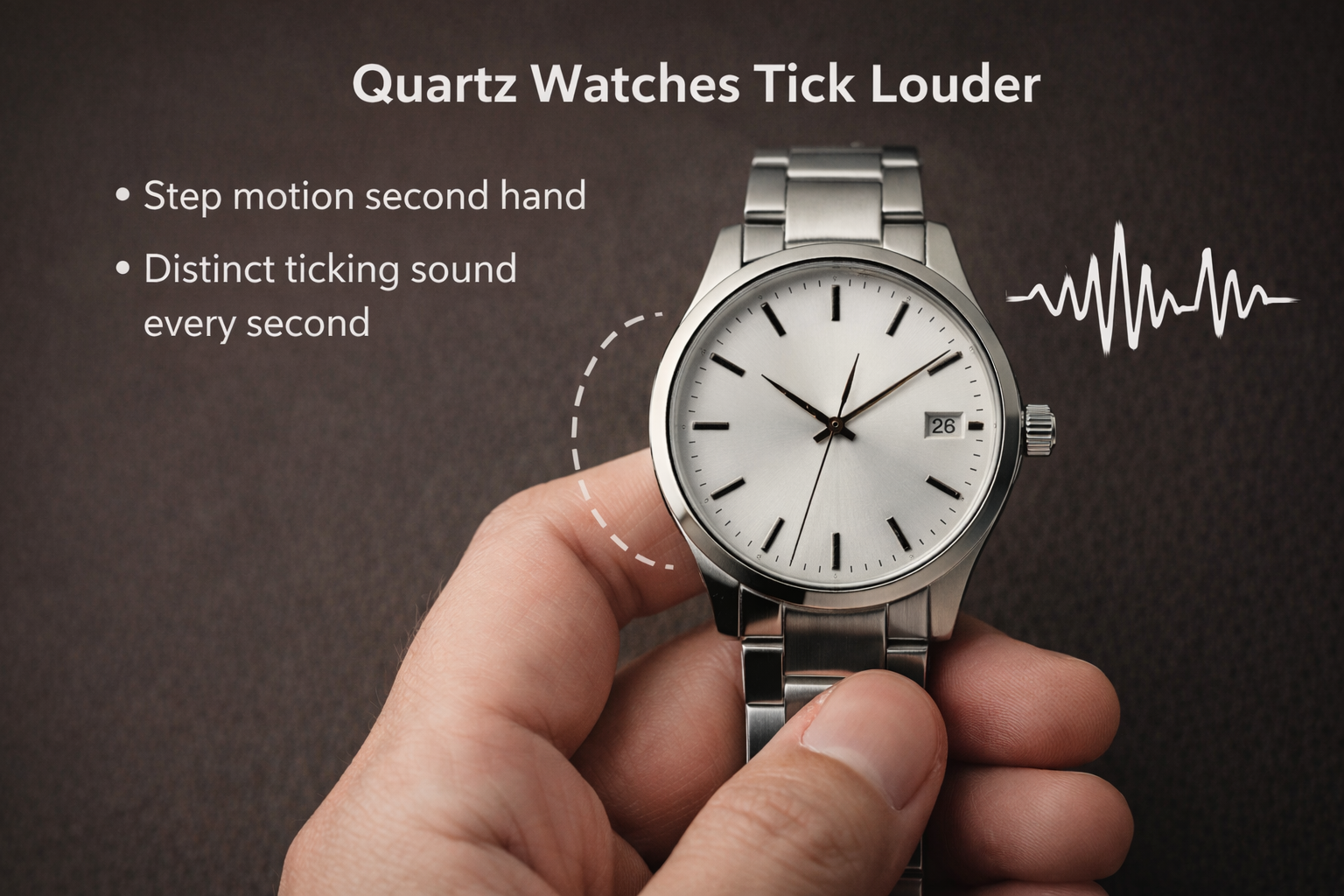
Quartz watches are powered by a battery and regulated by a quartz crystal. The movement sends a signal every second, causing the second hand to jump forward once per second.
This step movement is what creates the classic ticking sound many people recognize.
Because the movement activates once every second, the ticking sound can be easier to hear, especially in quiet environments.
Quartz watches are popular because they are:
-
Very accurate
-
Affordable
-
Low maintenance
If you want to understand how quartz watches compare to traditional movements, you may also want to read our guide on mechanical vs quartz watches.
2️⃣ Mechanical Watches Often Sound Different
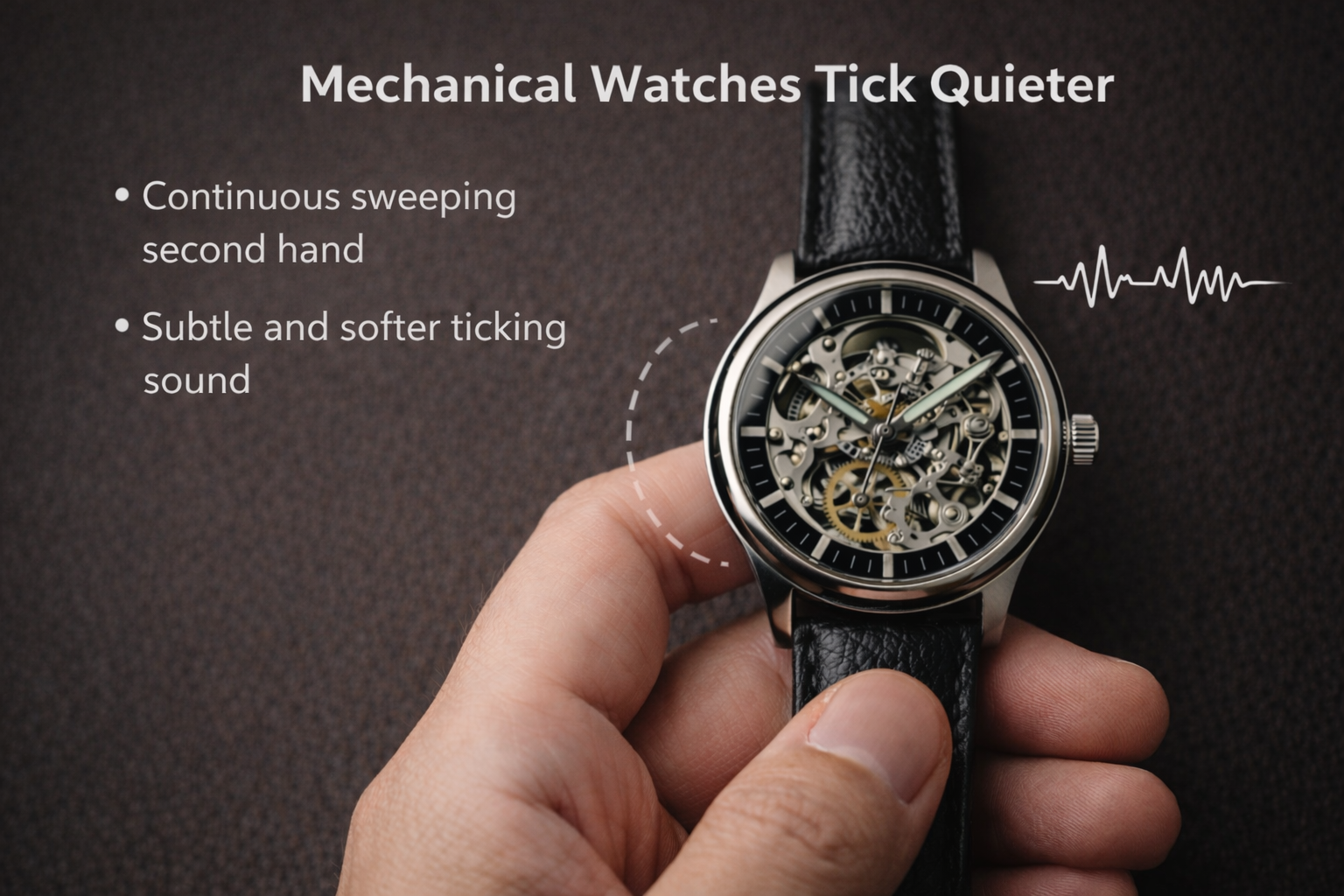
Mechanical watches operate using a complex system of gears, springs, and oscillations rather than electronic signals.
Instead of moving once per second, the second hand moves in several smaller steps each second. This creates a smoother sweeping motion.
Because the motion is continuous, the ticking sound is usually softer and less noticeable.
Mechanical watches are appreciated for their craftsmanship and traditional watchmaking design.
3️⃣ Watch Case Design Can Amplify Sound
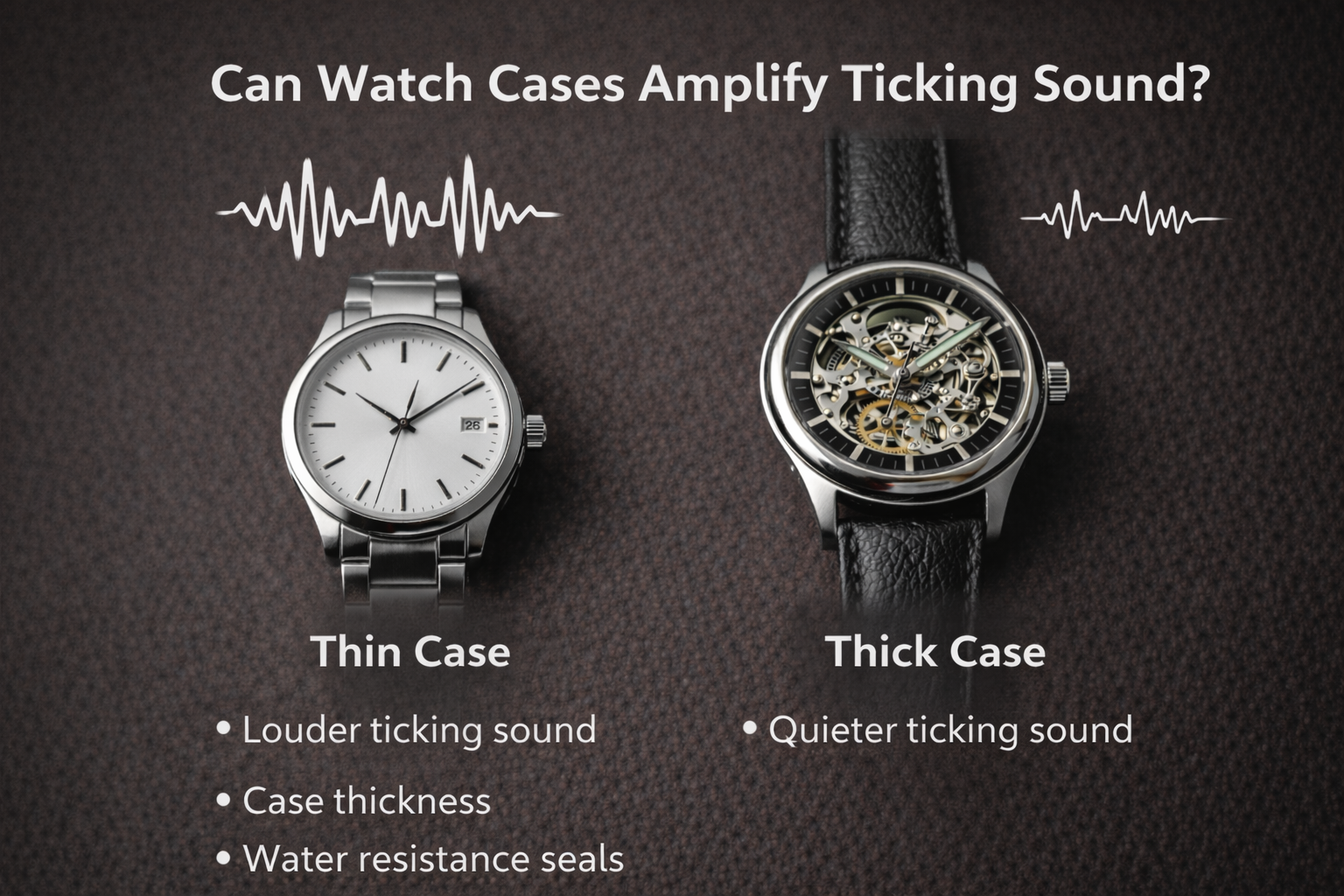
The watch case can also influence how loud the ticking sound feels.
Some cases act like small sound chambers that amplify internal movement noise.
Factors that affect sound include:
-
Case thickness
-
Case material
-
Case back design
-
Water-resistant seals
A thicker case often absorbs more vibration, making the ticking sound less noticeable.
4️⃣ Wrist Position and Environment Matter
Sometimes the ticking sound seems louder simply because of the environment.
For example:
-
In a quiet room the sound becomes more noticeable
-
When the watch is close to your ear you hear it more clearly
-
When the watch is placed on a desk the sound may echo slightly
Comfort is also related to watch size and fit. If you are choosing a new watch, it can help to understand how to choose the right watch size for your wrist.
5️⃣ Are Silent Watches Available?
Some watches are designed to minimize ticking noise.
Mechanical and automatic watches usually feel quieter because the second hand moves more smoothly. Certain quartz movements are also engineered to reduce the ticking sound.
If ticking noise bothers you, choosing a watch with smoother movement or a thicker case design may help reduce the sound.
Regular maintenance can also improve comfort and longevity. If you wear your watch daily, it is helpful to know how to clean a watch strap properly.
Conclusion
The ticking sound of a watch mainly depends on the movement type and case design. Quartz watches typically produce a more noticeable ticking sound because their second hand moves once every second. Mechanical watches tend to sound quieter due to their smoother motion.
Other factors such as case material, thickness, and the surrounding environment can also influence how loud the ticking appears.
Understanding these differences can help you choose a watch that suits both your style and comfort preferences.
FAQ
Why do quartz watches tick louder?
Quartz watches tick louder because their second hand moves once per second. This step movement produces a distinct ticking sound.
Are mechanical watches silent?
Mechanical watches are not completely silent, but their smoother movement usually makes the ticking sound softer.
Can the watch case affect ticking sound?
Yes. Case thickness, materials, and construction can either amplify or reduce the ticking noise.
Is a loud ticking watch broken?
Not necessarily. Many quartz watches naturally produce a noticeable ticking sound and still function perfectly.
