
Does a Watch on a Bracelet Always Look More Expensive Than One on a Strap?
Does a Watch on a Bracelet Always Look More Expensive Than One on a Strap?
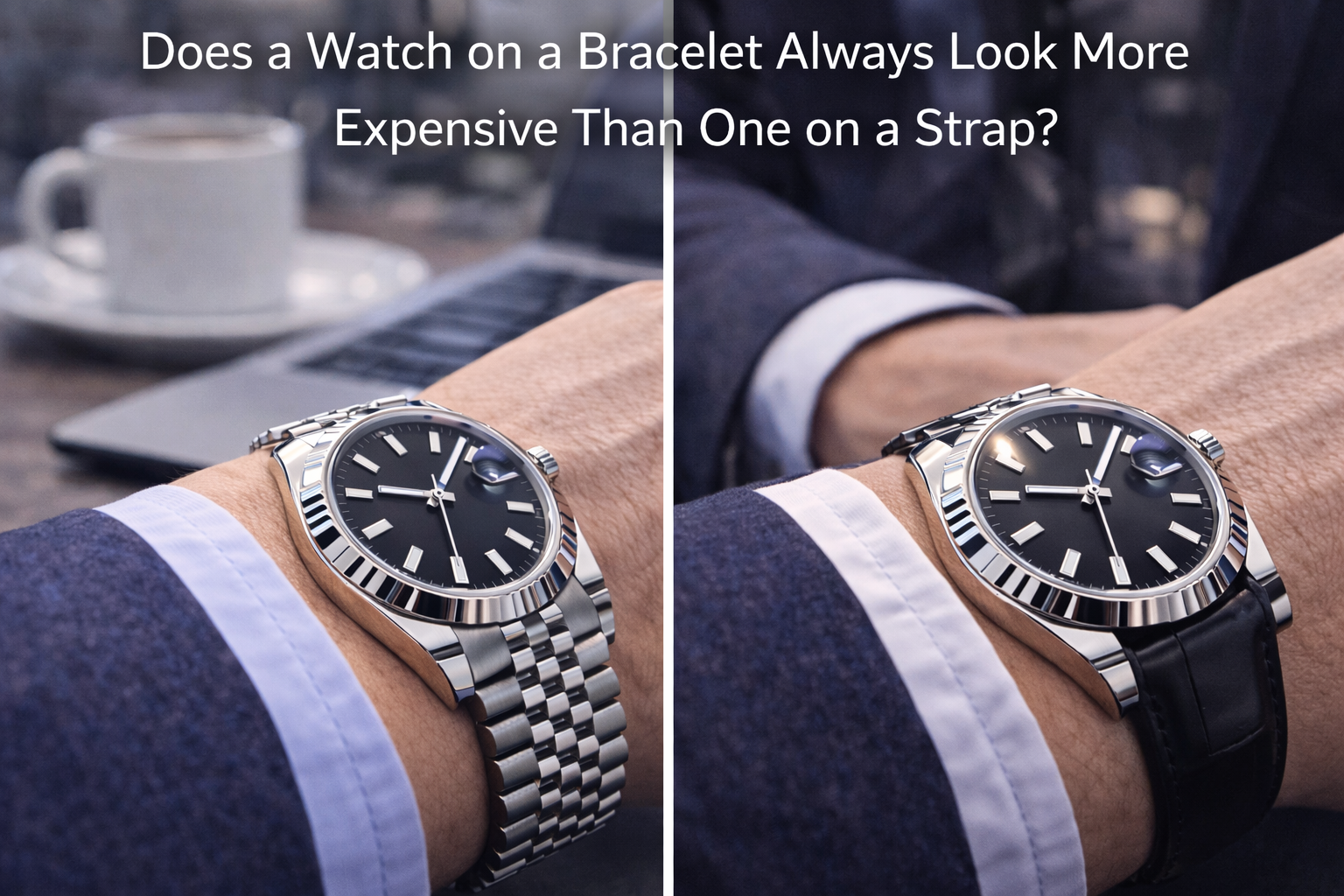
A lot of buyers assume the answer is obvious.
Metal bracelet equals more expensive.
Leather or rubber strap equals less expensive.
That idea feels simple, and sometimes it looks true in product photos.
But in real life, it is not that straightforward.
A watch on a bracelet can look sharper, heavier, and more premium at first glance. But the wrong bracelet can also feel too bright, too bulky, too stiff, or just slightly off for the rest of the watch. On the other hand, a good strap can make a watch feel more refined, more balanced, and sometimes even more expensive in the right setting.
That is why this question matters more than many people expect: does a watch on a bracelet always look more expensive than one on a strap, or does the answer depend on how the whole watch comes together?
In daily life, people are not judging a watch in a studio. They see it while you are typing in the office, commuting, sitting in a café, traveling, wearing a shirt cuff, or moving your hand naturally in conversation. In those moments, the bracelet or strap changes much more than just comfort. It changes the whole visual impression.
If you have already read our article on what makes a watch look expensive or our guide on how to choose the right watch for everyday wear, you probably already know that expensive-looking design usually comes from balance, not one single component.
Quick Answer
A bracelet does not always make a watch look more expensive. In real life, a metal bracelet often creates a stronger first impression of value, but a good strap can look more refined, more elegant, or more appropriate depending on the watch style, clothing, and setting. The most expensive-looking option is usually the one that fits the design of the watch and the way it is actually worn.
Why This Question Feels So Important
This question matters because bracelet versus strap changes two things at once:
- how the watch looks
- how the watch feels to wear
And those two are closely connected.
A watch that feels more natural on the wrist often ends up looking more expensive too. Not because people consciously measure comfort, but because better balance and better fit usually create a cleaner impression.
This is why some watches look stronger on a bracelet in photos, but feel better on a strap in daily life. And it is why some buyers change their mind completely after wearing both versions for a few days.
In real use, this difference becomes obvious in settings like:
- office wear
- smart-casual outfits
- travel days
- warm weather
- formal dinners
- long desk hours
That is where the “expensive” look starts becoming more practical than theoretical.
1. A Bracelet Usually Creates Faster Visual Impact
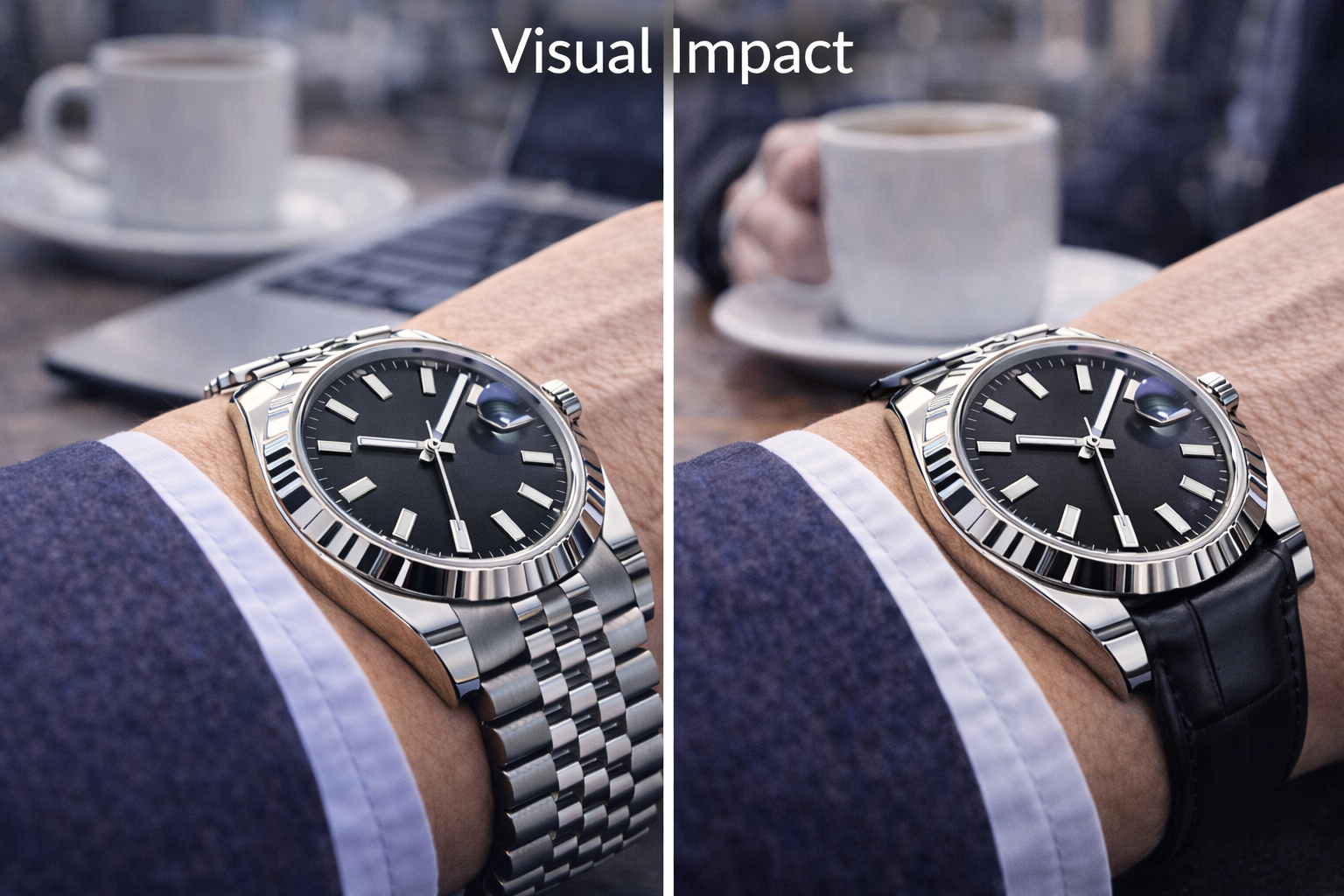
At first glance, a bracelet often does look more expensive.
There are a few reasons for that:
- it adds more visible metal
- it makes the watch feel more complete as an object
- it often creates more shine and more presence
- it usually looks heavier and more substantial
- it can make the watch feel more like jewelry and less like an accessory
This is why bracelet watches often stand out quickly in product photos and display cases. The visual message is immediate.
In everyday life, a bracelet can still have that advantage, especially when the watch is seen in motion. A metal bracelet catches light more than most straps do, and that often helps people notice the watch sooner.
That first impression is real. But it is not the whole answer.
2. A Strap Can Look More Refined in the Right Context
A lot of buyers underestimate how refined a strap can look.
A good leather strap, for example, often makes a watch feel:
- more intentional
- more elegant
- less noisy
- more dressy
- more balanced in formal wear
That is especially true when the watch itself is relatively clean and the strap suits the case shape well.
In a shirt-and-jacket setting, a strap can sometimes look more expensive than a bracelet because it feels more controlled. Instead of adding more visual weight, it lets the watch head breathe. That often creates a cleaner, more mature impression.
This is similar to what we discussed in how to choose the right watch for formal occasions. In more formal settings, “more metal” does not always mean “more premium.”
Sometimes less looks better.
3. Bracelet Watches Usually Feel Stronger for Daily Sports and Everyday Styles
Where bracelets usually have a stronger real-life advantage is in sporty daily wear.
A bracelet often feels more natural on:
- dive-style watches
- sports watches
- travel-oriented everyday watches
- casual office watches
- one-watch collections meant to cover many situations
Why? Because the bracelet usually supports the practical identity of the watch.
It can make the watch feel:
- tougher
- more versatile
- more integrated
- easier to wear casually
- more convincing as an all-day piece
This is one reason bracelet watches are so common in daily-wear discussions. A well-designed bracelet often makes a sports watch feel like a complete system rather than just a watch head on a separate band.
4. The Wrong Bracelet Can Make a Watch Feel Less Expensive
This is where the simple “bracelet always looks better” idea starts breaking down.
A poor bracelet can hurt the impression very quickly.
For example, a bracelet can make a watch feel worse if it is:
- too shiny for the case
- too light compared with the watch head
- too stiff on the wrist
- too noisy during movement
- too bulky for the size of the watch
- poorly matched to the style of the dial and case
In those cases, the bracelet may still look expensive in a still image, but less convincing in real life.
This becomes especially obvious while typing at a desk, walking, or wearing the watch for several hours. The bracelet moves more than people expect, and that movement affects the whole feeling of quality.
A strap, by contrast, often hides weaknesses better because it creates less visual complexity.
5. A Good Strap Can Improve Proportion
One of the most overlooked benefits of a strap is proportion.
Some watches simply wear better and look better on a strap because the strap reduces visual weight around the wrist. That can make the case feel:
- more balanced
- less bulky
- more elegant
- more focused
- easier for smaller or medium wrists
This is particularly useful when a watch already has a strong case presence. A bracelet may push it too far, while a strap lets the watch feel more composed.
That is exactly why a good guide to choosing the right watch size matters so much. The same watch can feel very different depending on what is attached to it, especially if wrist size is already near the limit for that case.
6. Bracelets Usually Show More Value, Straps Usually Show More Taste
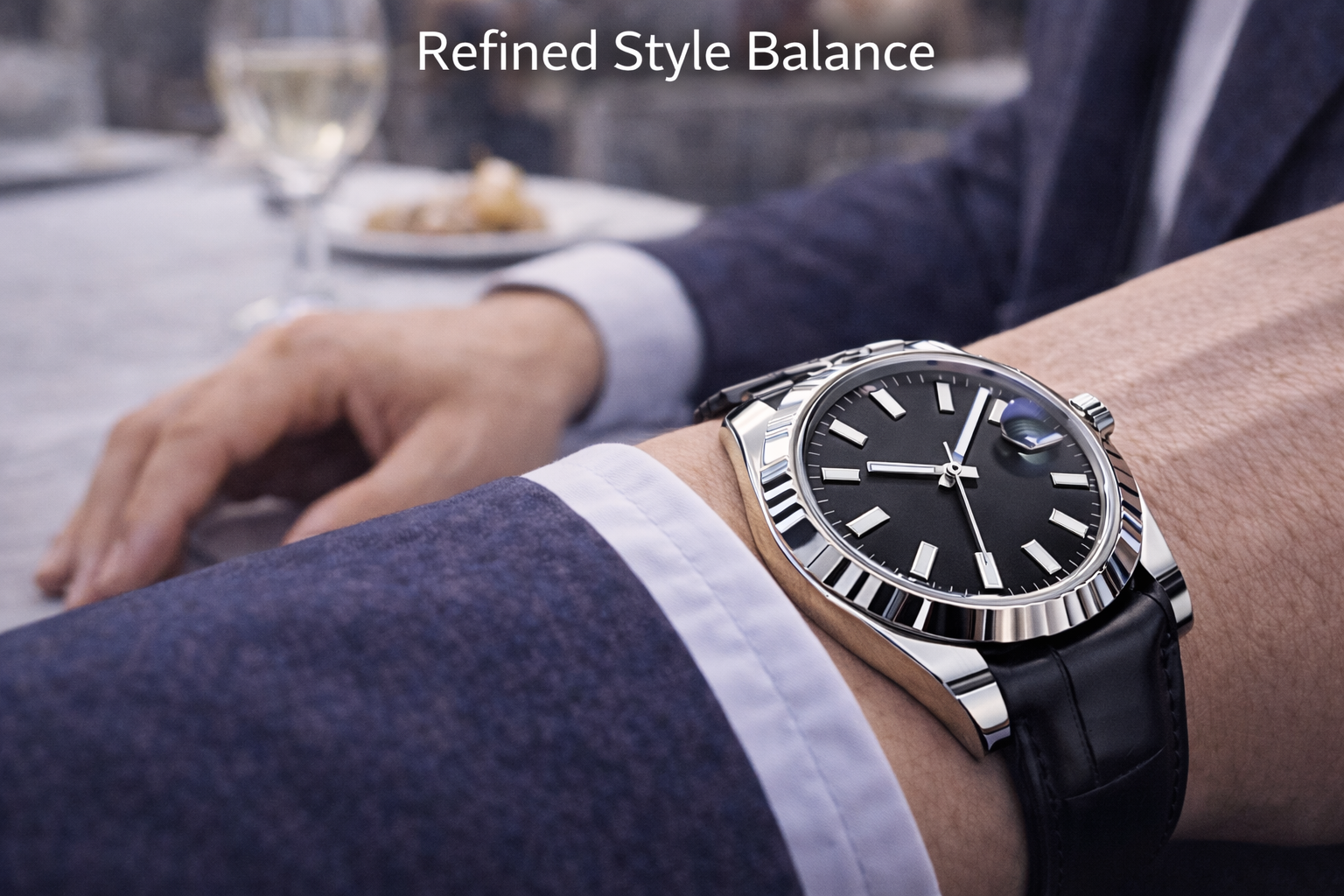
This is a useful way to think about the difference.
A bracelet often signals:
- visible value
- presence
- metalwork
- sport-luxury energy
- stronger first-glance impact
A strap often signals:
- restraint
- style awareness
- elegance
- dress focus
- a more curated look
That does not mean one is better. It means they communicate differently.
In real life, this is why a bracelet may get noticed first, but a strap may leave a more refined impression in the right setting. The bracelet often says “substantial.” The strap often says “intentional.”
And depending on the watch and the wearer, either one can feel more expensive.
7. Weather and Daily Comfort Change the Answer
This is where the practical side becomes important.
A bracelet that looks expensive but feels uncomfortable in heat, desk work, or travel may stop feeling like the better choice after a few days. A strap that looks slightly less flashy but feels easier all day can quietly become the better option.
In warm weather:
- rubber may feel more practical
- leather may feel less ideal
- a bracelet may feel secure but sometimes heavier
- comfort starts influencing how premium the watch feels
In office wear:
- a bracelet may feel stronger for everyday use
- a slim leather strap may feel neater under a cuff
During travel:
- a bracelet often feels more versatile
- but a simple strap can make packing and styling easier
This is exactly why how to choose the right watch for everyday wear is not only about appearance. Daily life changes what feels expensive.
8. Light Reflection Makes Bracelets More Noticeable
One reason bracelets often seem more expensive is because they interact with light more dramatically.
A bracelet creates:
- more reflection
- more visual movement
- more shine across the wrist
- more metal contrast with skin and clothing
This often helps a bracelet watch stand out in cafés, office light, daylight, and social settings. People may not consciously think “nice bracelet,” but they notice the extra presence.
A strap usually reflects less and therefore reads more quietly. That can make it feel less luxurious at first glance, but sometimes also more tasteful over time.
This is also why some buyers initially prefer bracelet watches, then later appreciate strap watches more after repeated wear.
9. Which One Looks More Expensive Depends on the Watch Type
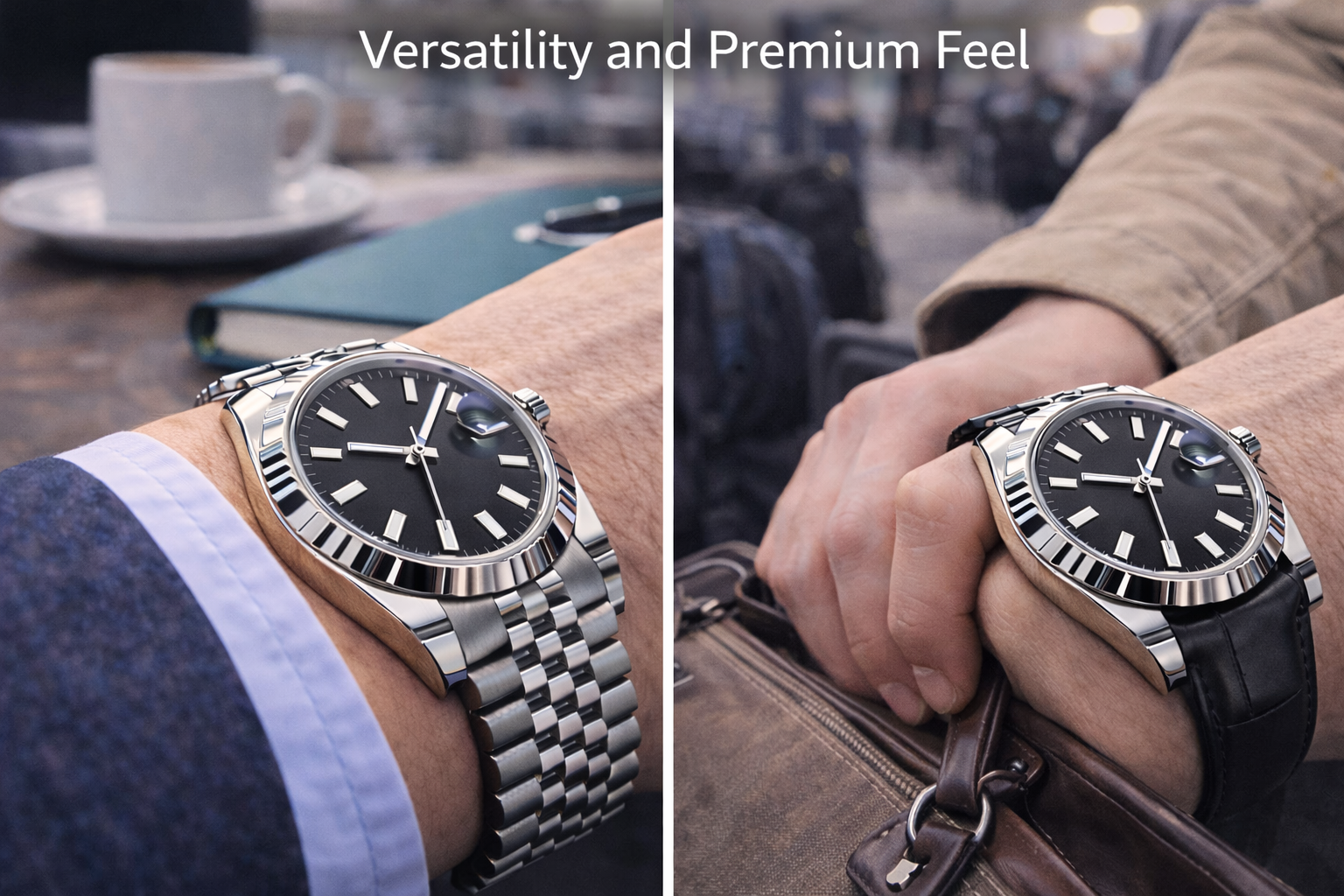
There is no universal winner because different watches naturally belong with different setups.
A bracelet often looks more expensive on:
- dive-style watches
- sporty daily watches
- integrated-bracelet designs
- modern versatile steel watches
- one-watch everyday collections
A strap often looks more expensive on:
- slim dress watches
- vintage-inspired designs
- cleaner formal watches
- watches with polished cases and elegant dials
- pieces meant to feel understated rather than sporty
That is why buyers should ask not “which is more expensive-looking in general?” but:
which looks more expensive on this specific watch, in my actual daily life?
That is the more useful question.
What Buyers Usually Notice in Real Life
In real life, people rarely stop and analyze whether the watch is on a bracelet or strap in abstract terms.
What they notice instead is:
- whether the watch feels complete
- whether it fits the outfit
- whether it looks natural on the wrist
- whether it seems too shiny or just right
- whether it feels sporty, dressy, refined, or awkward
That means the bracelet or strap matters a lot, but mainly as part of the whole impression.
A bracelet might make one watch feel more expensive because it adds the right weight and structure. A strap might do the same for another watch because it improves the balance and tone.
What Buyers Usually Get Wrong
A lot of buyers oversimplify the question.
They assume:
- bracelet always means more luxury
- strap always means less value
- more metal always equals better first impression
- one option works best for every watch
- the bracelet or strap only changes comfort
In real life, that is not how it works.
Bracelet versus strap changes:
- visual balance
- size perception
- dressiness
- comfort
- light behavior
- how the watch works with real clothing
That is why this decision matters so much more than people think.
How to Judge Bracelet vs Strap More Realistically
If you want to know which one really looks more expensive, ask practical questions:
1. Which one suits the watch head better?
Look at the whole design, not the bracelet or strap alone.
2. Which one fits how I actually dress?
Office, weekend, travel, formal dinners.
3. Which one feels more natural after several hours?
Long-term wear matters more than a quick mirror check.
4. Does the bracelet add value or just shine?
Those are not always the same thing.
5. Does the strap make the watch feel elegant or just plain?
A good strap should improve the watch, not weaken it.
This is also why learning how to choose your first watch is usually more about real-life fit than chasing one default answer.
Final Thoughts
A bracelet does not always make a watch look more expensive than a strap, even though it often creates a stronger first impression of value.
In real life, the better-looking choice depends on the design of the watch, the setting, the clothing, the comfort, and how naturally the whole watch comes together on the wrist.
A bracelet often looks stronger on sporty daily watches.
A strap often looks more refined on elegant or dress-focused pieces.
And the most expensive-looking option is usually the one that feels most appropriate, not just the one with the most metal.
That is what buyers usually notice in real life, even if they do not describe it that way.
FAQ
Does a bracelet always make a watch look more expensive?
No. A bracelet often creates stronger first-glance impact, but a good strap can look more refined depending on the watch and setting.
Are bracelet watches better for daily wear?
Often yes, especially for sporty or versatile everyday watches. But comfort and fit still matter a lot.
Can a strap make a watch look more premium?
Yes. A good strap can make a watch look more elegant, balanced, and appropriate in formal or refined settings.
Which is better for office wear, bracelet or strap?
Both can work. A bracelet often feels stronger for everyday office use, while a leather strap can look more formal and controlled.
Which is better for a first watch?
It depends on how you dress and how you plan to wear it. A bracelet is often more flexible, but a strap can be the better choice for some styles.
