
Do Automatic Watches Lose Accuracy Over Time?
Do Automatic Watches Lose Accuracy Over Time?
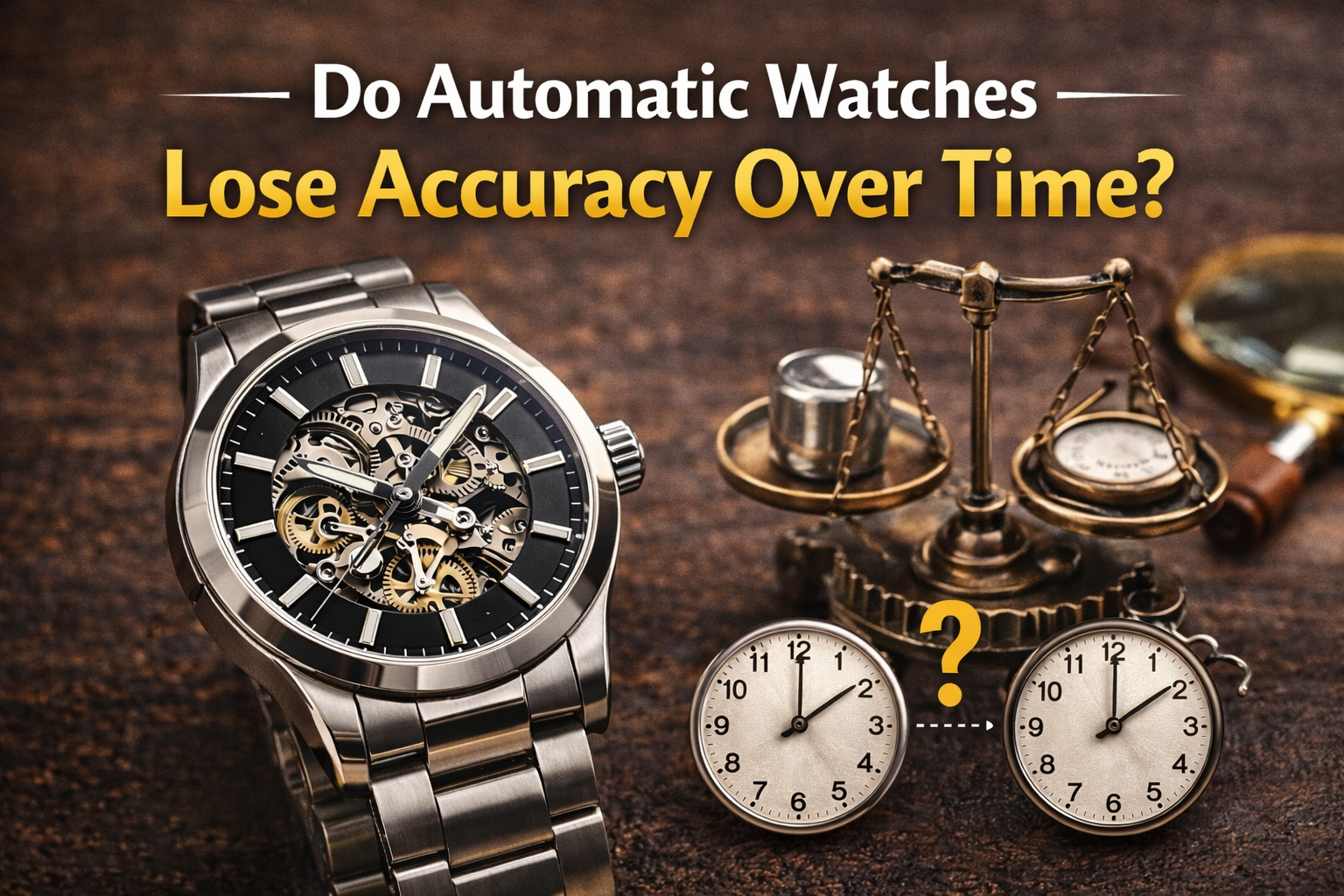
Quick Answer
Yes, automatic watches can lose accuracy over time. Mechanical movements rely on many small moving parts, and factors like wear, magnetism, temperature, and servicing intervals can affect how precisely the watch keeps time.
Introduction
Automatic watches are admired for their craftsmanship and mechanical complexity. Unlike quartz watches, which rely on batteries and electronic regulation, automatic watches depend entirely on mechanical movements.
Because of this mechanical nature, their accuracy can change slightly over time. Understanding why automatic watches lose accuracy and how to maintain them properly can help keep your watch performing at its best.
1️⃣ Why Automatic Watches May Lose Accuracy
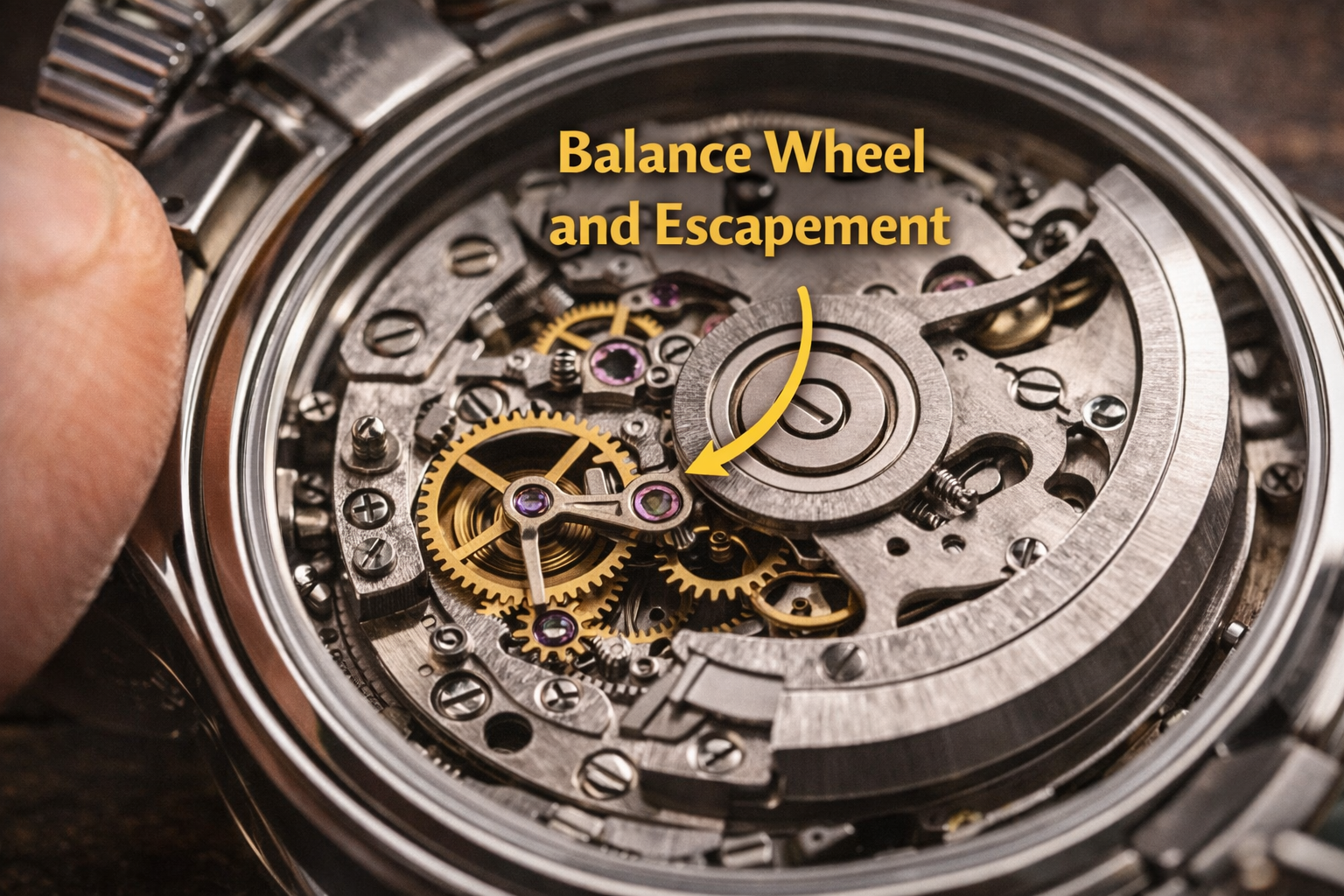
Automatic watches use a balance wheel and escapement system to regulate time.
These components move thousands of times every hour. Over time, small changes in lubrication, friction, or environmental conditions may affect the watch’s timekeeping.
Common factors that influence accuracy include:
-
Wear of internal components
-
Changes in lubrication
-
Temperature fluctuations
-
Magnetic fields
Mechanical watches are designed to last many years, but slight variations in accuracy are normal.
2️⃣ Mechanical vs Quartz Accuracy
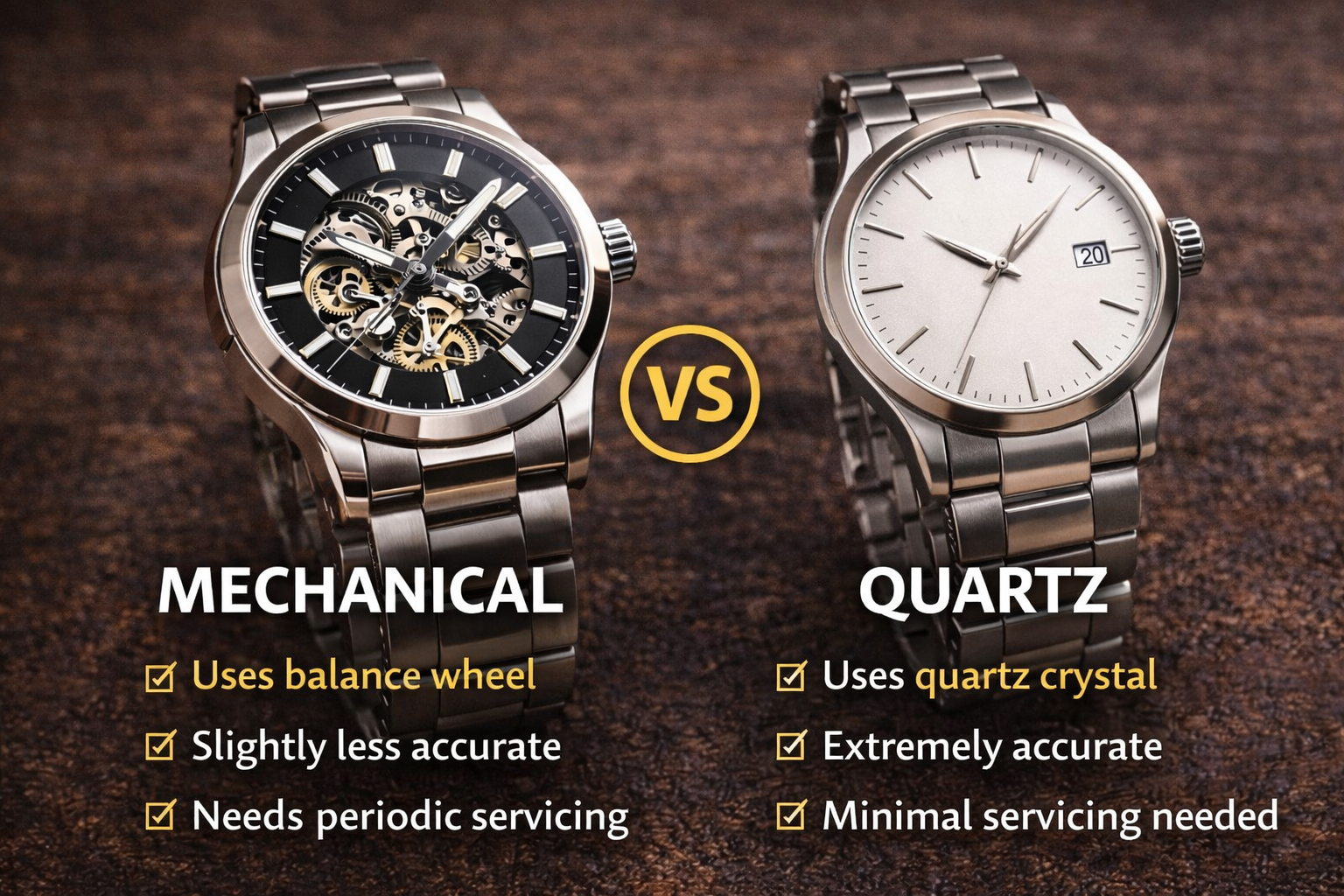
Compared to quartz watches, mechanical watches are generally less precise.
Quartz watches are regulated by a vibrating quartz crystal and are extremely consistent.
Mechanical watches, on the other hand, rely on tiny mechanical components interacting together.
If you want to understand this difference more clearly, you can read our guide on mechanical vs quartz watches.
3️⃣ Magnetism Can Affect Watch Accuracy
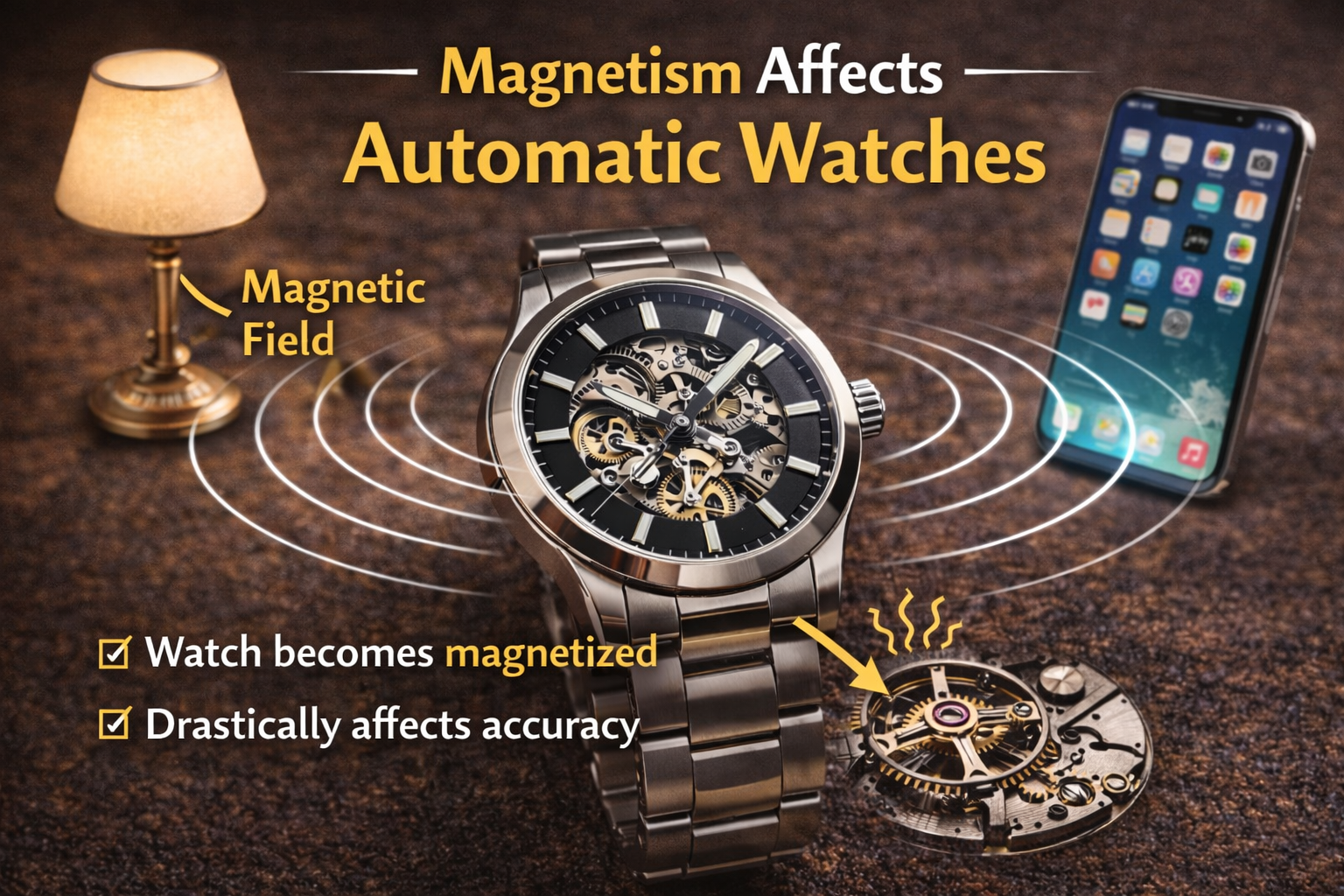
Magnetic fields are one of the most common causes of inaccurate mechanical watches.
Devices such as:
-
Smartphones
-
Laptops
-
Speakers
can expose watches to magnetic fields.
When a watch becomes magnetized, the balance spring may stick together, causing the watch to run faster than normal.
Understanding how watch mechanisms work can help explain why magnetism affects timekeeping. Our guide on how long mechanical and quartz watches really last explains the durability of different movements.
4️⃣ Regular Servicing Helps Maintain Accuracy
Automatic watches require periodic servicing to maintain performance.
During servicing, a watchmaker will:
-
Clean internal components
-
Replace worn parts
-
Reapply lubrication
-
Regulate accuracy
Most manufacturers recommend servicing a mechanical watch every 3–5 years.
Proper maintenance helps keep the watch running smoothly and accurately.
You can also reduce unnecessary wear by following the tips in our guide on how to protect your watch from daily wear and damage.
5️⃣ Is Slight Inaccuracy Normal?
Yes, slight variations in timekeeping are completely normal for mechanical watches.
Most automatic watches have an accuracy range of:
-
−20 to +20 seconds per day
High-end watches may perform even better.
For many watch enthusiasts, this small variation is part of the charm of mechanical watchmaking.
Conclusion
Automatic watches may lose a small amount of accuracy over time due to their mechanical nature. Factors like magnetism, lubrication, temperature, and normal wear can all influence timekeeping.
With proper care and regular servicing, automatic watches can remain reliable and enjoyable for many years.
FAQ Section
Do automatic watches lose accuracy over time?
Yes. Mechanical movements can experience small accuracy changes due to wear, magnetism, or environmental factors.
How accurate are automatic watches?
Most automatic watches are accurate within −20 to +20 seconds per day.
Can magnetism affect watch accuracy?
Yes. Magnetic fields can affect the balance spring and cause the watch to run faster than normal.
How can I keep my automatic watch accurate?
Regular servicing, avoiding strong magnetic fields, and proper watch care can help maintain accuracy.
