
Does Watch Thickness Matter More Than Case Size? What Most Buyers Notice Too Late
Does Watch Thickness Matter More Than Case Size? What Most Buyers Notice Too Late
Quick Answer
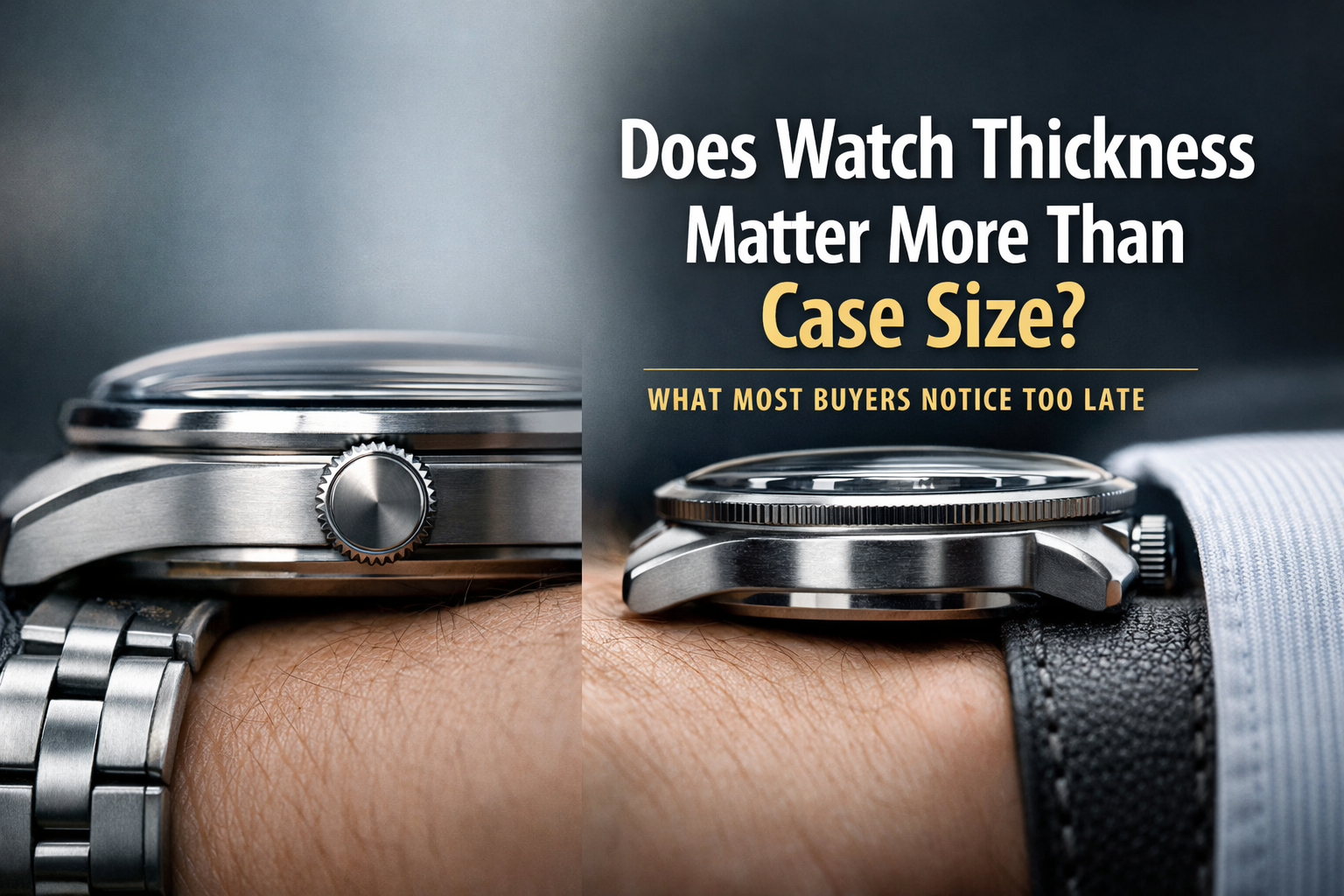
Yes, watch thickness often matters more than many buyers expect, and in real daily wear, it can sometimes affect comfort even more than case size. A watch may look reasonable on paper at 40mm, but if it is too thick, it can feel bulky, sit too high on the wrist, and become uncomfortable over time.
Case size still matters for visual balance, but thickness changes how a watch actually feels in motion, under sleeves, and during all-day wear. That is why many first-time buyers focus on diameter first and only realize later that thickness was the real issue.
A lot of people shopping for a watch focus on one number first: case size.
They compare 38mm, 40mm, or 42mm and assume that tells them everything they need to know. But in real life, that number only explains part of the experience. Two watches with the same case diameter can feel completely different on the wrist if one is much thicker than the other.
This is one of the most common things buyers notice too late. A watch may look balanced in product photos, sound reasonable in the specifications, and still feel larger or less comfortable than expected once it is worn for a full day. This is also why guides like How to Choose the Right Watch Size for Your Wrist are helpful, because the right fit is never just about width alone.
If you have ever tried on a watch that looked good from the front but felt bulky in real use, thickness was probably the reason.
Why buyers focus on case size first
Case size is easier to understand.
It is simple, visible, and usually the first measurement listed on a product page. Most beginners learn early that a large watch can overwhelm a small wrist, so they naturally assume diameter is the main sizing factor.
That is partly true. Case size absolutely affects how a watch looks. A 42mm watch will usually have more wrist presence than a 38mm watch, and visual proportion matters a lot.
But diameter does not tell you:
- how tall the watch sits
- how top-heavy it feels
- how well it fits under a cuff
- how noticeable it becomes after several hours of wear
That is where thickness starts to matter, especially for people who want one watch that feels easy to live with every day rather than just impressive at first glance.
What watch thickness actually changes
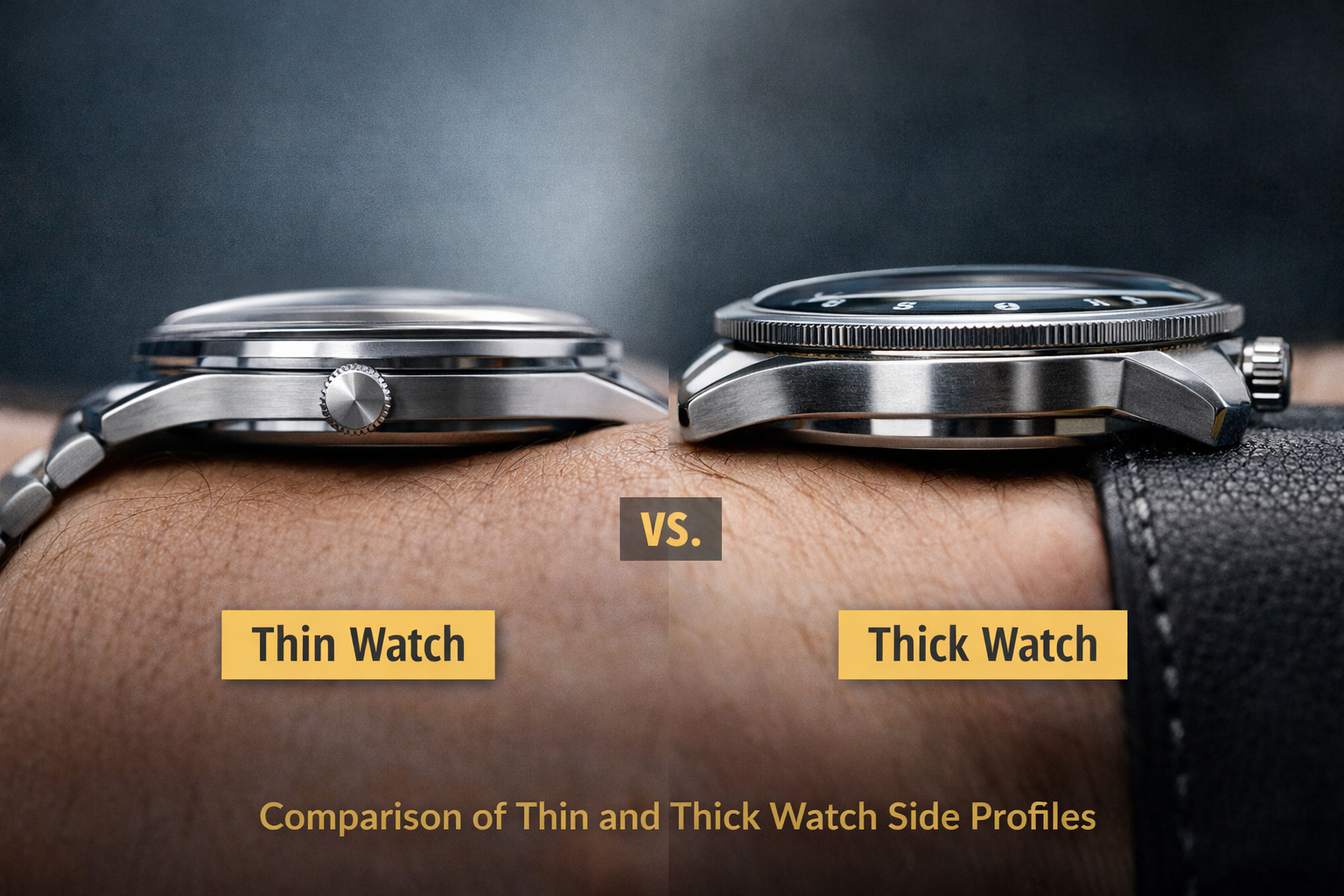
Watch thickness affects the wearing experience more than many people realize.
A thicker watch usually:
- sits higher on the wrist
- feels more noticeable during movement
- catches sleeves more easily
- can feel heavier even when the case size is moderate
- often looks sportier or bulkier
A thinner watch usually:
- feels easier to forget you are wearing
- slides under sleeves more comfortably
- looks cleaner and more refined
- often works better for office wear or formal outfits
This is why someone can wear a 40mm watch comfortably in one model but dislike another 40mm watch that seems almost identical on paper.
Real-life example
Imagine two watches:
- Watch A is 40mm wide and 10.2mm thick
- Watch B is 40mm wide and 14.1mm thick
On a product page, both may sound similar because the diameter matches. But on the wrist, Watch B will almost always feel larger, taller, and more noticeable. For some people, it may even feel less balanced, especially if the wrist is smaller or the watch is worn under fitted sleeves.
This is also where overall fit matters, not just size. A watch that is too tall can shift more during wear, which is one reason articles like How Tight Should a Watch Be? Proper Fit Guide matter when you are judging comfort in real life rather than just reading specs.
When thickness matters more than case size
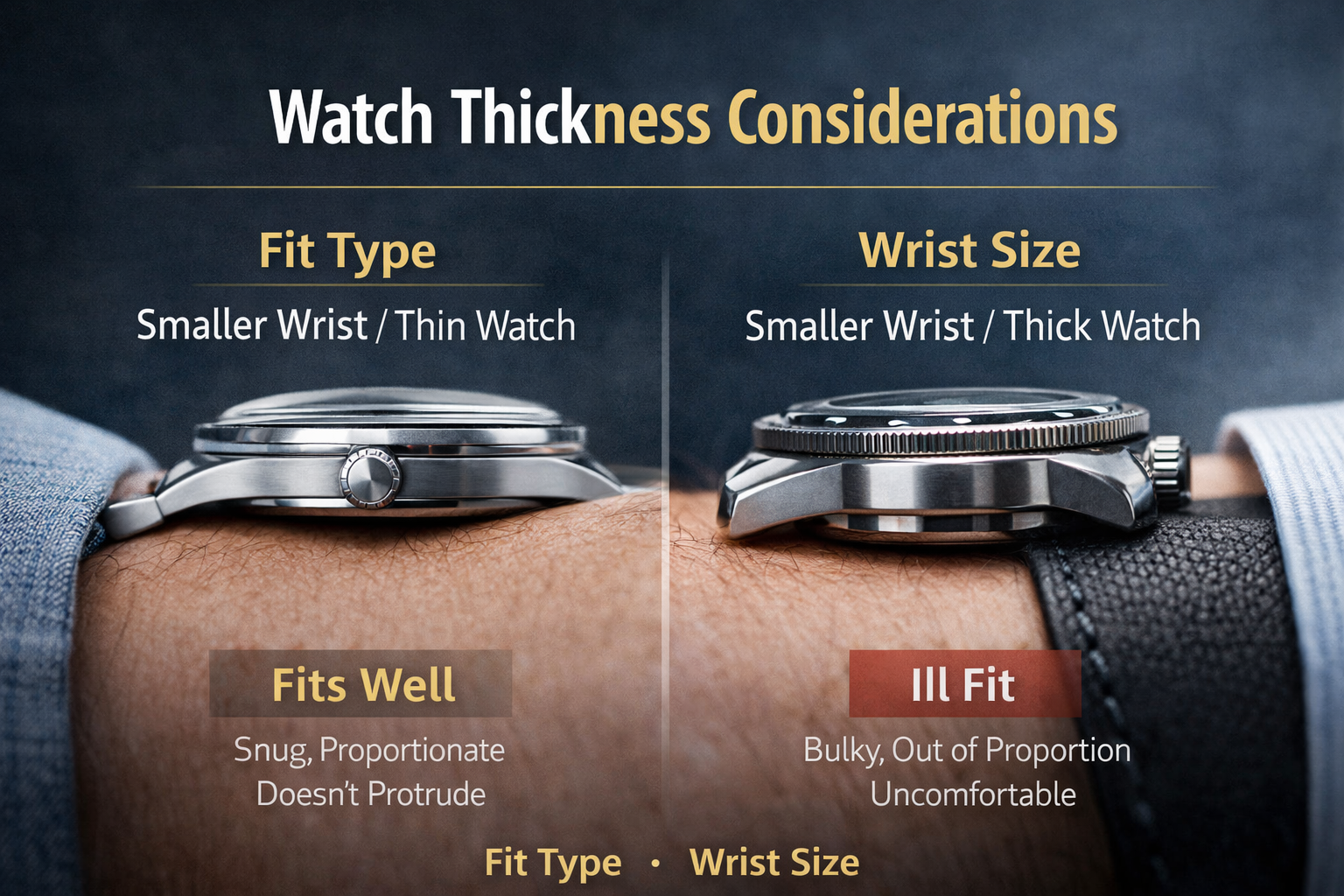
There are several situations where thickness becomes the more important number.
1. When you wear your watch all day
For short try-ons, diameter may stand out first. But during a full workday, thickness often becomes more noticeable.
A watch that feels fine for five minutes can feel top-heavy by the afternoon if it is too tall or bulky for your wrist. This is especially true if you want something that works from morning to evening without constantly reminding you that it is there.
2. When you wear long sleeves often
If you wear shirts, jackets, knitwear, or office clothes regularly, thickness matters a lot.
A thicker watch may keep rubbing against the cuff or get caught every time you move your wrist. A thinner watch usually feels much easier in these situations. That is one reason many people choosing between a more refined daily watch and a bolder one end up preferring slimmer proportions, especially after reading comparisons like Dress Watch vs Everyday Watch: Which One Should You Buy First?
3. When your wrist is smaller
Smaller wrists usually feel thickness faster.
Even if the diameter seems acceptable, too much height can make the watch feel awkward or visually oversized. This is one reason why some buyers say, “The size looked okay, but it still felt too big.”
4. When comfort matters more than bold wrist presence
Some people want a watch to feel substantial. Others want it to disappear into daily life.
If your priority is everyday comfort, thickness may end up being more important than a few millimeters of diameter. This becomes even clearer when you start thinking less about isolated measurements and more about what actually makes a watch easy to wear, which is exactly why posts like How to Choose the Right Watch for Everyday Wear tend to matter so much for beginners.
Why a thick watch can feel bigger than a larger watch
This sounds strange at first, but it happens all the time.
A 39mm watch with a thick case can feel larger in real daily wear than a 41mm watch with a slimmer profile. That is because human comfort is not based on width alone. Height, weight distribution, and wrist movement all affect how the watch wears.
A slimmer 41mm watch may feel flatter, cleaner, and better balanced. A thicker 39mm watch may feel more compact from the front but bulkier once it is on the wrist.
That is why judging only by diameter often leads to disappointment. It also explains why some watches look better in official photos than they do in daily use, because photographs usually highlight the dial and front view, not the full side profile or long-term comfort.
Thickness also changes the style of a watch
Thickness is not only about comfort. It changes appearance too.
In general:
- thinner watches look more elegant, refined, and dress-friendly
- thicker watches look sportier, bolder, and more rugged
This matters because the same diameter can communicate a very different style depending on the case height.
For example, someone buying a watch for office wear may think 40mm sounds perfect. But if the watch is too thick, it may look more aggressive or casual than expected. By contrast, a thinner watch of the same width can feel more polished and versatile. This is closely related to the same design logic discussed in What Makes a Watch Look Expensive? 9 Details Most People Notice First, because thickness plays a big role in whether a watch feels refined or heavy-handed.
Case size still matters, but not by itself
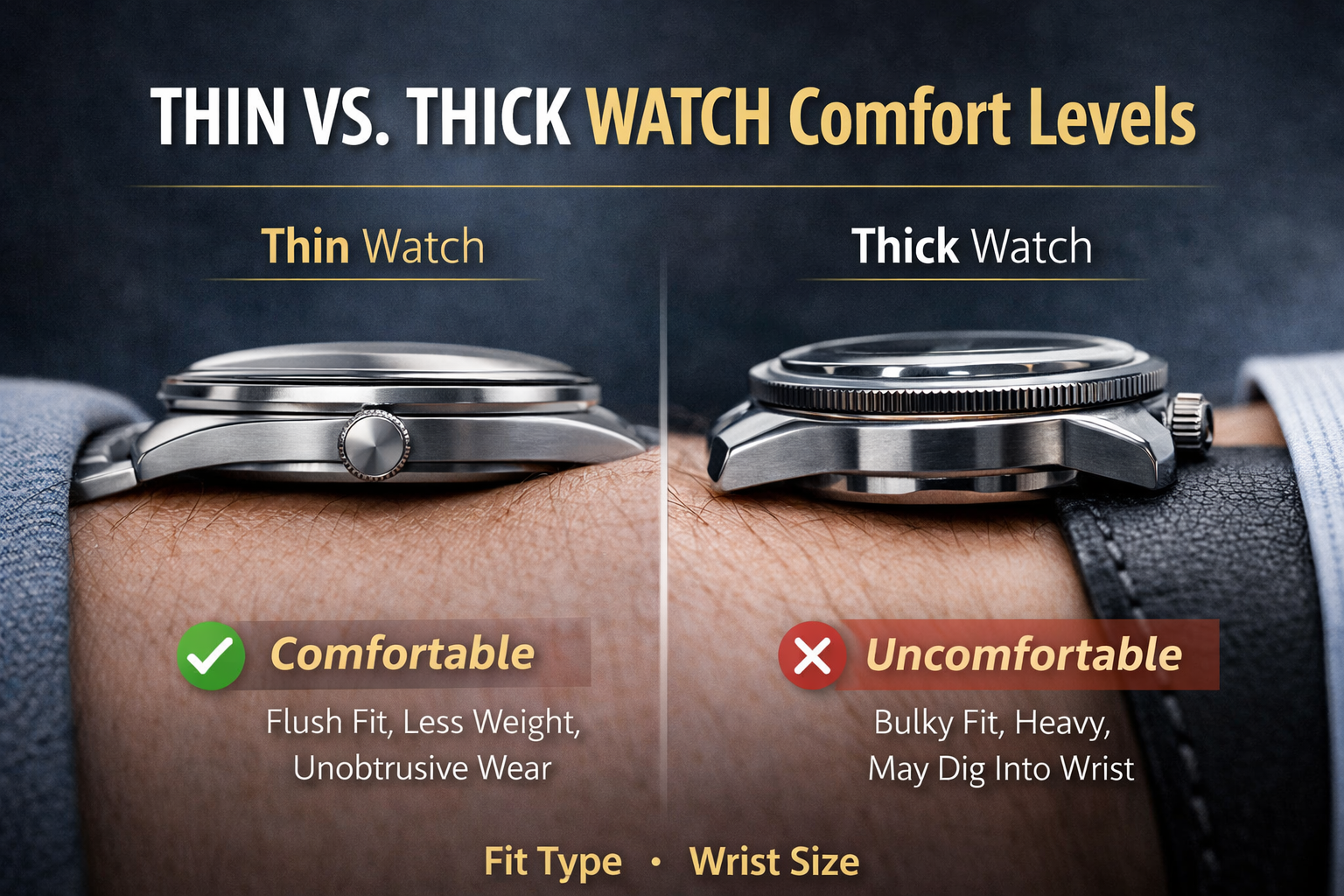
None of this means case size is unimportant.
Diameter still affects:
- how wide the watch appears
- how much dial space you see
- overall wrist presence
- visual balance on different wrist sizes
But case size only works well when the rest of the proportions make sense.
A watch feels more balanced when these things work together:
- case diameter
- thickness
- lug-to-lug distance
- strap integration
- wrist size
That is why a good fit is really about proportion, not just one number. Someone choosing a watch only by diameter may still end up with the wrong feel if the thickness and overall profile do not match their wrist or their style.
What most beginners get wrong
Many first-time buyers make one of these mistakes:
They choose based on diameter only
This is the biggest one. They assume 40mm is always safe without checking the case height.
They ignore how they actually dress
A thick sporty watch may look great online but feel wrong if your wardrobe is mostly clean, fitted, or office-based.
They underestimate long-term wear
A watch that feels fun and bold for ten minutes may feel tiring after eight hours.
They confuse “substantial” with “comfortable”
Some buyers want a watch to feel solid, which is fine. But solid and bulky are not the same thing.
In many cases, people only realize this after wearing the watch for a week. That is why it is better to think in terms of daily life, not just first impressions.
A simple way to judge thickness before buying
If you cannot try the watch on in person, use this general guide:
- Under 11mm → usually feels slim, easy, and versatile
- 11–13mm → moderate range for many daily watches
- 13–14.5mm → more noticeable, often sporty or heavier in feel
- Over 14.5mm → bold presence, may feel bulky for many wrists
This is not a strict rule, because case shape and lug design still matter, but it gives you a realistic starting point.
Practical buyer example
If someone has a smaller to medium wrist and wants one watch for office wear, weekends, and daily comfort, a 38–40mm watch under about 12mm thick will often feel easier to live with than a thicker alternative.
That kind of real-life balance usually matters more than chasing the biggest or boldest specs. In practice, the most wearable watch is often the one that combines sensible width, manageable thickness, and a style that fits real routines rather than just product-page appeal.
So which matters more: thickness or case size?
For appearance alone, case size often gets more attention first.
For real daily comfort, thickness often becomes the issue people remember most.
That is why the honest answer is this:
- Case size matters more for first impression
- Thickness often matters more for long-term wear
The best watch is not just the one that looks right in photos. It is the one that still feels right after a full day on your wrist.
Final thoughts
Watch thickness does not always matter more than case size, but it matters much more than most buyers think.
If you only focus on diameter, you may end up with a watch that looks balanced at first glance but feels bulky, tall, or tiring in everyday wear. A better approach is to judge the full set of proportions, including thickness, lug-to-lug distance, and how the watch fits your real routine.
For many people, the most wearable watch is not the largest or boldest one. It is the one with the most balanced proportions.
And very often, thickness is the detail that makes that balance work.
FAQ
Does watch thickness really matter?
Yes. Thickness affects comfort, sleeve fit, wrist balance, and how noticeable a watch feels during daily wear.
What is a good watch thickness for everyday wear?
For many people, a watch under about 11–12mm feels easier and more versatile for everyday use, especially with office or smart-casual clothing.
Can a small watch still feel bulky?
Yes. A watch with a modest diameter can still feel bulky if the case is too thick or the weight sits too high on the wrist.
Is thickness more important than case diameter?
Not always, but for comfort and long-term wear, thickness can matter just as much, and sometimes more.
Why does the same case size feel different on two watches?
Because thickness, lug-to-lug distance, case shape, and weight distribution all change how a watch actually wears.
Are thinner watches better?
Not always. Thinner watches are often more elegant and comfortable, but thicker watches may suit sporty styles or people who prefer stronger wrist presence.
