
- Home
- Does Wearing a Watch Every Day Damage It? What You Should Know
Does Wearing a Watch Every Day Damage It? What You Should Know
Introduction

Many watch owners wear their timepiece every day.
But does daily wear damage a watch?
Will constant use shorten its lifespan?
Or are watches designed for continuous use?
In this guide, we break down how daily wear affects different types of watches.
1️⃣ Are Watches Designed for Daily Wear?

Yes — most watches are built to be worn regularly.
Especially:
-
Stainless steel watches
-
Sport watches
-
Automatic watches designed for active lifestyles
In fact, automatic watches often perform better when worn daily because movement keeps them powered.
If you’re unsure how long a watch typically lasts, read:
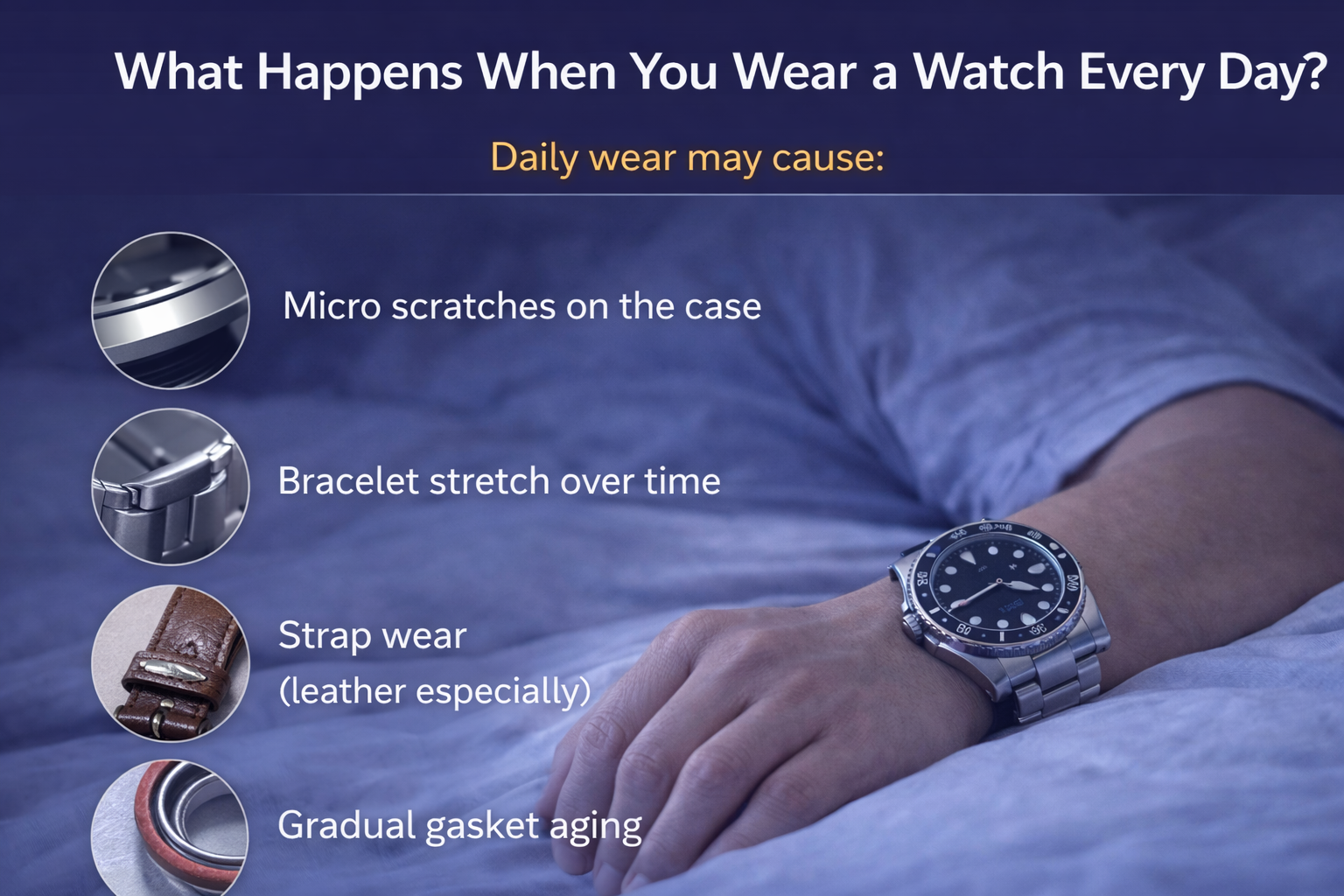
2️⃣ What Happens When You Wear a Watch Every Day?
Daily wear may cause:
-
Micro scratches on the case
-
Bracelet stretch over time
-
Strap wear (leather especially)
-
Gradual gasket aging
These are normal wear patterns — not “damage.”
Watches are tools, and signs of use are expected.
3️⃣ Mechanical vs Quartz: Which Handles Daily Wear Better?
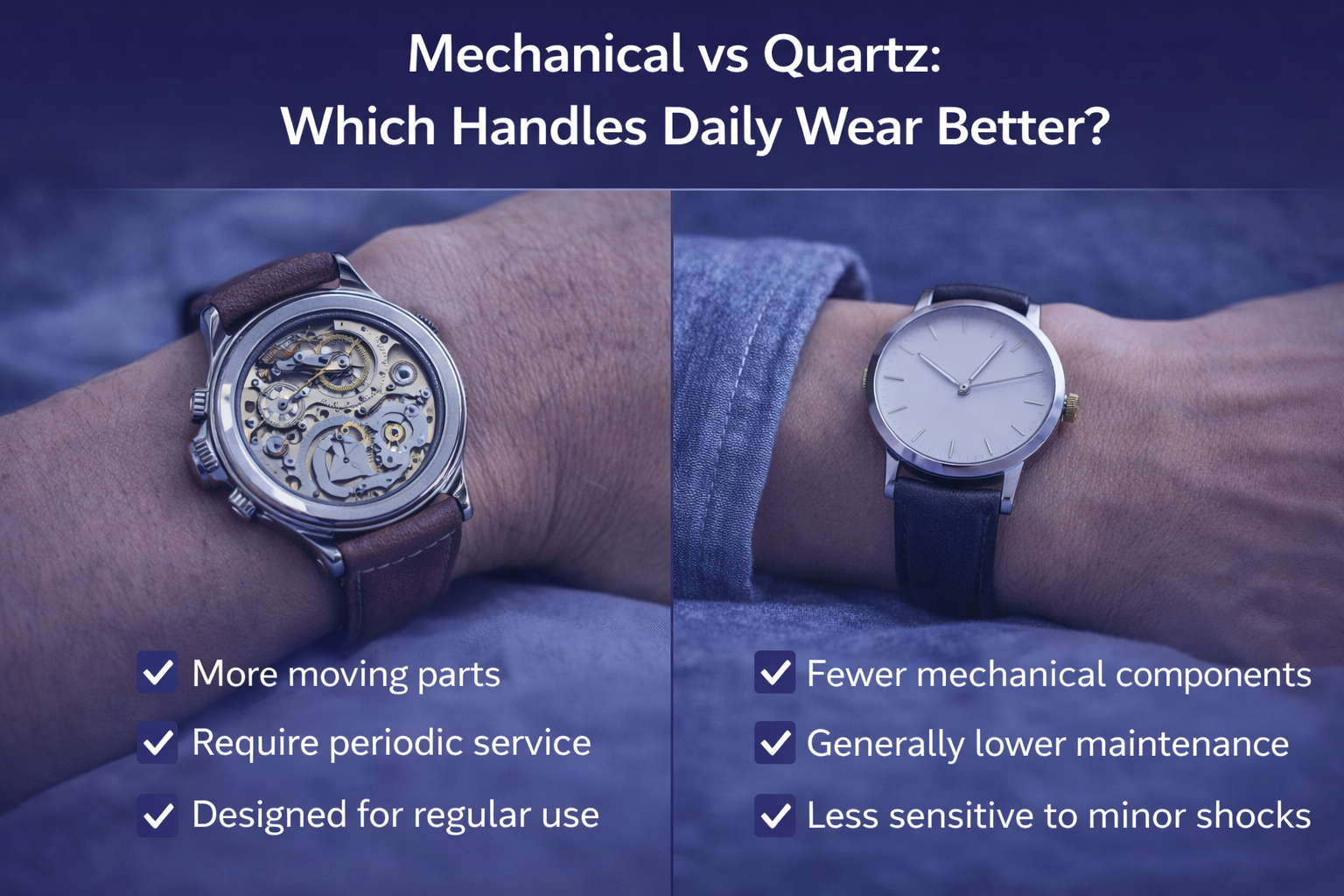
Mechanical watches:
-
More moving parts
-
Require periodic servicing
-
Designed for regular use
Quartz watches:
-
Fewer mechanical components
-
Generally lower maintenance
-
Less sensitive to minor shocks
For a deeper comparison:
👉 Automatic vs Quartz: Which Watch Needs More Maintenance?
4️⃣ Does Wearing It Every Day Reduce Lifespan?
Not necessarily.
Proper care matters more than frequency.
To extend lifespan:
-
Avoid strong magnetic fields
-
Keep water resistance maintained
-
Store properly when not in use
👉 How to Store Watches Properly
5️⃣ When Should You Give Your Watch a Break?
You may want to rotate watches if:
-
You own multiple pieces
-
One watch is particularly heavy
-
The strap is leather and needs rest
Rotation reduces cosmetic wear but is not required for durability.
FAQ Section
❓ Is it bad to wear a watch all the time?
No, most watches are designed for daily wear. Regular maintenance matters more than frequency.
❓ Does daily wear affect accuracy?
Not usually. In fact, automatic watches often benefit from regular movement.
❓ Will daily wear cause scratches?
Minor cosmetic scratches are normal with use.
❓ Should I rotate my watches?
Rotation reduces visible wear but is optional.
