
How to Evaluate Watch Craftsmanship: Key Details That Make a Watch Feel Premium
How to Evaluate Watch Craftsmanship: Key Details That Make a Watch Feel Premium
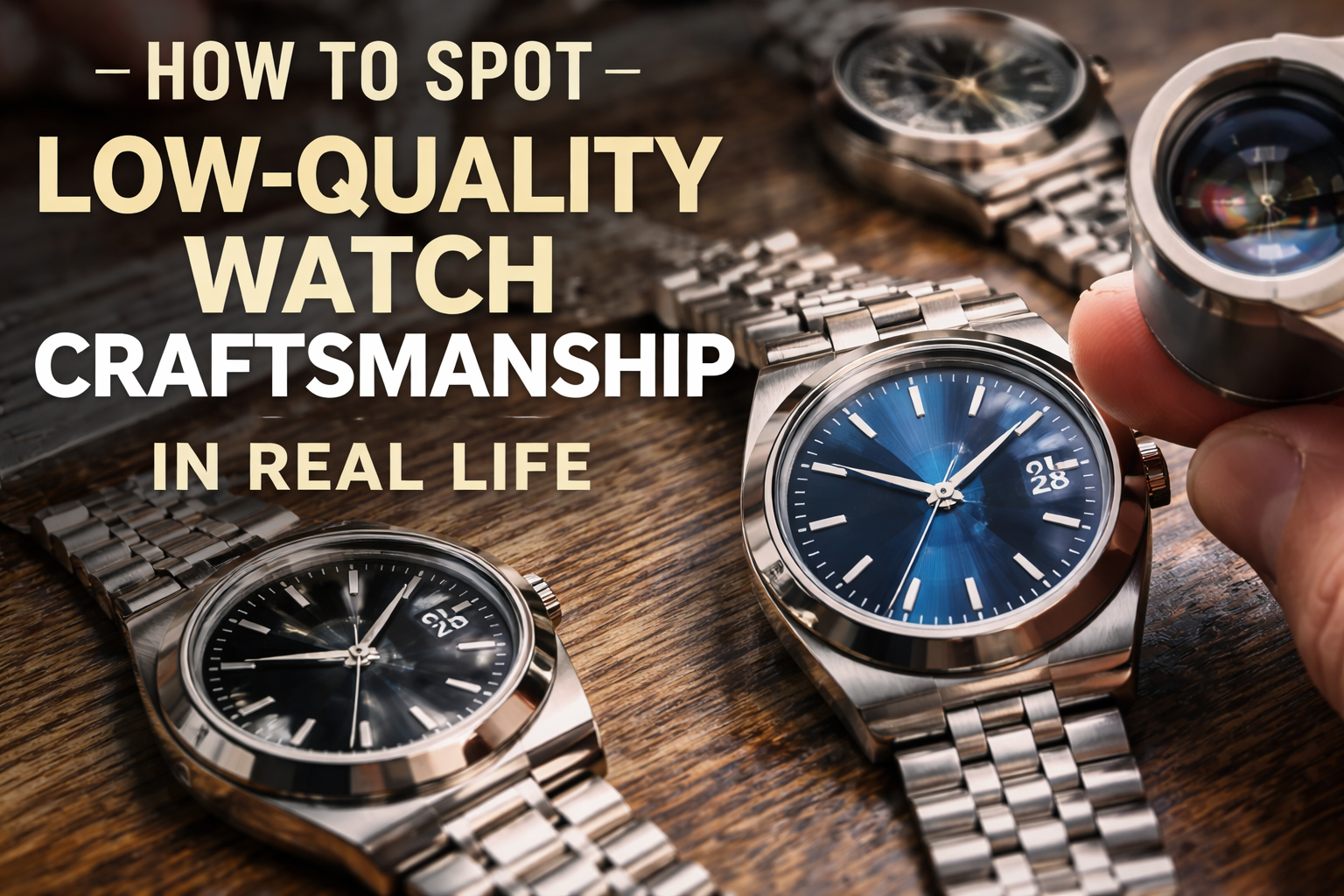
When buying a watch, many buyers focus primarily on the design or brand. While these are important, the craftsmanship of a watch is what truly defines its value over time. The quality of a watch is not just about the external look — it’s also about how it is built, how it feels on the wrist, and how it holds up to wear.
The good news is that spotting a high-quality watch doesn’t have to be difficult. There are specific details you can evaluate to determine if a watch is built to last, feels luxurious, and exudes quality. Whether you’re buying your first luxury watch or adding to your collection, knowing how to evaluate craftsmanship can help you make an informed decision.
Quick Answer
To evaluate a watch’s craftsmanship, pay attention to key elements such as case finishing, dial texture, crystal quality, bracelet feel, hand quality, and overall weight. Premium watches typically have sharper, more defined edges, smooth transitions, and consistent finishes that catch light beautifully.
1. Case Finishing: How to Spot a Well-Defined Case
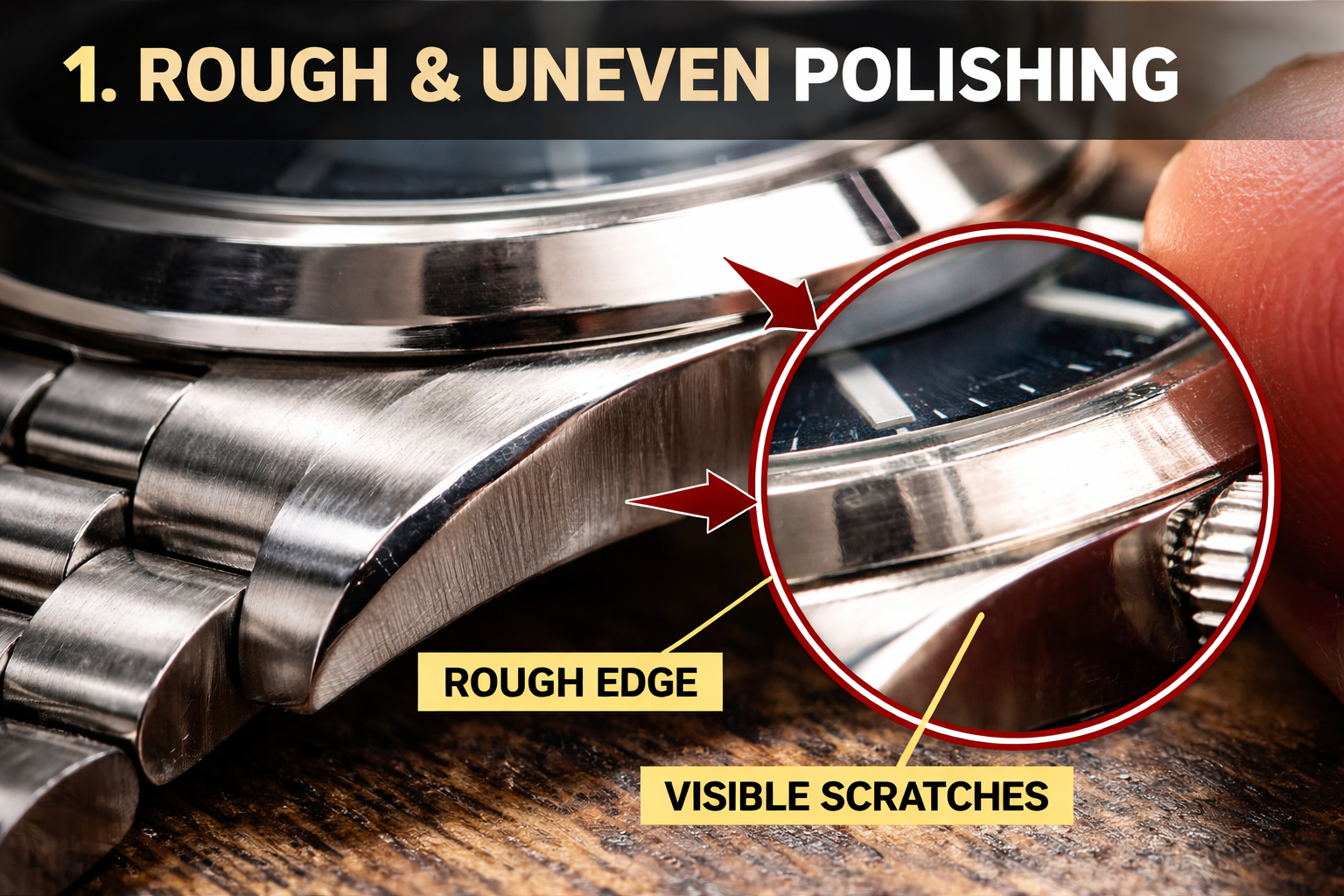
The case is the most visible part of the watch, and its finish tells you a lot about the quality of the craftsmanship. Premium watches often feature precise case finishing that highlights the design while maintaining a high level of refinement.
Look for:
- Brushed vs Polished Surfaces: Brushed finishes should be even, without visible streaks, and polished edges should be crisp and clean. Look for smooth transitions between different finishes.
- Sharp Edges: Well-made watches have crisp, defined edges where the case meets the bezel or lugs. Low-quality watches often have rounded or poorly defined edges.
- Consistency: Check for consistent finishing all around the case. A poorly finished case might have uneven brushing or distracting visible seams.
This is why evaluating the case finish is one of the first steps in watch craftsmanship evaluation. It directly impacts the overall perception of the watch and is essential to making the right choice. Learn more about the importance of case finishing in our guide on How to Choose Your First Watch.
2. Dial Texture and Print Quality
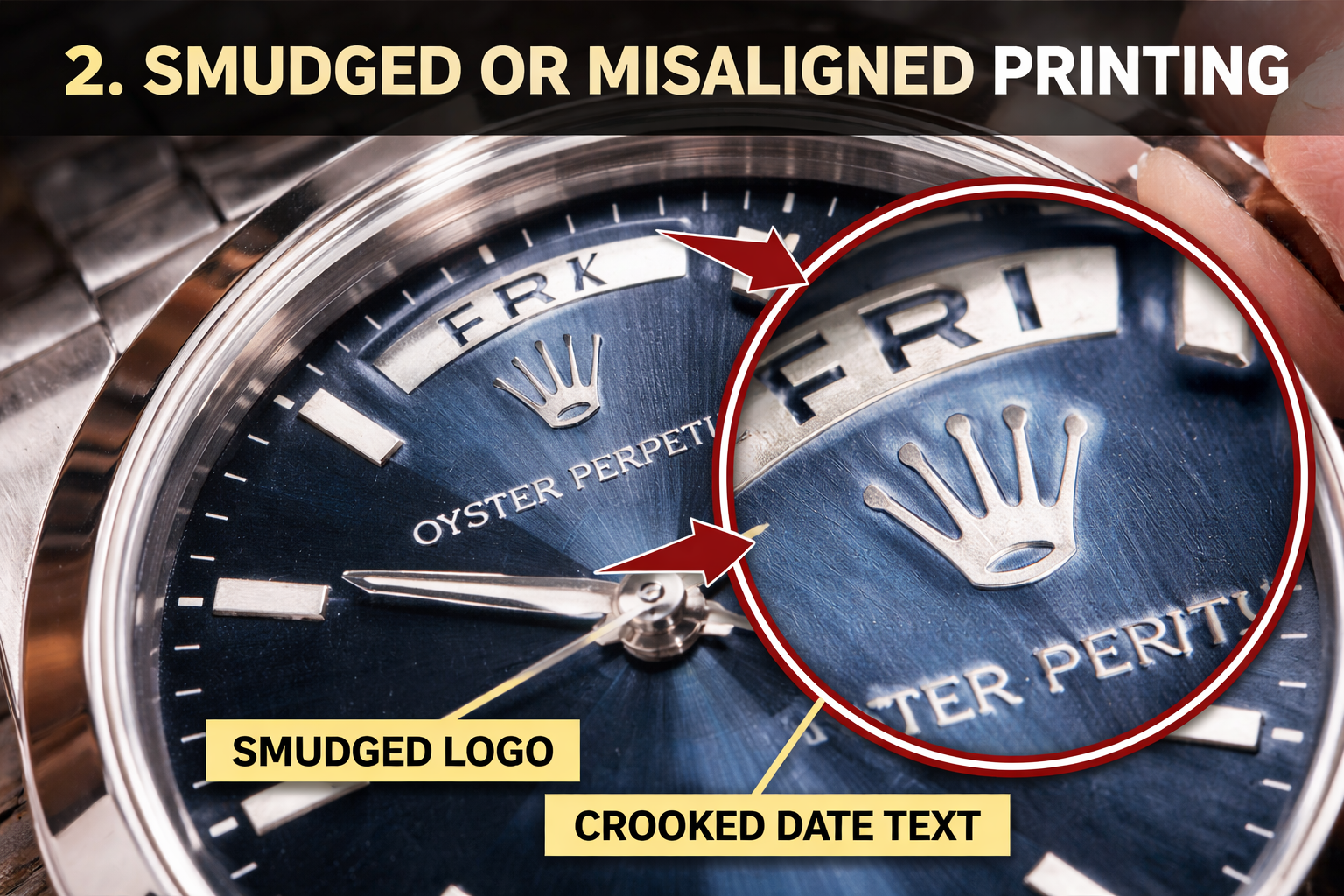
The dial is where the magic happens. A high-quality dial adds depth and refinement to the watch, and it’s one of the easiest places to spot the craftsmanship.
Key things to look for:
- Matte or Sunburst Effects: A sunburst dial should change slightly in appearance depending on the angle of the light, adding depth. A matte dial should have a uniform texture without imperfections.
- Marker and Print Alignment: The markers and indices should align perfectly with the dial. Any misalignment, especially in luxury watches, is a sign of poor craftsmanship.
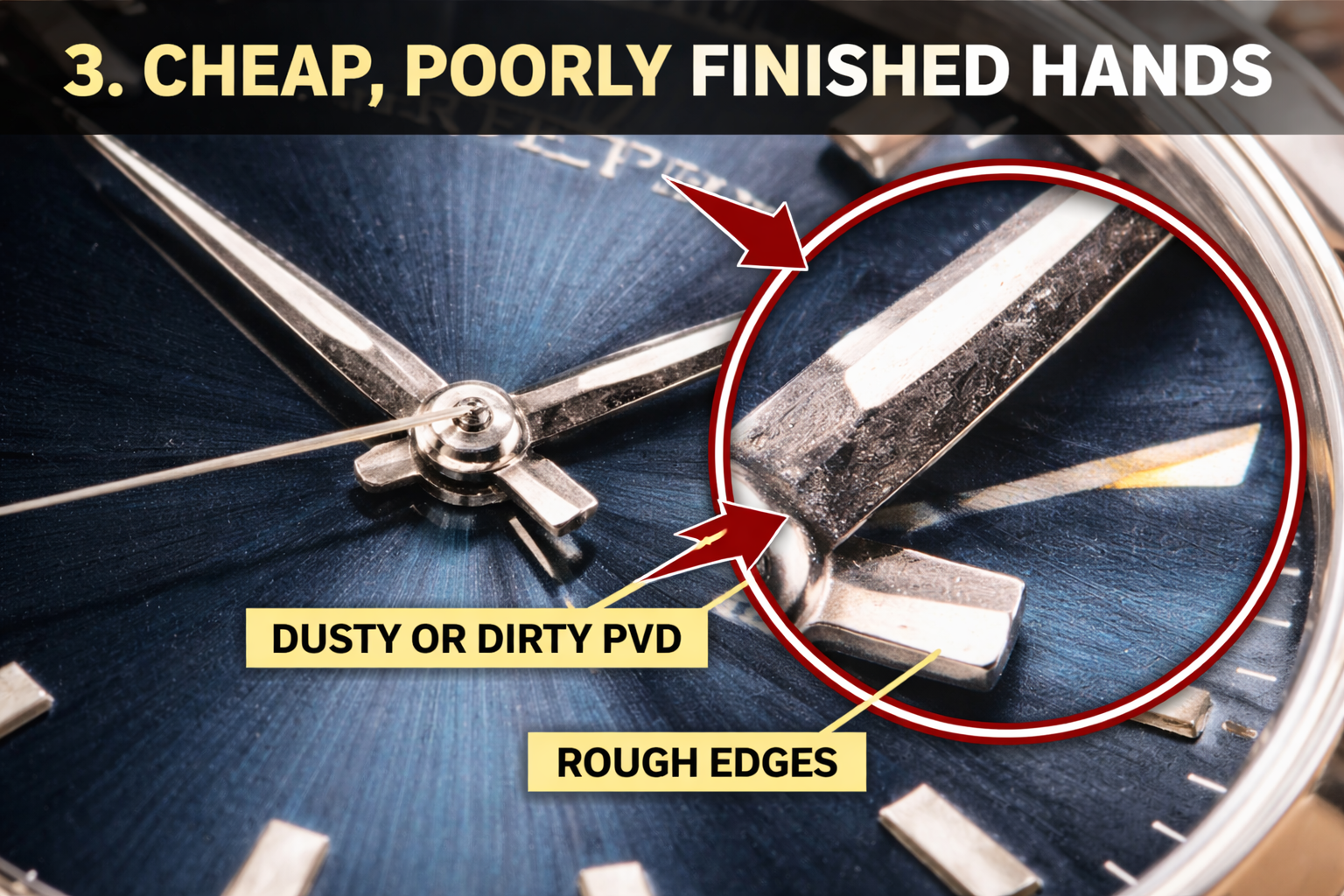
- Hand and Marker Quality: The hands and markers should have clean, sharp edges. Polished markers should reflect light uniformly, not look chipped or uneven.
If you're looking to explore more on how the dial texture affects the overall quality of the watch, check out our article on What Makes a Watch Look Expensive?, which dives deeper into the role of dial design in determining luxury.
3. Crystal Quality and Clarity
The crystal is one of the most important features of a watch. It’s the window through which you view the dial, and it needs to be both functional and aesthetically pleasing.
- Scratch Resistance: Premium watches often use sapphire crystal, which is highly scratch-resistant. Lower-quality watches may use mineral glass, which can scratch more easily.
- Anti-Reflective Coating: Check if the crystal has an anti-reflective coating. A good coating helps reduce glare and improves readability, especially under bright light.
- Clarity and Transparency: The crystal should be clear and free of any imperfections. It should not distort the dial or markers.
If you’re unsure about what makes sapphire crystals superior to mineral glass, our guide on How to Choose the Right Watch Size for Your Wrist can give you a better understanding of crystal quality and its role in overall watch craftsmanship.
4. Bracelet Finishing and Comfort
The bracelet is just as important as the case when evaluating the craftsmanship of a watch. It is what makes the watch comfortable to wear and gives it that polished feel on the wrist.
Look for:
- Smooth Edges: The bracelet links should have smooth edges and should feel comfortable against the wrist. Poorly finished bracelets often feel sharp or rough.
- Polished and Brushed Details: Just like the case, the bracelet should have a balanced finish. Premium bracelets often feature a combination of polished and brushed surfaces to add texture and depth.
- Link Construction: The links should be tightly constructed with no visible gaps. Watch for any loose or rattling links that could indicate poor craftsmanship.
- Weight: A heavier bracelet usually indicates higher-quality materials and better build quality. If the bracelet feels too light or flimsy, it may be made of low-grade materials.
For more about bracelet quality and its role in overall watch design, you can read our post on What Makes a Watch Look Expensive?, where we explore this element further.
5. Hand and Marker Quality
In addition to the dial and case, the hands and markers of a watch play a huge role in its overall craftsmanship. Well-made hands should feel balanced, and the markers should be applied or painted cleanly.
- Clean Edges and Polish: The hands should have sharp edges and a high-quality finish. Cheap watches often have hands that look dull or uneven.
- Hour Markers: Check whether the markers are applied correctly. Low-quality markers might be painted or glued on poorly, and some can even fall off over time.
- Alignment: Like with the dial, the hands and markers should be aligned perfectly. Misaligned hands or markers are a sign of poor assembly.
6. Weight and Overall Presence
Weight is often overlooked when evaluating craftsmanship, but it is a good indicator of quality. A well-made watch typically feels heavier and more substantial. The weight should be well balanced, with no parts feeling overly light or flimsy.
When you pick up a luxury watch, it should feel like there is substance to it, not just something that looks shiny on the surface. If a watch feels too light or too cheap, it may be a sign of low-quality materials or poor construction.
7. Movement and Functionality
While the outside of the watch is important, the inside is where the real craftsmanship lies. Look for:
- Smooth Operation: The second hand should sweep smoothly across the dial, and the chronograph functions should engage without feeling sticky or loose.
- Reliable Timekeeping: Premium watches often feature automatic movements that are finely tuned for accuracy. Lower-quality watches might lose time or need frequent adjustment.
What Buyers Usually Notice in Real Life
In everyday use, buyers typically notice:
- Comfort: How the watch feels on the wrist and how it fits under cuffs or sleeves.
- Overall Balance: Does the watch feel cohesive and well-proportioned, or does it feel off?
- Attention to Detail: Are the markers crisp? Does the dial feel rich and layered, or does it feel flat?
Final Thoughts
Evaluating watch craftsmanship requires attention to the smallest details, from the dial texture to the case finishing and bracelet quality. High-quality craftsmanship is reflected in the balance of the design, the cleanliness of the finishes, and the refinement of the overall feel.
A premium watch should look and feel intentional, with each component serving to enhance the overall experience. By paying attention to the details and understanding what makes a watch feel premium, you can make a more informed purchase and enjoy a timepiece that’s built to last.
FAQ
What makes a watch feel premium?
A watch feels premium when its craftsmanship is exceptional in areas like case finishing, dial texture, bracelet quality, and overall design balance.
How do I spot a cheap watch?
A cheap watch often has uneven finishing, poor alignment of markers and hands, a light or flimsy bracelet, and distorted crystal clarity.
Can I judge watch quality just by looking at the dial?
The dial is important, but it’s also essential to check the case finishing, bracelet feel, and the overall weight of the watch to evaluate its quality.
Why does weight matter when choosing a watch?
Weight usually indicates higher-quality materials. A watch that feels too light may be made from low-grade materials and lack the substance of premium craftsmanship.
