
How to Match a Watch with Different Outfits and Occasions (Without Owning 10 Watches)
How to Match a Watch with Different Outfits and Occasions (Without Owning 10 Watches)
Introduction
A watch is one of the few accessories that can instantly change how an outfit feels. The right watch can make a simple look feel intentional, while the wrong one can feel out of place—even if the watch itself is beautiful.
The good news is you don’t need a huge collection to match watches well. With a few simple rules about size, dial style, and strap choice, you can make one or two watches work for almost every situation.
Below is a practical guide to matching your watch with different outfits and occasions—without overthinking it.
1️⃣ Start with the Occasion (Not the Brand)
Before you think about color or strap, ask one quick question:
Where am I wearing this?
Most outfits fall into these categories:
-
Casual (t-shirt, denim, sneakers)
-
Smart casual (polo, knitwear, chinos)
-
Business (button-down, blazer, office wear)
-
Formal (suit, wedding, events)
-
Sport / outdoor (activity, travel, hiking)
A simple rule: the more formal the outfit, the simpler and cleaner the watch should look.
If you want a clear breakdown for formal events, you can also reference:
How to Choose the Right Watch for Formal Occasions
2️⃣ Match the Watch “Vibe” to the Outfit
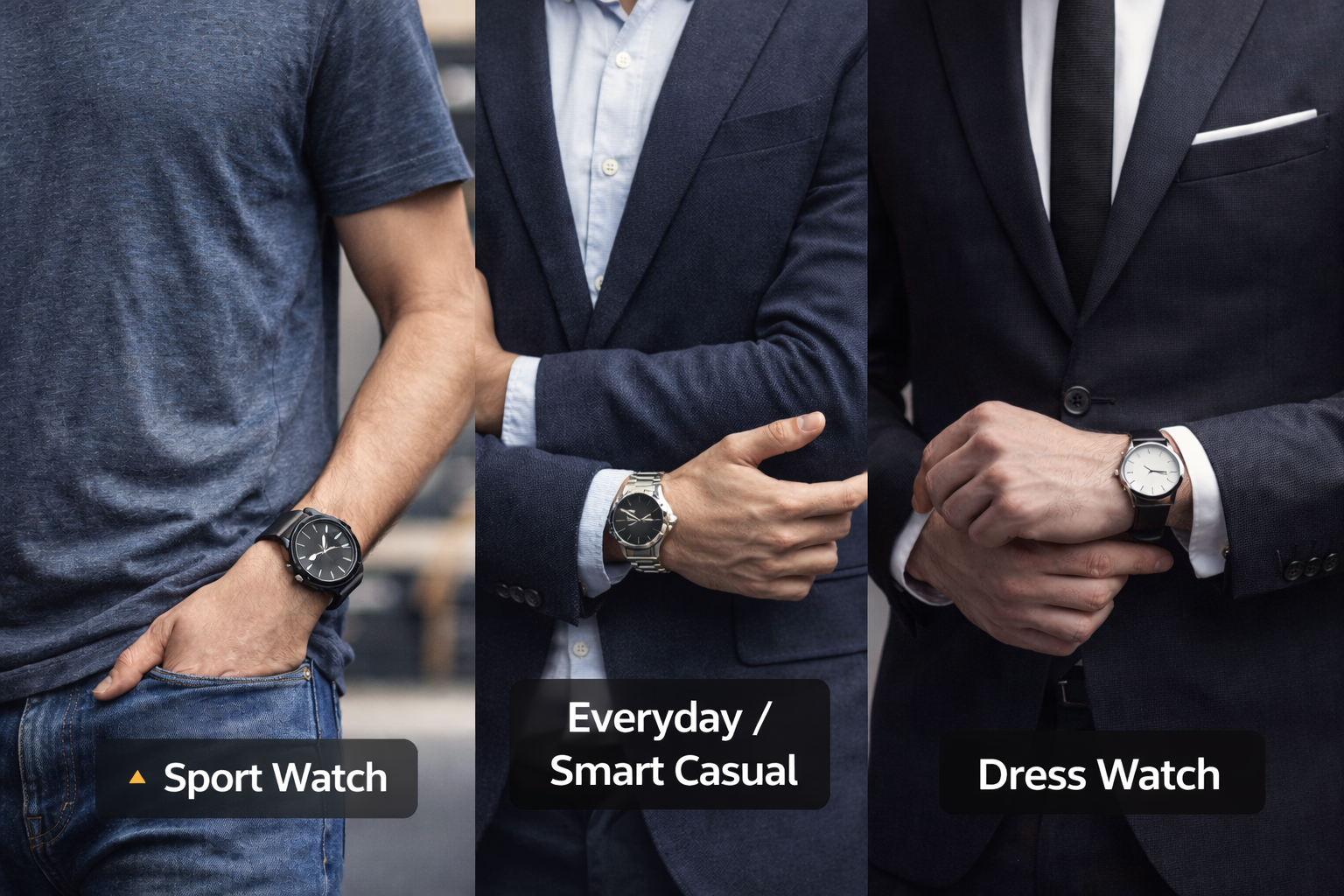
Think of watches like shoes: sporty watches look best with sporty outfits, and dressy watches look best with dressy outfits.
Here’s the easiest pairing guide:
-
Dress watch → suits, weddings, formal dinners
-
Everyday watch → work, casual, smart casual
-
Sport watch → travel, weekend, active outfits
If you’re building a “one-watch fits most” setup, focus on an everyday piece that works with multiple looks. This guide helps:
How to Choose the Right Watch for Everyday Wear
3️⃣ Size Matters More Than Most People Think
Even the best-looking watch can feel wrong if the size doesn’t fit your wrist or outfit style.
General styling rule:
-
Smaller / thinner watches look more refined and formal
-
Larger / thicker watches feel more casual or sporty
If you’re unsure what size works best, use your wrist size as the base decision:
How to Choose the Right Watch Size for Your Wrist
When in doubt, choose a moderate size and a slimmer case—it blends with more outfits.
4️⃣ Dial Color: Keep It Simple for Maximum Versatility
Dial color affects how “loud” or “quiet” the watch feels.
Most versatile dial colors:
-
Black (works with almost everything, slightly sharper)
-
White / silver (clean and classic, slightly more formal)
-
Dark blue (still versatile, adds subtle style)
Less versatile dial colors:
-
bright colors (fun, but harder to match daily)
-
heavy patterns (strong personality, more outfit-dependent)
A simple approach: if you want one watch to match most outfits, stick with black, white, or navy.
5️⃣ Strap Choice Changes the Whole Outfit
The strap is the fastest way to “change” a watch without buying another one.
Use this strap matching guide:
-
Leather strap → smarter, cleaner, more formal
-
Metal bracelet → versatile, everyday, office-friendly
-
Rubber / fabric → sporty, casual, travel-ready
If you rotate straps, make sure you also maintain them properly—especially leather and rubber. For cleaning tips:
How to Clean a Watch Strap Properly (Leather, Rubber & Metal)
6️⃣ Match Metals with Your Outfit Details
This is optional, but it makes your styling look “intentional”:
-
Silver watch case/bracelet pairs naturally with silver belt buckles, rings, and glasses frames
-
Gold-tone works best when your outfit already has warm tones (brown belt, warm shoes, beige/cream clothing)
You don’t need perfect matching, but staying in the same metal “family” makes the whole look cleaner.
7️⃣ Easy Outfit Examples You Can Copy
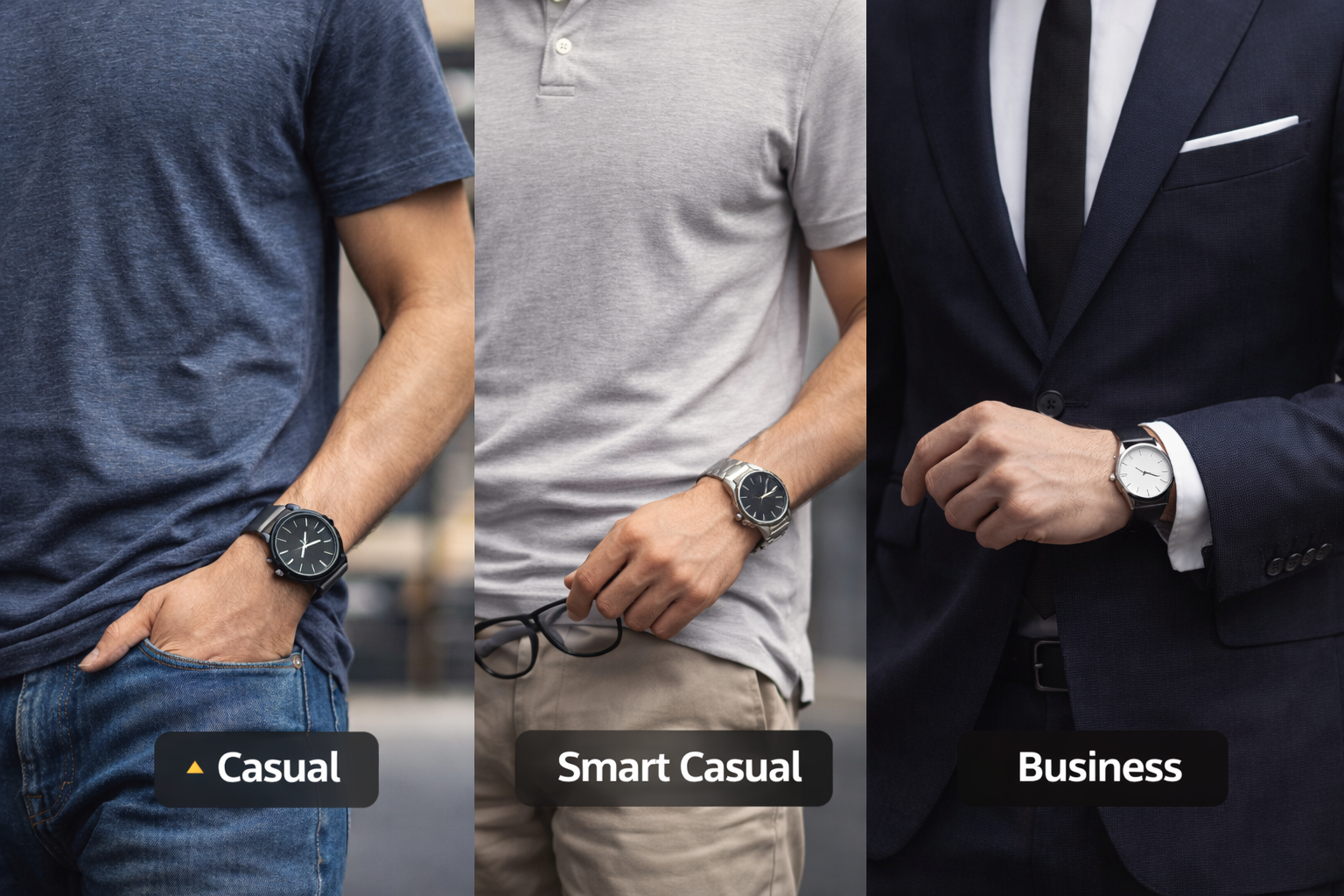
Here are simple combinations that work almost every time:
Casual (t-shirt + jeans)
-
steel bracelet watch or simple sport watch
-
black/blue dial works great
Smart casual (polo/knitwear + chinos)
-
steel bracelet or leather strap
-
clean dial, moderate size
Business (shirt + blazer)
-
slim everyday watch, simple dial
-
leather strap or refined bracelet
Formal (suit / wedding)
-
dress watch, thinner case, leather strap
-
minimal dial is best
(Use this reference if needed: How to Choose the Right Watch for Formal Occasions)
Travel / weekend
-
comfortable, durable watch on bracelet or rubber
-
easy-to-read dial
8️⃣ The “Two-Watch” Setup That Covers 95% of Life

If you want a simple collection that matches almost everything:
-
Watch #1 (everyday versatile): steel bracelet, black/white/blue dial
-
Watch #2 (formal option): slim case, leather strap, clean dial
That combination covers daily wear + events without needing a big collection.
Conclusion
Matching a watch to your outfit doesn’t need to be complicated. Focus on the occasion first, keep dial colors versatile, choose the right size, and use straps strategically.
A few simple rules will make your watch feel like a natural part of your outfit—whether you’re dressed casually, heading to work, or attending a formal event.
FAQ Section
❓ What is the most versatile watch color?
Black, white/silver, and dark blue are usually the easiest dial colors to match with most outfits.
❓ Can I wear a sport watch with a suit?
You can, but it often looks less refined. For formal outfits, a slimmer watch with a clean dial usually works better.
❓ Is a leather strap always more formal than a bracelet?
Generally yes. Leather straps tend to look dressier, while bracelets feel more versatile for everyday use.
❓ Do I need to match my watch metal with my belt buckle or jewelry?
It helps the look feel more intentional, but it’s not mandatory. Staying in the same metal family is a simple upgrade.
❓ How many watches do I need for different occasions?
Most people only need one versatile everyday watch. Two watches (everyday + formal) can cover nearly everything.
