
How to Store Watches Properly: Protecting Your Watch from Damage and Wear
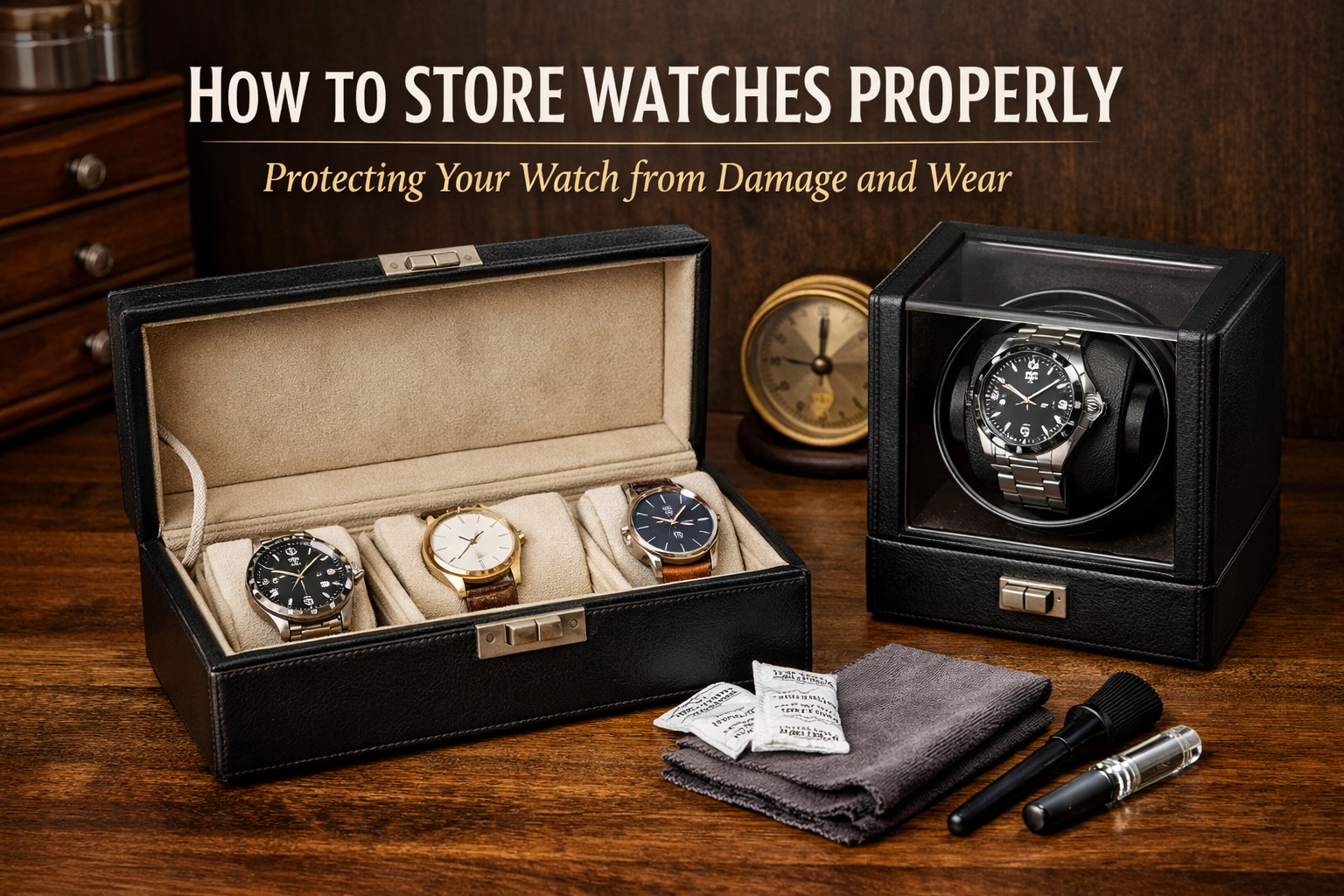
Introduction
Wearing a watch daily is important — but storing it properly matters just as much.
Improper storage can lead to:
-
Dust buildup
-
Moisture damage
-
Scratches
-
Reduced water resistance
-
Movement issues
Whether you own one watch or a growing collection, proper storage can extend its lifespan significantly.
In this guide, we’ll explain how to store watches correctly and avoid common mistakes.
1️⃣ Why Proper Watch Storage Matters
Even when not in use, watches are sensitive instruments.
Mechanical and automatic watches contain dozens of moving components that can be affected by:
-
Humidity
-
Temperature fluctuations
-
Magnetic fields
-
Physical impact
Quartz watches are more durable but still vulnerable to environmental damage.
If you’re wondering how long a watch can last with proper care, read:
2️⃣ Should You Store Watches in a Box?
Yes — but not just any box.
A proper watch storage box should:
-
Have soft interior lining
-
Keep watches separated
-
Protect against dust
-
Reduce exposure to air humidity
Avoid leaving watches:
-
On open desks
-
Near windows
-
In humid bathrooms
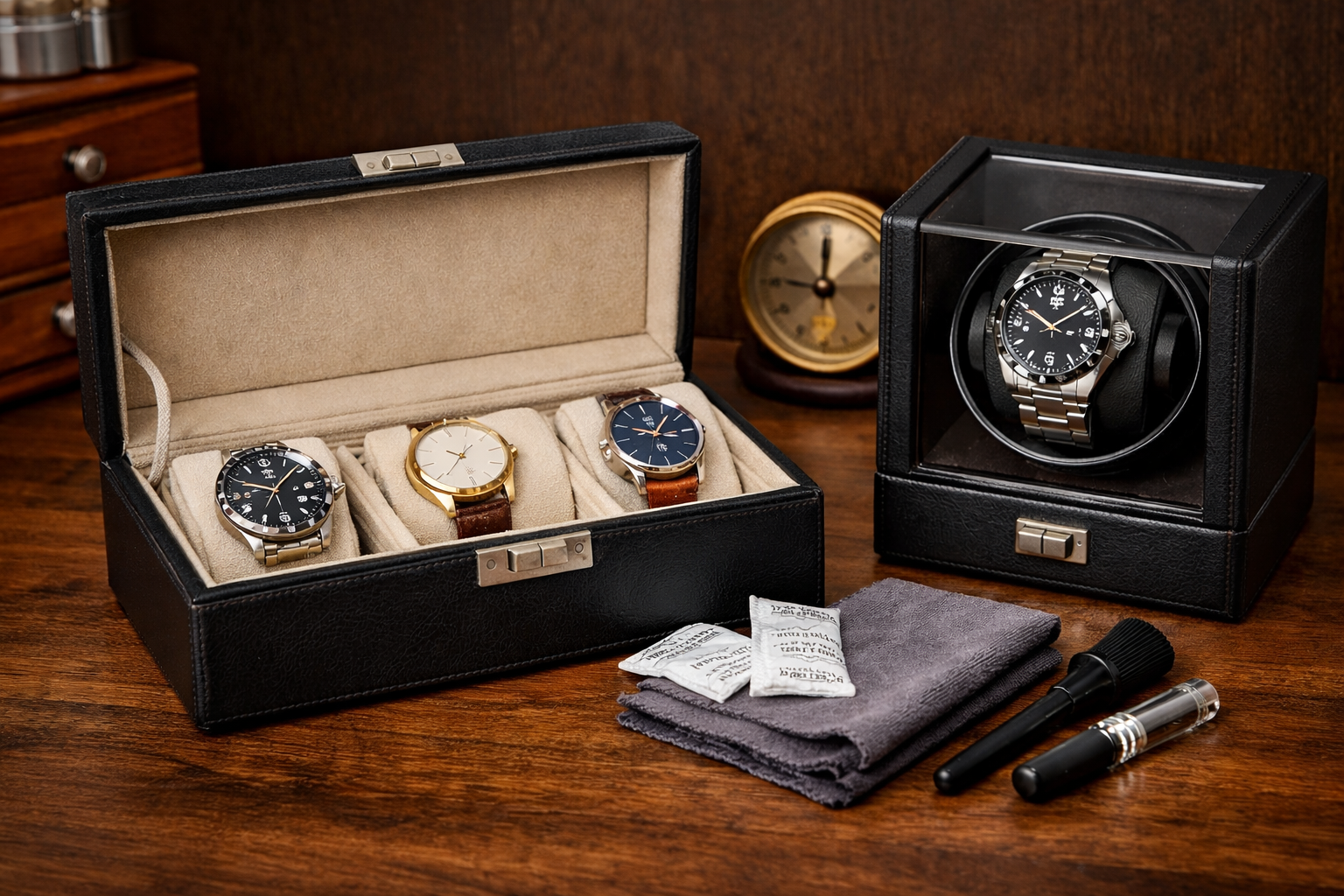
3️⃣ What About Watch Winders?
Automatic watches benefit from movement.
If you rotate watches and don’t wear them daily, a watch winder may help maintain timekeeping.
However:
-
Not all watches need constant winding
-
Overuse may increase wear
If you’re new to automatic watches, see:
👉 How Often Should You Service Your Automatic Watch?
4️⃣ Protecting Against Moisture and Magnetism
Two silent enemies of watches are:
-
Humidity
-
Magnetic fields
To reduce risk:
-
Store watches in dry environments
-
Avoid placing near speakers or electronics
-
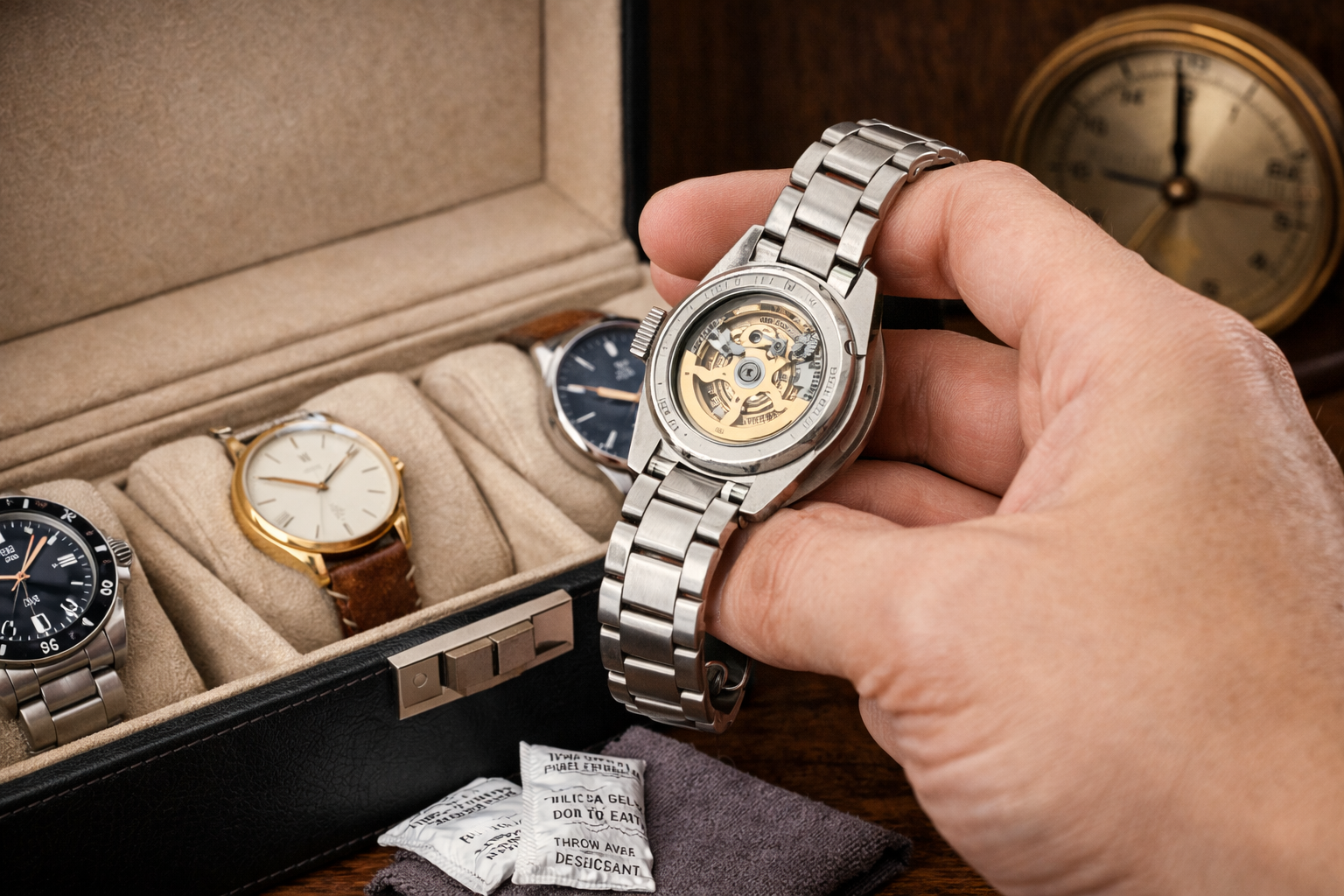
Use silica gel packs inside storage boxes
5️⃣ Long-Term Storage Tips
If you plan not to wear a watch for months:
-
Clean it first
-
Store it in a padded case
-
Keep it in a cool, dry place
-
For automatic watches, wind them once every few months
6️⃣ Common Mistakes to Avoid
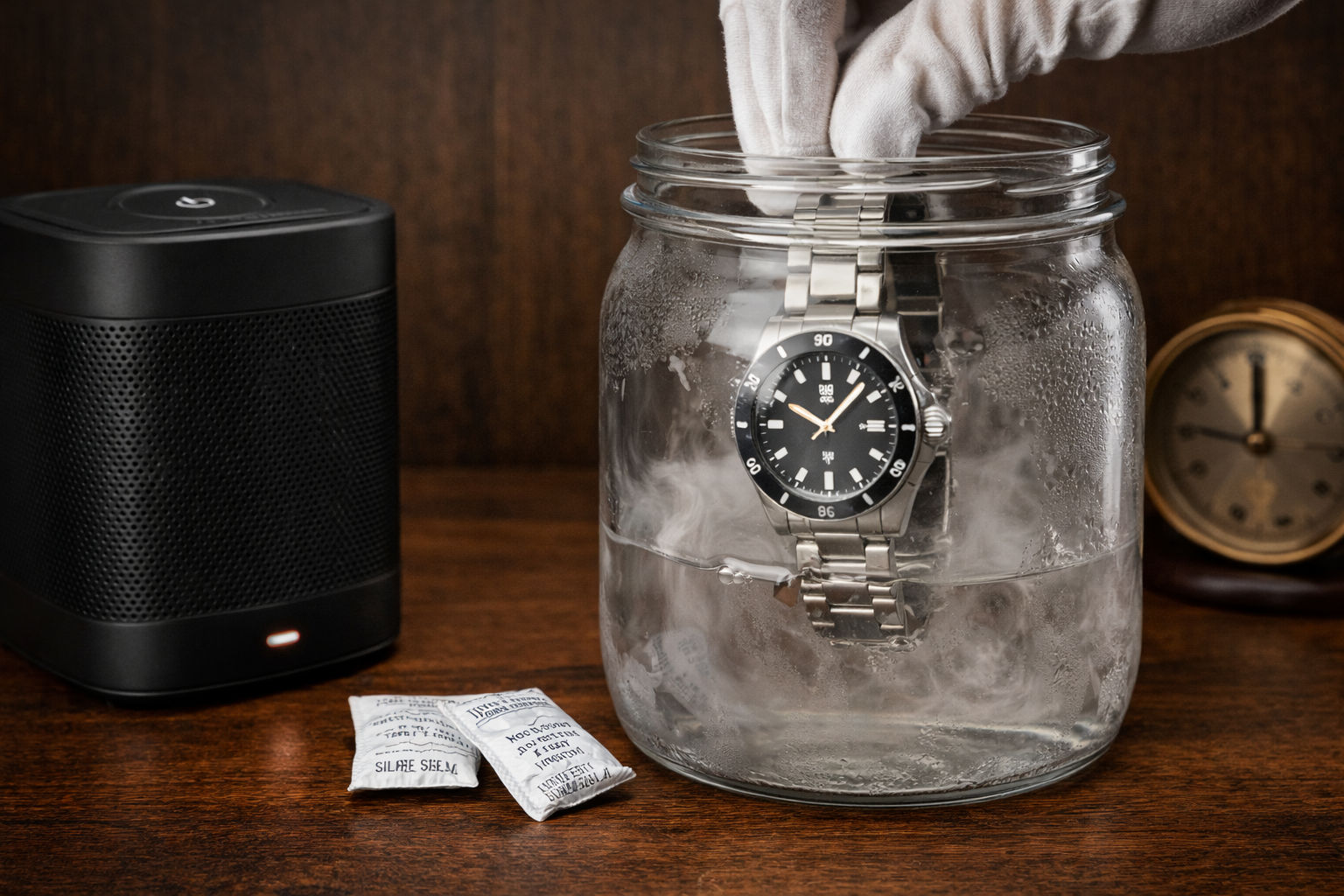
Many people unknowingly shorten their watch’s lifespan by:
-
Tossing it into drawers
-
Stacking watches on top of each other
-
Storing in direct sunlight
-
Ignoring dust buildup
Small habits make a big difference.
Proper storage is only one part of maintaining your timepiece. Understanding how long does a watch last and what affects its lifespan can also help you protect your investment in the long run.
FAQ Section
❓ Is it bad to leave a watch unworn for a long time?
Not necessarily, but automatic watches benefit from occasional winding.
❓ Should I keep my watch in a safe?
Yes, especially for valuable watches. Just ensure the safe is dry and not humid.
❓ Do watches need air circulation?
They should be stored in dry air but not sealed in damp environments.
❓ Can magnetism damage a watch?
Yes. Strong magnetic fields can affect accuracy, especially in mechanical watches.
