
Replica vs Genuine Watch: What Looks Different in Real Life?
Replica vs Genuine Watch: What Looks Different in Real Life?
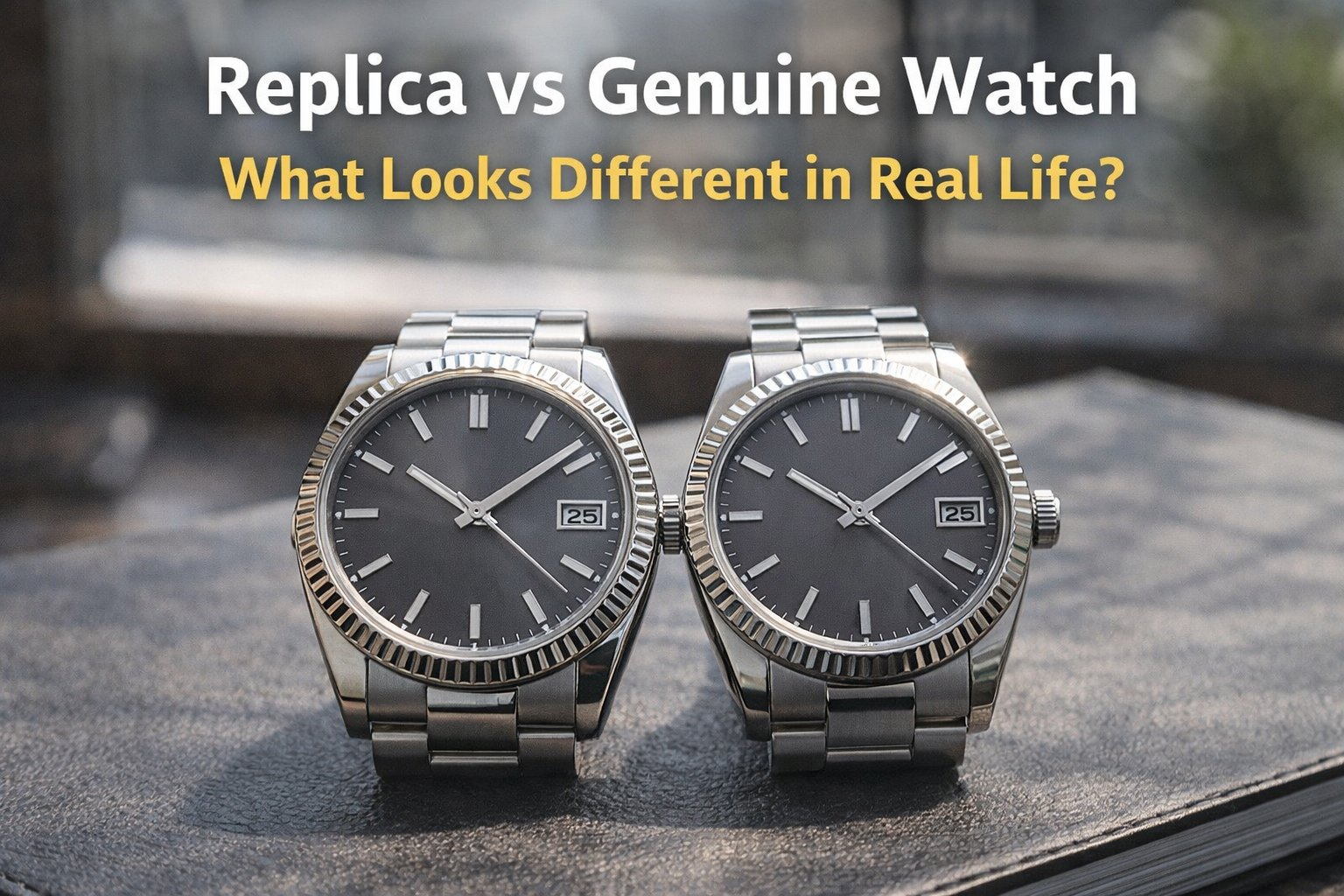
Quick Answer
In real life, the difference between a replica and a genuine watch usually becomes clearer through finishing quality, dial sharpness, bracelet feel, weight balance, and overall wrist presence. Many watches can look similar in photos, but once they are seen in daylight or worn for a few hours, small differences often become much easier to notice.
At first glance, two watches can look surprisingly close.
In listing photos, social media posts, or even short videos, a replica watch may appear very convincing. The shape looks similar, the dial color seems close, and the bracelet style appears familiar. For many buyers, that is exactly why the comparison becomes confusing.
But real life is different from photos.
Once a watch is held in the hand, viewed in daylight, or worn through a normal day, people often start noticing details that do not show up clearly online. The watch may still look decent from a distance, yet something about it feels less refined, less balanced, or simply less convincing.
That is the key difference this article explores.
Instead of focusing on technical claims or what is hidden inside the case, this guide looks at what people actually notice in real life when comparing a replica watch and a genuine one.
A Real-Life Situation Many Buyers Recognize
Imagine this situation.
Someone sees a watch online that looks almost identical to a well-known luxury model. The bracelet design looks similar, the dial color looks right, and the case shape appears close enough in photos. At first, there seems to be very little difference.
Then the watch arrives.
When it is held in the hand, the weight feels a little different. Under window light, the dial seems flatter than expected. After wearing it for a few hours, the bracelet feels less smooth, and the overall watch no longer has the same polished presence it had in the photos.
This is where the difference usually starts to show.
In many real-life comparisons, it is not one dramatic flaw that stands out first. It is the overall experience of how the watch looks, feels, and wears.
1. The Finishing Usually Tells the Story First
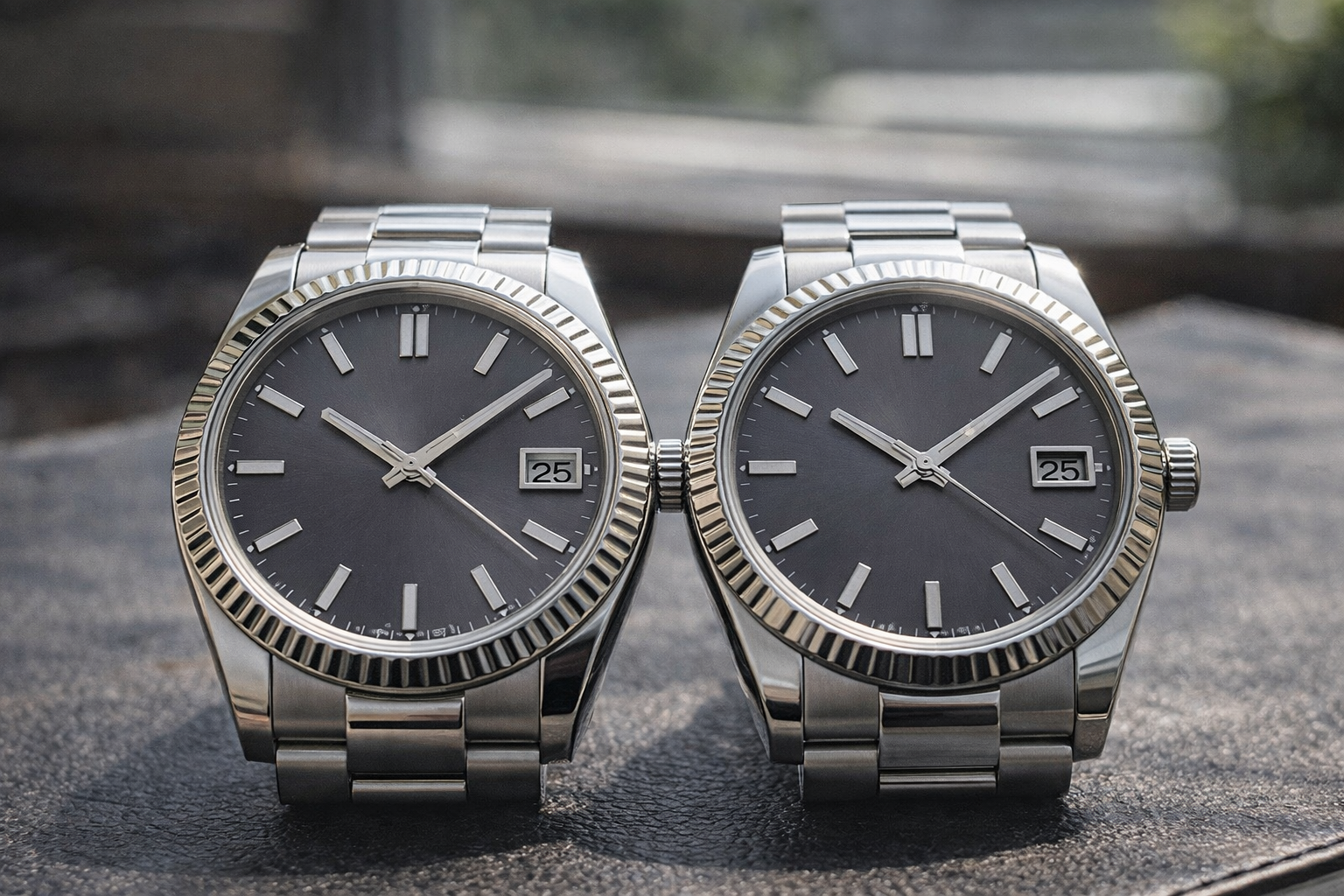
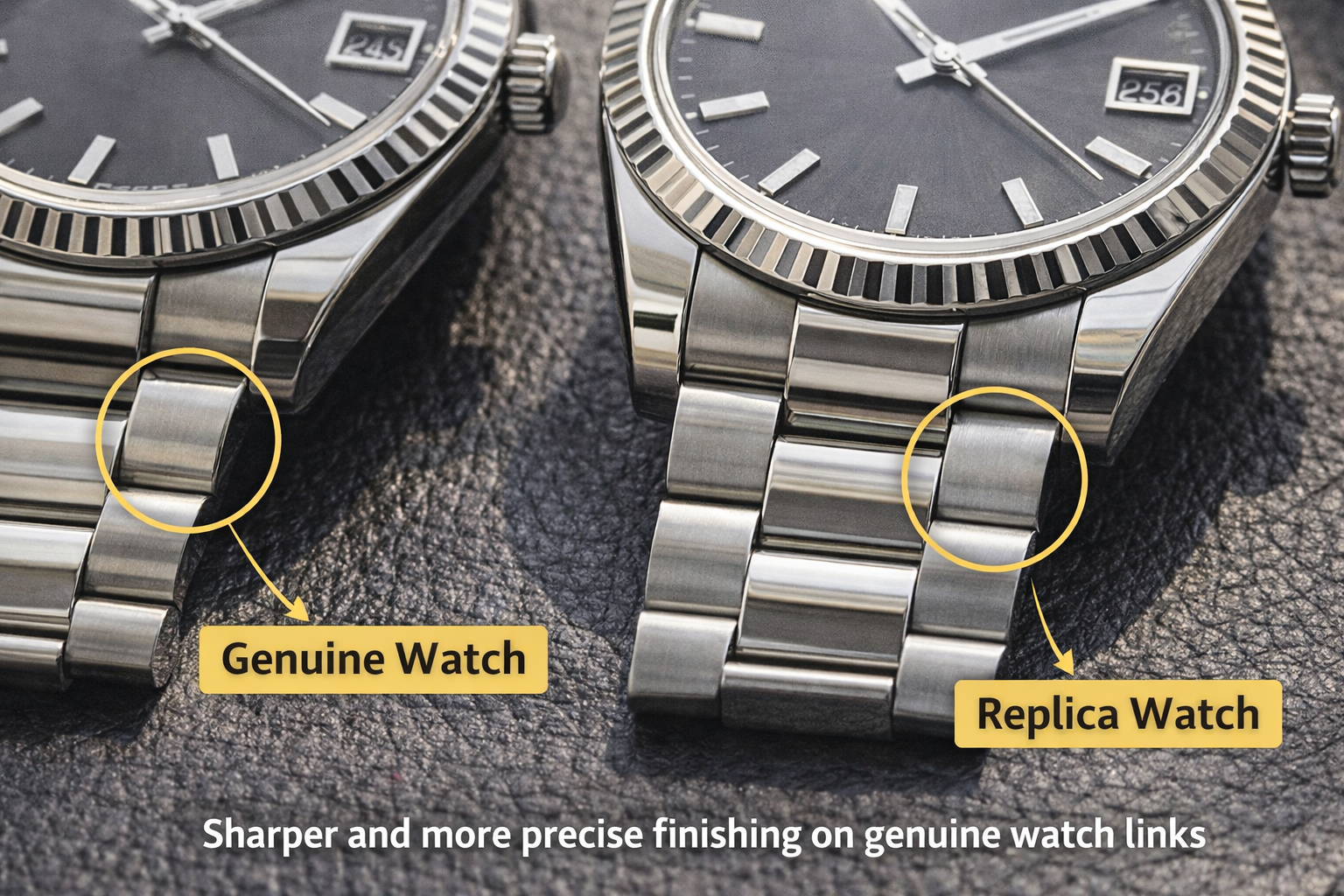
One of the clearest real-life differences is finishing.
A genuine watch often has cleaner transitions between brushed and polished surfaces, more controlled reflections, and sharper but more refined edges. On many replicas, the general shape may be close, but the finishing can feel less precise once seen up close.
Real-life example
Two watches are placed side by side on a desk near a window. From a short distance, they look similar. But once both are tilted under natural light, one case reflects more cleanly, the bezel looks more defined, and the lugs show smoother transitions. The other still looks acceptable, but less refined.
This is why some watches look convincing on a phone screen and much weaker in person.
You can naturally support this point with: What Makes a Watch Look Expensive? 9 Details Most People Notice
What to check
- Are polished surfaces smooth and even?
- Are brushed surfaces consistent?
- Do the edges look sharp in a refined way, or just rough?
- Does the bezel look precise under daylight?
2. The Dial Often Looks Similar in Photos but Different Up Close
The dial is where many small differences start to become obvious.
At first glance, the overall dial layout may look close. But in real life, the text, hour markers, minute track, hands, and date window often reveal more than expected.
A genuine watch usually shows stronger precision in these areas. The printing tends to look crisper, the marker alignment feels more exact, and the overall dial appears more balanced.
Real-life example
A buyer compares a watch under indoor lighting and thinks it looks fine. Later, they hold it near natural daylight and start noticing that the text looks slightly softer, the markers do not feel as sharp, and the date window looks less clean than they expected.
That is the kind of difference many people only notice after the watch is physically in front of them.
What to check
- Does the dial text look crisp?
- Are the hour markers evenly aligned?
- Do the hands look clean and well finished?
- Does the date window look centered and properly framed?
3. Bracelet Feel Can Be More Revealing Than the Case
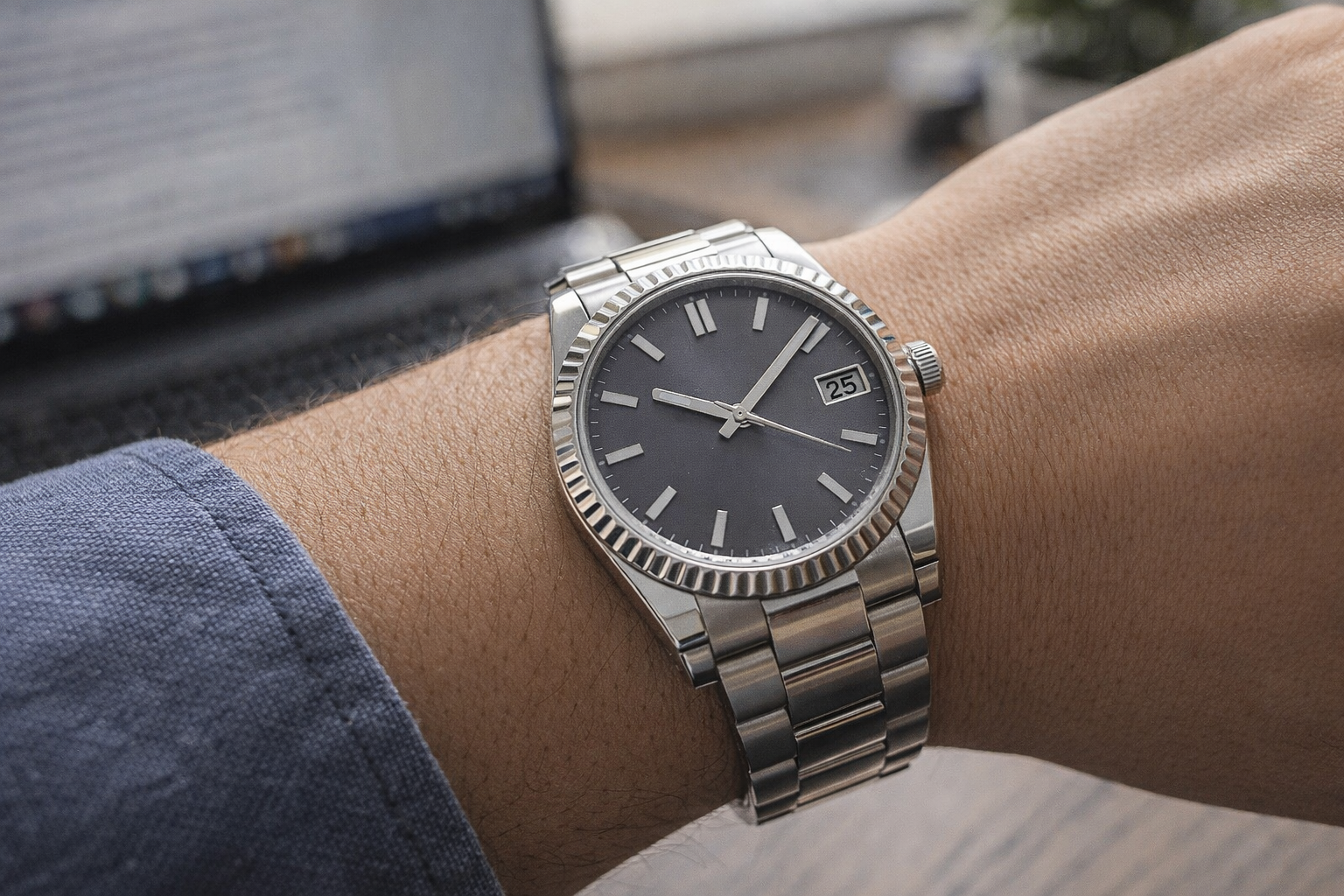
A lot of people focus on the case and dial first, but bracelet feel often gives away quality faster than anything else.
A watch can look impressive in photos and still feel disappointing as soon as the bracelet moves on the wrist. The links may sound looser, the drape may feel stiffer, or the clasp may not close with the same confidence.
Real-life example
A watch is worn during a normal office day. In the mirror, it still looks good enough. But after several hours of typing, moving around, and adjusting the wrist, the bracelet begins to feel less smooth and less comfortable than expected. That difference becomes much harder to ignore than any visual detail.
This is why daily wear matters so much in real-life comparison.
You can connect this naturally to: Best Watch Strap Material for Everyday Wear: Leather, Rubber, or Metal?
What to check
- Does the bracelet feel smooth against the skin?
- Does it drape naturally around the wrist?
- Does the clasp feel secure and precise?
- Does the bracelet sound rattly or loose?
4. Weight Balance Feels Different in the Hand and on the Wrist
Weight alone does not prove anything, but weight balance matters a lot.
A genuine watch often feels more solid and better balanced. Even when it is not especially heavy, the weight usually feels intentional and well distributed. Some replicas may look close visually but feel slightly hollow, top-heavy, or less substantial once handled.
Real-life example
A buyer picks up two similar-looking watches. One feels planted and balanced in the hand. The other is not dramatically lighter, but the weight distribution feels less natural. After trying both on, the difference becomes even clearer because one sits more confidently on the wrist.
This kind of difference is hard to judge from photos but easy to notice in person.
You can support this section with: Stainless Steel vs Titanium Watches: Which Material Is Better for Daily Wear?
What to check
- Does the watch feel balanced in your hand?
- Does the case feel too light for its size?
- Does it sit securely on the wrist?
- Does the bracelet help the watch feel stable or flimsy?
5. Daylight Exposes More Than Indoor Photos Ever Will
Lighting changes everything.
A watch that looks strong indoors or in edited seller photos may appear much less impressive in natural daylight. This is especially true when people compare texture, dial depth, finishing transitions, and the way the case reflects light.
Real-life example
A watch looks attractive under warm indoor lighting at home. The next day, the owner wears it outside for coffee and suddenly notices that the dial looks flatter, the finishing looks less clean, and the bracelet no longer feels as premium as it did indoors.
That is one reason why real-life comparison matters so much more than online screenshots.
What to check
- Does the watch still look refined outside?
- Does the dial keep its depth under natural light?
- Do polished areas reflect cleanly?
- Does the overall quality still feel convincing in daylight?
6. The Overall Presence on the Wrist Feels Different
This is one of the hardest things to describe but one of the easiest things to notice.
A genuine watch often has a more coherent presence on the wrist. The proportions, finishing, bracelet fit, and dial details come together in a way that feels balanced and intentional. With many replicas, the design may be close, but the final impression can feel less complete.
Real-life example
A buyer wears the watch out to dinner after first seeing it only in photos. In the listing images, it looked elegant and refined. On the wrist in real life, though, the watch seems flatter, the bracelet less fluid, and the overall look less polished than expected.
That difference in presence is often what people mean when they say one watch simply “feels right” and the other does not.
This section can naturally link to: How to Choose the Right Watch Size for Your Wrist because fit can amplify or reduce these visual differences.
What to check
- Does the watch feel balanced on the wrist?
- Does it look refined from different angles?
- Does the bracelet follow the wrist naturally?
- Does the watch still feel impressive after several hours?
7. Small Inconsistencies Add Up Very Quickly
The biggest real-life difference is often not one single flaw.
It is the way small inconsistencies build up over time. The finishing looks slightly weaker. The dial text is a little softer. The bracelet feels a little cheaper. The weight balance is slightly off. None of these issues may seem dramatic alone, but together they create a very different overall impression.
Real-life example
A buyer notices one small issue in the morning, another in the afternoon, and another after wearing the watch outside. By the end of the day, the watch does not necessarily look terrible, but it no longer feels as convincing as it did when first seen online.
That is how many real-life comparisons actually happen.
You can tie this back to:
What to check
- Do all parts of the watch feel equally well executed?
- Does one area seem much weaker than the others?
- Does the overall watch feel consistent?
- Does your opinion of it improve or weaken during real wear?
Why Photos Often Make the Difference Harder to See
Photos flatten detail.
They can hide texture, soften finishing flaws, reduce the visibility of bracelet movement, and make small alignment issues easier to miss. They also remove the physical side of the watch experience, which is often where the real difference shows up.
That is why so many buyers feel uncertain when looking only at product images. A watch may seem very convincing online because the conditions are controlled. Real life is much less forgiving.
What People Usually Notice First in Everyday Use
Most people do not sit down and study a watch like a watchmaker.
They notice differences in normal situations:
- when they first pick it up out of the box
- when they adjust the bracelet
- when they check the dial near a window
- when they wear it through a workday
- when they see it outdoors in natural light
- when they compare how it feels after a few hours on the wrist
That is why real-life comparison is so useful. It is based on normal use, not perfect marketing photos.
Final Thoughts
When comparing a replica watch and a genuine watch, the difference in real life usually comes down to refinement.
From a distance or in carefully chosen photos, two watches can appear surprisingly similar. But once they are held, worn, and viewed in daylight, the details often start separating them. Finishing becomes clearer. Dial quality becomes easier to judge. Bracelet feel matters more. Weight balance becomes more obvious. And the overall wrist presence tells a more complete story.
In the end, real-life comparison is less about one dramatic mistake and more about how well the whole watch comes together during normal use.
FAQ
Can a replica watch look almost the same as a genuine watch in photos?
Yes. In photos, many differences can appear much smaller. Real-life lighting, handling, and wrist wear often make those differences easier to notice.
What is the most obvious real-life difference?
For many people, it is the finishing and bracelet feel. These are hard to judge online but become clear quickly in person.
Does the dial always reveal the difference?
Not always at first glance, but under closer inspection the dial often shows differences in text sharpness, marker alignment, and overall precision.
Why does a watch sometimes look better indoors than outside?
Indoor lighting can hide texture and finishing flaws. Natural daylight usually reveals more detail and makes comparison easier.
Can you tell the difference just by wearing the watch for a day?
Often, yes. Comfort, bracelet feel, balance, and overall wrist presence usually become clearer during real daily wear.
