
Stainless Steel vs Titanium Watches: Which Case Material Is Better?
Stainless Steel vs Titanium Watches: Which Case Material Is Better?
Quick Answer
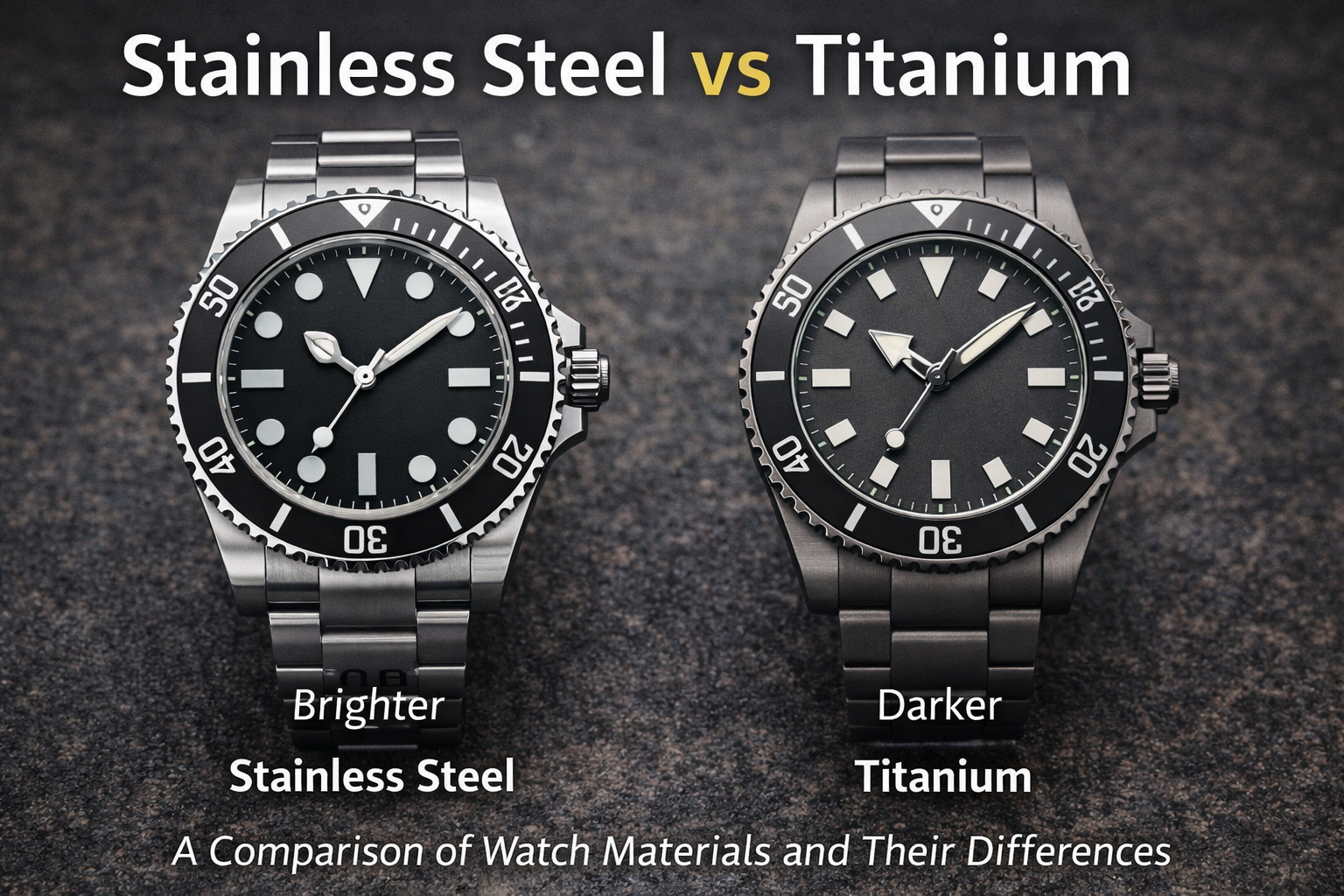
For most buyers, stainless steel is the better all-around watch case material because it offers a classic look, strong durability, wider availability, and better value. Titanium is often the better choice if you want a watch that feels noticeably lighter, more comfortable for long wear, and more modern in overall character.
The better material depends on what matters most to you: weight, comfort, style, price, or daily wrist feel.
Why Watch Case Material Matters
When people shop for a watch, they often focus on the dial, movement, or brand first. But case material has a huge influence on how a watch actually feels once it is on your wrist. It affects weight, comfort, visual style, and even how often you enjoy wearing the watch.
Two watches can look similar in photos but feel completely different in real life because of the case material. That is especially important if you plan to wear the watch every day rather than only on special occasions.
If you are still learning how build quality affects long-term ownership, it also helps to read our guide on what makes a high-quality watch.
What Is the Difference Between Stainless Steel and Titanium?
At the simplest level, stainless steel and titanium are both strong watch case materials, but they create a different wearing experience.
Stainless steel usually feels heavier, looks brighter, and gives a more traditional sense of solidity.
Titanium usually feels lighter, looks a little darker, and gives a more modern, understated impression.
That means this comparison is not really about good versus bad. It is about which material better matches your personal preferences.
Stainless Steel Watches
Stainless steel is the most common watch case material in the industry. It is used on everything from affordable everyday watches to luxury models, and there is a reason for that: it works well for almost every category.
Why Stainless Steel Is So Popular
Steel offers a balance that appeals to many buyers. It is durable, familiar, versatile, and often more affordable than titanium. It also works well with different finishes, from polished dress-watch surfaces to brushed sport-watch cases.
Many buyers also associate a certain amount of weight with quality. A steel watch often feels substantial and reassuring on the wrist, which is part of its appeal.
Pros of Stainless Steel Watches
-
Widely available across all price ranges
-
Strong and dependable for daily wear
-
Usually more affordable than titanium
-
Works well with polished and brushed finishing
-
Feels solid and traditional on the wrist
Cons of Stainless Steel Watches
-
Heavier than titanium
-
Can feel tiring in larger case sizes
-
May feel less comfortable during very long wear if weight bothers you
If you care about daily toughness as much as appearance, our guide on how to choose a durable watch for long-term use is also worth reading.
Titanium Watches
Titanium is often seen as the more modern alternative to stainless steel. It is especially popular in tool watches, sports watches, and larger watches where comfort matters more.
Why Buyers Choose Titanium
The biggest reason people choose titanium is simple: it is much lighter on the wrist. That difference becomes obvious very quickly, especially if you wear your watch all day or prefer larger cases.
Titanium also tends to have a more muted, slightly darker appearance than polished steel. That gives it a more technical and understated feel, which some buyers strongly prefer.
Pros of Titanium Watches
-
Noticeably lighter than stainless steel
-
Usually more comfortable for all-day wear
-
Strong for its weight
-
Often feels more modern and specialized
-
Especially useful for larger sports or tool watches
Cons of Titanium Watches
-
Usually costs more
-
May feel too light for buyers who prefer a solid wrist presence
-
Does not have the same bright classic look as polished steel
-
Some finishes can show wear in a different way than steel
If comfort and daily wear matter most to you, it also helps to compare what size watch you should wear before choosing between heavier and lighter case materials.
Stainless Steel vs Titanium: Key Differences
1. Weight
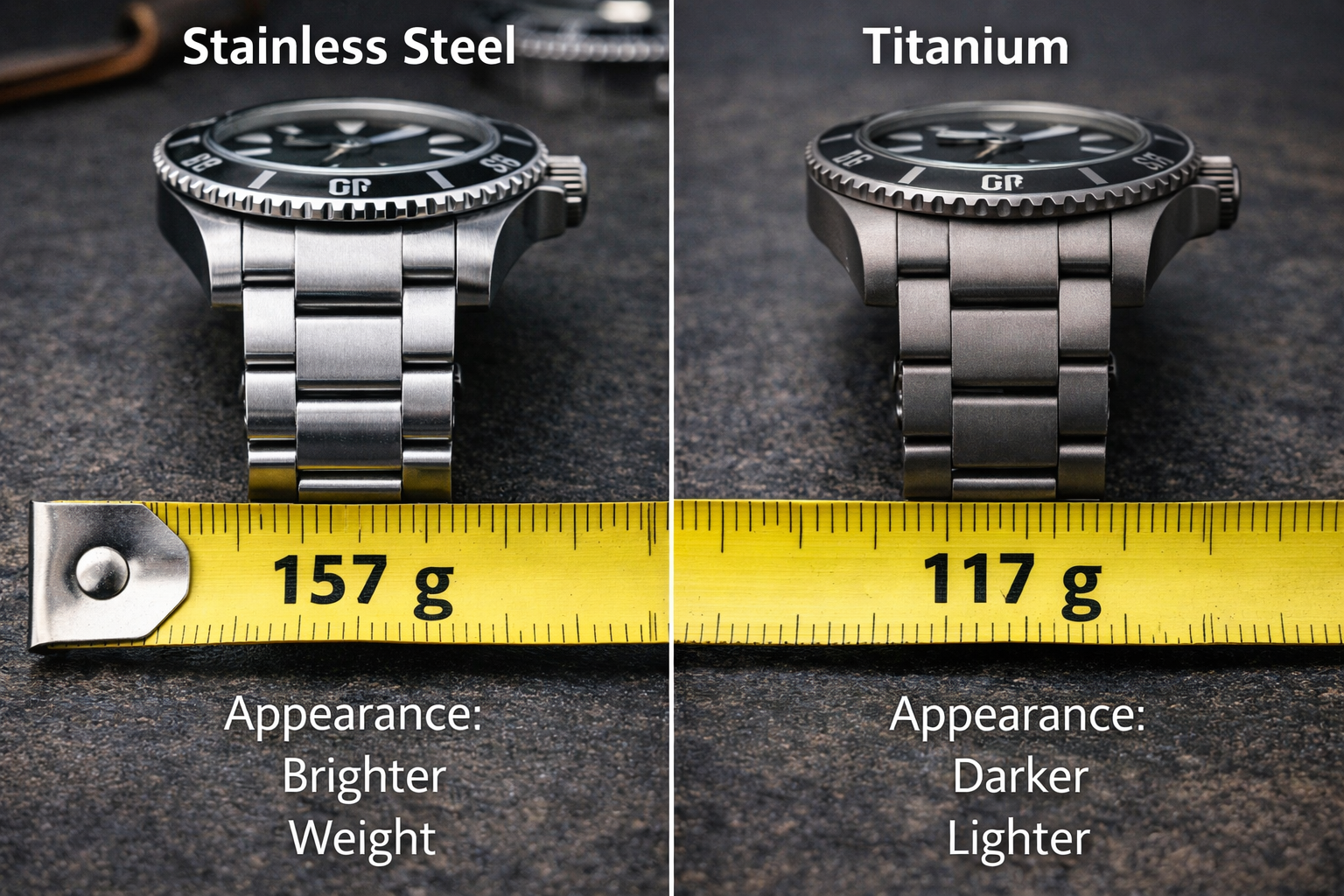
This is the biggest difference for most buyers.
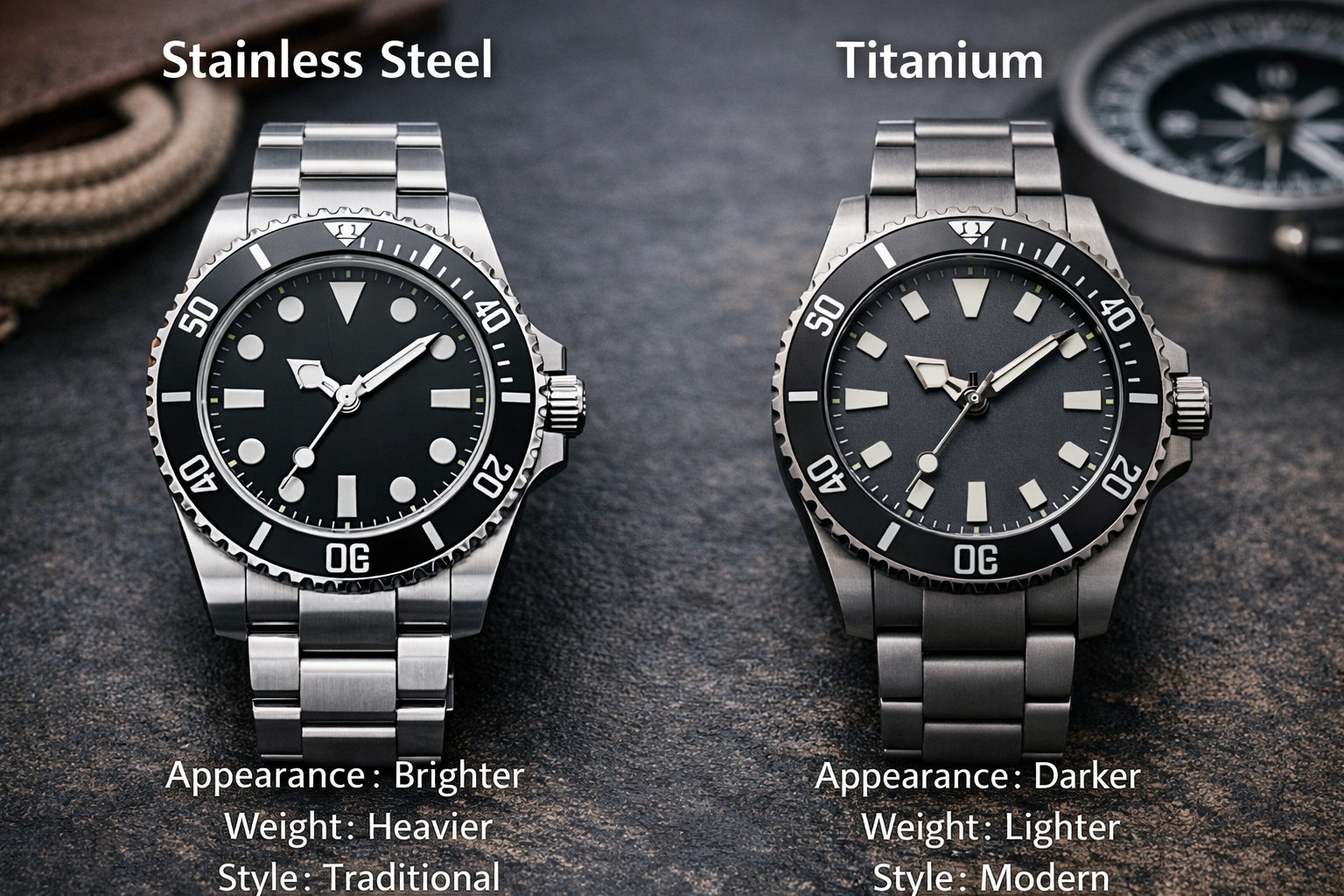
A stainless steel watch usually feels heavier and more substantial. A titanium watch feels significantly lighter. On paper that sounds simple, but in daily wear it can shape your whole experience with the watch.
If you like a strong sense of wrist presence, steel may feel more satisfying. If you want a watch that feels easier to forget you are wearing, titanium often wins immediately.
2. Comfort
Because titanium is lighter, it is often more comfortable for long wear. This matters most if you:
-
wear a watch all day
-
prefer larger case sizes
-
have a smaller wrist
-
dislike heavy accessories
-
live in a warm climate
Steel can still be very comfortable, especially in moderate sizes, but titanium usually has the advantage when comfort is the top priority. If fit is one of your main concerns, you may also want to read how tight a watch should be.
3. Appearance
Steel and titanium do not look the same.
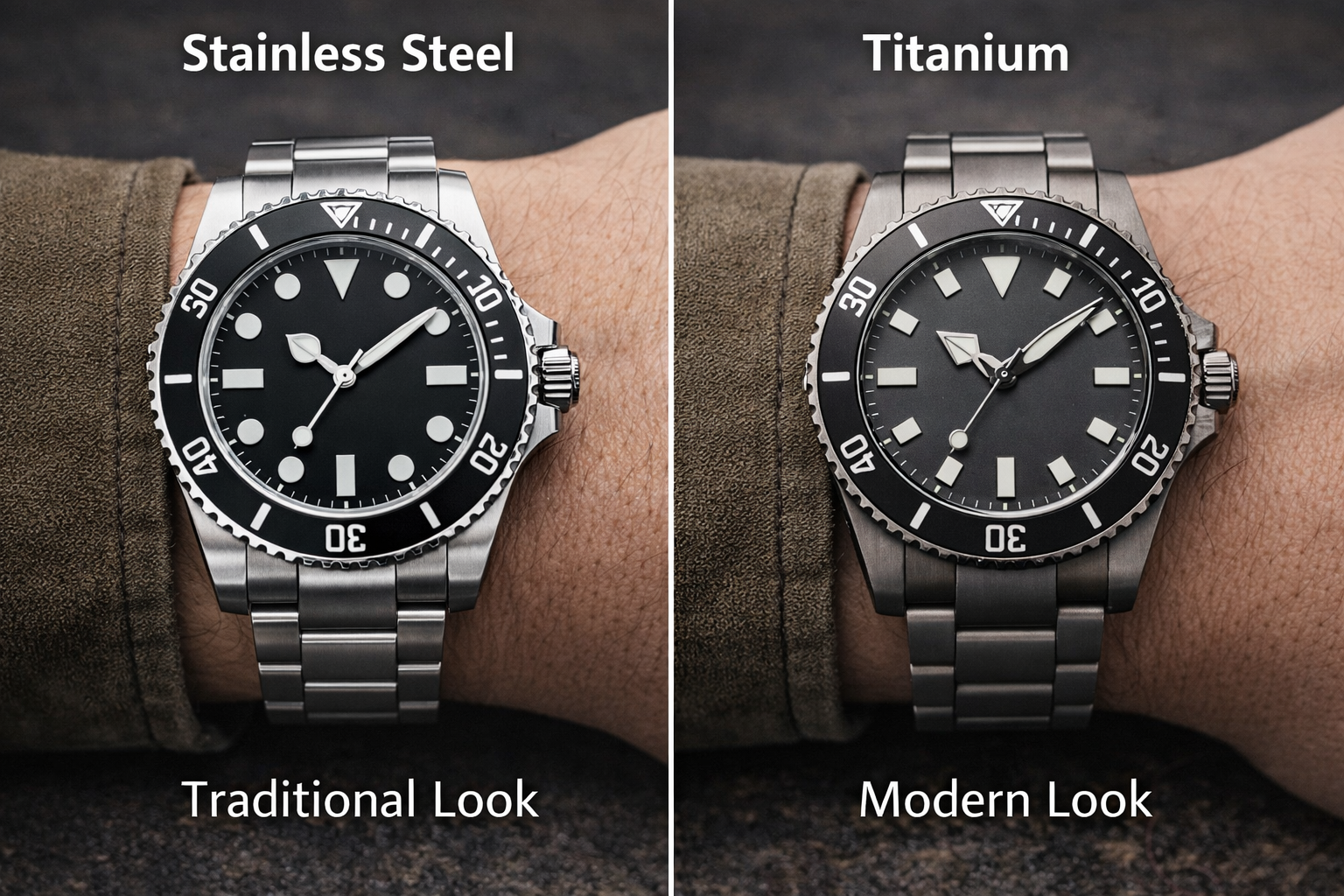
Stainless steel usually looks brighter, shinier, and more classic. Titanium often looks darker, softer, and more understated. Because of that, steel is often associated with traditional luxury, while titanium tends to feel more technical and modern.
Neither look is automatically better. It depends on the style you want.
4. Price
In many cases, titanium watches cost more than comparable stainless steel versions. That does not mean titanium is always the better buy. It simply means you are often paying for a lighter and somewhat more specialized material.
If value matters most, steel usually makes more sense.
5. Wrist Presence
Some buyers want a watch to feel substantial. Others want it to disappear on the wrist.
That is one of the clearest differences between these materials:
-
Steel usually feels more present
-
Titanium usually feels more effortless
This is one reason some people love steel and others never want to go back after trying titanium.
Which Material Is Better for Daily Wear?
For most people, stainless steel is the better all-around choice for daily wear because it balances cost, durability, appearance, and availability so well. It is the safest recommendation for buyers who want a reliable everyday watch without overthinking the material decision.
Titanium becomes the better daily-wear option if your top priority is comfort. It makes the biggest difference when you wear a watch for long hours, prefer larger cases, or simply dislike the feeling of a heavy watch.
A simple way to think about it is this:
-
choose stainless steel for better all-around value
-
choose titanium for lighter all-day comfort
If you are comparing material choices more broadly, it is also useful to read best watch case materials for everyday use.
Which Looks More Premium?
This depends on your taste more than many buyers expect.
To many people, stainless steel looks more traditionally premium because it has the shine and visual familiarity associated with classic watches. It often feels dressier and more luxurious in a conventional sense.
Titanium, by contrast, often looks more subtle and modern. Some people see that as more advanced and more refined. Others think it looks less luxurious because it is not as bright or reflective.
So the more accurate answer is this:
-
stainless steel often looks more classic and traditional
-
titanium often looks more modern and understated
Which Is Better for Beginners?
For most beginners, stainless steel is usually the better first choice.
There are a few reasons for that. Steel watches are easier to find, easier to compare, usually more affordable, and available in almost every style category. They also give first-time buyers the familiar watch feel that many people expect.
Titanium can still be an excellent choice, especially if comfort is your main priority. But if you are buying your first serious watch, steel is the easier place to start.
If you are still deciding what type of first watch fits your lifestyle, our guide on best watch types for beginners can help.
Common Mistakes Buyers Make
One common mistake is assuming titanium is automatically better because it often costs more. That is not really how this comparison works. Titanium is better for certain priorities, especially comfort and lightness, but not necessarily for everyone.
Another mistake is ignoring wrist feel. Some buyers choose a steel watch because they love the look, then realize later that they do not enjoy the added weight every day. Others choose titanium expecting it to feel more premium, then discover they actually prefer the heft of steel.
A smarter approach is to decide whether you want your watch to feel more substantial or more effortless. That is usually the real decision.
It also helps to compare other durability-related details, including watch crystal types explained, because the full wearing experience depends on more than case material alone.
How to Choose Between Stainless Steel and Titanium
The easiest way to choose is to start with your top priority.
Choose Stainless Steel If:
-
you want the best all-around value
-
you prefer a more classic watch look
-
you like a solid, weighty feel
-
you want the widest range of choices
-
you are buying your first serious watch
Choose Titanium If:
-
you want a lighter watch
-
comfort matters more than heft
-
you wear your watch for long hours
-
you prefer a more modern or technical look
-
you are considering a larger sports or tool watch
This decision gets easier once you think about how the watch will actually feel during daily use, not just how it looks in product photos.
Final Verdict
If you want the simplest answer, stainless steel is better for most buyers, while titanium is better for buyers who strongly prioritize lightweight comfort.
Steel remains the safer all-around recommendation because it offers better value, broader versatility, and the classic wrist feel many people expect from a watch. Titanium becomes the stronger choice when long-term comfort matters more than heft or traditional appearance.
The best case material is not the one that sounds more advanced. It is the one that makes you enjoy wearing the watch more often.
Key Takeaways
-
stainless steel is the better all-around choice for most buyers
-
titanium is often the better choice for comfort and low weight
-
steel feels more traditional, brighter, and more substantial
-
titanium feels lighter, more modern, and more understated
-
steel is usually more affordable
-
titanium is especially appealing for large sports and tool watches
-
the better material depends on whether you value heft or comfort more
FAQ
Is titanium better than stainless steel for watches?
Not always. Titanium is usually better for lightweight comfort, while stainless steel is usually better for all-around value, traditional feel, and broader versatility.
Are titanium watches more comfortable?
For many people, yes. Titanium watches are noticeably lighter, which often makes them more comfortable for long daily wear.
Which is better for daily wear, steel or titanium?
For most people, stainless steel is the better all-around daily-wear option. Titanium is better if lightness and comfort are your main priorities.
Which looks more premium, titanium or stainless steel?
That depends on taste. Stainless steel usually looks more classic and luxurious, while titanium looks more modern and understated.
Should a beginner buy a titanium watch?
A beginner can buy titanium, but stainless steel is usually the easier and safer first choice because it is more common, easier to compare, and often more affordable.
