
What Is a Watch Power Reserve and Why Does It Matter?
What Is a Watch Power Reserve and Why Does It Matter?

Introduction
When exploring mechanical or automatic watches, you may often see the term power reserve mentioned in product descriptions.
But what exactly does power reserve mean, and why is it important for watch performance?
Understanding how a watch power reserve works helps explain why some watches can run longer without being worn and why others stop sooner. For watch enthusiasts and beginners alike, this concept is essential to understanding how mechanical timepieces operate.
1️⃣ What Is a Watch Power Reserve?
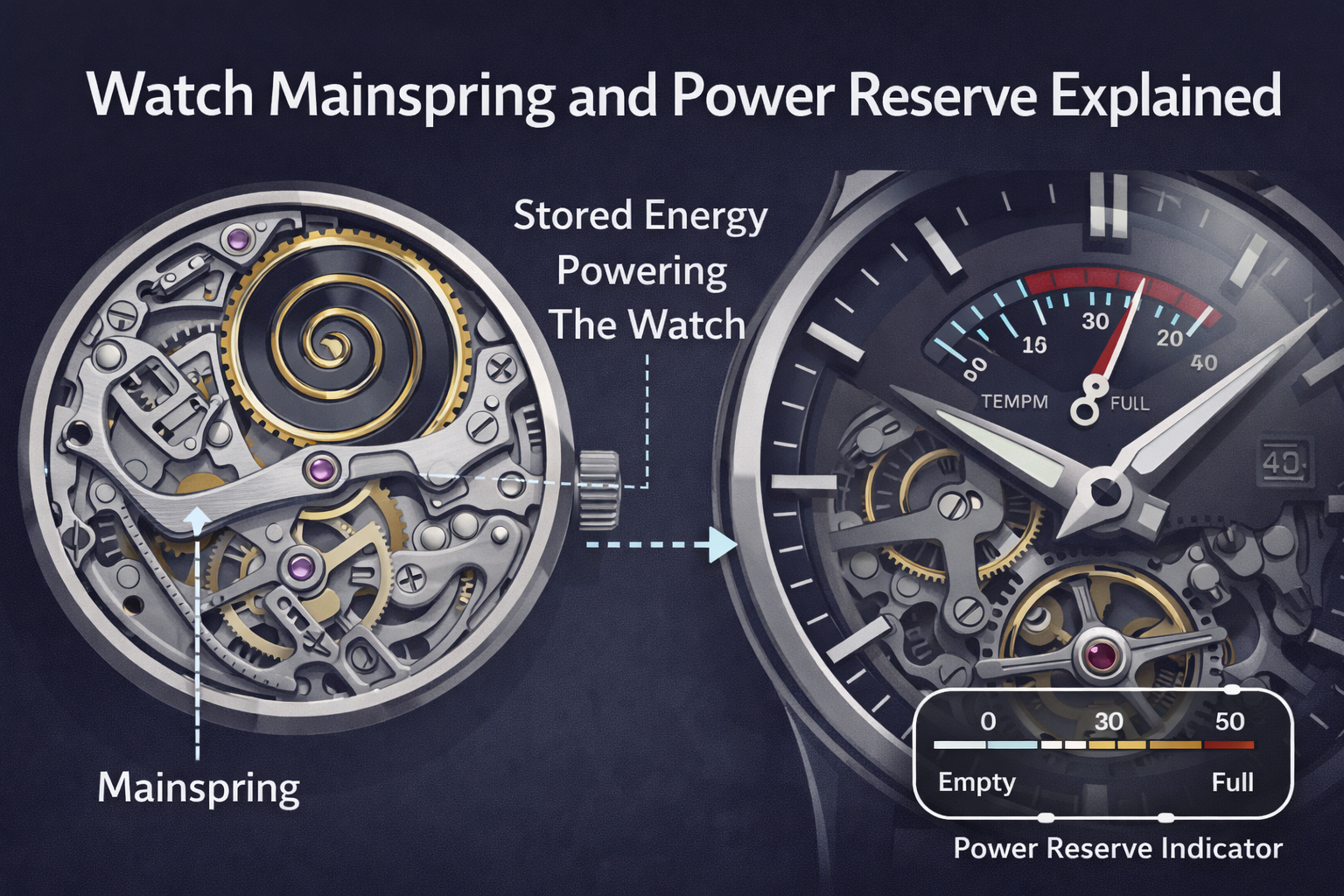
A watch power reserve refers to the amount of time a mechanical or automatic watch can continue running after it has been fully wound.
Inside the watch, energy is stored in a component called the mainspring. As the mainspring slowly releases this energy, it powers the gears and movement that keep the watch running.
Most mechanical watches have a power reserve of:
-
36 hours
-
40 hours
-
48 hours
Some modern movements can last up to 72 hours or more.
If you want to understand how mechanical watches work compared to battery-powered watches, you can read our guide on mechanical vs quartz watches.
2️⃣ Why Power Reserve Is Important
Power reserve determines how long your watch will continue running when it is not being worn.
For example, if a watch has a 40-hour power reserve, it can continue working for about two days after you remove it from your wrist.
Watches with longer power reserves are particularly useful for people who rotate between several watches in their collection.
Understanding how watches function over time can also help you learn more about watch durability. Our guide on how long mechanical and quartz watches really last explains how different watch movements perform over the long term.
3️⃣ Automatic Watches vs Manual Wind Power Reserve
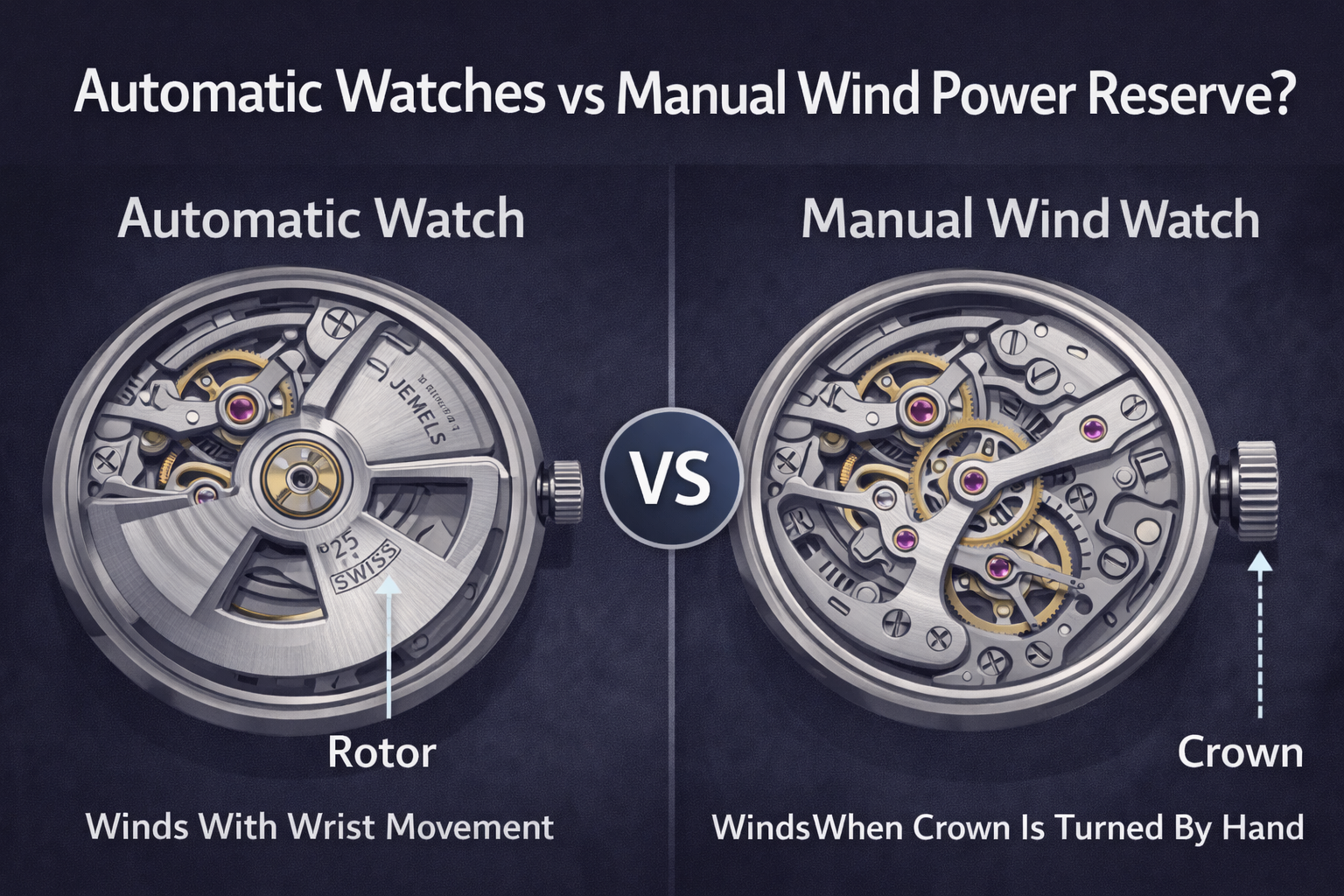
Both automatic watches and manual-wind watches rely on the same basic power reserve system.
The difference lies in how the mainspring is wound.
Automatic watches use a rotor mechanism that winds the mainspring as you move your wrist during daily wear.
Manual wind watches require the wearer to wind the crown regularly to maintain power.
Despite this difference, both types of watches will stop once the stored power reserve runs out.
4️⃣ How to Know When a Watch Needs Winding
When the power reserve of a mechanical watch is depleted, the watch will stop running.
This is completely normal and simply means the mainspring no longer has stored energy.
Restarting the watch is easy. You can either wind the crown manually or wear the watch so that the rotor begins winding the mainspring again.
Keeping your watch in good condition also helps maintain its performance. You can learn helpful care tips in our article on how to protect your watch from daily wear and damage.
5️⃣ Longer Power Reserve in Modern Watches
Modern watchmakers have been improving movement efficiency for many years.
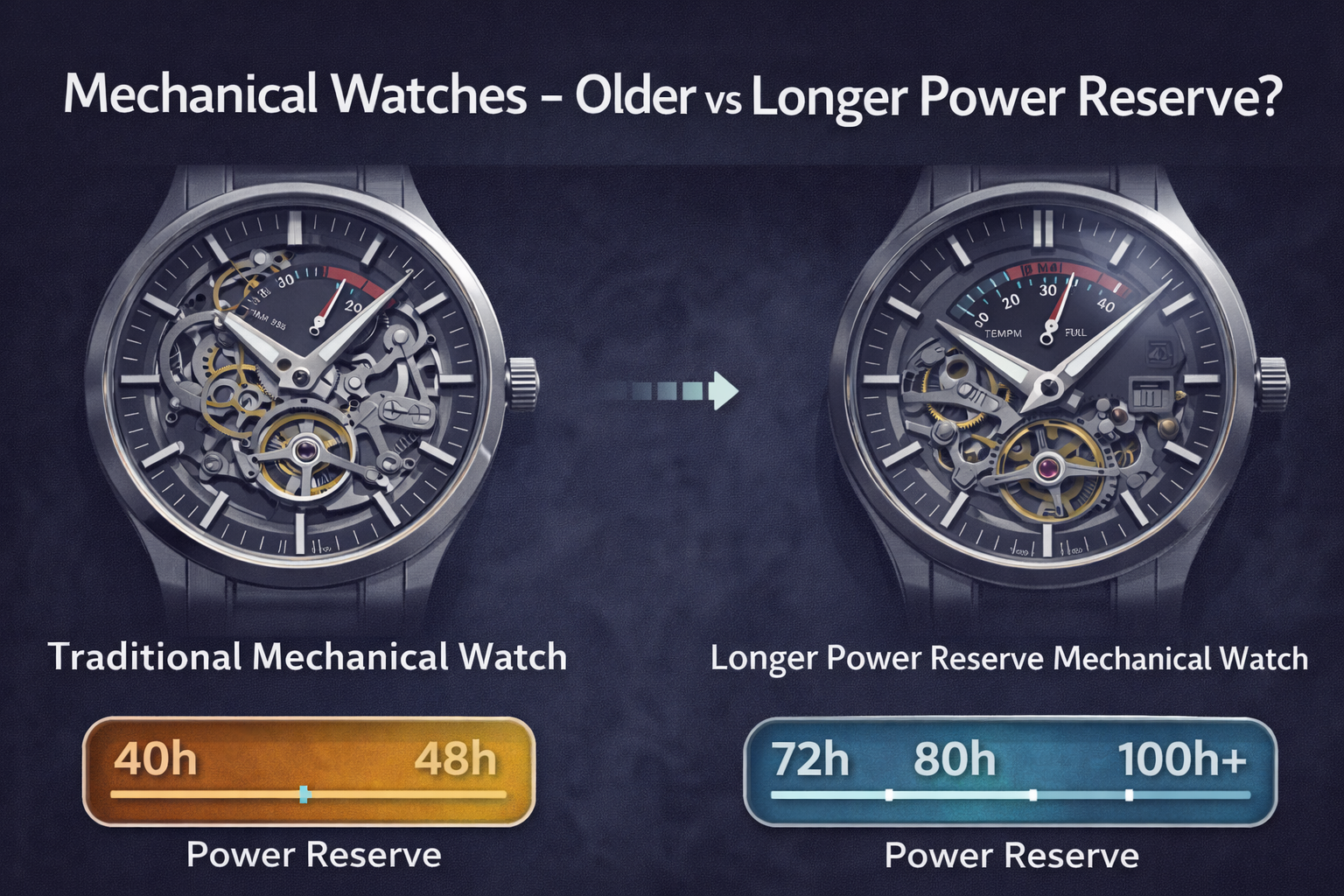
Some modern mechanical watches now offer:
-
72-hour power reserve
-
80-hour power reserve
-
Even longer in certain advanced movements
These improvements allow watch owners to remove their watch for several days without needing to reset the time.
For collectors who rotate multiple watches, longer power reserve movements can be especially convenient.
Conclusion
Power reserve is one of the most important features of mechanical and automatic watches. It determines how long the watch can run after being fully wound.
By understanding power reserve and how it works, watch owners can better manage their watches and ensure they continue running smoothly. Whether you wear your watch daily or rotate several watches in your collection, knowing how power reserve functions helps you get the most out of your timepiece.
FAQ Section
❓ What does power reserve mean in watches?
Power reserve refers to how long a mechanical or automatic watch can run after it has been fully wound.
❓ How long is a normal watch power reserve?
Most mechanical watches have a power reserve between 36 and 48 hours, though some modern watches can last up to 72 hours or more.
❓ Do automatic watches have a power reserve?
Yes. Automatic watches store energy in the mainspring and release it gradually, allowing the watch to run for a specific amount of time.
❓ Why does my watch stop after a few days?
Your watch stops because the stored energy in the mainspring has been used up. Winding the watch again will restart it.
