
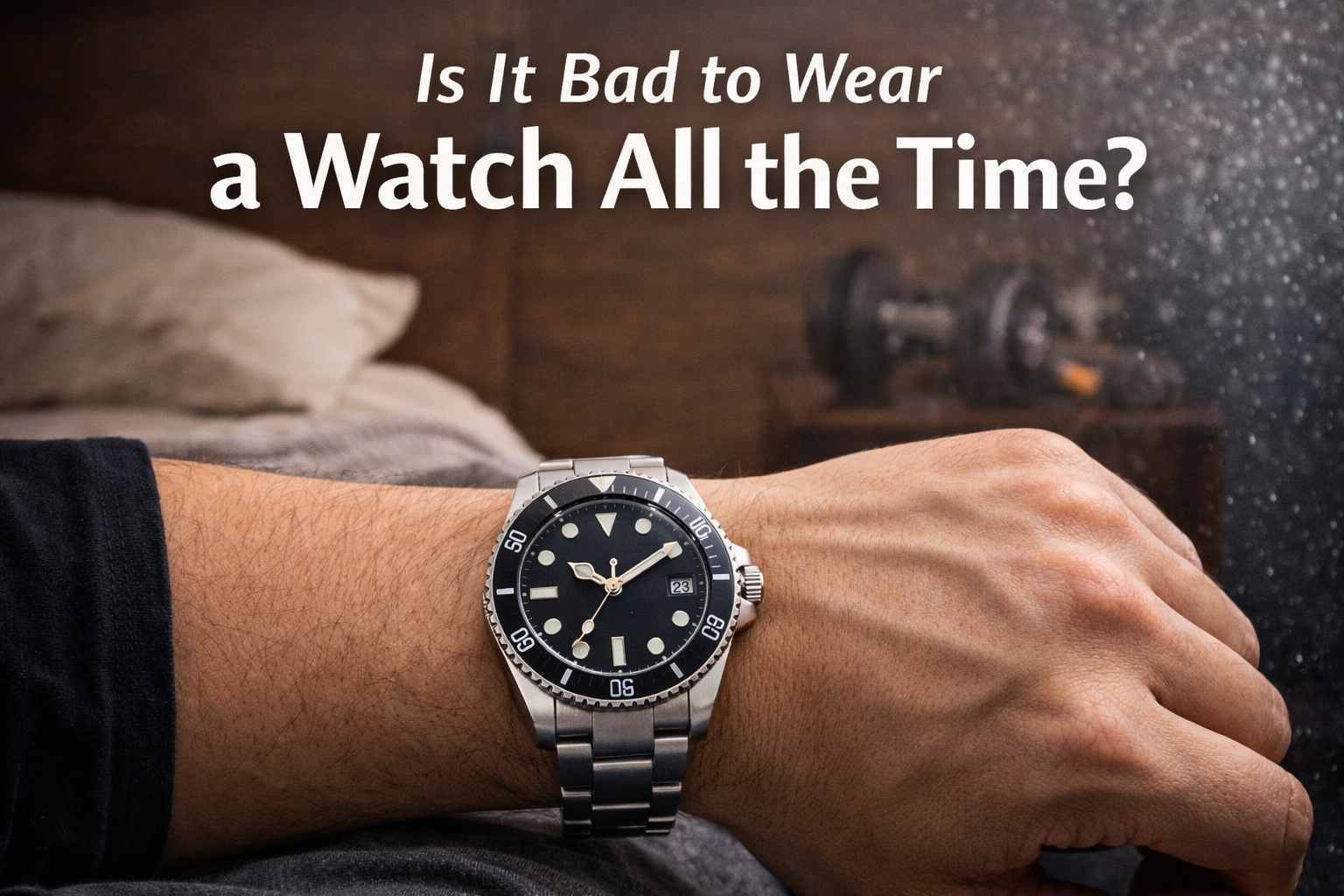
Is It Bad to Wear a Watch All the Time?
Is It Bad to Wear a Watch All the Time?
Introduction
Many watch owners wonder whether wearing a watch all the time is harmful — either to the watch or to themselves.
Is it bad to wear a watch 24/7?
Can it damage the movement?
Does constant wear reduce its lifespan?
The short answer: It depends on the type of watch and how you wear it.
Let’s break it down.
1️⃣ Wearing a Watch Daily: Is It Harmful?
For most modern watches, daily wear is completely normal.
In fact, automatic watches are designed to run while being worn regularly. Wrist movement keeps the rotor spinning and the mainspring powered.
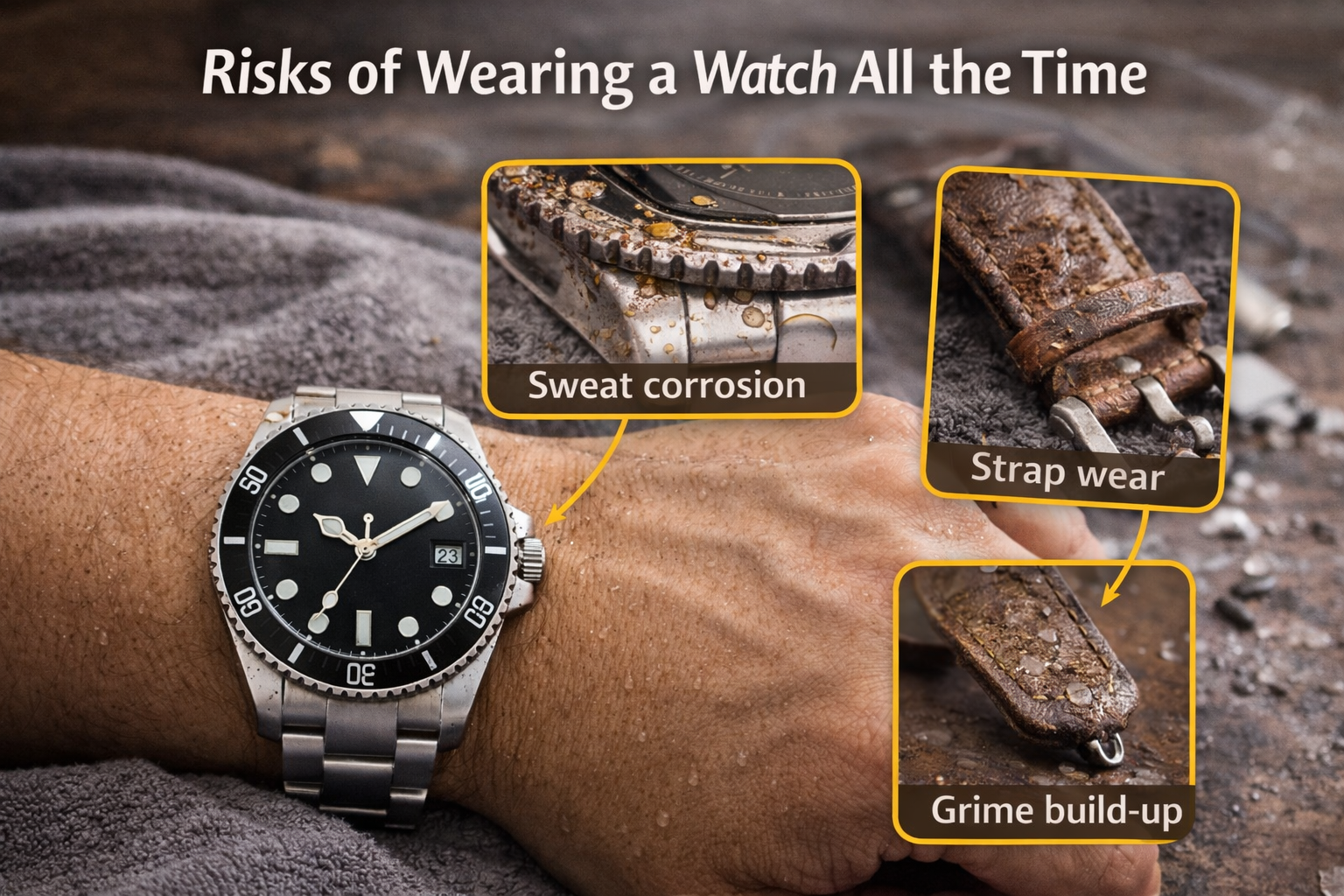
However, constant wear without proper care can lead to:
-
Dirt buildup
-
Sweat corrosion
-
Strap wear
-
Gasket aging
If you're new to automatic movements, you may also want to read our guide on
👉 Mechanical vs Quartz Watches Explained
2️⃣ Is It Safe to Sleep with a Watch On?
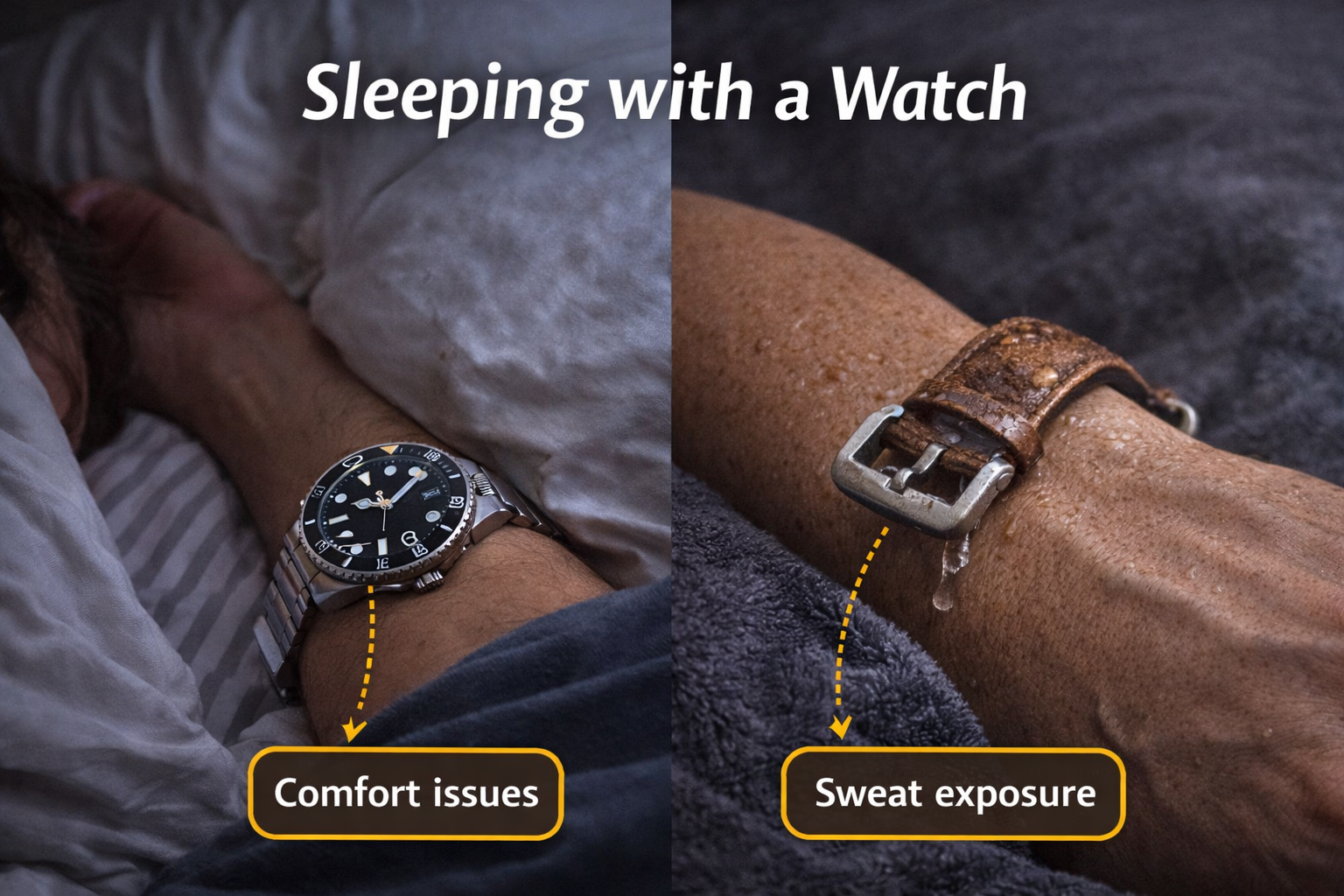
Sleeping with a watch is not necessarily dangerous, but there are considerations:
-
Pressure against the wrist
-
Increased sweat exposure
-
Possible scratching against surfaces
Metal bracelets may feel uncomfortable overnight, while leather straps can absorb moisture and deteriorate faster.
For daily protection tips, you can explore our article on
👉 How to Protect Your Watch from Daily Wear and Damage
3️⃣ Can Wearing a Watch Constantly Damage It?

Watches are designed for regular use, but constant exposure to:
-
Moisture
-
Shock
-
Heat
-
Chemicals
can reduce longevity.
For example, wearing a watch in the shower or gym repeatedly may weaken seals over time.
If you’re unsure about water safety, our guide on
👉 Water Resistance in Watches Explained
covers how ratings work in real-life situations.
4️⃣ Does Constant Wear Shorten Lifespan?
Not necessarily.
In fact:
-
Automatic watches benefit from consistent movement.
-
Quartz watches are largely unaffected by daily wear.
The real factor is maintenance.
Regular servicing every 3–5 years keeps internal components healthy.
5️⃣ When Should You Take It Off?
You should remove your watch when:
-
Showering
-
Swimming (unless rated properly)
-
Using chemicals
-
Doing heavy manual labor
-
Sleeping if uncomfortable
Creating healthy habits prevents unnecessary wear.
6️⃣ Is It Bad for Your Wrist?
For most people, no.
But potential minor issues include:
-
Skin irritation from sweat
-
Metal allergies
-
Tight strap marks
Choosing the correct size and material helps prevent discomfort.
If you're unsure about sizing, our guide on
👉 How to Choose the Right Watch Size for Your Wrist
can help you find a comfortable fit.
Conclusion
Wearing a watch all the time is generally not harmful — as long as you take care of it.
Daily wear is what watches are designed for. Problems usually arise from:
-
Poor maintenance
-
Excess moisture
-
Chemical exposure
-
Improper fit
If treated properly, a good watch can last decades — even with regular use.
FAQ
❓ Can I wear my watch every day?
Yes, most watches are designed for daily wear.
❓ Is it bad to sleep with a watch on?
Not necessarily, but moisture and pressure may cause long-term wear.
❓ Do automatic watches need to be worn daily?
They benefit from regular movement but do not require constant wear.
❓ Does wearing a watch shorten its lifespan?
Only if exposed to harsh conditions without maintenance.
