
Why Some Watches Feel Heavier Than Others: Does Watch Weight Matter?
Why Some Watches Feel Heavier Than Others: Does Watch Weight Matter?

Introduction
When choosing a watch, many people focus on style, movement type, or brand reputation. However, one factor that often surprises new watch buyers is the weight of the watch.
Some watches feel light and comfortable, while others feel noticeably heavier on the wrist. This difference is not random. Watch weight depends on several factors including case material, bracelet construction, movement type, and overall watch design.
Understanding why watches feel heavier or lighter can help you choose a watch that feels comfortable for everyday wear.
1️⃣ What Determines the Weight of a Watch
The overall weight of a watch comes from several components working together. The most important factors include:
-
Case material
-
Bracelet or strap type
-
Movement inside the watch
-
Case thickness and size
A larger watch with a thick stainless steel bracelet will usually feel much heavier than a smaller watch with a leather strap.
For many people, weight becomes more noticeable during long periods of wear. If you are planning to wear your watch daily, comfort should always be part of the decision.
If you are still deciding what kind of watch works best for everyday use, you may find this guide helpful:
How to Choose the Right Watch for Everyday Wear
2️⃣ Case Material Makes a Big Difference
One of the biggest factors affecting watch weight is the material used for the case.
Common watch materials include:
-
Stainless steel
-
Titanium
-
Ceramic
-
Carbon fiber
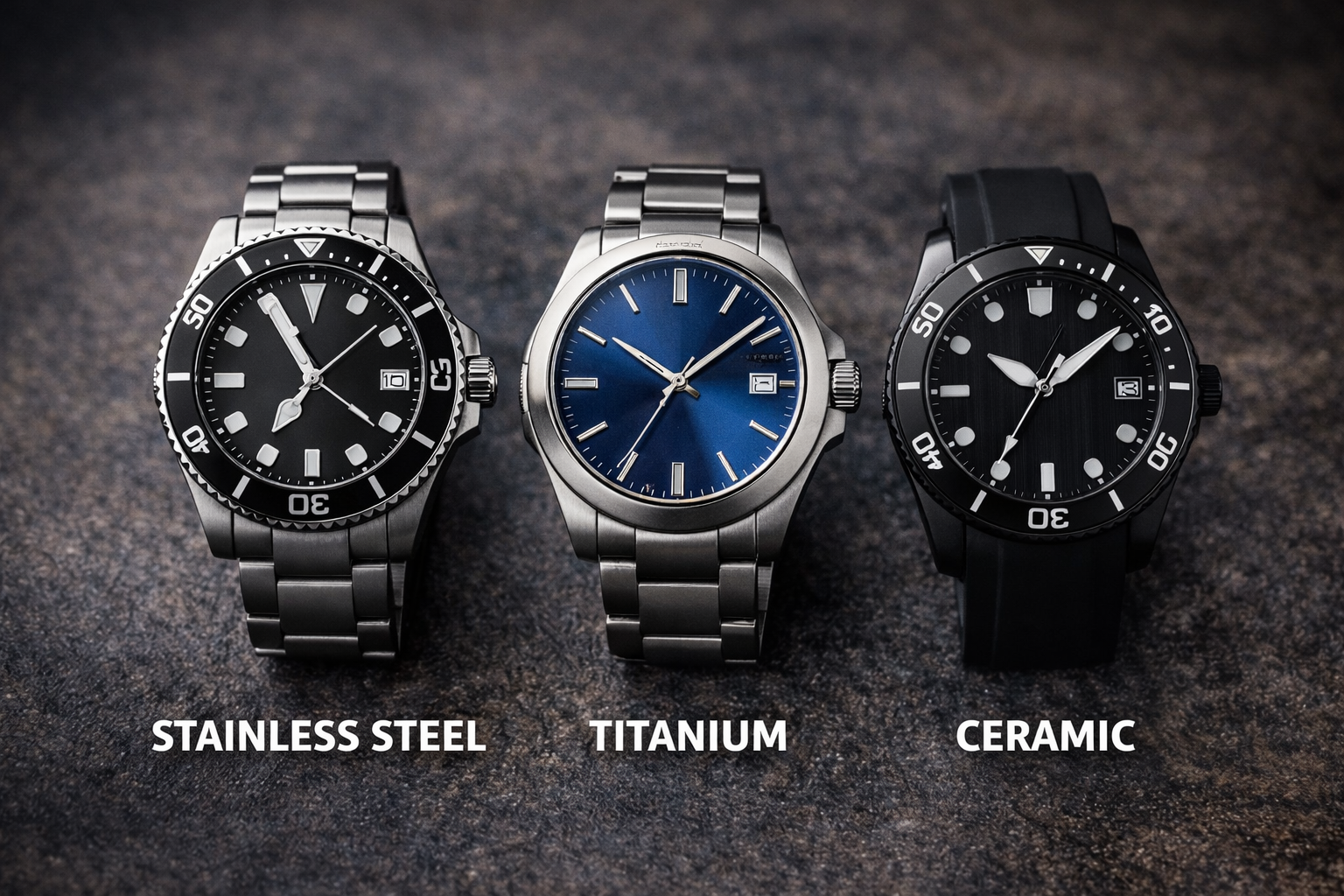
Stainless steel watches usually feel heavier because steel is dense and solid. Many people actually prefer this because it makes the watch feel sturdy and durable.
Titanium watches, on the other hand, are known for being much lighter while still maintaining strong durability. Ceramic watches can also feel relatively light while offering excellent scratch resistance.
Material choice often affects not only the weight but also the long-term durability of the watch.
3️⃣ Bracelet vs Strap Weight
Another major factor in watch weight is the type of strap used.
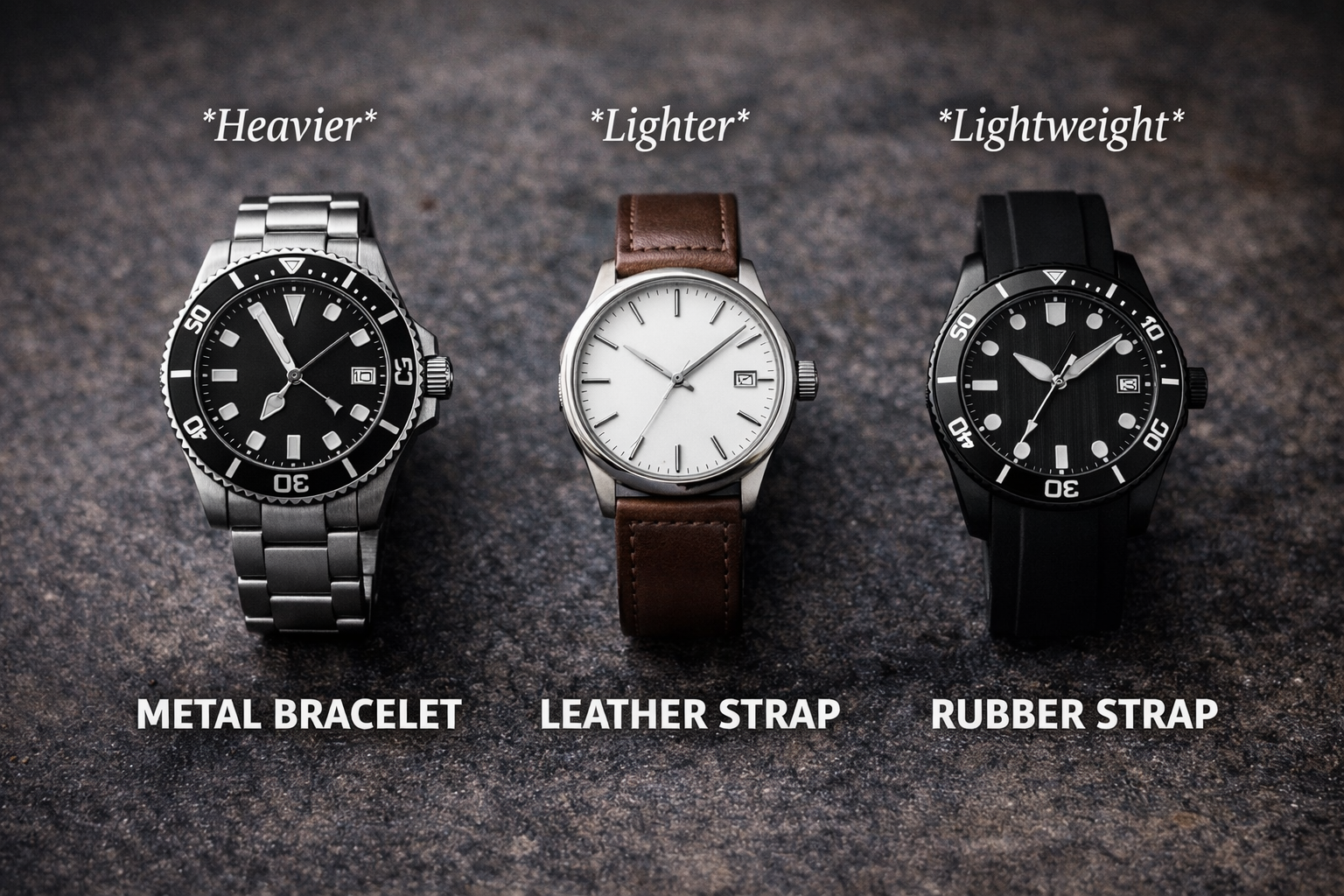
Metal bracelets are usually heavier than leather or rubber straps. A stainless steel bracelet adds significant weight compared to a leather strap.
Here is a simple comparison:
-
Metal bracelet: heavier but more durable
-
Leather strap: lighter and more comfortable
-
Rubber strap: lightweight and sporty
If you want to reduce the weight of your watch without changing the case, switching the strap is one of the easiest solutions.
Proper strap care also helps extend its lifespan. You can learn more here:
How to Clean a Watch Strap Properly (Leather, Rubber & Metal)
4️⃣ Movement Type Can Affect Weight
The movement inside the watch also contributes to the total weight.
Mechanical and automatic movements contain more components such as gears, springs, and rotors. Because of this, they are often heavier than quartz movements.
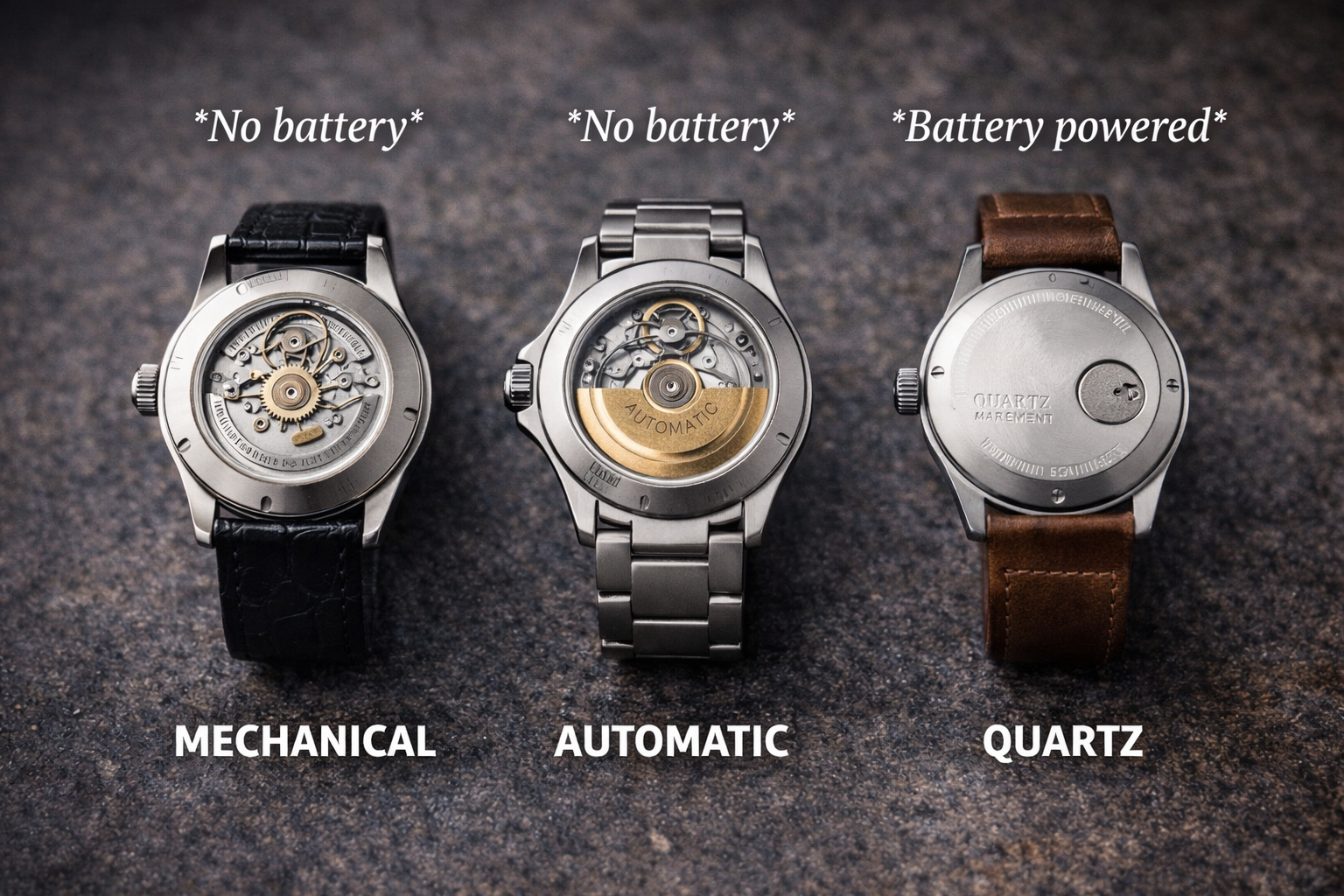
Quartz watches use a battery and fewer mechanical parts, which can make them lighter overall.
If you are unsure which movement suits your lifestyle best, you may want to read:
Mechanical vs Quartz Watches: Which One Is Right for Everyday Wear?
Understanding movement differences can help you balance comfort, maintenance, and performance.
5️⃣ Does a Heavier Watch Mean Better Quality?
Some people believe that heavier watches automatically mean better quality. While a solid watch may feel reassuring on the wrist, weight alone does not determine quality.
A well-made watch should balance:
-
durability
-
comfort
-
materials
-
design
For example, titanium watches can feel very light while still offering excellent durability. Similarly, a well-designed quartz watch may be lighter but still extremely reliable.
The key is finding a watch that feels comfortable for your wrist size and daily routine.
If you are unsure how size and comfort work together, you may also want to check:
How to Choose the Right Watch Size for Your Wrist
6️⃣ Finding the Right Weight for Everyday Wear
The ideal watch weight depends largely on personal preference.
Some people enjoy the solid feel of a heavier stainless steel watch, while others prefer a lighter watch that is barely noticeable during daily wear.
Here are some general guidelines:
-
Lightweight watches are better for long daily wear
-
Medium weight watches balance comfort and durability
-
Heavier watches often feel more robust but may not suit everyone
If you plan to wear your watch all day, comfort should always be one of your top priorities.
Conclusion
Watch weight may seem like a small detail, but it can make a big difference in daily comfort and wearability.
The weight of a watch depends on several factors including case material, bracelet type, movement design, and overall watch size. Understanding these elements helps you choose a watch that feels comfortable and fits your lifestyle.
In the end, the best watch is not necessarily the heaviest or the lightest — it is the one that feels right on your wrist and works well for your everyday routine.
FAQ Section
❓ Why do some watches feel heavier than others?
Watch weight depends on case material, bracelet type, movement design, and overall watch size.
❓ Are heavier watches better quality?
Not necessarily. Quality depends on materials, craftsmanship, and design rather than weight alone.
❓ Are titanium watches lighter than stainless steel watches?
Yes. Titanium is significantly lighter than stainless steel while still offering strong durability.
❓ Is a lighter watch better for everyday wear?
For many people, lighter watches are more comfortable for long periods of wear, especially during daily activities.
