
Best Watch Case Materials for Everyday Use: Stainless Steel, Titanium or Ceramic?
Best Watch Case Materials for Everyday Use: Stainless Steel, Titanium or Ceramic?
Introduction
When buying a watch, many people focus on movement, dial design, or brand reputation. But one detail that often gets overlooked is the case material.
The watch case affects much more than appearance. It influences durability, comfort, scratch resistance, weight, and how the watch feels during daily wear. If you wear your watch often, the material of the case can make a real difference over time.
So which case material is best for everyday use? Stainless steel, titanium, and ceramic are three of the most common options, and each one has its own strengths and weaknesses.
Understanding how these materials perform in real life can help you make a smarter decision before buying your next watch.
1️⃣ Why Watch Case Material Matters
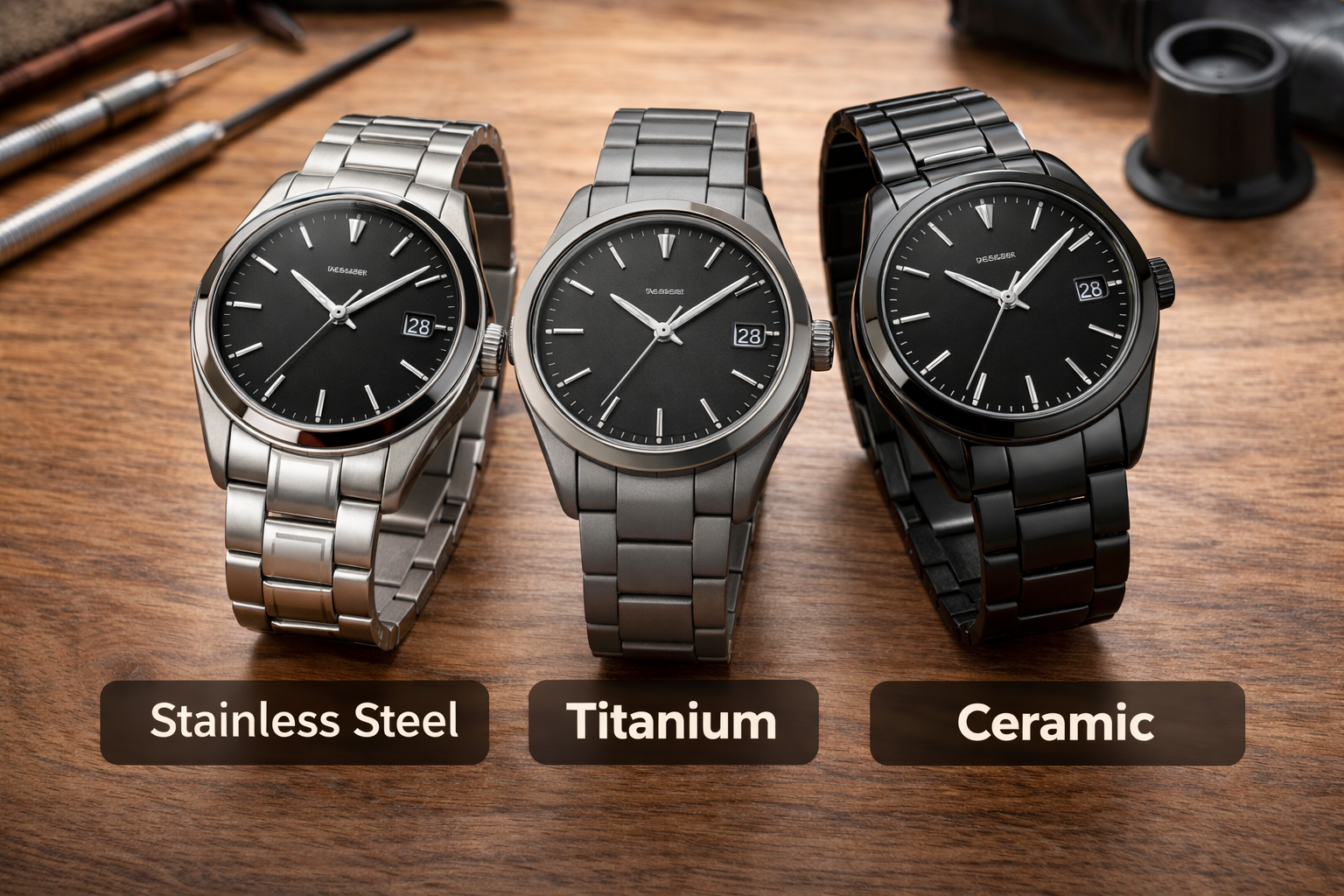
The case is the outer shell that protects the movement and gives the watch its overall structure. Since it is the part that comes into contact with your environment every day, it plays a major role in how the watch handles scratches, knocks, moisture, and long-term wear.
A good case material should ideally offer:
-
strong durability
-
comfortable daily wear
-
resistance to scratches or corrosion
-
a look that fits your style
-
practical long-term ownership
If you are already comparing features that affect daily usability, you may also want to read How to Choose the Right Watch for Everyday Wear. Case material is one of the most important parts of that decision.
2️⃣ Stainless Steel: The Most Popular All-Round Choice
Stainless steel is by far one of the most common watch case materials, especially for everyday watches. It is popular because it offers a strong balance between durability, affordability, and appearance.
Main advantages of stainless steel:
-
durable and reliable
-
resistant to corrosion
-
widely available across many price ranges
-
easy to refinish or polish
-
works well in both casual and formal styles
For many buyers, stainless steel is the safest and most practical choice. It feels solid on the wrist and usually gives a watch a more substantial presence.
The downside is that stainless steel is heavier than titanium, and polished surfaces can show scratches over time. Even so, for most people, it remains one of the best materials for daily use because it combines strength with long-term practicality.
If durability is one of your main concerns, this also connects well with How to Choose a Durable Watch for Long-Term Use, since case material is a major part of long-term performance.
3️⃣ Titanium: Lightweight and Comfortable for Daily Wear
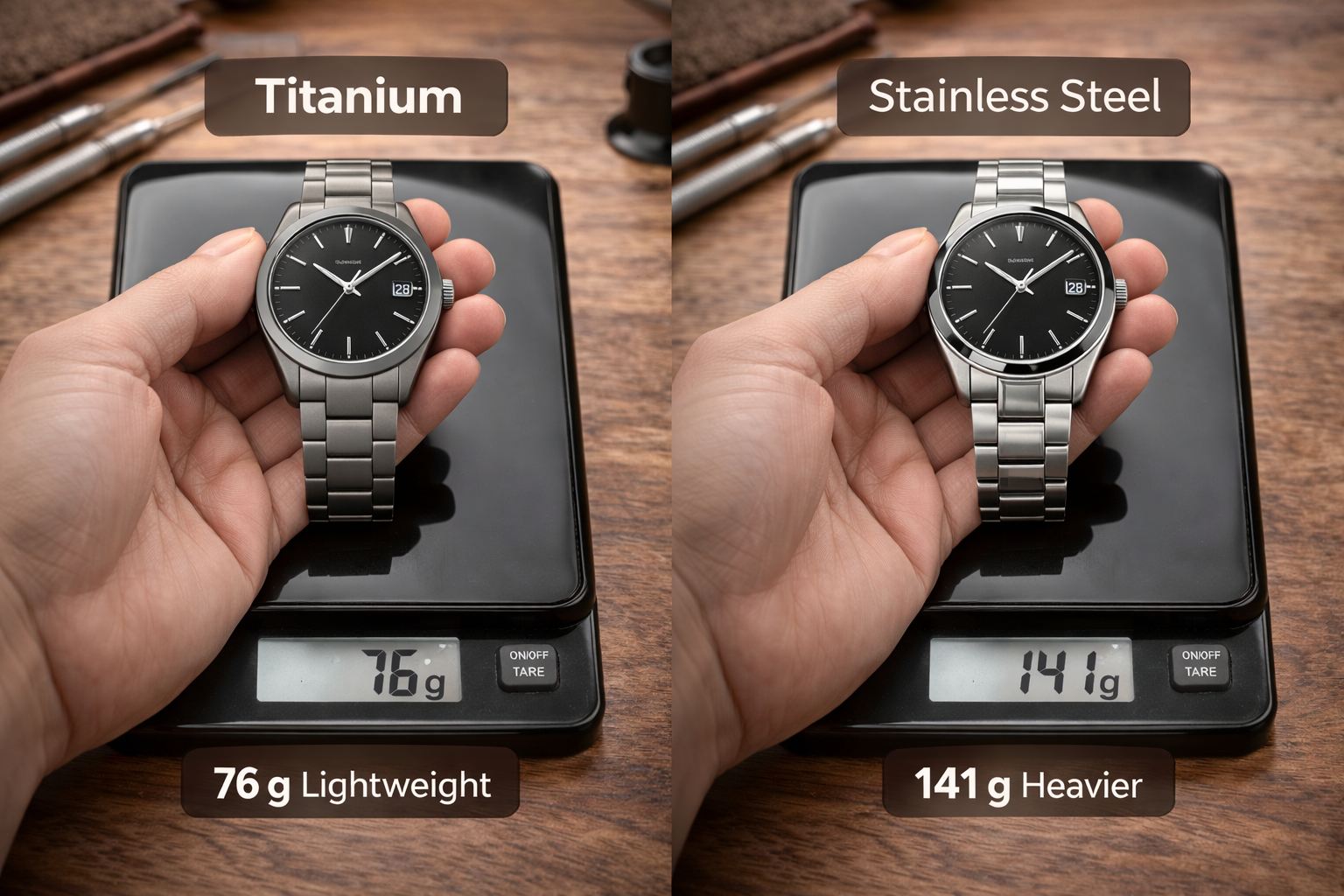
Titanium has become increasingly popular, especially among people who wear their watch for long hours each day. Its biggest advantage is comfort.
Main advantages of titanium:
-
much lighter than stainless steel
-
comfortable for all-day wear
-
highly resistant to corrosion
-
strong for its weight
-
often better for people with metal sensitivity
A titanium watch often feels noticeably lighter on the wrist, which many people love. If you dislike the heavier feel of steel, titanium can be a very attractive option.
However, titanium is not perfect. While it is strong, it can still show surface marks more easily depending on the finish. Some titanium watches also have a slightly duller or less shiny appearance compared with polished steel, which may or may not suit your taste.
For people who care a lot about comfort, wrist feel, and fit, it is also helpful to consider How to Choose the Right Watch Size for Your Wrist, because material and size together greatly affect how a watch feels in daily life.
4️⃣ Ceramic: Excellent Scratch Resistance with a Modern Look
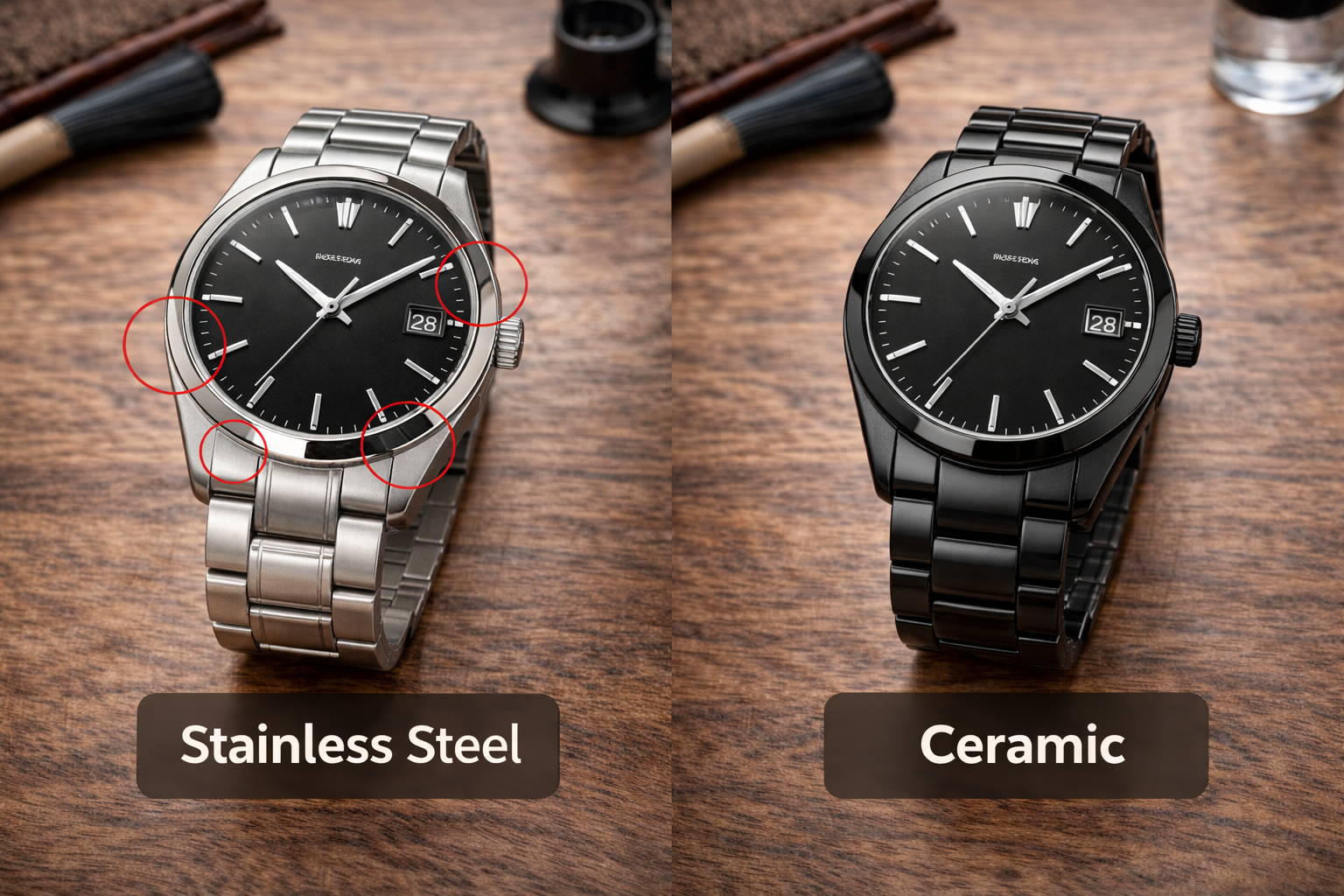
Ceramic is often chosen for its clean appearance and impressive scratch resistance. A ceramic watch can continue looking fresh for a long time, especially compared with softer surfaces that collect daily marks more easily.
Main advantages of ceramic:
-
highly scratch resistant
-
lightweight feel
-
modern and refined appearance
-
color tends to stay consistent over time
-
good for people who care about long-term cosmetics
This makes ceramic especially appealing for people who want their watch to keep looking clean and polished after frequent wear.
The main concern with ceramic is that while it resists scratches very well, it can be less forgiving under sharp impact. In some situations, a strong hit may cause chipping or cracking more easily than steel or titanium.
So ceramic is excellent for appearance and scratch resistance, but it may not always be the best choice for rough everyday environments.
5️⃣ Which Material Is Best for Comfort?
If comfort is your top priority, titanium usually stands out first because of its light weight. It is especially suitable for people who wear a watch all day, travel often, or simply do not enjoy a heavy feeling on the wrist.
Stainless steel comes second for most people. It is heavier, but many wearers actually like that solid and balanced feel.
Ceramic can also feel comfortable because it is often light and smooth, but comfort depends a lot on the exact design, bracelet construction, and case size.
That is why choosing the right watch is never only about one feature. Material, case diameter, thickness, and strap type all work together.
6️⃣ Which Material Is Best for Durability?
For overall real-world durability, stainless steel is often the most practical everyday choice. It can handle daily use well, and while it may scratch, it usually remains structurally reliable and easier to maintain.
Titanium is also very durable and excellent for long-term wear, especially when low weight is important. It performs very well in daily life, especially for active users.
Ceramic wins in scratch resistance, but not always in impact resistance. It is better for people who want a watch to stay visually clean rather than for those who expect rough handling.
If you are thinking about build quality more broadly, you may also like What Makes a High-Quality Watch? 7 Key Factors to Consider, because material choice is one of the clearest signs of how a watch is designed for real use.
7️⃣ Which Material Looks Best?
This depends more on style than performance.
Stainless steel usually gives the most classic and versatile look. It works well for sports watches, dress watches, and everyday models.
Titanium often looks more understated and technical. It suits buyers who like a modern, practical aesthetic.
Ceramic usually feels the most sleek and contemporary. It often looks more premium at first glance because the surface stays clean and smooth for longer.
If you wear your watch in different settings, including work or more polished occasions, appearance may matter just as much as durability.
8️⃣ So Which One Should You Choose?
Choose stainless steel if you want:
-
the safest all-round option
-
classic appearance
-
strong durability
-
good long-term value
-
easy everyday practicality
Choose titanium if you want:
-
lighter weight
-
maximum comfort
-
strong corrosion resistance
-
a more modern and technical feel
Choose ceramic if you want:
-
superior scratch resistance
-
a cleaner long-term appearance
-
a sleek and modern style
-
less concern about surface wear
There is no single best material for everyone. The best choice depends on how you wear your watch, what kind of comfort you prefer, and whether you value toughness, lightness, or scratch resistance most.
Conclusion
Watch case material has a bigger impact than many buyers realize. It affects not only how a watch looks, but also how it feels and performs during daily wear.
Stainless steel remains the most balanced option for most people. Titanium is excellent for comfort and lightweight wear. Ceramic is ideal for those who want better scratch resistance and a more modern finish.
The right choice depends on your lifestyle, your preferences, and what you expect from an everyday watch. When you understand the strengths and trade-offs of each material, it becomes much easier to choose a watch that will truly suit you over the long term.
FAQ Section
❓ Is stainless steel or titanium better for everyday wear?
Both are good options. Stainless steel is more traditional and solid, while titanium is lighter and often more comfortable for long daily wear.
❓ Does ceramic scratch easily?
No. Ceramic is highly scratch resistant, which is one of its biggest advantages. However, it may be less resistant to sharp impact than steel.
❓ Why are titanium watches more expensive sometimes?
Titanium is more difficult to machine and finish than stainless steel, which can increase production cost.
❓ What is the most practical watch case material?
For most buyers, stainless steel is usually the most practical all-round choice because it balances durability, appearance, cost, and everyday usability.
