
Best Watch Size for Medium Wrists: The Most Versatile Sizes for Everyday Wear
Best Watch Size for Medium Wrists: The Most Versatile Sizes for Everyday Wear
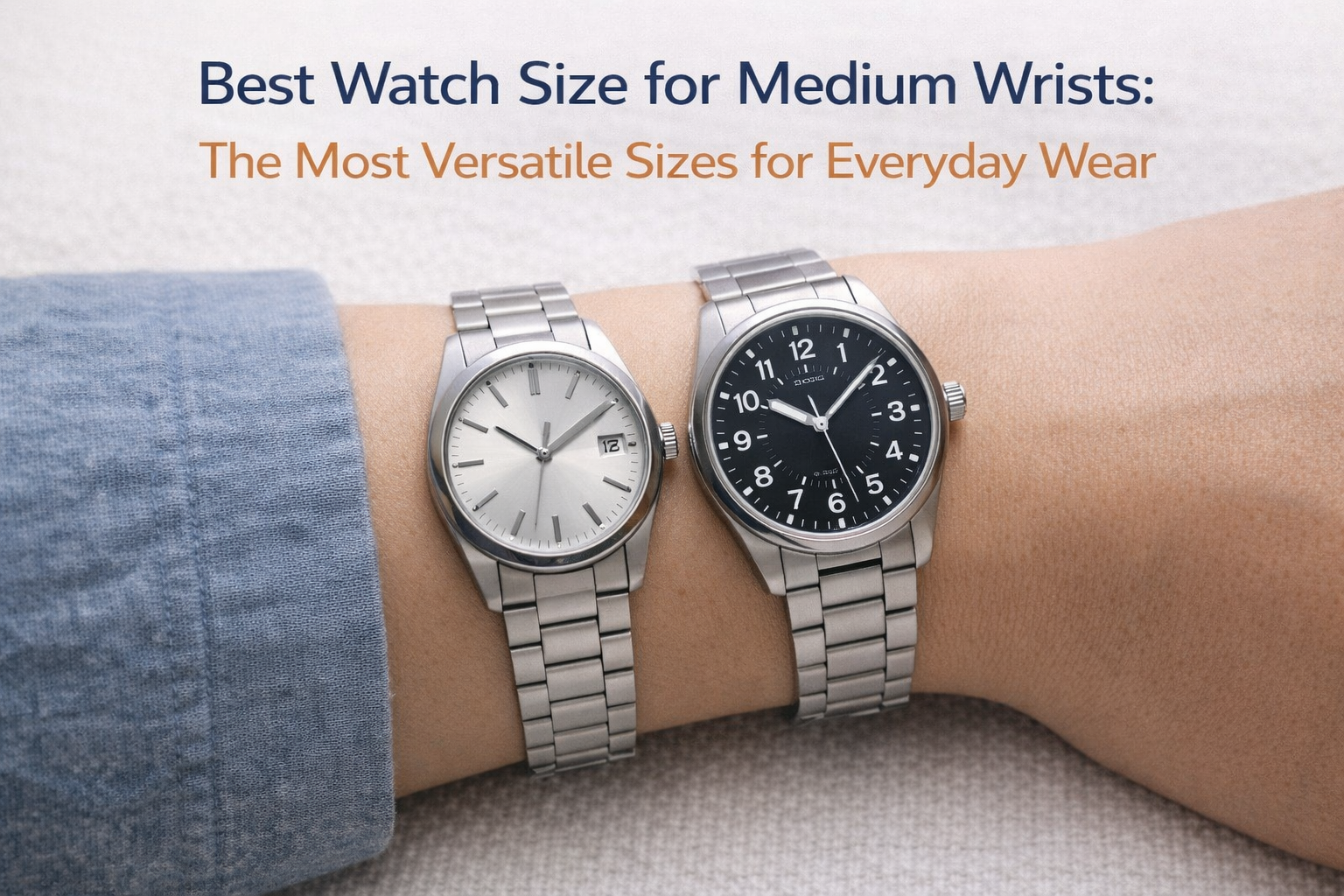
Quick Answer
For most people with medium wrists, the best watch size is usually 38mm to 42mm. That range gives the most flexibility for everyday wear, with 39mm to 40mm often being the safest all-around choice.
That said, the best fit is not decided by case diameter alone. On a medium wrist, lug-to-lug length, case thickness, dial design, and strap style still make a big difference in whether a watch feels balanced, sporty, compact, or too large.
Why Medium Wrists Have the Most Flexibility
If you have a medium wrist, you are in the easiest position when shopping for watches.
That is because most mainstream watch sizes are designed around a wrist that can comfortably handle a wide range of proportions. In real life, that means medium-wrist buyers usually have the freedom to wear:
-
compact dress watches
-
balanced everyday watches
-
sportier dive watches
-
some larger casual styles
But flexibility can also create confusion. A medium wrist can wear many sizes, which makes it easier to buy something technically wearable but not actually ideal.
For example, one person with a 6.9-inch wrist may love a compact 38mm field watch for daily wear, while another person with the same wrist size prefers a 41mm sports watch because they want more wrist presence. Both can work. The real goal is choosing the size that fits your style, not just your wrist measurement.
If you have not measured your wrist yet, start with our guide on how to measure your wrist for the right watch size before comparing specific size ranges.
What Counts as a Medium Wrist?
A medium wrist is commonly around:
-
6.5 to 7.5 inches
-
roughly 16.5 to 19 cm
This is not a strict rule, but it is a very practical guide when choosing watch size. Many of the most common modern watch sizes are built with this range in mind.
Best Watch Size Range for Medium Wrists
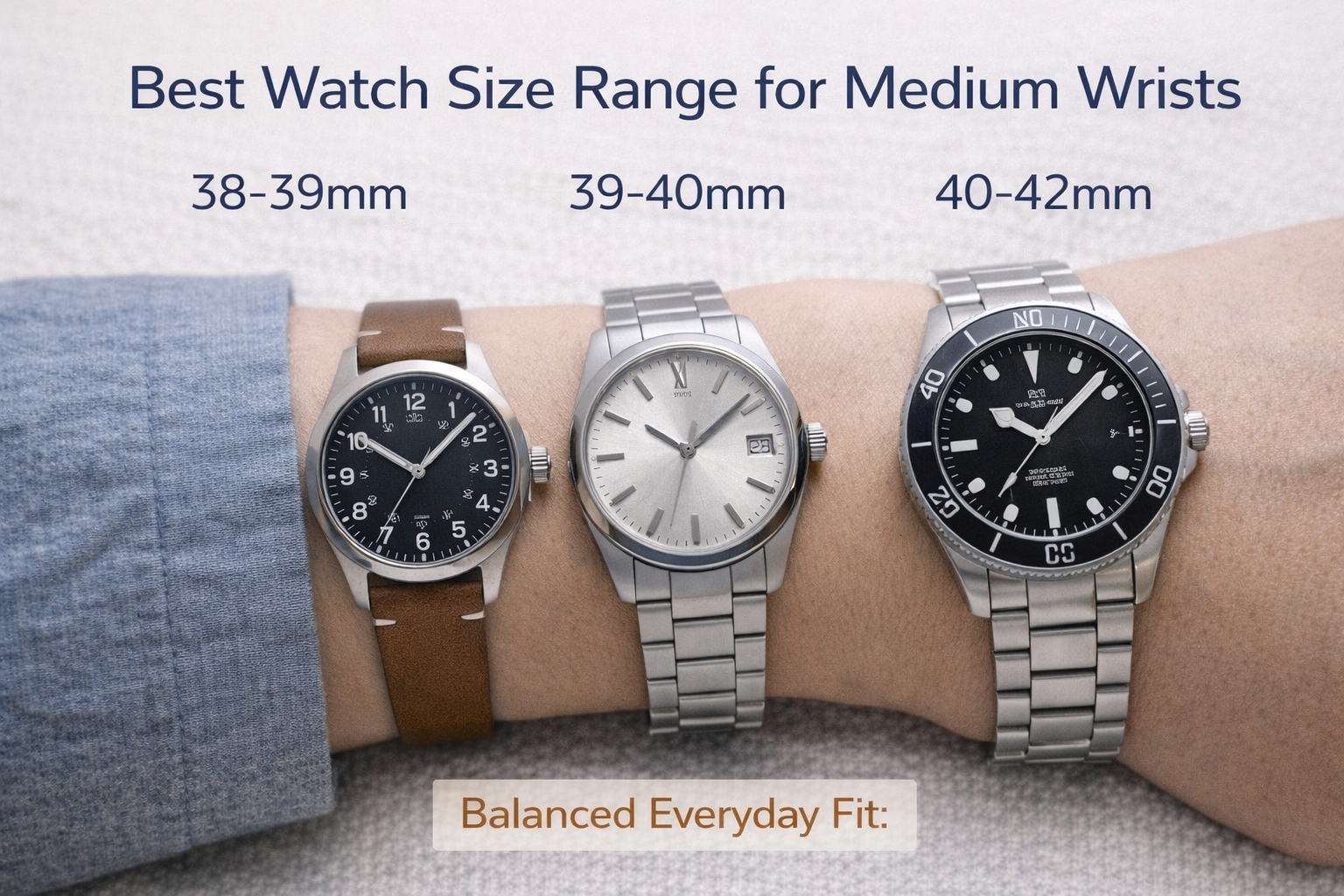
For most medium wrists, these ranges work well:
38mm to 39mm
This range feels clean, easy, and versatile. It is especially strong for:
-
field watches
-
everyday watches
-
dress-casual watches
-
vintage-inspired designs
39mm to 40mm
For many people, this is the sweet spot. It usually feels modern without looking oversized and works in both casual and smart settings.
40mm to 42mm
This range is still excellent for medium wrists, especially if you want a sportier look, more dial presence, or a more contemporary feel.
42mm and above
This can still work, but it becomes more style-dependent. It is often better for sport watches, dive watches, or buyers who intentionally prefer a larger look.
Why 39mm to 40mm Often Feels “Just Right”
A lot of medium-wrist buyers eventually settle in the 39mm to 40mm area for a reason: it tends to look balanced in the widest range of watch styles.
Real-World Example
Imagine someone with a 7-inch wrist choosing between three watches:
-
37mm dress watch
-
40mm everyday steel watch
-
43mm dive watch
In many cases:
-
the 37mm option may feel a bit compact but elegant
-
the 40mm option feels the most balanced overall
-
the 43mm option may work, but only if the buyer wants a stronger sporty presence
That is why 39mm to 40mm often becomes the safest recommendation for medium wrists.
If you want a broader sizing reference, our article on what size watch should you wear is a useful companion.
The 4 Things Medium-Wrist Buyers Should Always Check
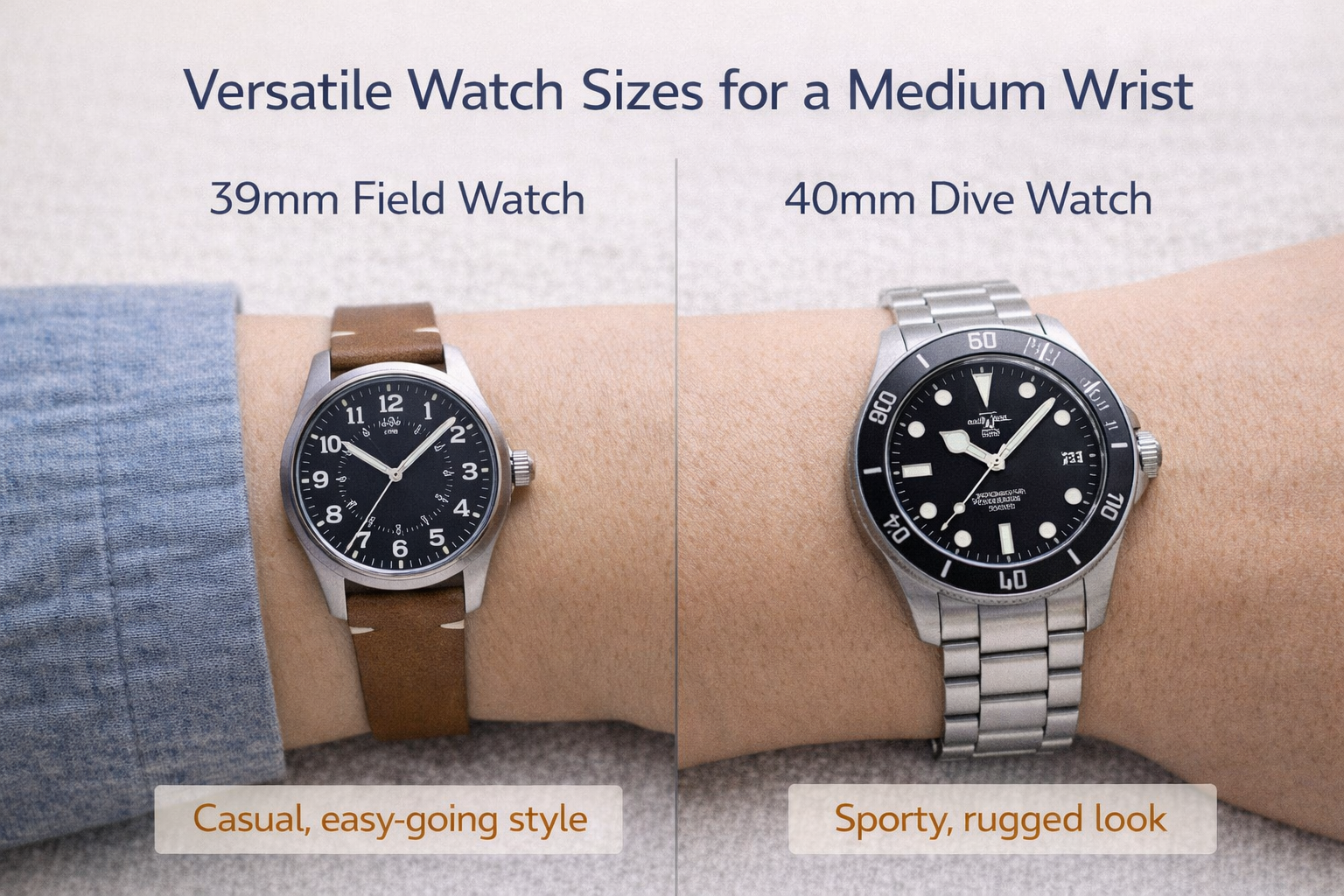
1. Case Diameter
Case diameter is still the first number most people look at, and for medium wrists it is a useful starting point.
A medium wrist can usually wear:
-
38mm to 42mm very comfortably
-
some 43mm watches depending on design
-
smaller classic sizes if the buyer prefers a restrained fit
But diameter alone does not tell the full story.
2. Lug-to-Lug Length
This is where many buying mistakes happen.
A medium wrist is more forgiving than a small wrist, but a long lug-to-lug can still make a watch feel awkward.
Practical Example
Two watches may both be 40mm, but:
-
Watch A has a 46mm lug-to-lug
-
Watch B has a 50mm lug-to-lug
On a 6.75-inch wrist, Watch A may feel clean and balanced, while Watch B may feel noticeably longer and more dominant.
That is why lug-to-lug is still one of the most important numbers, even for buyers who are not especially worried about size.
3. Case Thickness
Thickness changes the personality of a watch.
A thin 40mm watch may feel elegant and easy. A thick 40mm sports watch may feel far larger than the diameter suggests.
Real-World Example
A person with a 6.8-inch wrist might wear:
-
a 40mm dress-casual watch comfortably under a shirt cuff
-
but feel that a 40mm thick chronograph wears much larger and heavier
If comfort matters just as much as visual fit, our guide on how tight a watch should be can help you think about wearability more practically.
4. Strap or Bracelet Style
A medium wrist can adapt to many strap types, but strap choice still changes the final feel.
For example:
-
leather often makes a watch feel slimmer and dressier
-
rubber can make it feel more sporty and casual
-
metal bracelets can make the same watch feel more substantial
If you are comparing all-around daily options, our article on best watch strap material for everyday wear is worth reading.
Best Watch Styles for Medium Wrists
Medium wrists can handle the broadest range of styles well.
Usually Easy to Wear
-
field watches
-
dive watches
-
everyday steel watches
-
chronographs
-
dress-casual watches
-
minimalist watches
Styles That Need More Attention
-
oversized dive watches
-
especially thick chronographs
-
very wide cushion-case sports watches
-
long-lug modern fashion watches
A medium wrist gives you flexibility, but not every large watch automatically looks right.
If you are still choosing your first or second serious watch, our guide on best watch types for beginners may help narrow the field.
What Usually Looks Best on a Medium Wrist?
In most cases, the best-looking watch on a medium wrist is one that looks intentional rather than exaggerated.
That usually means:
-
the watch fills the wrist without overhanging
-
the lugs stay controlled
-
the case height feels proportional
-
the strap looks balanced with the case
-
the watch matches the wearer’s style
Practical Example
A 6.75-inch wrist wearing a 39mm field watch often looks effortlessly balanced.
The same wrist wearing a 42mm dive watch can also look good, but it will feel more sporty and more visually assertive.
So the best size is not just about “what fits.”
It is about what kind of look you want.
How to Tell If a Watch Is Too Small on a Medium Wrist
A watch may feel too small if:
-
it looks visually lost in the middle of the wrist
-
the strap appears more prominent than the case
-
the dial feels smaller than your taste prefers
-
the overall presence feels too slight for the style you want
Example
A 34mm minimalist watch on a 7.25-inch wrist might still look refined in a dress setting, but for everyday casual wear, many people would find it too small.
How to Tell If a Watch Is Too Big on a Medium Wrist
A watch may feel too big if:
-
the lugs stretch too close to the edges of your wrist
-
the case feels top-heavy
-
the bracelet makes the watch wear longer than expected
-
the watch dominates your whole wrist visually
-
it becomes harder to wear with normal daily clothes
Example
A 44mm thick dive watch may technically fit a medium wrist, but still feel excessive for someone who mostly wears smart-casual or office clothes.
Step-by-Step: How to Choose a Watch for a Medium Wrist
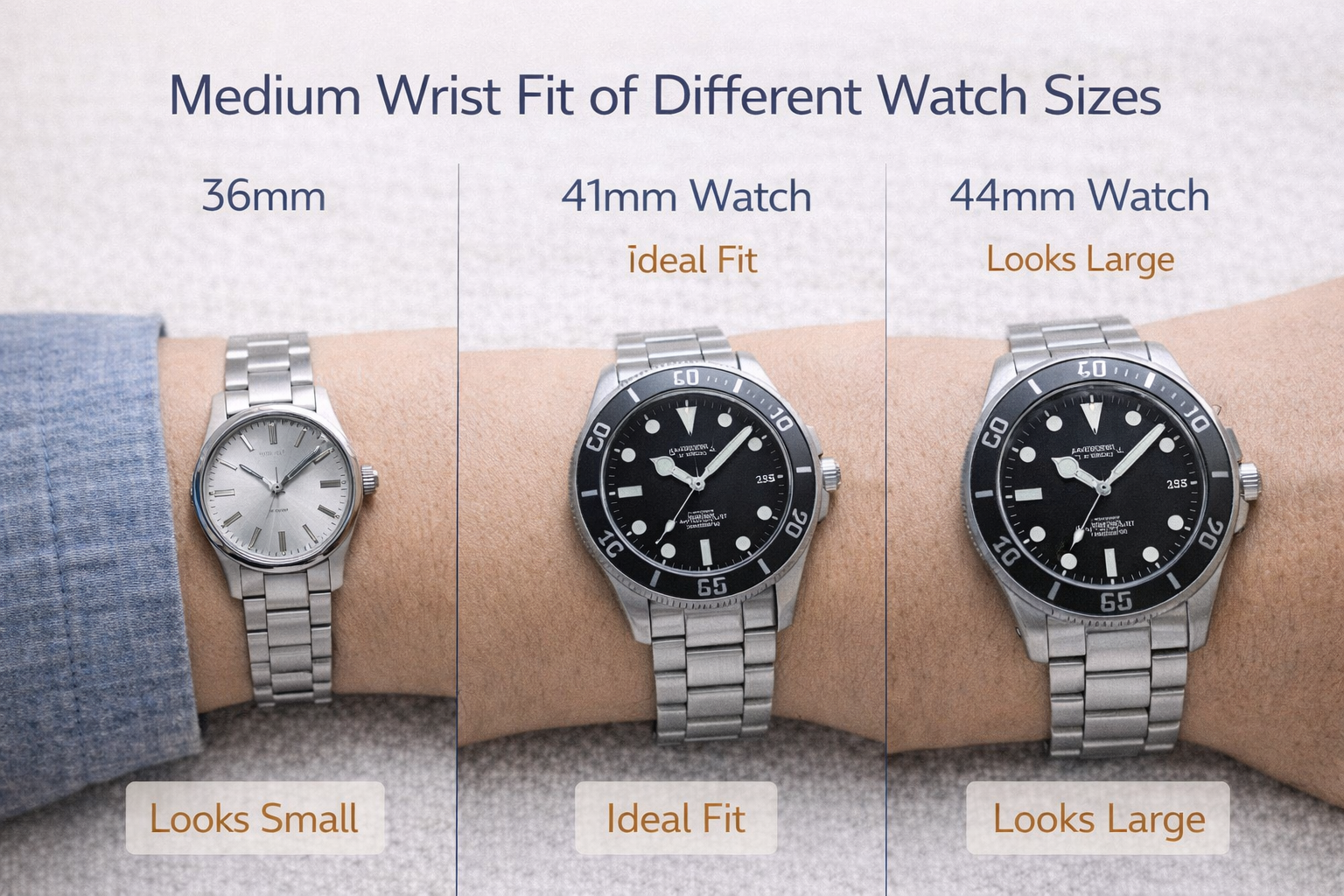
Here is the easiest practical process.
Step 1: Measure Your Wrist
Even if you think you are “average,” measure it properly. Many buyers guess wrong.
Step 2: Start with 38mm to 42mm
This is the safest broad range for medium wrists.
Step 3: Use 39mm to 40mm as Your Baseline
If you are unsure where to start, this range is usually the easiest all-around choice.
Step 4: Check Lug-to-Lug Before Buying
Do not assume the diameter tells the whole story.
Step 5: Think About Your Style
Ask yourself whether you want:
-
compact and classic
-
balanced everyday wear
-
sporty and more noticeable
Step 6: Check Thickness and Strap
A watch that looks fine in diameter can still feel wrong if it is too thick or paired with the wrong bracelet.
Actual Buying Scenarios
Scenario 1: Office + Casual Use
If you have a 6.8-inch wrist and want one watch for daily office and weekend wear, a 39mm to 40mm everyday steel watch is often the safest choice.
Scenario 2: You Prefer Sportier Watches
If you have a 7.1-inch wrist and like dive watches, a 41mm dive watch can often look very balanced, provided the case is not excessively thick.
Scenario 3: You Like Classic Sizing
If you have a 6.6-inch wrist and prefer a timeless style, a 38mm field watch or 36mm to 38mm dress-casual watch may actually look better than a larger modern piece.
These kinds of real use cases matter more than blindly following the biggest size your wrist can technically carry.
Common Mistakes Medium-Wrist Buyers Make
One common mistake is assuming a medium wrist means every watch size will look equally good. It does not. A medium wrist gives flexibility, but proportion still matters.
Another mistake is jumping too quickly to 42mm+ watches because they seem more modern. In reality, many medium-wrist buyers end up happiest with something slightly smaller and more balanced.
A third mistake is overlooking how much thickness changes the feel of a watch.
If you are also comparing quality and proportions together, our guide on what makes a high-quality watch may help you think more clearly about long-term ownership.
Should You Go Smaller or Larger on a Medium Wrist?
That depends on the look you want.
Go Smaller If You Want:
-
classic style
-
easier daily wear
-
dressier proportions
-
lower-profile comfort
Go Larger If You Want:
-
sporty wrist presence
-
more dial visibility
-
modern casual styling
-
a stronger visual statement
There is no single right answer. Medium wrists are flexible enough that both directions can work if the proportions stay controlled.
Final Verdict
If you want the simplest answer, the best watch size for medium wrists is usually 38mm to 42mm, with 39mm to 40mm being the most versatile range for everyday wear.
For most buyers, that range gives the best mix of comfort, modern style, and long-term flexibility. But the smartest choice still depends on:
-
your wrist measurement
-
lug-to-lug length
-
thickness
-
strap style
-
the look you want the watch to have
A medium wrist can wear many sizes well, which is why balance matters more than simply choosing the biggest or most modern-looking option.
Key Takeaways
-
most medium wrists suit watches in the 38mm to 42mm range
-
39mm to 40mm is often the most versatile sweet spot
-
lug-to-lug still matters, even on a medium wrist
-
case thickness can make a watch wear much larger
-
medium wrists can handle the widest range of watch styles
-
the best size depends on whether you want classic balance or sporty presence
-
a balanced 39mm or 40mm watch is often the safest all-around everyday choice
FAQ
What is the best watch size for a medium wrist?
For most people with a medium wrist, the best range is usually 38mm to 42mm, with 39mm to 40mm often being the most versatile choice.
Is 42mm too big for a medium wrist?
Not necessarily. A 42mm watch can work well on a medium wrist, especially in sporty designs, but thickness and lug-to-lug length still matter.
Can a medium wrist wear 36mm watches?
Yes. A 36mm watch can still look excellent on a medium wrist, especially if you prefer a classic or dressier fit.
What matters more, lug-to-lug or case diameter?
Both matter, but lug-to-lug often tells you more about how a watch will actually wear on the wrist.
What is the safest everyday watch size for a medium wrist?
For many people, a 39mm or 40mm watch is the safest everyday choice because it feels balanced in most styles.
