
Do Dark Dial Watches Look Smaller? How Color Changes Wrist Presence
Do Dark Dial Watches Look Smaller? How Color Changes Wrist Presence
Quick Answer
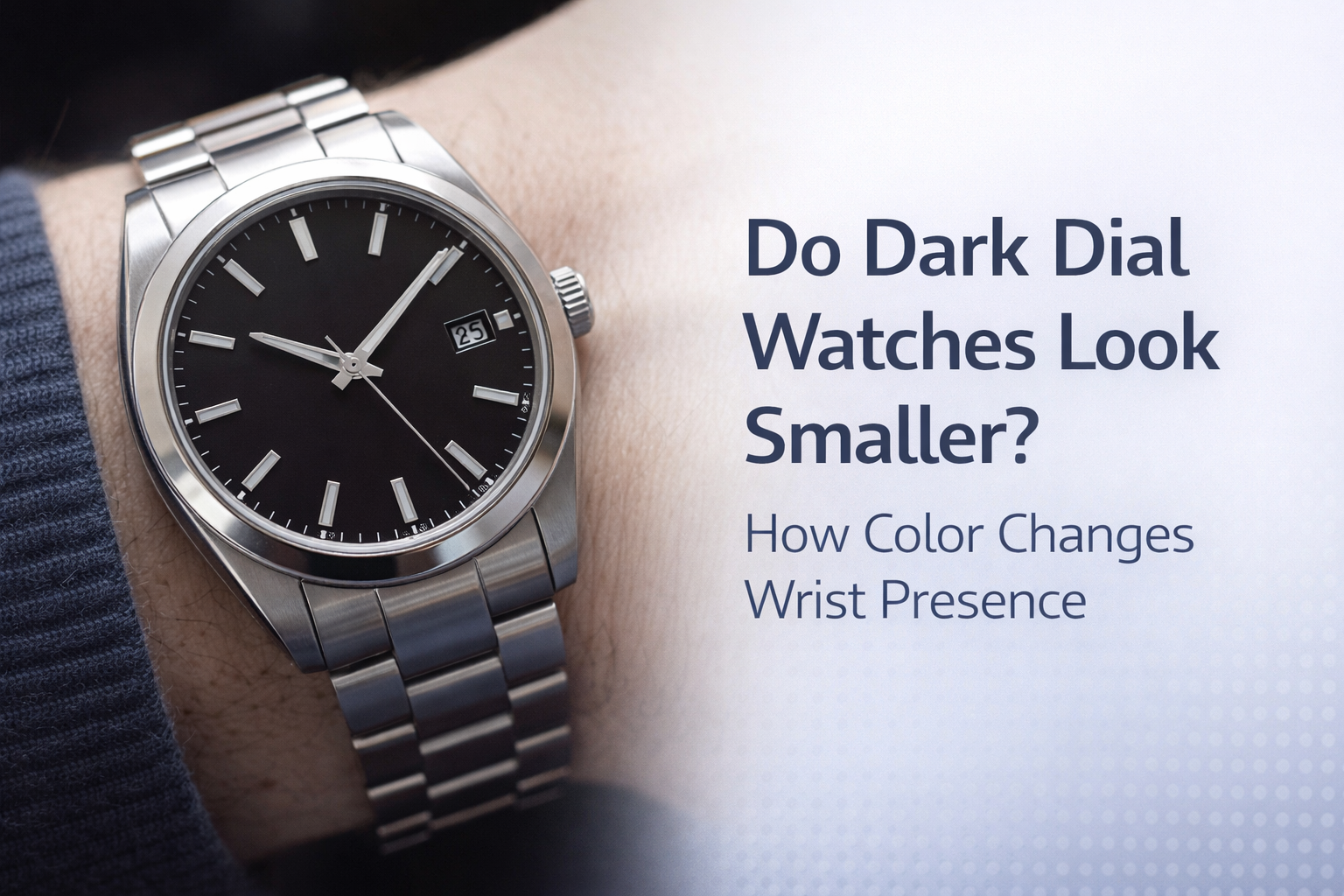
Yes, dark dial watches often look slightly smaller on the wrist than light dial watches of the same size. That is because darker colors tend to reduce visual expansion, making the dial feel more compact and less attention-grabbing. In real life, dial color can noticeably affect how large, bold, or balanced a watch appears on the wrist.
Introduction
Most watch buyers focus on case diameter first.
They compare 38mm, 40mm, and 42mm, look at lug-to-lug measurements, and try to figure out what size works best for their wrist. But one detail many people overlook is dial color.
In real life, dial color can change the way a watch wears visually, even when the actual dimensions stay exactly the same.
A watch with a dark dial often feels more compact, more controlled, and sometimes more versatile. A watch with a white, silver, or lighter dial can feel more open, more visible, and often slightly larger on the wrist.
That does not mean dark dials are always better. It simply means color changes perception more than many buyers expect.
If you are still learning how size works in daily wear, it also helps to read How to Choose the Right Watch Size for Your Wrist before going deeper into visual presence.
A Real-Life Situation Buyers Often Notice
Imagine someone choosing between two watches with the same 40mm case.
One has a black dial. The other has a silver dial. On paper, the watches are the same size, use the same bracelet, and have the same overall shape.
But once both are worn, the difference becomes obvious.
The black-dial watch feels slightly more compact and restrained. The silver-dial watch appears more open and more noticeable from across the room. The actual measurements have not changed, but the wrist presence clearly has.
That is why dial color matters.
A watch is not judged by numbers alone. It is also judged by how it looks in real light, on real skin tone, and during actual daily wear.
1. Dark Dials Usually Create a More Compact Visual Effect
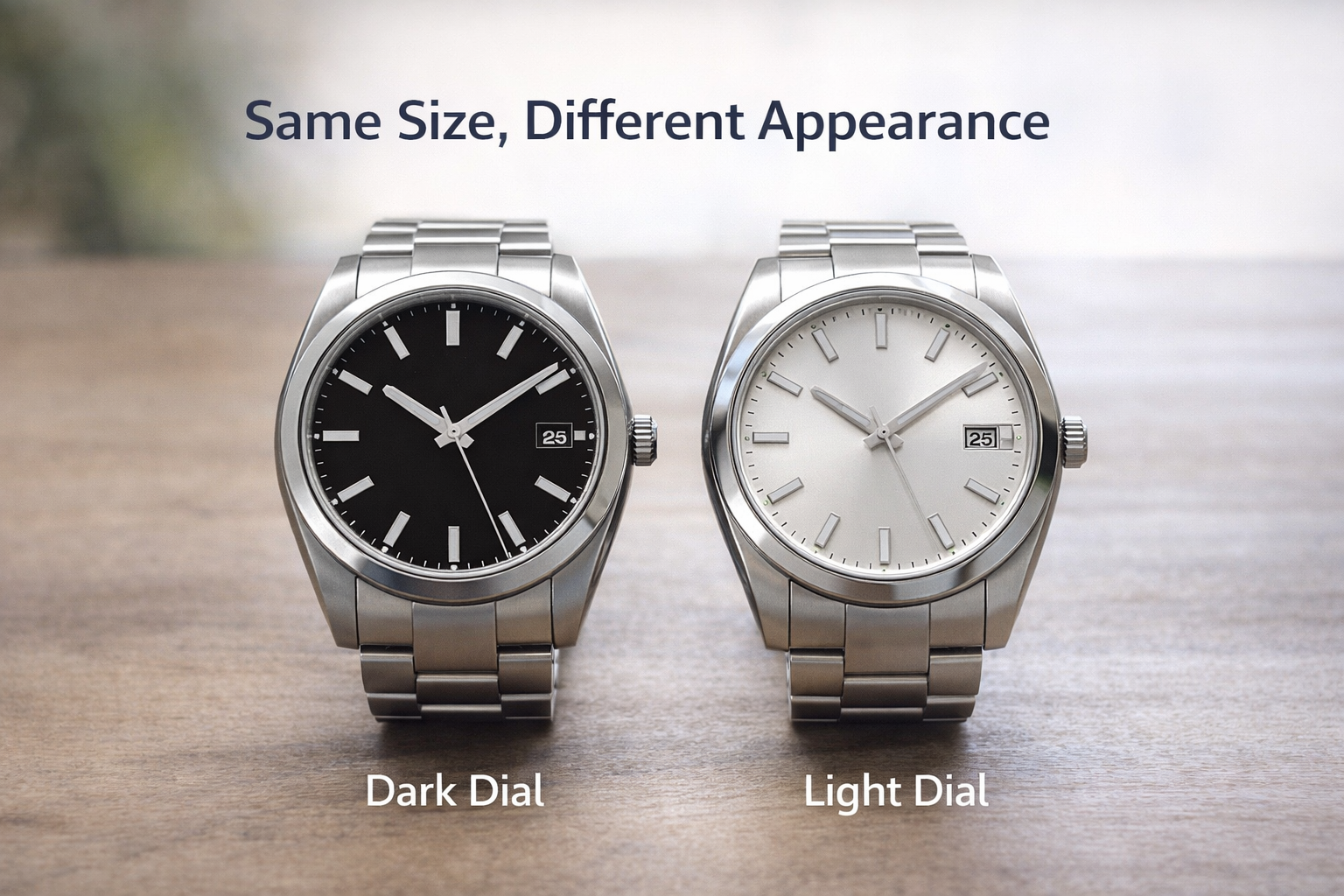
Dark colors tend to visually recede, while lighter colors tend to stand out more.
That same principle applies to watches. A black, charcoal, dark blue, or deep green dial often makes the watch feel more compact because the dial surface does not expand visually as much as a white or silver dial.
Real-life example
A buyer tries on two similar watches in a store. Both are 40mm, but the black-dial version immediately feels slightly easier to wear because it does not dominate the wrist in the same way the white-dial version does.
This is especially noticeable for people with smaller or medium wrists.
What to check
- Does the dark dial make the watch feel more balanced?
- Does the watch feel visually calmer on your wrist?
- Does it attract less attention than the lighter version?
2. Light Dials Usually Make a Watch Feel More Open and Larger
Lighter dials reflect more light and create a stronger sense of surface area.
This often makes the watch appear larger or more prominent, even when the size is identical. White, silver, champagne, and light blue dials usually have more visual expansion, especially in bright daylight.
Real-life example
Someone wears a white-dial watch to the office and notices it stands out more than expected under natural light. The watch does not feel oversized, but it definitely feels more visible than a darker dial of the same size.
That is not a flaw. In some cases, it is exactly what buyers want.
What to check
- Does the light dial make the case feel broader?
- Does it stand out more under daylight?
- Does it look more noticeable with formal or casual clothing?
3. Wrist Presence Is About More Than Physical Size
Many buyers confuse size with presence.
A watch can have moderate dimensions but still feel bold because of its dial color, polished surfaces, or contrast. On the other hand, a watch can be physically larger but wear more quietly because the darker dial reduces visual impact.
Real-life example
A 42mm sports watch with a dark dial may actually feel less visually overwhelming than a 40mm dress-style watch with a bright silver dial. That is because presence is not only about measurements. It is also about contrast and visual attention.
This is one reason why choosing the right watch is never just about millimeters.
If you want to understand this better, read Watch Size Guide: Case Diameter, Lug-to-Lug, and Thickness Explained.
What to check
- Does the watch feel large because of the size or because of the color?
- Does the dial dominate your wrist visually?
- Does the overall design look balanced in real wear?
4. Dark Dials Often Feel Easier for Everyday Wear
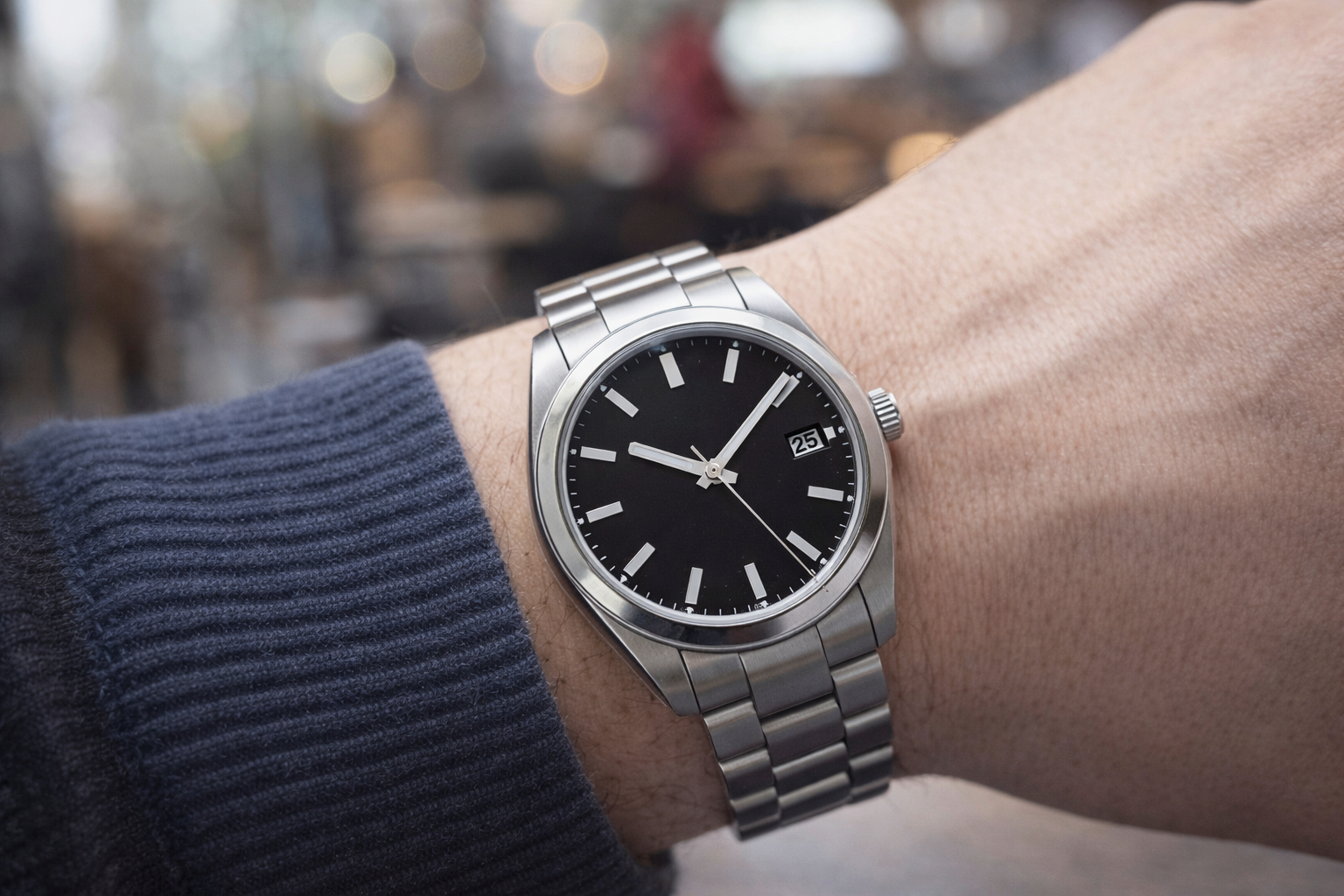
One reason dark dial watches stay popular is versatility.
Black, dark blue, charcoal, and other darker dial colors often feel easier to pair with workwear, casual clothing, and more formal outfits. They also tend to look more controlled and less visually loud during daily wear.
Real-life example
Someone who wants one watch for commuting, office wear, and weekend use often ends up preferring a black or dark blue dial because it feels easier to wear across more situations without drawing too much attention.
This is one reason dark dials are often chosen as “safe” everyday options.
You can naturally support this with How to Choose the Right Watch for Everyday Wear.
What to check
- Does the dial color work with most of your clothes?
- Does it feel easy to wear in both casual and smart settings?
- Would you still enjoy it after wearing it several days in a row?
5. Light Dials Can Feel More Elegant, Airy, or Dressy
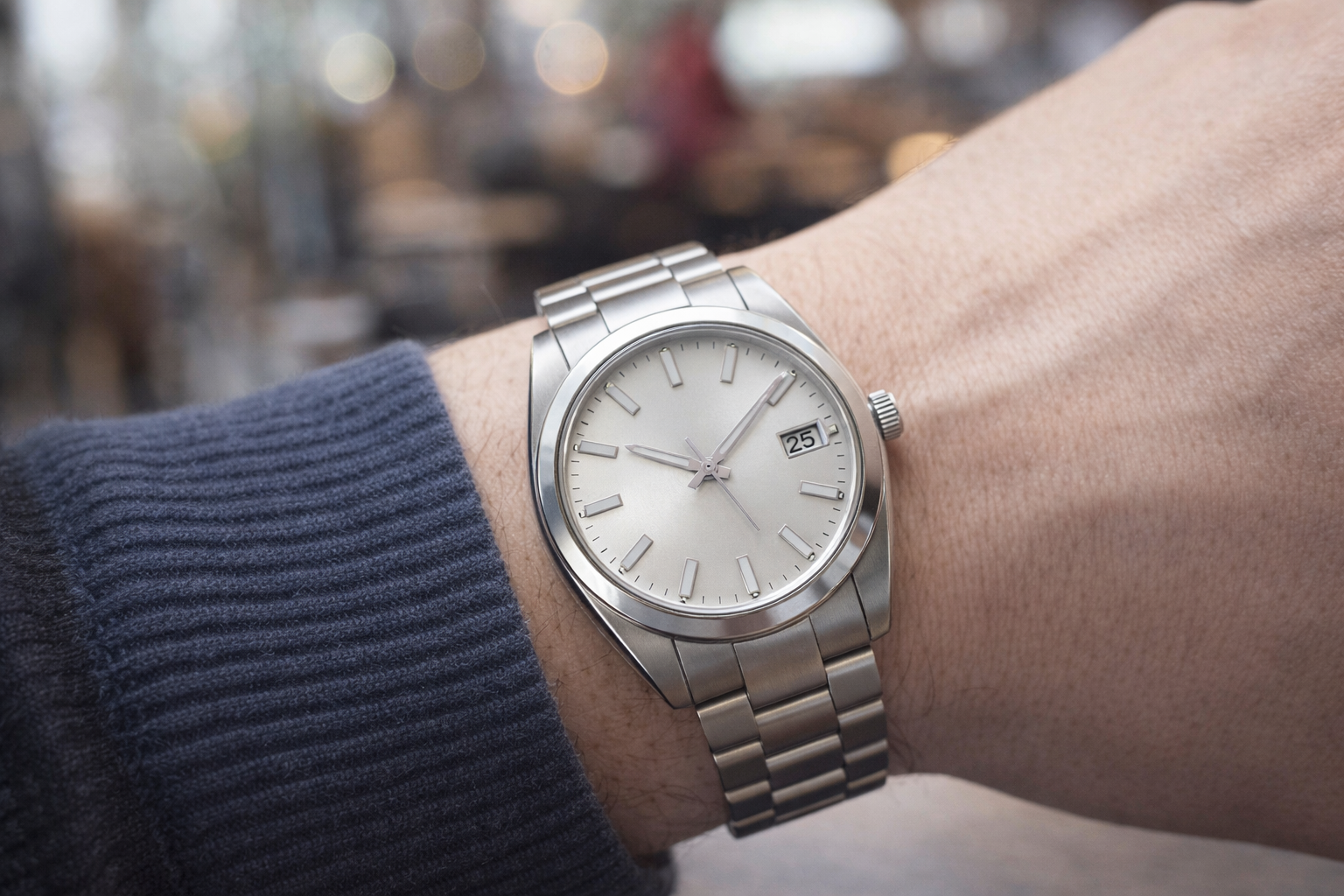
While dark dials often feel more compact, lighter dials can look cleaner, more elegant, and more open.
This can be a big advantage for dress watches or for people who want the dial to feel fresher and more visible. A silver or white dial often adds brightness and can make the whole watch feel more refined in certain settings.
Real-life example
A buyer choosing a watch for office wear and formal occasions may find that a silver dial looks more elegant under a shirt cuff and feels more classic in bright indoor lighting.
So while light dials may wear visually larger, they can also feel more graceful depending on the design.
What to check
- Does the lighter dial feel elegant or too visible?
- Does it match the overall style of the watch?
- Does it suit the kind of settings where you will wear it most?
6. Contrast Changes Perceived Size Even More
Dial color alone matters, but contrast matters too.
A dark dial with bright markers, polished hands, and a sharp chapter ring may still feel visually strong. A light dial with very soft contrast may wear more gently than expected. What really shapes wrist presence is the whole visual composition.
Real-life example
Two black-dial watches can wear very differently. One feels quiet and compact because the case and dial tones blend well. The other feels much bolder because the white markers and polished bezel create much stronger contrast.
That is why buyers should look at the whole design, not just the dial color in isolation.
What to check
- Are the hands and markers high contrast?
- Does the bezel add more visual sharpness?
- Does the watch feel calm or attention-grabbing overall?
7. The Best Dial Color Depends on the Look You Want
There is no universal “best” answer.
If you want a watch to wear smaller, feel more understated, and work easily in daily life, a dark dial is often the safer choice. If you want more visibility, more openness, or a cleaner dressier feel, a lighter dial may be the better option.
Real-life example
A buyer with a medium wrist may choose the dark-dial version of a sports watch because it feels more balanced for daily wear, but choose the light-dial version of a dress watch because it looks brighter and more refined for formal settings.
That is a good reminder that dial color should match both your wrist and your lifestyle.
If materials and visual quality also matter to you, this topic connects well with What Makes a Watch Look Expensive? 9 Details Most People Notice.
What to check
- Do you want the watch to stand out or blend in more?
- Are you buying for everyday wear or specific occasions?
- Does the dial color support the overall feeling you want?
What Buyers Often Get Wrong
Many buyers assume:
- size is only about millimeters
- all 40mm watches wear the same
- dial color is just a style preference
But in real use, color changes visual size more than people expect.
That is why two watches with identical case specs can feel very different once they are actually worn.
Who Should Think Most About Dial Color and Wrist Presence?
This matters most for people who:
- have smaller or medium wrists
- are deciding between two dial colors of the same watch
- want a versatile everyday watch
- do not want the watch to feel too bold
- care about how the watch looks in work and social settings
For buyers in those situations, dial color is not a minor detail. It can change the entire wearing experience.
Final Thoughts
Do dark dial watches look smaller?
In most cases, yes. Dark dials usually make a watch feel more compact, more controlled, and a little less visually expansive on the wrist. Lighter dials usually feel more open and more noticeable, even when the actual case size is identical.
That does not make one better than the other. It simply means dial color changes wrist presence in a very real way.
If you want a watch that feels easy, understated, and versatile, a dark dial is often the safer choice. If you want more brightness, visibility, and visual openness, a lighter dial may suit you better.
In the end, the right dial color is the one that gives you the kind of presence you actually want in daily wear.
FAQ
1. Do black dial watches look smaller than white dial watches?
Yes, in many cases they do. Black dials usually create a more compact visual effect, while white dials often feel more open and slightly larger on the wrist.
2. Does dial color really affect watch size perception?
Yes. Even when the dimensions stay the same, dial color can change how large or noticeable a watch appears in real life.
3. Are dark dial watches better for small wrists?
Often, yes. Dark dials usually feel more controlled and less visually expansive, which can help a watch wear more comfortably on smaller wrists.
4. Are light dial watches less versatile?
Not always, but dark dials are often easier to style across more daily situations. Light dials can still be very versatile depending on the watch design.
5. Which dial color is best for everyday wear?
For many people, dark dials are the easiest everyday option because they feel balanced, versatile, and less visually loud.
6. Can two watches with the same size wear differently because of dial color?
Yes. That is one of the most common reasons two watches with identical measurements can feel different on the wrist.
7. Is dial color more important than case size?
Not more important, but it is more influential than many buyers expect. The best choice usually comes from both size and color working together.
