
How to Tell if a Watch Is Fake: 7 Signs Buyers Notice First
How to Tell if a Watch Is Fake: 7 Signs Buyers Notice First
Quick Answer
If you want to tell whether a watch is fake, start by checking the weight, dial printing, bracelet feel, finishing quality, movement behavior, and how the watch looks in real life rather than only in photos. In many cases, buyers first notice that something feels off when the watch looks acceptable from a distance but seems cheap, inconsistent, or poorly finished up close.
Buying a watch can feel simple at first. You see a design you like, the photos look good, the price seems tempting, and the seller sounds confident.
But in real life, many buyers only begin to question a watch after they hold it in their hand or wear it for a few hours. The watch may look fine in listing photos, yet something about it feels wrong once you check the details more carefully.
Sometimes the bracelet feels lighter than expected. Sometimes the dial printing looks slightly messy under daylight. Sometimes the watch appears impressive at first glance but loses that effect once it is on the wrist.
The good news is that you do not need to be an expert collector to notice the most common warning signs. In many cases, the first clues are surprisingly practical and easy to spot.
A Real-Life Situation Buyers Often Face
Imagine this situation.
You find a watch online that looks almost identical to a much more expensive model. The photos are sharp, the case looks polished, and the seller says it is “high quality.” When the watch arrives, your first reaction might still be positive.
But then small things begin to stand out.
When you pick it up, it feels lighter than expected. When you adjust the bracelet, it sounds a little loose. When you check the dial closely near a window, the text does not look as crisp as it did in the photo. Later, when you wear it outside, the watch no longer has that same refined appearance you noticed in the listing.
That is how many people first realize a watch may not be genuine. It is often not one dramatic flaw. It is a group of small signals that become obvious in real-life use.
1. The Weight Feels Lighter or Less Solid Than Expected
One of the first things buyers notice is the weight.
A watch does not need to be extremely heavy to feel well made, but it should usually feel solid, balanced, and properly assembled. If it feels hollow, too light, or oddly empty for its size, that can be one of the earliest warning signs.
Real-life example
A buyer receives a metal bracelet watch that looked premium in photos. But when they take it out of the box, the bracelet feels rattly and the case feels lighter than expected. Even before checking the dial, they already start doubting the overall quality.
This is especially noticeable with larger watches, because buyers often expect more wrist presence and material substance. When that feeling is missing, the watch can seem less convincing immediately.
If you want to understand how material affects this side of watch quality, you can naturally link here: Stainless Steel vs Titanium Watches: Which Material Is Better for Daily Wear?
What to check
- Does the watch feel solid in your hand?
- Does the bracelet feel substantial or hollow?
- Does the case weight feel appropriate for its size?
2. The Dial Printing Looks Fine From Far Away but Weak Up Close
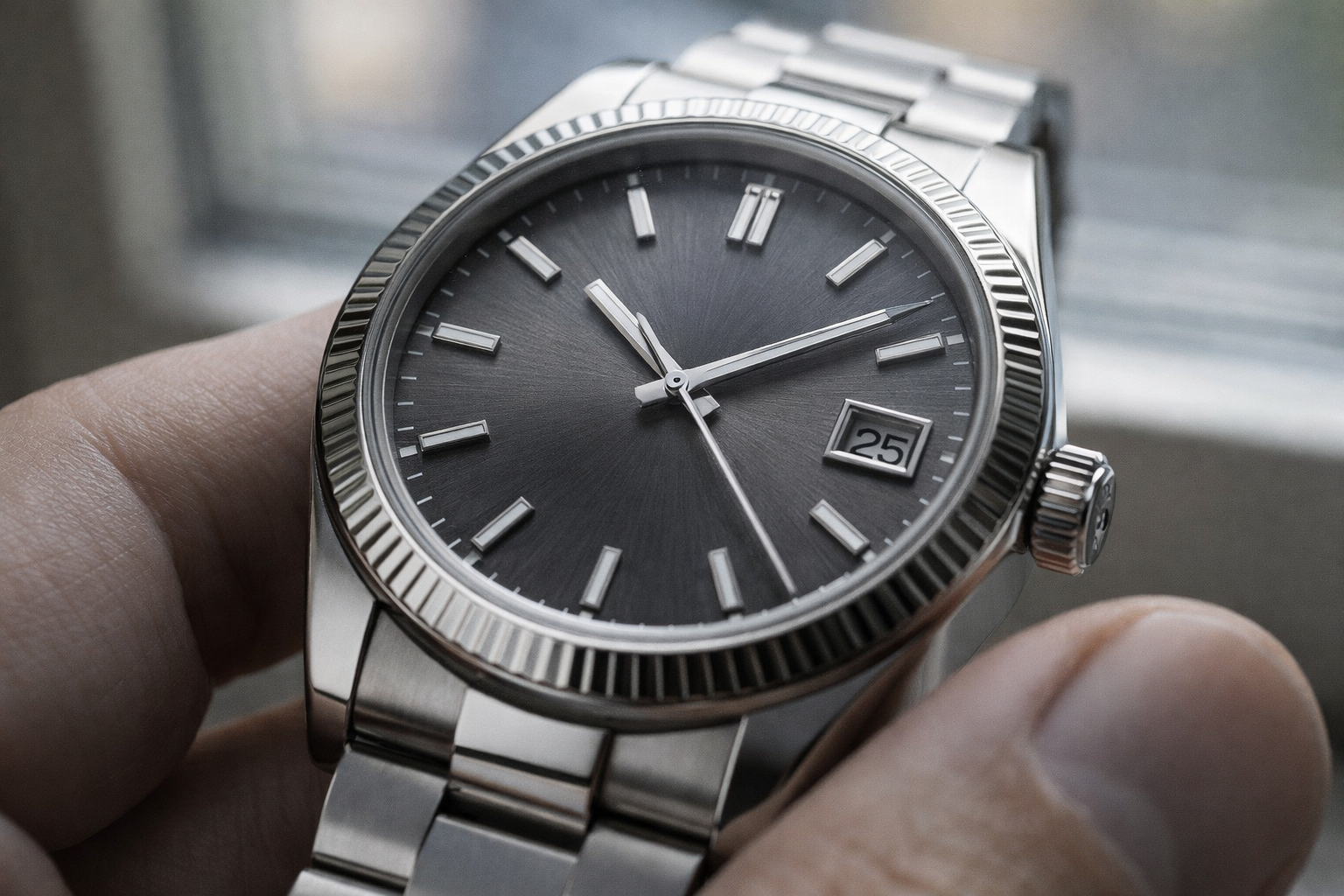
The dial is one of the most revealing parts of any watch.
From a distance, many watches look acceptable. But once you move closer, small details can begin to tell a different story. The logo may look too thick, the text may not be perfectly sharp, or the hour markers may seem slightly uneven.
Real-life example
A watch looks impressive in product photos on a phone screen. But when the buyer checks it under daylight near a window, the printed text looks softer than expected, and the spacing between letters feels slightly off. It is not dramatic, but it is enough to make the watch seem less refined.
These are the kinds of small details people often notice first in real life, especially when comparing two watches side by side.
What to check
- Is the text crisp and clean?
- Are the hour markers aligned evenly?
- Does the date window look centered?
- Do the hands look properly finished?
3. The Bracelet or Strap Feels Cheap During Normal Wear
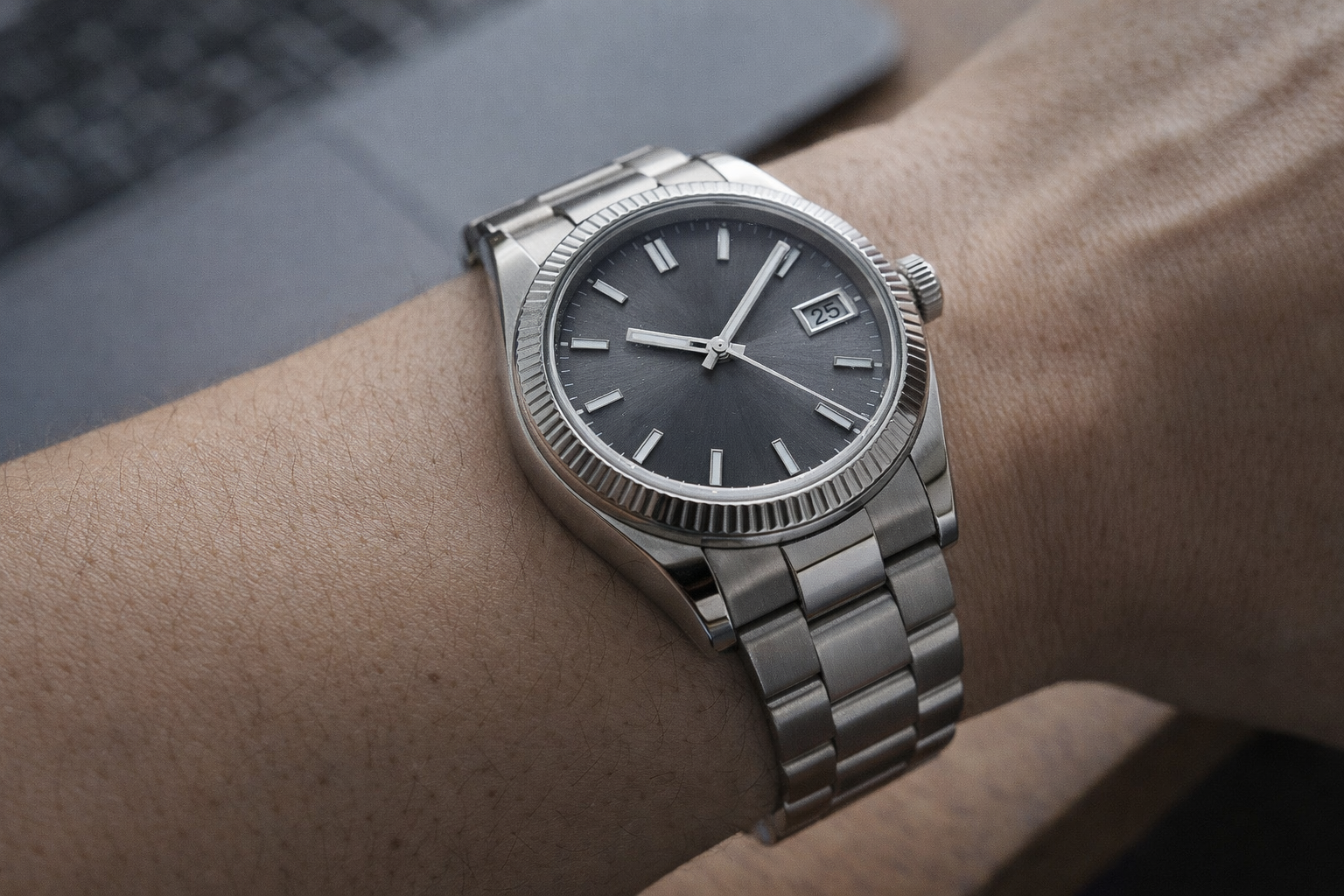
A lot of buyers focus on the dial or case first, but the bracelet or strap often reveals quality much faster.
A metal bracelet that pinches skin, feels noisy, or moves too loosely can make the entire watch seem cheaper than expected. A leather strap that feels stiff, plasticky, or rough at the edges can do the same.
Real-life example
A buyer wears a new watch for a full workday. By lunchtime, the bracelet already feels uncomfortable and the clasp does not inspire confidence. The watch still looks decent in the mirror, but the wearing experience feels much worse than expected.
That is why real wear matters. A watch can photograph well but still feel disappointing after several hours on the wrist.
You can connect this naturally to: Best Watch Strap Material for Everyday Wear: Leather, Rubber, or Metal?
What to check
- Does the bracelet feel smooth or rattly?
- Does the clasp close firmly?
- Does the strap feel comfortable after a few hours?
- Does anything feel sharp, loose, or cheap?
4. The Finishing Looks Less Refined in Daylight
Many watches look better in controlled photos than they do in real life.
Under natural light, finishing becomes much easier to judge. Sharp edges, rough brushing, uneven polishing, and weak transitions between surfaces all become more visible.
Real-life example
A buyer tries the watch on indoors and thinks it looks fine. Later, they step outside and notice the bezel edge looks rough, the polished surfaces do not reflect cleanly, and the case finishing feels less precise than expected.
This is one of the biggest reasons some watches appear convincing online but much less impressive on the wrist.
This also connects well to: What Makes a Watch Look Expensive? 9 Details Most People Notice
What to check
- Are polished areas smooth and clean?
- Do brushed surfaces look even?
- Are the edges refined or rough?
- Does the watch still look premium in daylight?
5. The Movement Behavior Does Not Match Expectations
You do not need to open a watch case to notice unusual behavior.
Sometimes the seconds hand moves in a way that does not feel right for that watch type. Sometimes the crown feels rough when setting the time. Sometimes the date does not change cleanly, or the watch loses time too quickly during regular wear.
Real-life example
A buyer sets the time in the morning and notices the crown feels rough and less precise than expected. After one or two days, the watch is already noticeably off. That does not automatically prove anything on its own, but combined with other warning signs, it becomes more concerning.
It helps to understand how different movement types normally behave, which makes these differences easier to notice. You can link here: Mechanical vs Quartz Watches: Which One Is Right for Everyday Wear? and Watch Accuracy Explained: How Accurate Should a Watch Really Be?
What to check
- Does the seconds hand move as expected?
- Does the crown feel smooth to use?
- Does the watch keep reasonable time?
- Does the date change cleanly?
6. The Overall Quality Feels Inconsistent
One of the clearest warning signs is inconsistency.
A watch may have an acceptable case shape, but weaker dial printing. The bracelet may look decent from a distance, but the clasp feels thin. The hands may look good in photos, but the finishing around the markers seems off in person.
Real-life example
A buyer compares the watch in different situations during the day: at home, at work, and outside. Each time, a different small issue stands out. None of them is huge on its own, but together they make the whole watch feel less convincing.
That feeling of inconsistency is important. Many people notice it before they can even explain exactly what is wrong.
This can naturally link to: How to Tell If a Watch Is High Quality: 10 Signs You Should Know
What to check
- Do all parts of the watch feel equally well made?
- Does one area look much weaker than the rest?
- Does the watch feel coherent as a whole?
7. It Looks Good in Photos but Less Convincing on the Wrist
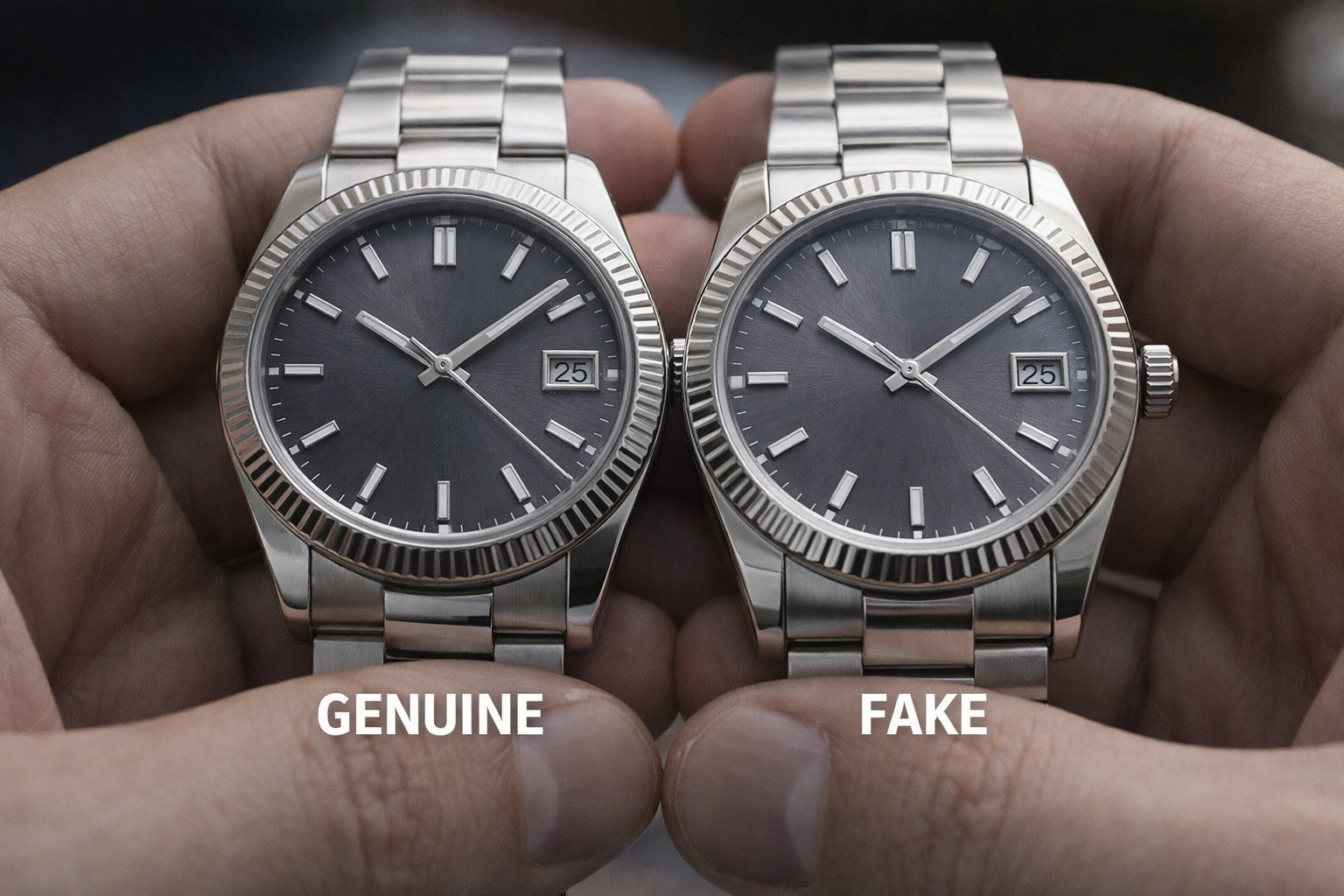
This is probably the most realistic sign of all.
A watch may look attractive in seller photos, social media images, or close-up listing shots. But once it is on your wrist in natural light, the proportions, finishing, and overall presence may feel less impressive.
Real-life example
A buyer is excited after seeing the watch online. But after wearing it out for dinner, they notice the dial lacks depth, the bracelet does not drape naturally, and the watch simply does not have the refined appearance they expected.
This happens often because photos hide a lot. They can hide texture, weight balance, bracelet flexibility, and finishing quality.
Fit also matters here. A watch that looks awkward because of poor sizing can make every flaw more obvious. That is why this article can also naturally link to: How to Choose the Right Watch Size for Your Wrist
What to check
- Does the watch still look good outside, not just indoors?
- Does it sit naturally on the wrist?
- Does it still feel convincing after a full day of wear?
Where People Most Commonly Notice These Signs
These details usually become obvious in normal situations, not in perfect studio conditions.
For example:
- When opening the package: the weight and first build impression stand out immediately
- When adjusting the bracelet: looseness, clasp quality, and comfort become clear
- When checking the watch near a window: dial printing and finishing look more honest in daylight
- When wearing it to work: comfort and bracelet feel become more noticeable over time
- When wearing it outside: the overall visual quality is easier to judge than in listing photos
That is why real-life use matters so much. Many watches are easy to judge once they leave the controlled environment of product photography.
Why Buyers Miss the Signs at First
Most buyers do not miss these details because they are careless. They miss them because they focus on the biggest visual elements first.
They notice the case shape, the color, the overall style, and the familiar design language. But what usually matters more is the smaller stuff: the dial sharpness, bracelet quality, finishing precision, comfort, and consistency.
Once you start paying attention to those details, it becomes much easier to make a better judgment.
Final Thoughts
If you are trying to figure out how to tell if a watch is fake, the answer is usually not hidden in one secret test. In real life, people notice it through several practical signs working together.
The weight feels slightly off. The dial printing looks weaker up close. The bracelet feels cheaper during normal wear. The finishing loses its appeal in daylight. The movement behavior seems less refined. And on the wrist, the watch simply does not feel as convincing as it did in photos.
That is why the best approach is not to rely on one clue, but to judge the full experience of holding, wearing, and closely observing the watch in real conditions.
FAQ
How can you tell if a watch is fake quickly?
The quickest way is to check the weight, dial printing, bracelet feel, finishing, and overall consistency. Many buyers notice problems as soon as they hold the watch or wear it in daylight.
Can a fake watch look good in photos?
Yes. Many watches look better in controlled photos than they do in real life. Natural light and wrist wear often reveal much more.
What is the first thing most buyers notice?
Usually the weight, bracelet feel, or dial printing. These are the details that often create the first feeling that something is off.
Is the bracelet really that important?
Yes. A cheap-feeling bracelet or strap can make the entire watch feel less convincing, even if the case and dial look decent at first glance.
Can you tell if a watch is fake without opening it?
Often, yes. Many clues are visible from the outside, especially through finishing, printing, comfort, movement behavior, and overall build quality.
