
VS vs APS: Which Factory Feels More Refined When You Actually Wear It?
VS vs APS: Which Factory Feels More Refined When You Actually Wear It?
Quick Answer
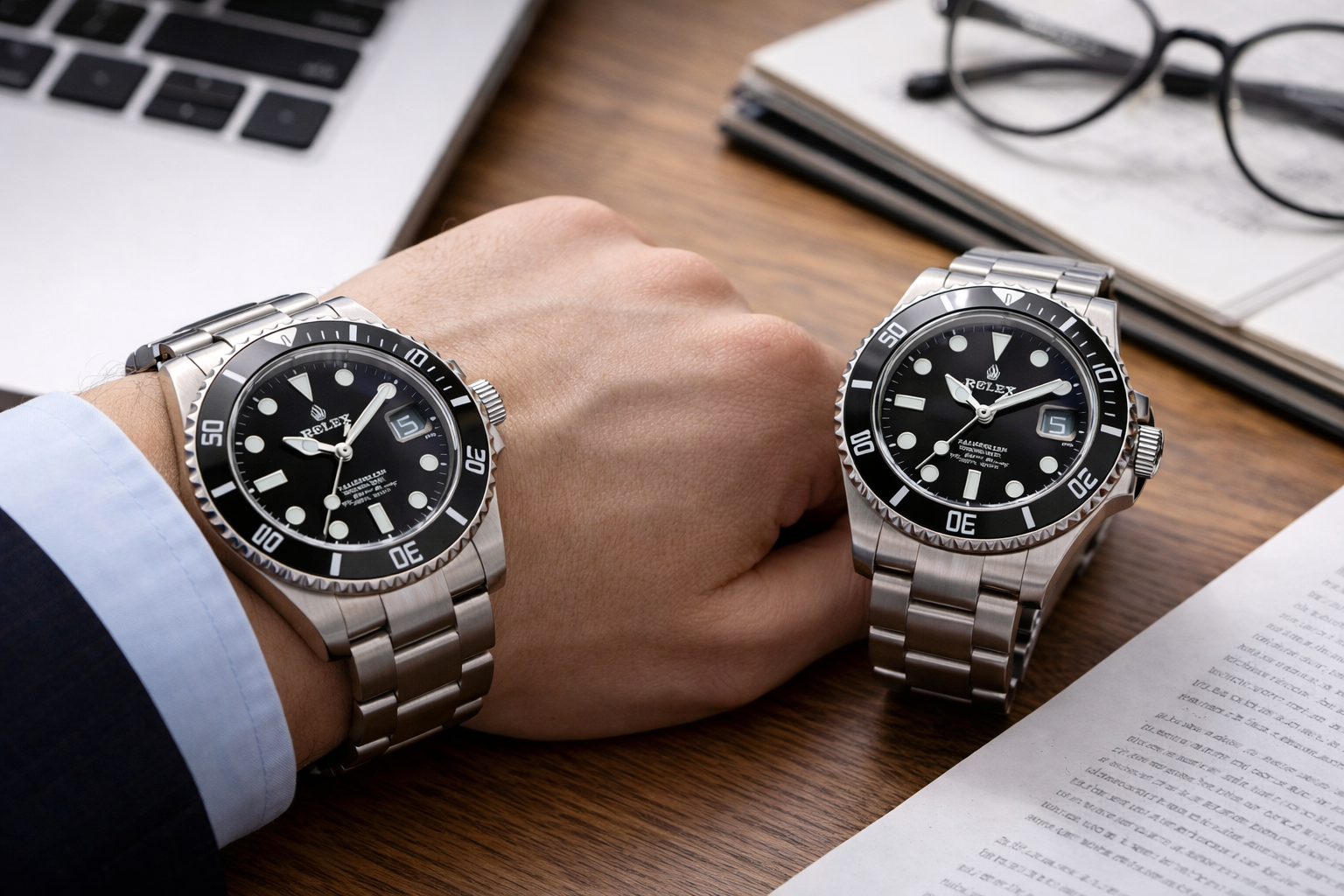
If you are comparing VS and APS, the more refined watch is usually not the one that wins the first close-up photo. It is the one that feels more complete once it is actually worn.
That difference usually comes from small things working together: how the case sits, how the bracelet moves, how calm the dial feels under normal light, how balanced the watch stays during daily motion, and whether the whole piece feels easier on the wrist after a few hours.
A refined watch is rarely about one loud detail. It is usually about fewer distracting ones.
Why “Refined” Is Harder to Explain Than “Looks Good”
A lot of buyers know when a watch looks sharp.
That part is easy.
The harder part is explaining why one watch feels more refined even when both look good enough in photos. Most people feel the difference before they can describe it. One watch seems a bit calmer, better settled, and more natural. The other may still look good, but it feels slightly more mechanical, slightly more eager, or slightly less complete.
That is what makes this comparison useful.
Refinement is not about whether a watch has enough detail. It is about whether those details work together without friction. The best way to notice that is not by staring at macro shots. It is by wearing the watch during a real day.
That is also why this article sits nicely next to Clean vs VS Factory: Which One Feels More Natural for Daily Wear?. Daily wear tells you whether a watch is easy to live with. Refinement tells you whether that ease also feels polished.
The First Hour Usually Does Not Tell the Whole Story
In the first 15 to 30 minutes, both watches may feel strong.
That is normal.
When people first put on a watch, they notice broad impression first:
- size
- dial color
- case shape
- bracelet style
- overall sharpness
- whether it looks expensive or not
But that is still surface-level judgment.
Refinement becomes clearer later, when the watch stops being “new” and starts becoming part of your movement. That is when small things begin to separate:
- the way the watch head settles
- how the bracelet reacts when your wrist bends
- whether the crystal feels calm or busy in changing light
- whether the watch becomes easier or harder to ignore
That is why some watches impress immediately but feel less special by the end of the day, while others become more convincing the longer you wear them.
1. Case Feel Is One of the Biggest Signs of Refinement
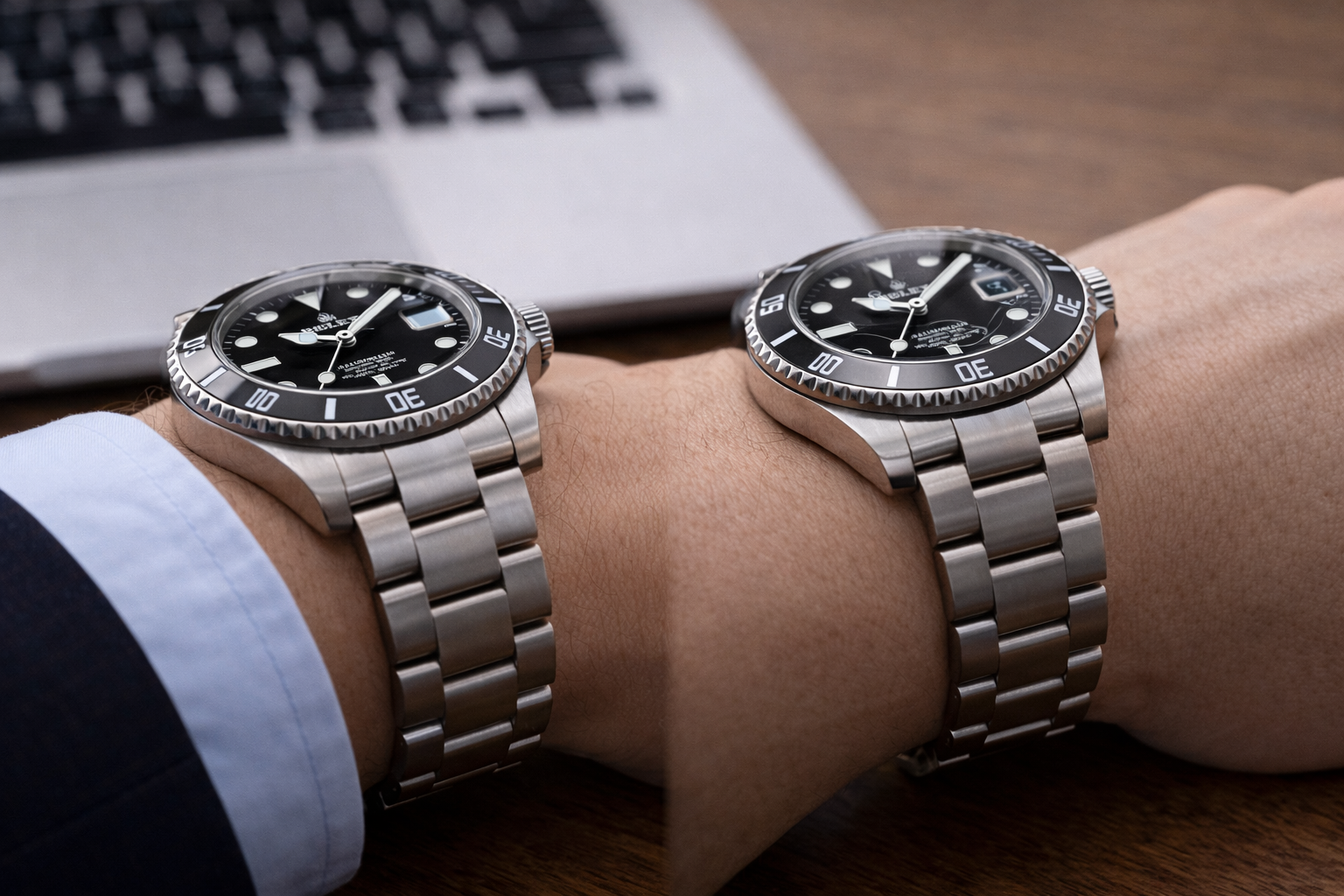
This is one of the most important parts, and also one of the least discussed.
A refined watch usually feels more settled where the case meets the wrist. It does not only look finished from above. It feels coherent in use. The transitions between the case side, lugs, underside, and bracelet all seem more naturally connected.
When a watch is slightly less refined, the case often gives the first clue:
- it may sit a bit flatter than you want
- the edges may feel more noticeable during movement
- the shape may look good, but feel less organic on the wrist
- the side profile may seem a touch more abrupt in daily use
You notice this most in boring situations, which is exactly why it matters:
- typing at a desk
- wearing the watch under a sleeve
- resting your wrist on a table
- driving
- lifting a coffee cup
- checking the time without adjusting your arm
Refinement shows up in how the watch handles these small moments.
If case feel is something you already pay attention to, this also connects naturally to Does Watch Thickness Matter More Than Case Size?, because refined wear often comes from proportion and transition, not only from finishing quality.
2. Bracelet Movement Can Make a Watch Feel More or Less Finished
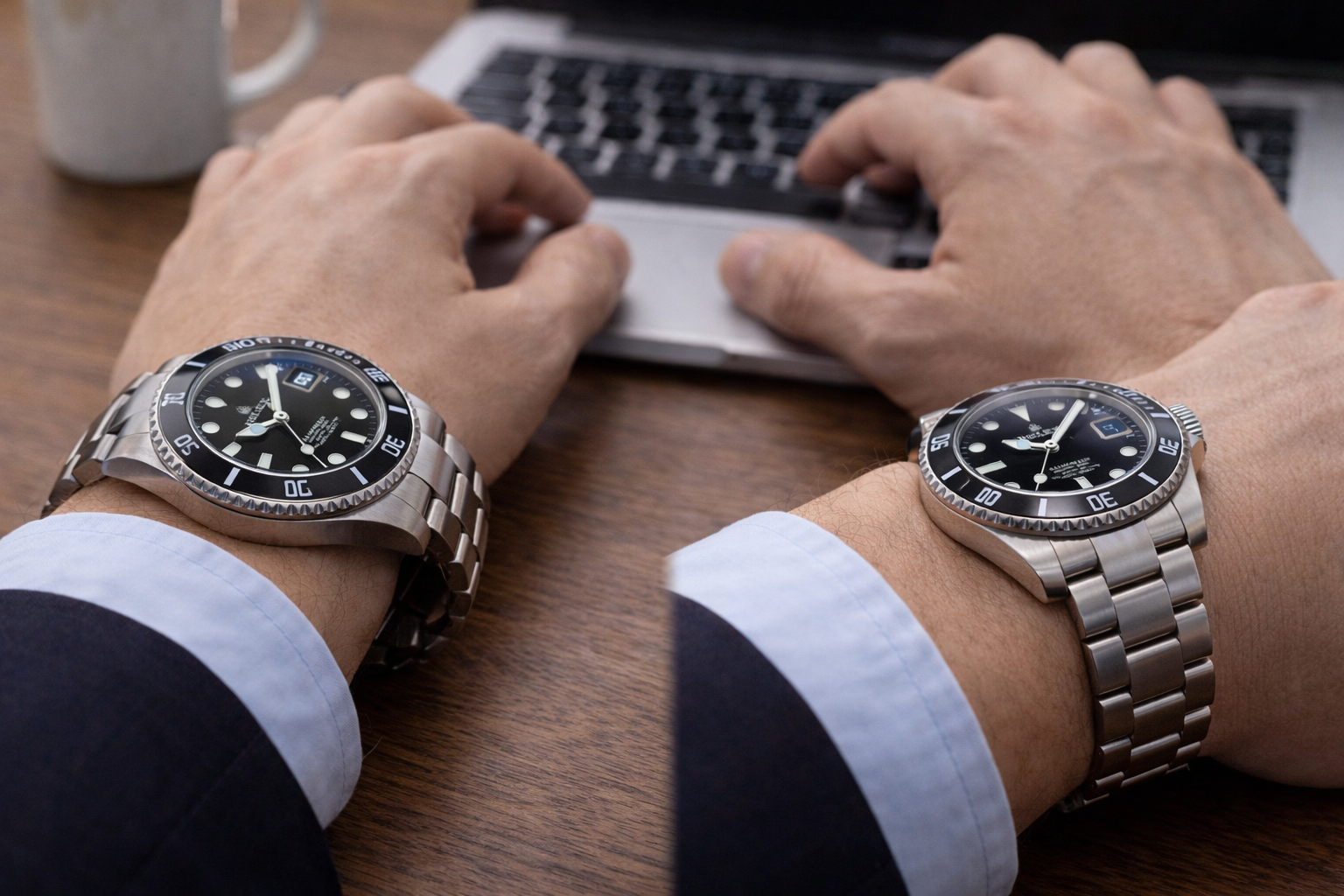
A bracelet does not need to be flashy to feel refined.
In fact, refinement usually feels quieter than that.
A more refined bracelet tends to do three things well:
- it drapes naturally
- it balances the watch head without fuss
- it does not keep reminding you it is there
A less refined bracelet may still look attractive, but the wearing feel changes in small ways:
- the link movement feels slightly less fluid
- the bracelet settles with a little more stiffness
- the head-to-bracelet transition feels a bit less natural
- the clasp area becomes more noticeable across the day
Again, these are not dramatic flaws. But refinement is often about removing mild friction from the experience.
This is one reason buyers sometimes change their opinion after a few hours of wear. The watch they liked more in photos is not always the one they enjoy more at 5 p.m.
That is also why Clean vs GM: Which Factory Gets the Bracelet Feel Closer to a Premium Watch? is a useful related read. Bracelet feel influences refinement much more than most people expect.
3. Dial Calmness Matters More Than Dial Detail Alone
A lot of buyers focus on dial detail first.
That makes sense, especially when comparing photos. People zoom in on text, marker shape, hand finishing, and color tone. But in real use, refinement often has less to do with isolated detail and more to do with how calm the dial feels overall.
A refined dial usually has a kind of visual stability. It does not need ideal light to look right. It holds itself together across different settings:
- office lighting
- daylight near a window
- overcast outdoor light
- soft indoor evening light
- quick wrist checks during movement
A less refined dial may still look nice, but feel slightly less settled. Sometimes it is not obviously worse. It just changes more awkwardly with angle, reflection, or distance.
That matters because real life is made of fast glances, not perfect stills.
This also connects closely to Why Some Replica Watches Look Fine in Photos but Less Convincing in Real Life. Refinement often survives real life better than raw visual impact does.
4. Wrist Balance Is a Refinement Test in Disguise
People often talk about comfort and refinement as if they are separate things.
They are related more than they seem.
A watch that feels refined usually also feels balanced. Not necessarily lighter. Not necessarily thinner. Just more centered and more stable during normal motion.
You especially notice this when:
- walking
- reaching for things
- typing
- checking the time repeatedly
- moving between indoor and outdoor settings
- wearing the watch from morning into evening
A refined watch usually stays quiet during those movements. It does not rotate too easily. It does not feel top-heavy. It does not make you think about it more than necessary.
A less refined one may still be fine, but it tends to feel slightly more object-like on the wrist. You remain aware of it in a way that is hard to describe but easy to feel.
That is why wrist balance is one of the best real-life tests you can use when comparing two factories.
5. Refinement Shows Up Most Under Ordinary Indoor Light
This is where a lot of opinions change.
Under ideal light, many watches look impressive enough. But daily life is mostly not ideal light. It is:
- office lighting
- indoor daylight
- coffee shop corners
- car interiors
- soft late-afternoon conditions
- casual social settings
A refined watch tends to keep its composure in these situations. The dial remains readable and calm. The case still feels proportionate. The bracelet does not suddenly feel more awkward. The watch keeps looking like itself.
A less refined watch often starts losing small pieces of harmony here:
- the dial feels a bit flatter
- reflections become harsher
- edges look slightly more obvious
- the overall impression becomes less controlled
This is why normal indoor use is one of the most honest watch tests there is.
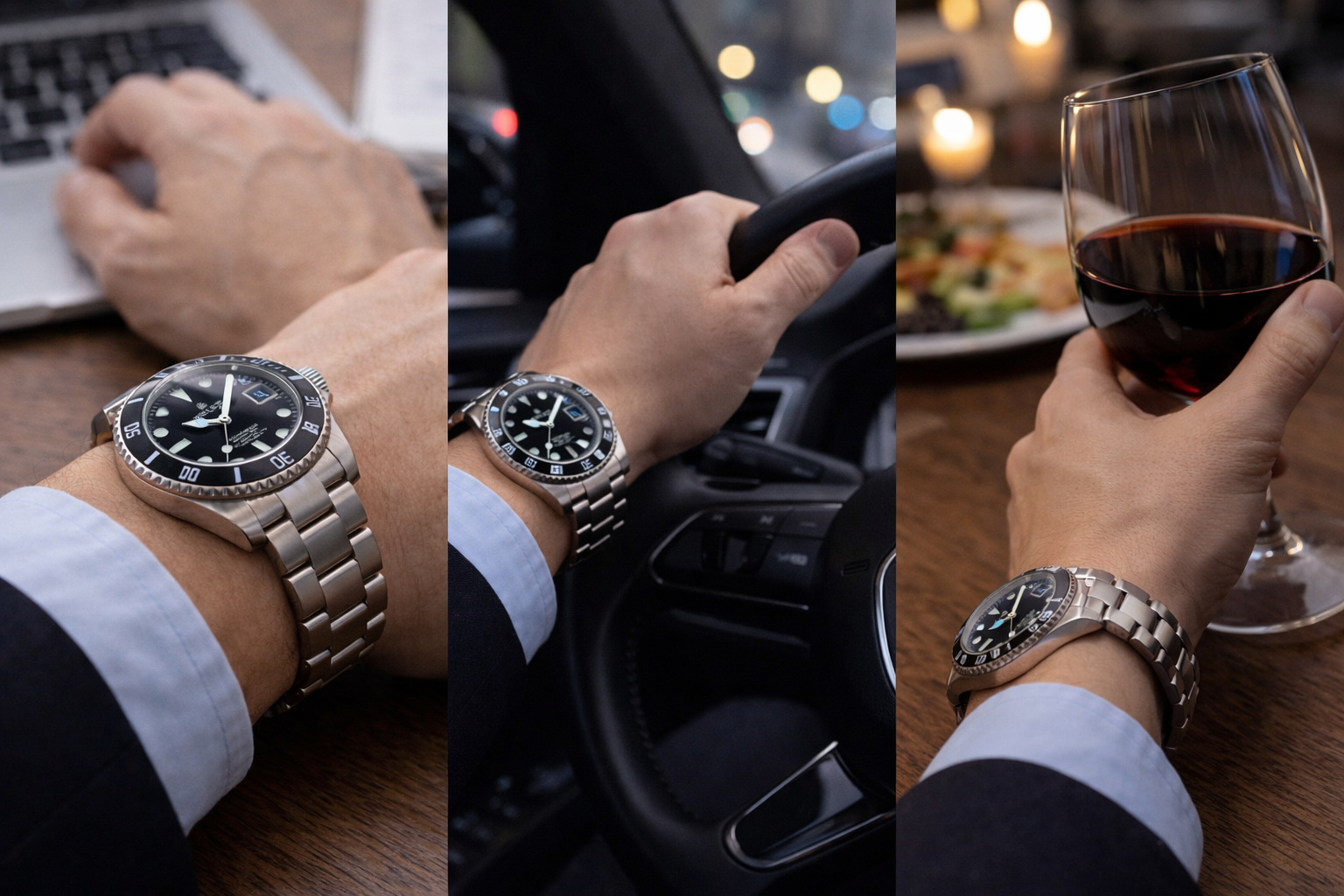
Real-Life Scenario: Office Day, Commute, and Dinner
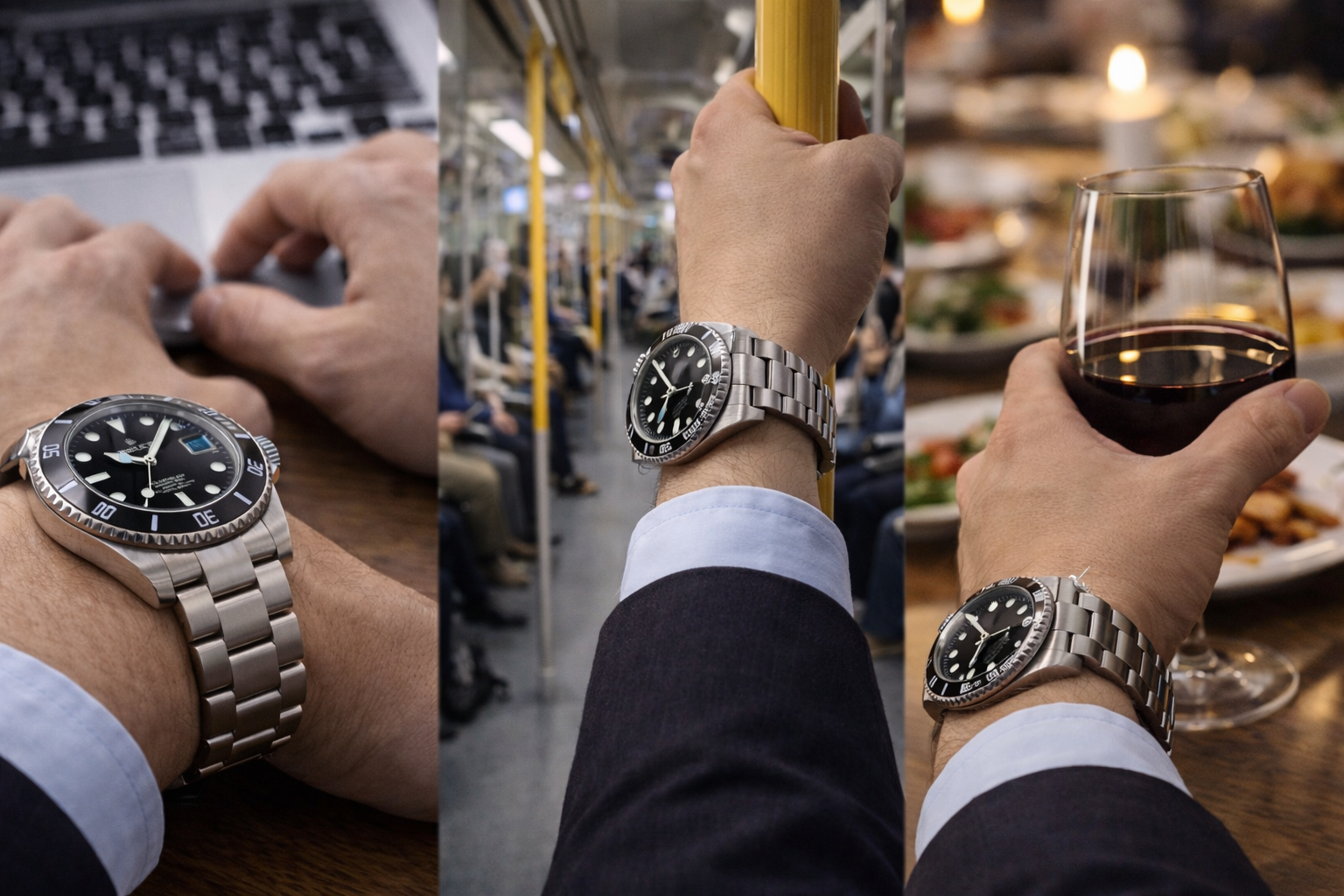
Let’s put this into one realistic day.
Morning at the office
At first glance, both may still feel strong. The size works, the style works, and the broad visual impression is there. You may not notice much separation yet.
Midday desk use
Now the difference starts becoming clearer. Repeated wrist movement, keyboard contact, indoor light, and constant time checks begin to reveal whether the watch feels truly settled. This is where bracelet movement and case comfort matter more.
Commute home
Motion exposes more. The watch catches different angles and reflections. A refined piece usually still feels composed here. A less refined one may start feeling a touch busier.
Dinner or evening setting
At this point, overall harmony matters more than detail obsession. Nobody is inspecting the watch like a forum post. They are just seeing whether it feels naturally convincing at close distance.
That is often where refinement becomes easiest to notice.
What Buyers Expect to Matter vs What Actually Matters
Before wearing the watch, buyers often expect these to matter most:
- visible finishing
- dial sharpness
- edge crispness
- how expensive it looks in a close-up
- how well it photographs
After actually wearing the watch, many end up caring more about:
- whether it sits naturally
- whether the dial feels calm
- whether the bracelet gets better or worse over time
- whether the watch remains balanced during real use
- whether the whole piece feels integrated
That change in perspective is important.
A refined watch is not always the most dramatic one.
It is often the one with fewer interruptions.
How to Judge Refinement More Accurately Before Choosing
If you are comparing VS and APS and care about refinement, ask better questions than “Which one looks stronger?”
Ask:
Does the case feel smooth and settled in normal wear?
This matters more than sharp still images.
Does the bracelet become more natural over time?
A refined bracelet usually improves your impression through wear, not the opposite.
Does the dial stay calm in average indoor lighting?
Not just in daylight or polished dealer photos.
Does the watch feel centered during movement?
If not, refinement usually drops fast.
Does the watch become easier to live with after a few hours?
That answer tells you a lot.
These are better refinement questions because they follow actual ownership, not just visual comparison.
Which Type of Buyer Notices This Most?
You are more likely to notice refinement differences if:
- you wear watches often
- you care about comfort and fit, not only appearance
- you spend most of your day indoors
- you check the time often
- you notice small changes in bracelet feel
- you have worn better-finished watches before
You may notice it less if:
- you wear the watch only occasionally
- your priority is broad style rather than tactile feel
- you mostly judge from photos
- you do not care much about long-hour comfort
That is why two people can compare the same pair of watches and honestly come to different conclusions.
The Most Common Mistake in This Comparison
The biggest mistake is treating refinement like a spec.
It is not.
Refinement is an experience. That means you cannot judge it well from:
- one dealer photo
- one macro shot
- one forum opinion
- one short first impression
You judge it from repeated contact.
How the watch feels at 9 a.m. matters.
How it feels at 2 p.m. matters more.
How it feels when you stop thinking about it matters most.
That is when refinement becomes real.
Final Thought
When comparing VS and APS, the more refined watch is usually not the one that shouts the loudest in photos. It is the one that feels more complete when the day becomes ordinary.
Refinement shows up through:
- calmer dial behavior
- smoother bracelet movement
- better case-to-wrist feeling
- more stable balance
- fewer small distractions over time
That is what makes a watch feel finished.
And when you actually wear it, that kind of quality is much easier to feel than to describe.
FAQ
What does “more refined” mean in a watch comparison?
It usually means the watch feels more complete and more natural in real use, with better balance, smoother transitions, calmer dial behavior, and less distraction during wear.
Is refinement the same as looking more expensive?
Not exactly. A watch can look expensive in a photo and still feel less refined during daily wear.
What part usually reveals refinement first?
For many buyers, it is either the case feel or the bracelet behavior after a few hours of wear.
Why does indoor lighting matter so much in this comparison?
Because most people wear their watches indoors for much of the day, and that is where dial calmness and overall visual harmony become easier to judge.
Can a less refined watch still look good in photos?
Yes. Photos often hide the small issues that become more noticeable during normal use.
What is the best way to compare VS and APS for real-life refinement?
Pay attention to case comfort, bracelet movement, dial calmness, wrist balance, and how the watch feels after a full day, not just the first impression.
