
Why Some Replica Watches Look Fine in Photos but Less Convincing in Real Life
Why Some Replica Watches Look Fine in Photos but Less Convincing in Real Life
Quick Answer
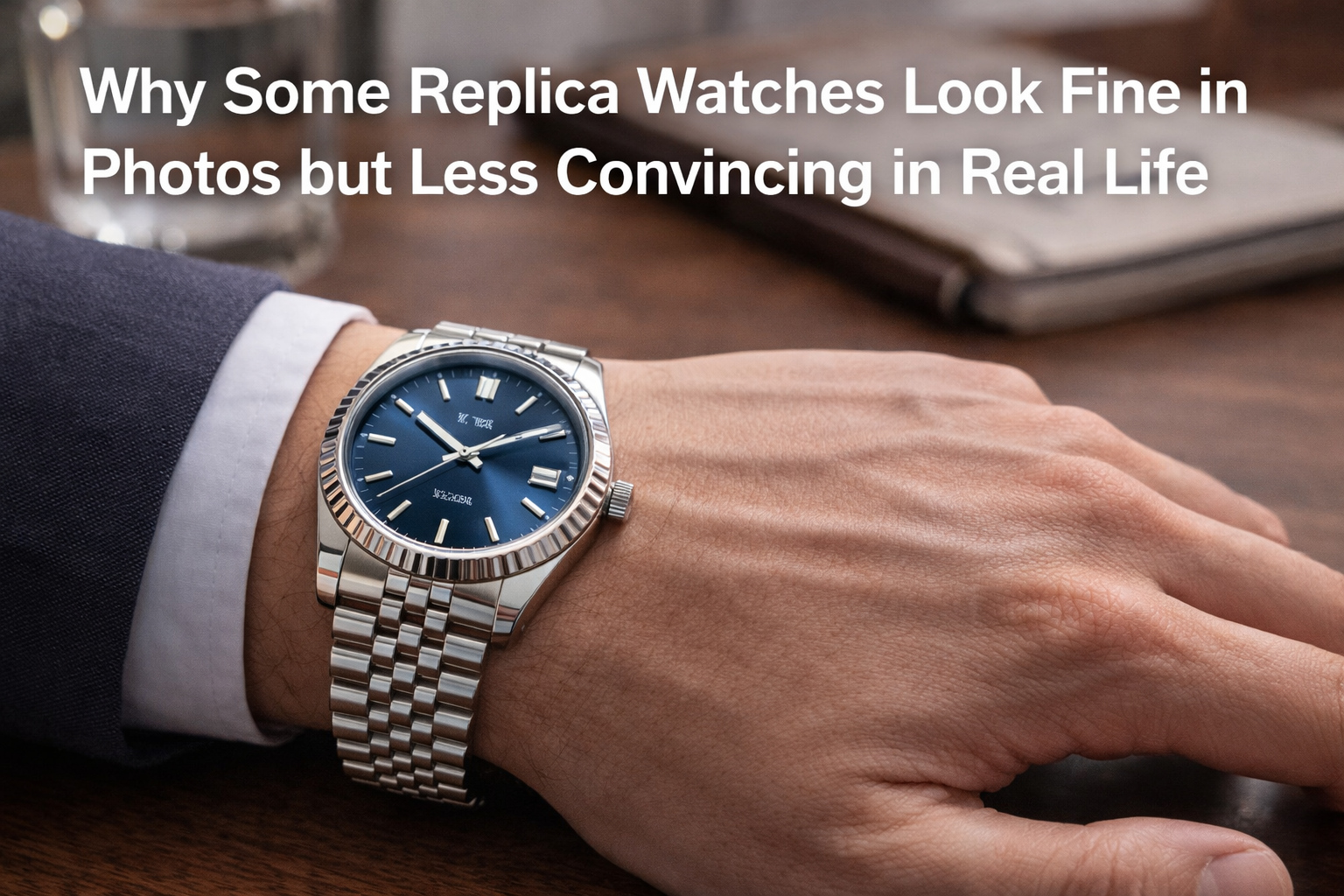
A replica watch can look surprisingly good in photos because photos hide a lot of the things that make a watch feel convincing in real life. A still image can control lighting, angle, distance, and reflection. Real life cannot.
That is why some watches look sharp, clean, and expensive in dealer photos or wrist shots, but feel less convincing once they are worn in normal indoor light, seen from different angles, or noticed at close distance during a regular day. The biggest difference is usually not one dramatic flaw. It is the combination of small things that photos flatten or hide.
Why This Happens More Often Than Buyers Expect
A lot of people trust watch photos too quickly.
That is understandable. On a screen, a watch looks complete. You can zoom in, compare color, check markers, look at the bezel, and convince yourself you already understand how it will feel in person.
But watches are not flat objects.
They have depth, reflectivity, edge behavior, balance, and movement on the wrist. They also change depending on where you are seeing them:
- at a desk
- in a car
- under office lights
- near a window
- in a restaurant at night
- on a moving wrist instead of a still product stand
That is why a watch that looks “totally fine” in photos can still feel slightly off in reality.
This is also related to what we discussed in Replica vs Genuine Datejust: What Feels Different After a Full Day on the Wrist?. The longer a watch is experienced in real life, the harder it becomes for a good photo alone to carry the whole impression.
Photos Are Good at Hiding Certain Problems
A photo does one thing extremely well: it freezes a watch at its best angle.
That means several real-life issues can become much less visible, including:
- slightly awkward case thickness
- shallow dial depth
- bracelet stiffness
- less refined edge transitions
- overly bright or flat reflections
- proportions that feel a little off when the watch is moving
In a controlled image, the watch only has to win for one moment.
In real life, it has to keep working from multiple angles, in mixed lighting, and during normal motion. That is a much harder test.
1. Lighting Can Make a Watch Look Better Than It Really Feels
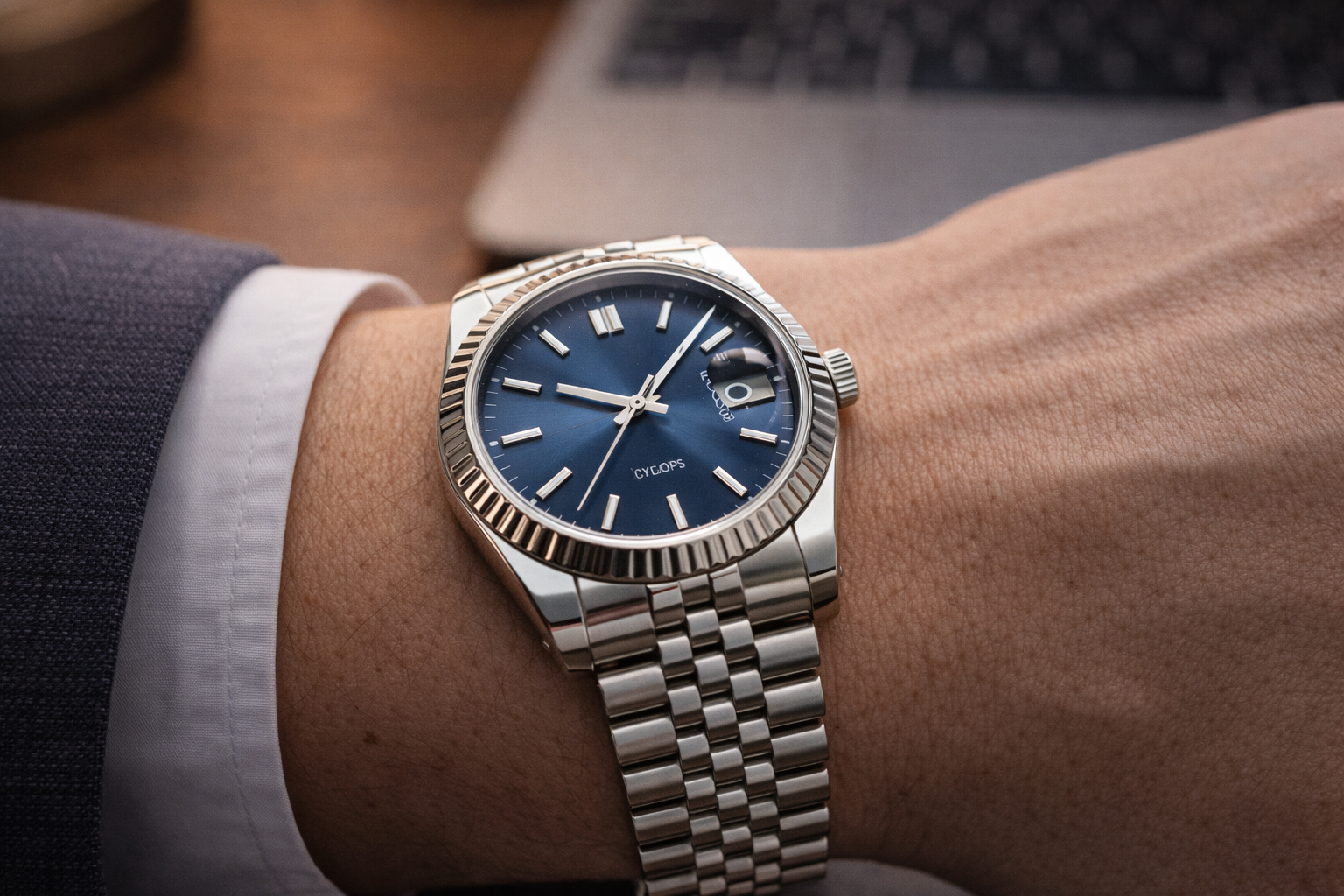
Lighting is probably the biggest reason.
A lot of watches look stronger in photos because the light is doing half the work. Good lighting can make the dial appear deeper, the bezel look cleaner, and the case finishing seem more refined than it feels in ordinary life.
In real life, most people do not see a watch under ideal studio conditions. They see it under:
- office ceiling lights
- cloudy daylight
- elevator mirrors
- car interiors
- restaurant lighting
- low-contrast indoor backgrounds
This matters because some watches rely too much on one kind of lighting to look convincing. When that lighting disappears, the watch can start looking flatter, harsher, or less composed.
You especially notice this with watches that seem impressive in bright product photos but lose some of that “finished” feeling indoors.
That is why articles like What Do People Actually Notice First About a Watch in Real Life? matter. In person, people react to the overall visual harmony, not just one frozen detail.
2. Dial Depth Often Looks Different in Person
This is one of the most misunderstood parts of watch photography.
A dial can look rich in a photo simply because the camera, lighting angle, and editing make it appear more dimensional. But when you see the same watch in person, the dial may feel flatter or less calm than expected.
A convincing watch dial usually has a kind of visual stability. It does not need perfect lighting to look right. It holds together under quick glances and ordinary use.
A less convincing dial often changes too much depending on angle. In some moments it looks great. In others, it feels a little empty or overly surface-level.
You may notice this in normal daily situations such as:
- checking the time at your desk
- glancing down while walking
- lifting your wrist in a café
- seeing the watch in soft evening light
- catching it briefly in a mirror
That “quiet quality” is difficult to fake consistently.
It is also why a replica can look excellent in one wrist shot and only average when actually worn all day.
3. The Bracelet May Look Premium but Move Less Naturally
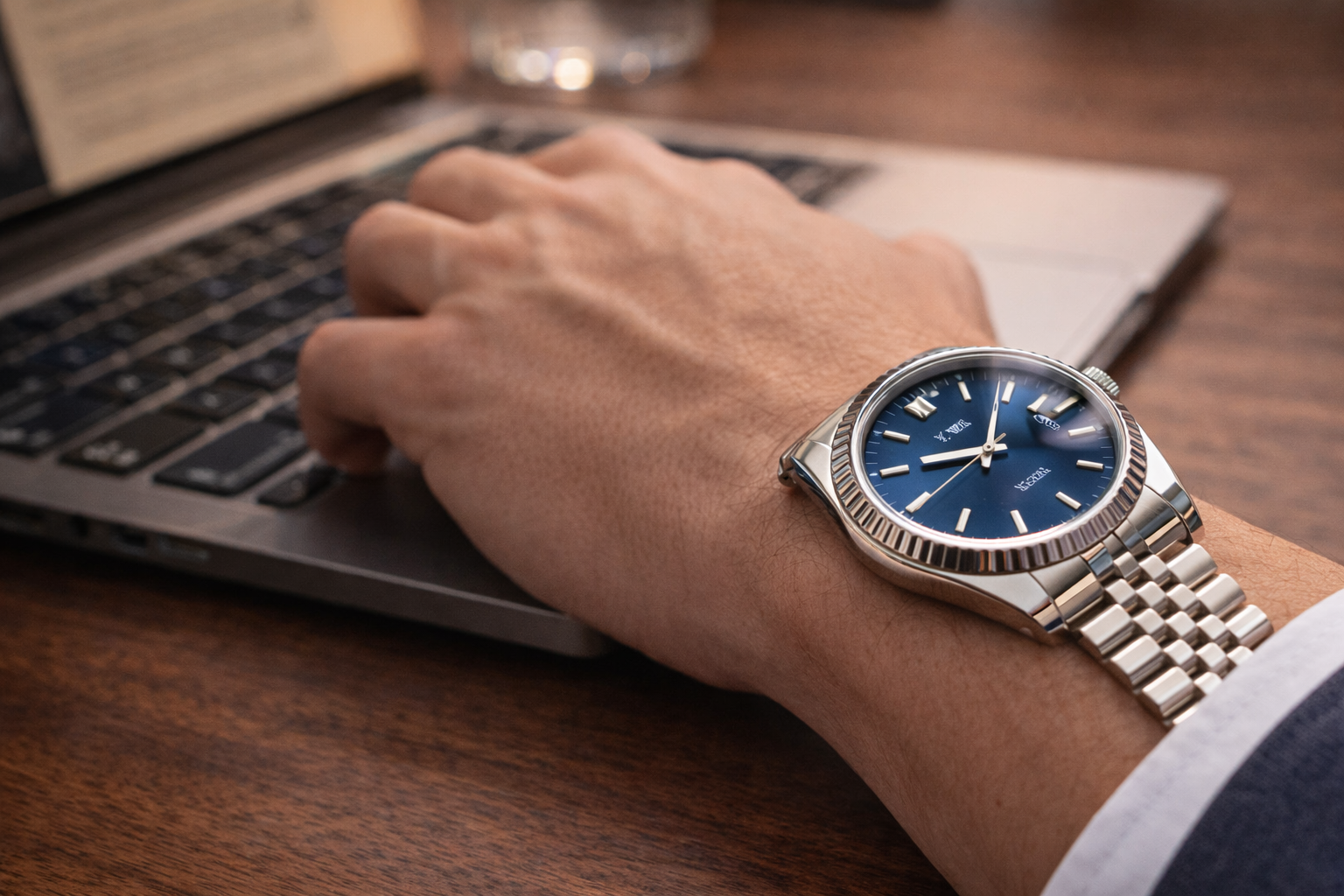
This is where real life becomes more honest than photos.
A bracelet in a photo only has to look clean. It does not have to move. It does not have to wrap the wrist naturally. It does not have to deal with typing, bending, sweating, walking, or resting on a desk.
In daily wear, those things matter a lot.
A bracelet that photographs well can still feel less convincing because:
- the links do not drape naturally
- the bracelet sits stiffly near the lugs
- movement feels less fluid
- the watch head and bracelet do not balance well together
- it never quite “disappears” on the wrist
This is one reason some watches feel stronger on screen than in person. On a screen, the bracelet is part of the look. In real life, it is part of the experience.
That connects closely to Why Two Similar Watches Can Feel Completely Different in Daily Wear and What Makes a Watch Comfortable All Day?. Once a watch is actually worn, comfort and movement become part of the quality judgment.
4. Proportions Can Be Harder to Notice in Photos
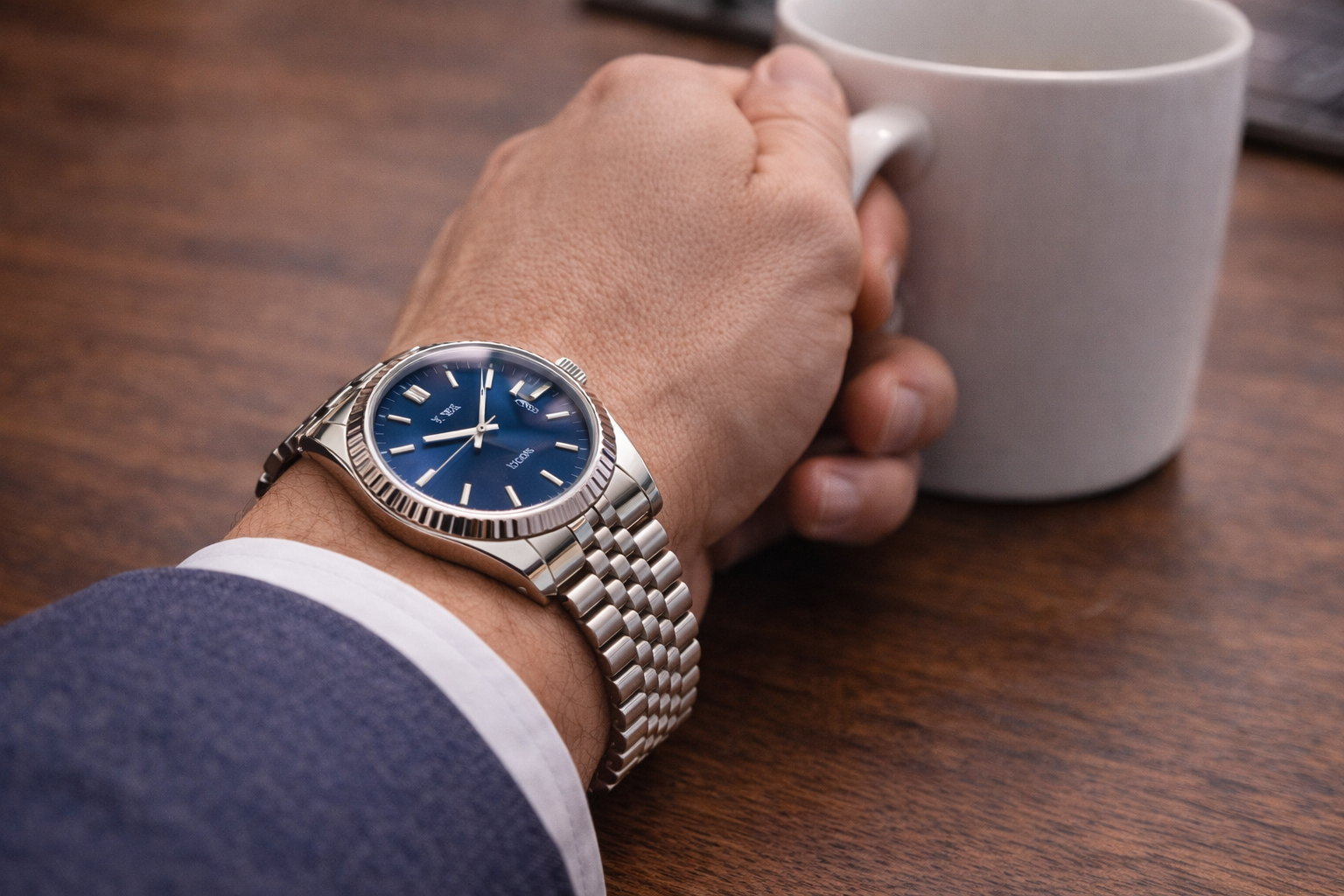
Photos flatten proportions more than most buyers realize.
A watch case may look balanced in a close-up shot, but on the wrist in person, the thickness, lug shape, bezel presence, or dial opening may feel slightly off. Not obviously wrong. Just not fully natural.
That is often the problem. The watch is not “bad.” It simply does not feel coherent from every angle.
Real life reveals proportion issues much more quickly because the watch is seen while moving:
- from the side
- from slightly above
- under sleeves
- while the wrist bends
- during quick, casual glances instead of posed inspection
This is why some watches look good in a straight-on photo but less convincing once worn in an office or social setting. The camera gave them one controlled perspective. Real life gives them many.
If proportions are something you already pay attention to, you may also want to revisit Does Watch Thickness Matter More Than Case Size?, because thickness and balance often affect real-life presence more than buyers expect.
5. Real Life Adds Movement, and Movement Exposes More
Photos remove motion. Real life adds it back.
That sounds simple, but it changes everything.
A watch in motion reveals:
- how the bracelet flexes
- how the case catches light while moving
- whether the watch rotates too easily
- how naturally it sits during wrist movement
- whether its details still feel balanced during quick glances
Some watches are built for the camera more than for the wrist. They look strong when the wrist is perfectly positioned, but once the hand moves naturally, the illusion weakens a little.
That is especially noticeable in everyday situations:
At work
A watch is seen while typing, pointing, resting on the desk, and moving under indoor lighting.
During a commute
The watch catches broken reflections and shifting angles. A design that felt strong in still photos may feel less settled.
In social settings
People do not inspect a watch like collectors. They notice it in passing. That is exactly when overall harmony matters more than any single feature.
A Real-Life Example: Why a Watch Can Feel Different from Morning to Night
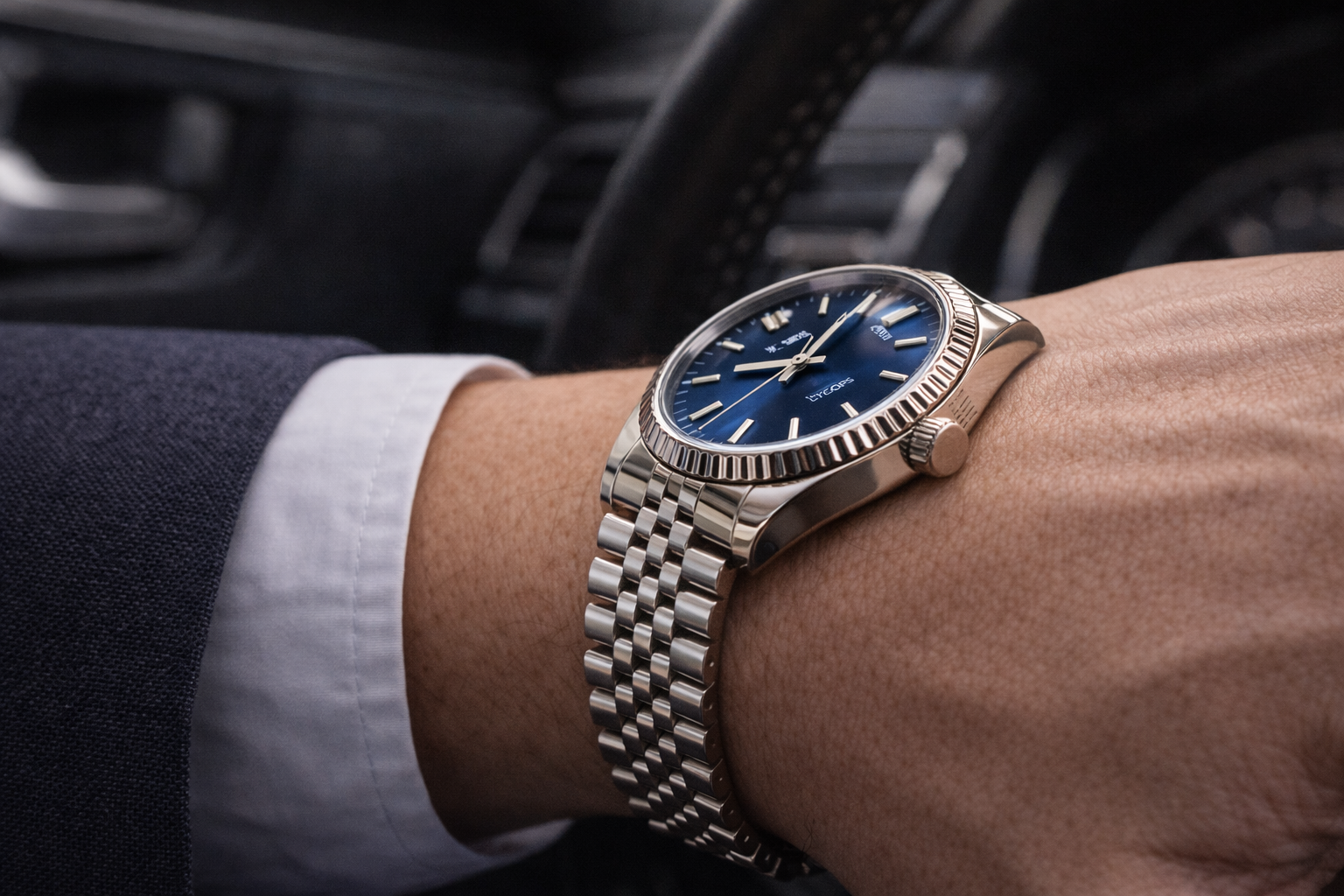
Imagine a buyer sees a replica watch online and thinks it looks excellent. The dial is attractive, the bracelet looks polished, and the overall shape feels close enough in photos.
Then they wear it for a full day.
In the morning
The first impression is good. Natural light helps. The watch looks clean enough. Confidence is high.
By midday in the office
Now the watch is under indoor light. The dial may feel flatter. The bracelet may feel a bit stiffer. The case may look slightly more prominent than expected.
During the commute home
Motion reveals more. The watch shifts a little differently on the wrist. Reflections may look harsher. The overall impression becomes less smooth.
At dinner or in close conversation
The watch is seen at real social distance, not in a carefully framed photo. Small issues in balance, finishing, and depth become easier to feel, even if nobody can name them precisely.
This is often the moment when buyers realize the difference between a watch that photographs well and a watch that wears convincingly.
Why the Problem Is Usually Not One “Big Flaw”
This is important.
Most of the time, a watch does not become less convincing in real life because of one terrible detail. It is usually a build-up of smaller things:
- the dial feels a bit flat
- the bracelet looks fine but moves less naturally
- the case edges feel slightly more noticeable
- the watch behaves differently under indoor light
- the proportions do not feel quite as relaxed on the wrist
Individually, none of those may seem serious.
Together, they change the whole impression.
This is also why many buyers struggle to explain what feels wrong. They just know the watch looked stronger in photos than it does in person.
How to Judge a Watch More Honestly Before You Buy
If you want to avoid being overly influenced by photos, use a better set of questions.
Ask how the watch looks in average indoor light
Not only in bright daylight or edited dealer photography.
Ask how the bracelet behaves during wear
A bracelet is not just visual. It needs to move well.
Ask for side angles, not only straight-on angles
Many proportion issues appear from the side or three-quarter view.
Ask whether the watch still looks good during ordinary use
Not only while posed for a wrist shot.
Ask whether the watch feels calm or slightly exaggerated in person
That one question often tells you more than a long spec list.
You can also cross-check your judgment with related articles like How to Evaluate Watch Craftsmanship: Key Details That Make a Watch Look and Feel Better and What Makes a Watch Look Premium in Real Life? 8 Details Most Buyers Notice, because real-life quality is usually a combination of finishing, comfort, and visual balance.
Who Notices This Difference Most?
Some buyers are much more sensitive to this than others.
You will notice it more if:
- you wear the watch often, not occasionally
- you check your watch many times a day
- you work indoors under artificial light
- you care about bracelet feel and wrist balance
- you have worn better-finished watches before
- you notice when a watch feels slightly too sharp, stiff, or flat
You may notice it less if:
- you mostly care about style from a distance
- you wear the watch occasionally
- your priority is photo appearance
- you are not sensitive to small comfort or finishing differences
Neither reaction is wrong. But it helps to know which kind of buyer you are before trusting photos too much.
The Most Common Buying Mistake
The biggest mistake is assuming that “looks good in photos” means “will feel convincing in real life.”
Those are not the same thing.
A photo can tell you whether a watch has the right general style. It can even tell you whether the basic layout is attractive. But it cannot fully tell you:
- how balanced it feels
- how the dial behaves in normal light
- how the bracelet moves
- how the case wears
- whether the whole watch feels calm and coherent over time
That is why the smartest buyers do not ask only, “Does it look good in photos?”
They ask, “What will this feel like after a normal day?”
That is a much better question.
Final Thought
Some replica watches look convincing in photos because photos are selective. They capture one angle, one light source, one moment, and usually the most flattering version of the watch.
Real life is less forgiving.
It adds movement, mixed lighting, wrist behavior, changing angles, and repeated close-up use. That is where a watch either holds together or starts to feel a little less right than expected.
The difference is rarely dramatic.
But daily wear does not need a dramatic flaw to change your opinion.
Sometimes a small loss of harmony is enough.
And that is exactly why a watch that looks fine in photos can feel noticeably less convincing in real life.
FAQ
Why do some replica watches look better in photos than in person?
Because photos control angle, lighting, and distance. Real life reveals movement, depth, bracelet behavior, and how the watch reacts in normal conditions.
What is the first thing that usually feels different in real life?
For many buyers, it is either dial depth under indoor lighting or bracelet feel during normal wrist movement.
Can a good photo hide case proportion issues?
Yes. Straight-on images often flatten the watch and make thickness, edge shape, and overall balance harder to judge accurately.
Why does indoor lighting matter so much?
Because most watches are worn indoors for much of the day. A watch that only looks strong in ideal daylight or edited photos may feel less convincing in everyday environments.
Is the problem usually one obvious flaw?
No. It is usually a combination of smaller issues that add up over time.
How can I judge more accurately before buying?
Look for side angles, indoor-light photos, natural wrist shots, and information about bracelet movement and long-wear comfort, not just polished product images.
