
Clean vs GM: Which Factory Gets the Bracelet Feel Closer to a Premium Watch?
Clean vs GM: Which Factory Gets the Bracelet Feel Closer to a Premium Watch?
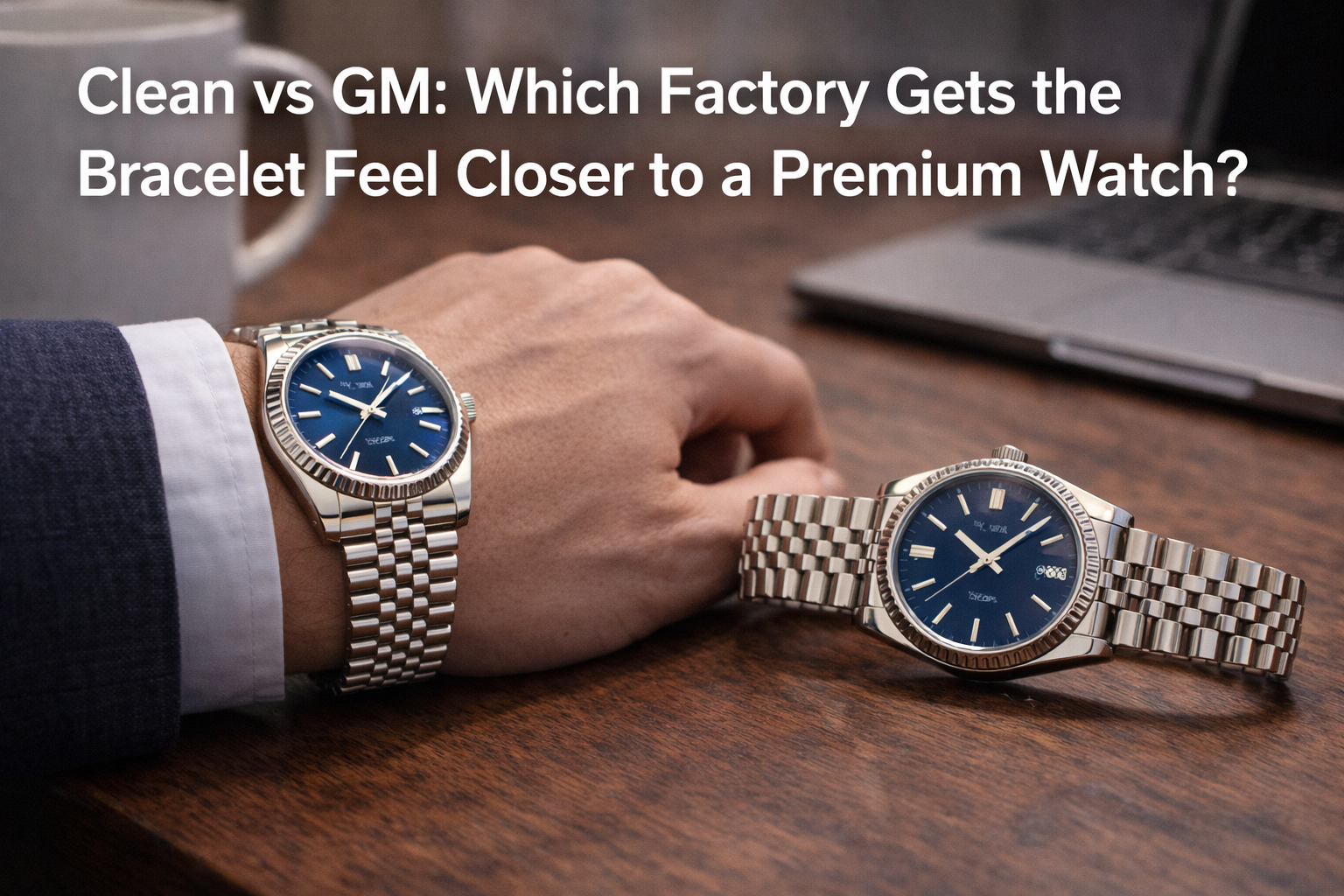
Quick Answer
If you are comparing Clean and GM, the bracelet feel is one of the most useful ways to judge which one feels closer to a premium watch in real life.
Why? Because bracelet quality is not just about how it looks in a photo. It is about how it moves, how it settles on the wrist, how it reacts during daily motion, and whether it quietly feels natural after hours of wear. A premium-feeling bracelet usually feels smooth, balanced, stable, and easy to forget in the best way.
For most buyers, the better bracelet is not the one that looks flashier at first glance. It is the one that feels more fluid, better integrated with the case, and less distracting over the course of a real day.
Why Bracelet Feel Matters More Than Many Buyers Realize
A lot of people think they are buying a watch head and getting the bracelet as a bonus.
In real life, it often works the other way around.
The bracelet is the part touching your wrist all day. It is the part that moves every time you type, walk, drive, reach for something, or adjust your sleeve. If the bracelet feels slightly stiff, slightly noisy, slightly unbalanced, or slightly less settled than it should, the whole watch can feel less premium even if the dial and case look good.
That is why bracelet feel has such a strong effect on overall quality perception.
A watch does not need a terrible bracelet to feel less refined. It only needs a bracelet that never fully disappears on the wrist.
That difference becomes obvious in daily wear.
This is also why our earlier article Does a Watch on a Bracelet Always Look More Expensive Than One on a Strap? only tells part of the story. Looking expensive and feeling premium are related, but they are not identical.
A Premium Bracelet Has a Different Kind of “Ease”
When people describe a bracelet as premium, they often struggle to explain what they actually mean.
It is usually not one thing.
A premium-feeling bracelet tends to have a quiet ease to it:
- it follows the wrist naturally
- it does not fight small movements
- it feels stable without feeling rigid
- it balances the watch head well
- it does not keep drawing attention to itself
- it feels refined in motion, not only in stillness
This is why a bracelet can look polished in a close-up photo and still feel less premium in person. The real test begins when the watch stops posing and starts being worn.
That is exactly where Clean vs GM becomes interesting.
First Impression vs Long-Wear Impression
At first glance, many buyers focus on visual things:
- center link shine
- overall tightness of the bracelet
- clasp appearance
- brushing and polishing
- how “luxury-like” it feels in photos
That is normal, but it is still only the first layer.
The second layer comes later:
- Does the bracelet drape naturally?
- Does it feel smooth when the wrist bends?
- Does the watch head stay balanced?
- Does the bracelet still feel right after several hours?
- Does it become more natural over time, or more noticeable?
That second layer is what actually tells you whether the bracelet feels closer to a premium watch.
1. Link Movement: Smooth vs Slightly Mechanical
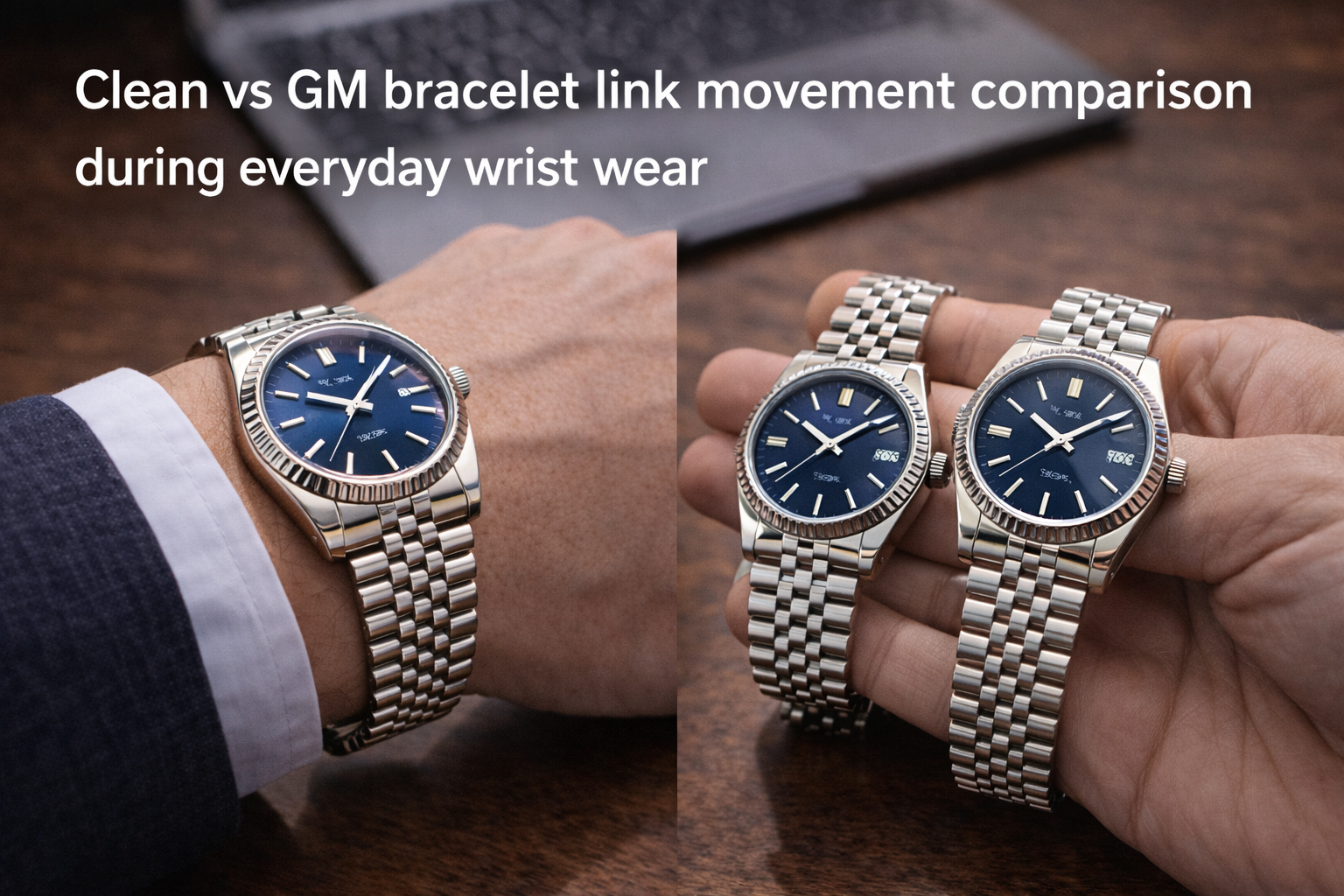
One of the first real differences buyers notice is link behavior.
A premium bracelet usually moves in a way that feels smooth and controlled. The links do not need to feel loose. They just need to articulate naturally. When the wrist turns, the bracelet should respond with very little resistance.
A less premium-feeling bracelet often seems fine at first, but over time it may feel a little more mechanical in its behavior. Not broken, not uncomfortable, just slightly less fluid than you want.
That can show up in small ways:
- the bracelet settles more stiffly after movement
- it feels a touch less organic around the wrist
- the lower section hangs well, but the upper section feels more rigid
- the watch head and bracelet do not transition as naturally as expected
These differences are subtle, but that is exactly why they matter. Premium feel is usually subtle too.
If you already read Clean vs VS Factory: Which One Feels More Natural for Daily Wear?, the same principle applies here: the best bracelet is usually the one that feels less distracting across a full day, not the one that only wins a first impression.
2. Wrist Balance Changes the Whole Experience
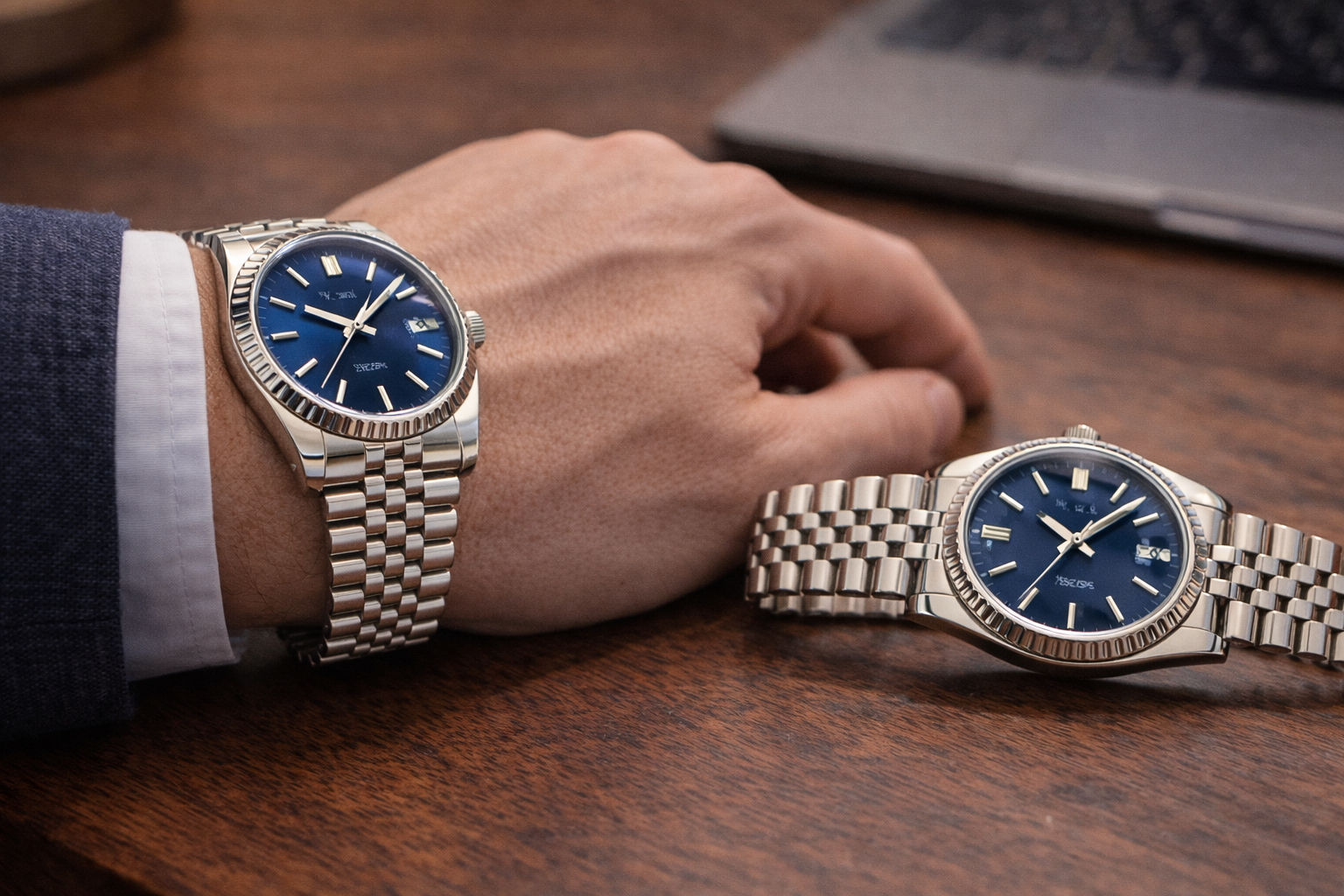
A bracelet can look good and still make the watch feel less premium if the balance is slightly off.
This is something many buyers underestimate.
The bracelet is not separate from the watch head. It is what helps the watch feel centered. If the bracelet does not support the head well, the whole watch starts feeling a bit more top-heavy, a bit less stable, or a bit more noticeable during motion.
You notice this most in ordinary daily use:
- typing at a desk
- driving
- walking outdoors
- reaching into a bag
- putting a hand on a table
- wearing the watch under a cuff
A premium bracelet helps the watch feel calm. It makes the watch sit where it should without asking for repeated adjustment. That sense of quiet stability is one of the strongest signs that a watch feels refined.
It is also closely connected to What Makes a Watch Comfortable All Day?, because comfort is often really about balance, not softness alone.
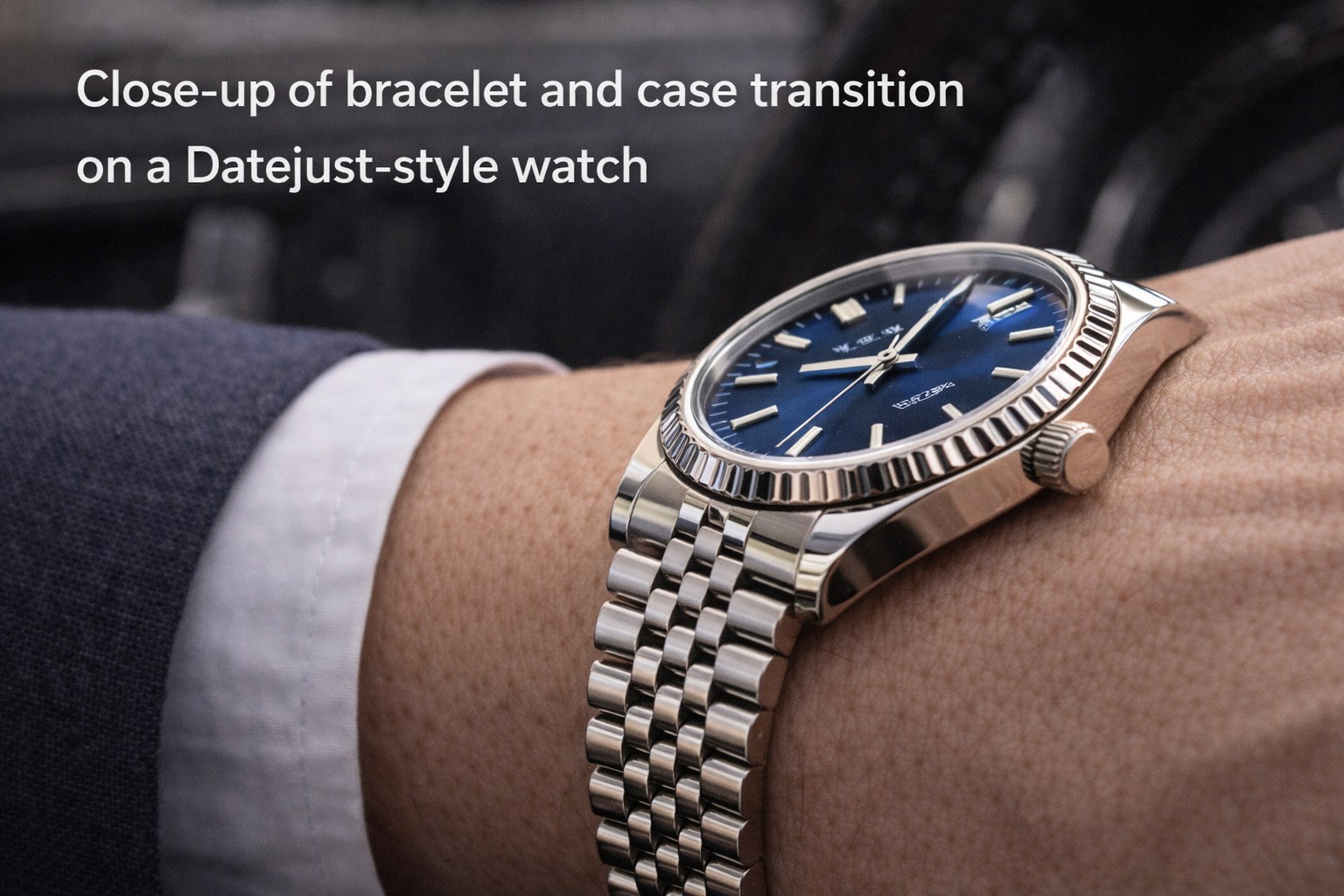
3. The Bracelet-Case Transition Matters More Than Buyers Think
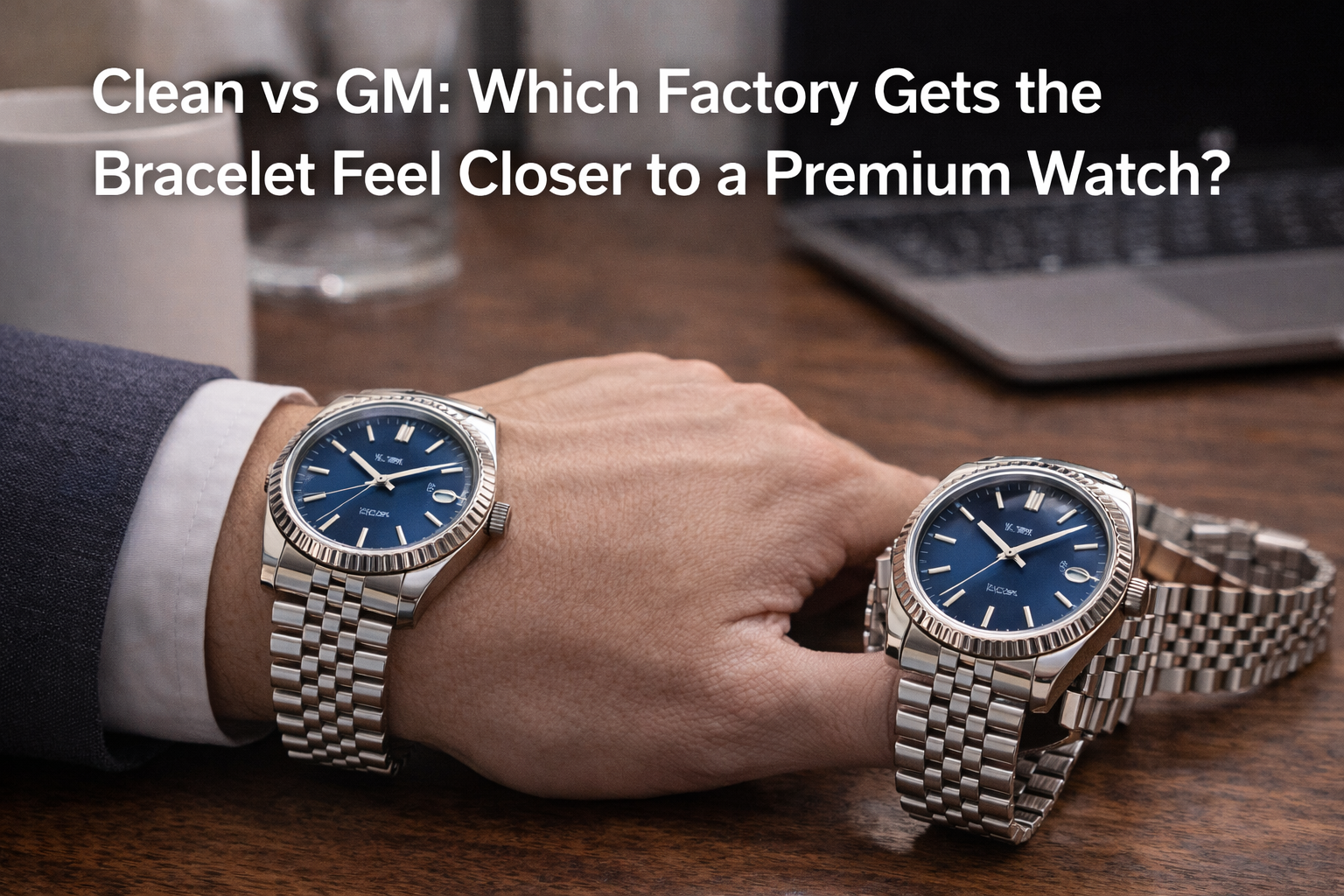
A lot of buyers judge bracelets by looking at the middle section only.
But one of the most premium-feeling parts of a bracelet is actually the transition between the case and the first few links.
That area affects how the watch begins to wrap the wrist. If the transition feels smooth, the whole watch feels better integrated. If it feels slightly stiff or visually disconnected, the bracelet can seem less refined even if the finishing itself looks acceptable.
This is one reason some watches look convincing in dealer photos but less convincing on the wrist. The camera often focuses on polish, alignment, and shine. Real life notices how the watch actually starts to sit.
This is also why Why Some Replica Watches Look Fine in Photos but Less Convincing in Real Life matters as a related read. Photos flatten a lot of the bracelet experience. Daily wear brings it back.
4. Sound, Friction, and Micro-Movements
People do not always mention this out loud, but it matters.
A premium bracelet usually feels quieter and more composed during small movements. It does not feel overly loose. It does not create extra awareness through tiny shifts or unnecessary friction. It simply moves with the wrist in a controlled way.
A less premium-feeling bracelet can still look strong but feel a little busier in use:
- more noticeable micro-shifts
- a slight sense of friction during movement
- a clasp area that feels more obvious
- a bracelet that never becomes fully “invisible” on the wrist
This is hard to capture in product photography, but easy to notice after half a day of wear.
And because premium feel is often psychological as much as physical, these small things can change your impression more than a visible finishing detail.
5. Office Wear Reveals Bracelet Quality Quickly
If you want the most honest real-life test, wear the watch during a normal office day.
Office wear is one of the best bracelet tests because the wrist is constantly doing small, repeated movements. You are not making dramatic motions. You are typing, resting your wrist, turning pages, picking up your phone, adjusting your sleeve, reaching for a coffee cup.
This is exactly where a bracelet either feels premium or starts feeling ordinary.
A better bracelet usually feels:
- more settled during small wrist angles
- less distracting against a desk
- smoother under shirt cuffs
- more natural when the wrist bends repeatedly
- easier to live with from morning to late afternoon
That is why a bracelet comparison should never rely only on close-up shots. The real answer often appears at a desk, not under a macro lens.
If you care about this type of refinement, How to Evaluate Watch Craftsmanship: Key Details That Make a Watch Look and Feel Better is also worth revisiting, because bracelet behavior is one of the easiest ways craftsmanship shows up in daily life.
Real-Life Scenario: Desk, Commute, Coffee Break
Let’s make this more practical.
At your desk in the morning
This is where bracelet articulation starts revealing itself. One bracelet may immediately feel easy and settled. Another may feel fine, but slightly more noticeable when the wrist rests against the desk.
During the commute
As the wrist moves more naturally, the bracelet either continues feeling controlled or starts shifting in a way that reminds you it is there. A premium-feeling bracelet usually keeps the watch centered more quietly.
During a coffee break
When the wrist rotates to lift a cup or check the time casually, the bracelet-case transition becomes easier to notice. This is where the watch either feels integrated or a little more object-like.
These are small situations, but together they tell you much more than a polished side-by-side photo.
So Which Type of Bracelet Usually Feels Closer to Premium?
Instead of forcing this into a simplistic “winner” answer, it is more useful to think in terms of buyer priorities.
Buyers who usually prefer the more premium-feeling bracelet tend to care about:
- smooth articulation
- less distracting daily wear
- balanced wrist feel
- quiet refinement over flashy first impression
- a bracelet that feels settled after several hours
Buyers who care more about visual sharpness at first glance may prioritize:
- stronger visual separation between links
- a slightly more pronounced polished look
- a bracelet that photographs well immediately
- appearance over long-wear subtlety
The key is being honest about what you care about.
A lot of people say they want “premium feel,” but when they compare options, they still judge mostly with their eyes. That is where mistakes happen.
What Buyers Often Get Wrong in This Comparison
The most common mistake is treating bracelet feel as a visual category.
It is not.
It is an experience category.
That means you cannot judge it well from:
- one still wrist shot
- one dealer description
- one overhead table photo
- one repeated opinion in a forum comment
You need to think in terms of wear:
- how the links move
- how the bracelet settles
- how the watch balances
- how it behaves under a cuff
- how it feels after hours, not minutes
A bracelet does not need to impress you instantly to feel premium. Sometimes the most premium bracelet is the one that becomes less noticeable the longer you wear it.
That is usually a good sign, not a boring one.
How to Judge Clean vs GM More Accurately Before Choosing
If bracelet feel is one of your priorities, ask better questions than “Which one looks better?”
Ask:
- Which one seems more fluid around the wrist?
- Which one keeps the watch head more balanced?
- Which one feels calmer in daily movement?
- Which one becomes less noticeable after several hours?
- Which one feels more natural under office conditions?
Also pay close attention to whether you are judging the bracelet in motion or only in still photos. That one change alone can improve your decision.
Final Thought
When buyers compare Clean and GM, they often focus on visible details first. But if your goal is to find the bracelet that feels closer to a premium watch, the better question is not which one looks more polished in a close-up shot.
It is which one feels more natural after real use.
A premium bracelet usually does not scream for attention. It feels integrated, fluid, balanced, and calm. It helps the watch disappear onto the wrist in the best possible way.
That is the standard worth using.
Because when a bracelet feels right, the whole watch feels more expensive.
FAQ
Why does bracelet feel matter so much in a factory comparison?
Because the bracelet is what you interact with all day. If it feels less fluid, less balanced, or slightly distracting, the whole watch can feel less premium.
Can a bracelet look premium but still feel average?
Yes. Photos can make finishing and shine look strong, but daily wear reveals movement, comfort, articulation, and wrist balance.
What is the biggest sign of a premium-feeling bracelet?
Usually smooth articulation and quiet stability. It should feel natural in motion and not keep drawing attention to itself.
Does office wear really help reveal bracelet quality?
Yes. Typing, bending the wrist, resting on a desk, and wearing cuffs expose bracelet behavior faster than many other situations.
Should I judge bracelet feel from photos alone?
No. Photos help with appearance, but bracelet feel is much easier to understand through how the watch behaves in real daily use.
What should I prioritize if I care about long-term enjoyment?
Prioritize articulation, balance, transition near the case, and how the bracelet feels after several hours, not just its first visual impression.
