
Acrylic vs Mineral vs Sapphire Watch Crystals: Which One Is Best?
Acrylic vs Mineral vs Sapphire Watch Crystals: Which One Is Best?
Quick Answer
For most people, sapphire crystal is the best overall choice because it offers the strongest scratch resistance and helps a watch stay clear and clean-looking over time. Mineral crystal is a good middle-ground option that balances cost and durability, while acrylic crystal is softer, more vintage in appearance, and easier to polish if scratched.
The right choice depends on what you value most: long-term appearance, affordability, impact resistance, or vintage character.
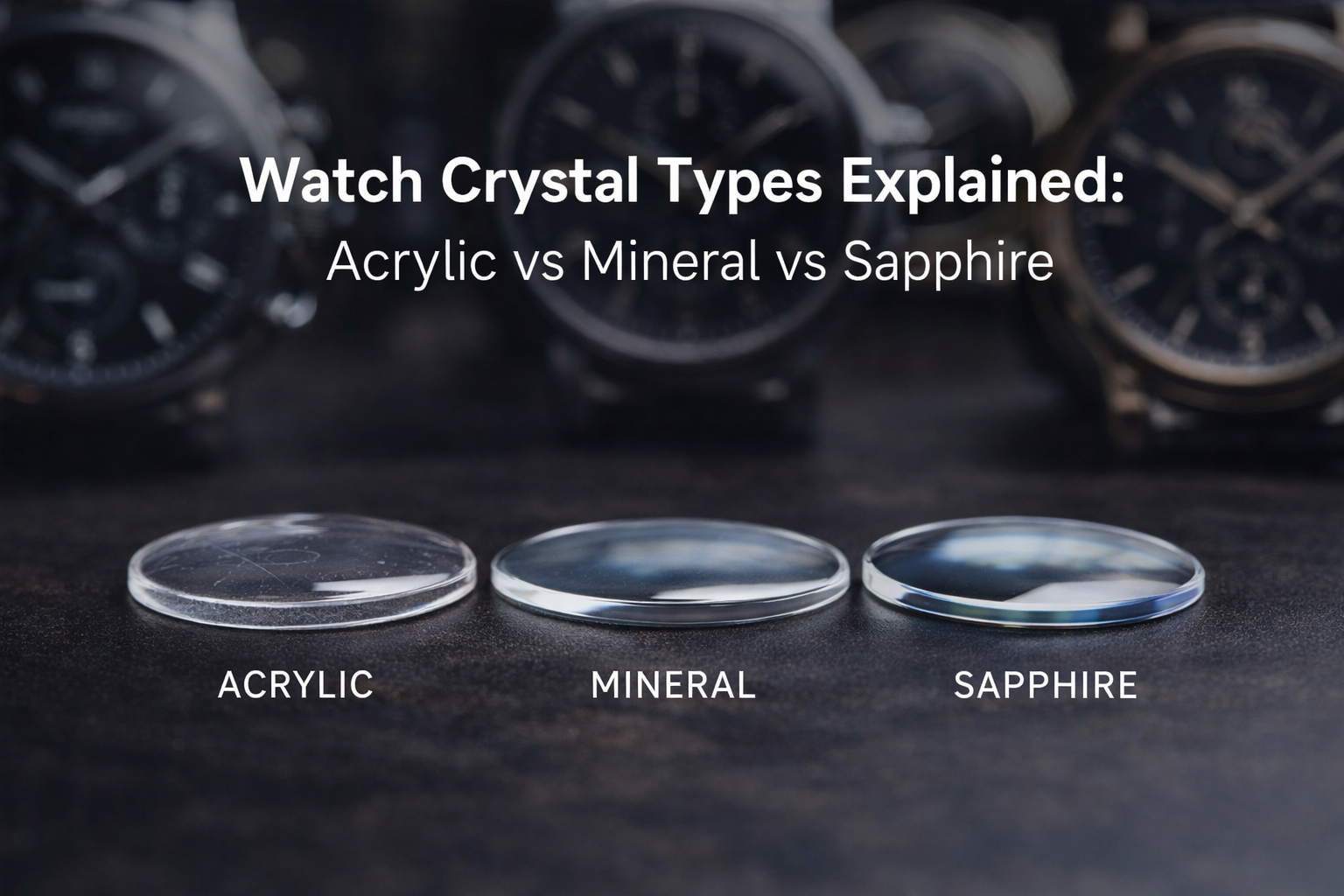
Why the Watch Crystal Matters
Many buyers focus on the dial, movement, case size, or strap when choosing a watch. Those details are important, but the crystal deserves more attention than it usually gets.
The crystal is the clear layer that protects the dial. It affects how easily the watch scratches, how sharp the dial looks in daily light, and how well the watch ages after months or years of wear. Two watches can look similar at first glance, but different crystal materials can create a very different ownership experience over time.
If you are still learning how to compare key watch features, our guide on how to choose your first watch can help you understand what matters most before deciding which crystal type fits your needs.
What Is a Watch Crystal?
A watch crystal is the transparent cover placed over the dial to protect the face of the watch from dust, moisture, scratches, and everyday contact. Despite the name, it is not always made from a traditional crystal material. In modern watches, the crystal is usually made from one of three materials:
-
Acrylic
-
Mineral glass
-
Sapphire crystal
Each one offers a different balance of scratch resistance, toughness, appearance, and cost.
The Three Main Types of Watch Crystals
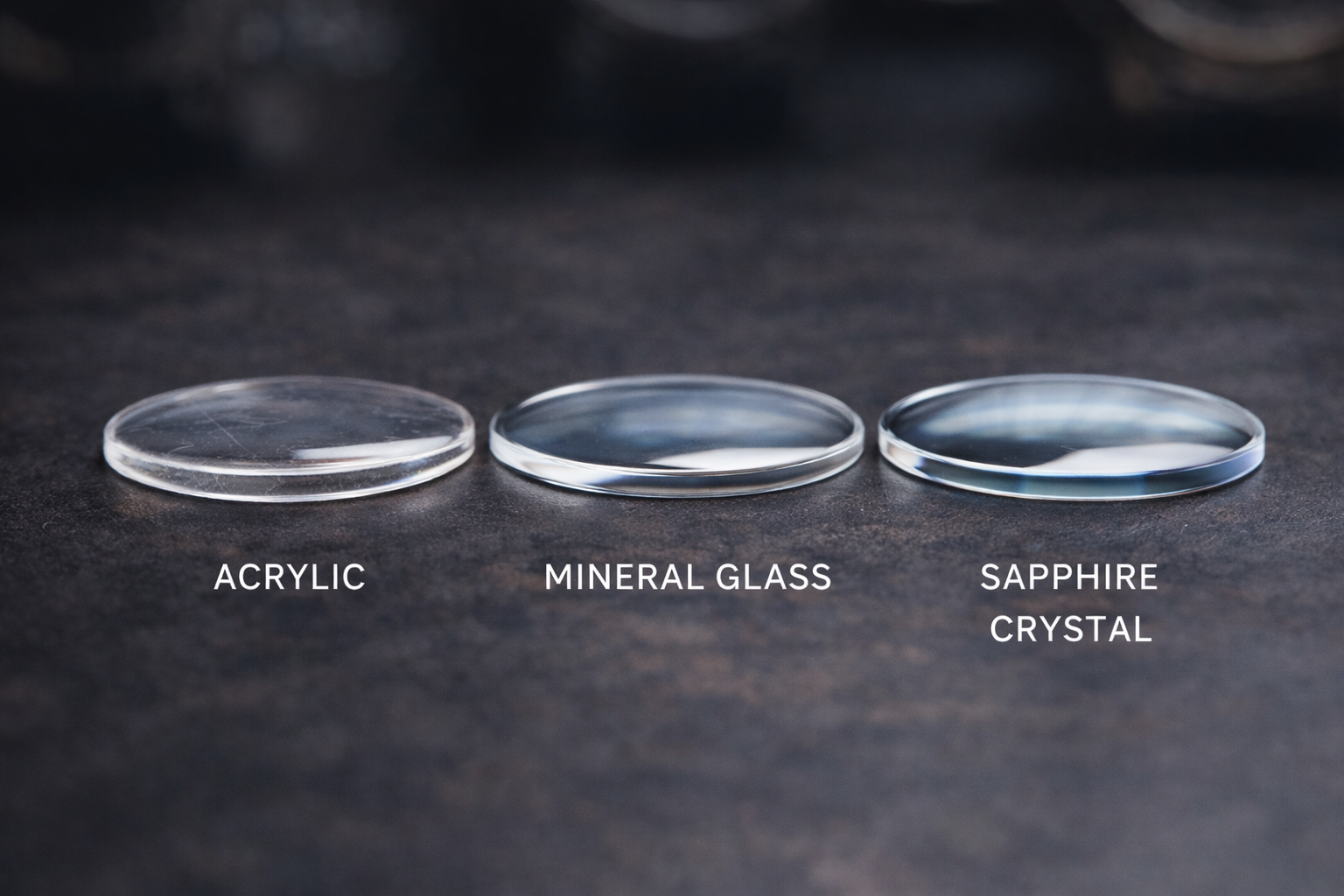
1. Acrylic Crystal
Acrylic crystal is a plastic-based material that has been used in watches for many decades. It is commonly found on vintage watches, retro-inspired designs, and some affordable entry-level models.
What Makes Acrylic Different?
Acrylic is softer than mineral glass and sapphire, which means it scratches more easily. At the same time, that softness gives it a practical advantage: it is usually less likely to shatter from impact. Instead of cracking like glass can, acrylic tends to absorb knocks a bit better.
It also has a warmer, slightly softer visual look that many collectors enjoy. On vintage-style watches, acrylic often feels more period-correct than a sharp, modern sapphire crystal.
Pros of Acrylic Crystal
-
Usually the most affordable option
-
Less likely to shatter on impact
-
Easy to polish compared with other crystal types
-
Popular for vintage-style aesthetics
Cons of Acrylic Crystal
-
Scratches much more easily
-
Can look worn faster with daily use
-
Usually feels less premium than sapphire
Who Should Choose Acrylic?
Acrylic makes sense for buyers who like vintage watches, want a softer retro look, or do not mind occasional polishing. It is also reasonable for budget watches where keeping costs down matters.
2. Mineral Crystal
Mineral crystal is made from hardened glass and is one of the most common options on affordable and mid-range watches. It is often chosen because it offers a practical balance between performance and price.
What Makes Mineral Crystal Popular?
Mineral crystal is harder than acrylic, so it does a better job resisting scratches during ordinary daily wear. At the same time, it is usually much less expensive than sapphire. That makes it attractive for brands building watches that aim for value rather than premium positioning.
For many casual wearers, mineral crystal is more than good enough. It performs well in normal use and is widely accepted as a sensible everyday choice.
Pros of Mineral Crystal
-
Better scratch resistance than acrylic
-
More affordable than sapphire
-
Common on everyday watches
-
Good balance of durability and price
Cons of Mineral Crystal
-
Still scratches over time
-
More difficult to polish than acrylic
-
Usually does not stay as clean-looking as sapphire in long-term wear
Who Should Choose Mineral?
Mineral crystal is a solid option for buyers who want dependable everyday performance without paying extra for sapphire. It is especially common in entry-level and lower mid-range watches.
Crystal material is only one part of overall quality, so it also helps to understand what makes a high-quality watch when comparing watches at different price points.
3. Sapphire Crystal
Sapphire crystal is widely considered the premium standard in modern watches. It is made from synthetic sapphire and is known mainly for its excellent scratch resistance.
Why Is Sapphire So Popular?
The main reason buyers want sapphire is simple: it keeps a watch looking newer for longer. Daily wear brings constant contact with sleeves, desks, counters, bags, and other surfaces. Sapphire stands up to that kind of wear much better than acrylic or mineral crystal.
That is why many premium watches and better-equipped daily wear models use sapphire crystal. It adds long-term visual durability and often contributes to a more refined overall feel.
Pros of Sapphire Crystal
-
Best scratch resistance among the three
-
Helps the watch stay cleaner-looking over time
-
Common on premium and long-term daily wear watches
-
Usually feels more upscale
Cons of Sapphire Crystal
-
More expensive
-
Can create glare if anti-reflective coating is limited or absent
-
Very hard, but not automatically the best at handling every kind of impact
Who Should Choose Sapphire?
Sapphire is usually the best option for buyers who wear their watches often and want the crystal to resist visible wear for as long as possible.
If long-term durability is one of your main priorities, see how to choose a durable watch for long-term use for a broader look at the features that matter beyond the crystal alone.
Acrylic vs Mineral vs Sapphire: What Is the Real Difference?
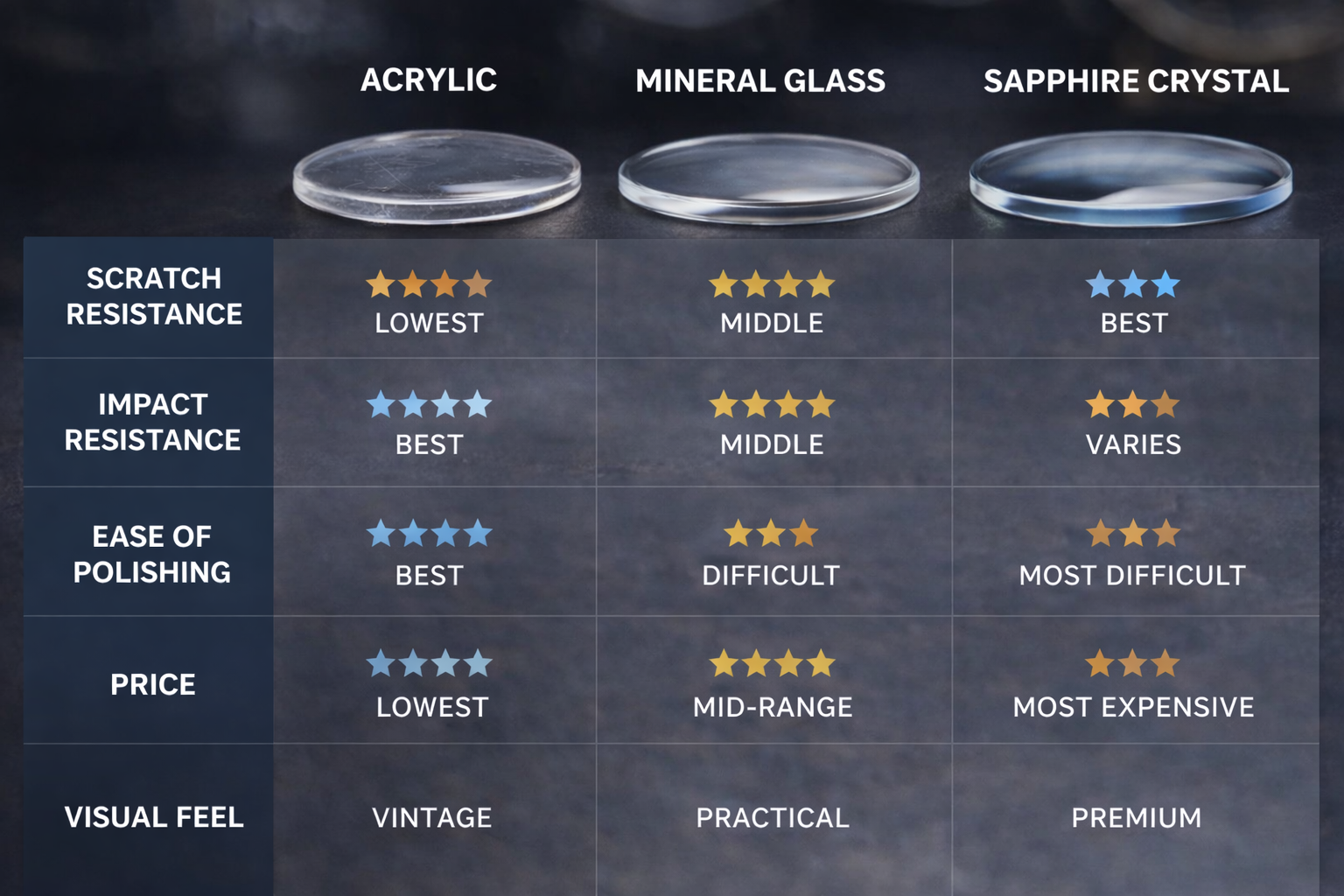
The easiest way to compare these materials is by looking at the categories that actually affect ownership.
Scratch Resistance
This is where sapphire clearly leads.
-
Sapphire offers the best scratch resistance
-
Mineral performs reasonably well but still marks over time
-
Acrylic scratches the easiest
If your main goal is keeping the watch crystal looking clean after frequent wear, sapphire is the strongest choice.
Impact Behavior
Impact resistance is a little more nuanced.
-
Acrylic is softer and tends to handle knocks better
-
Mineral sits in the middle
-
Sapphire is very hard, but sharp impacts can still chip or crack it
This does not make acrylic “better,” but it does explain why some practical or vintage-oriented watches still use it.
Ease of Polishing
If the crystal gets scratched, ease of restoration matters.
-
Acrylic is the easiest to polish
-
Mineral is much harder to restore
-
Sapphire is the most difficult to polish in practical terms
For buyers who do not mind a bit of maintenance, acrylic can still be appealing for that reason.
Cost
In most cases, the price range follows this pattern:
-
Acrylic is the most affordable
-
Mineral sits in the middle
-
Sapphire costs the most
The exact price gap depends on the brand and watch category, but sapphire almost always raises the perceived value of the watch.
Appearance and Feel
The visual experience is also different.
-
Acrylic often looks softer and more vintage
-
Mineral looks practical and neutral
-
Sapphire usually looks the most premium and refined
Which Watch Crystal Is Best for Daily Wear?
For most modern buyers, sapphire crystal is the best choice for daily wear.
Daily wear means repeated contact with everyday surfaces, and that is where sapphire performs best. If you wear the same watch most days and want it to keep looking sharp over time, sapphire is usually worth choosing.
That said, mineral crystal is still a good option for an everyday watch if budget matters more. It may not stay as flawless as sapphire, but it can still perform well enough for normal use.
Acrylic is the least practical option for buyers who want a watch to stay visibly clean, but it still works for people who prefer vintage styling and accept that scratches are part of the experience.
If daily wear is your main concern, our guide on how to protect your watch from daily wear and damage is a useful next step.
Is Sapphire Always Better?
Not in every situation.
Sapphire is the strongest recommendation for scratch resistance, but that does not mean it is automatically the best fit for every watch or every buyer.
A few examples:
-
A vintage reissue may feel more authentic with acrylic
-
An affordable daily watch may offer better value with mineral
-
A collector may prefer the softer charm of acrylic
-
A buyer focused on long-term clean appearance will usually prefer sapphire
So while sapphire is the safest overall recommendation for most people, the best choice still depends on your budget, wearing habits, and preferences.
What About Anti-Reflective Coating?
Some watch crystals, especially sapphire, include anti-reflective coating to reduce glare and improve readability. This can make the dial look clearer in bright light and help the crystal “disappear” visually when viewed from certain angles.
That matters because crystal quality is not only about scratch resistance. Clarity and legibility also shape how premium the watch feels in daily use.
Common Mistakes Buyers Make
One common mistake is assuming all watch crystals are basically the same. They are not.
Another mistake is thinking the hardest material is automatically the best in every way. Hardness matters a lot, especially for scratch resistance, but it is not the only factor. Cost, styling, glare, impact behavior, and ease of maintenance also matter.
A smarter approach is to choose the crystal that fits your lifestyle instead of chasing the most expensive option by default.
To reduce avoidable wear over time, you may also want to read how to protect your watch from daily wear and damage.
How to Choose the Right Watch Crystal
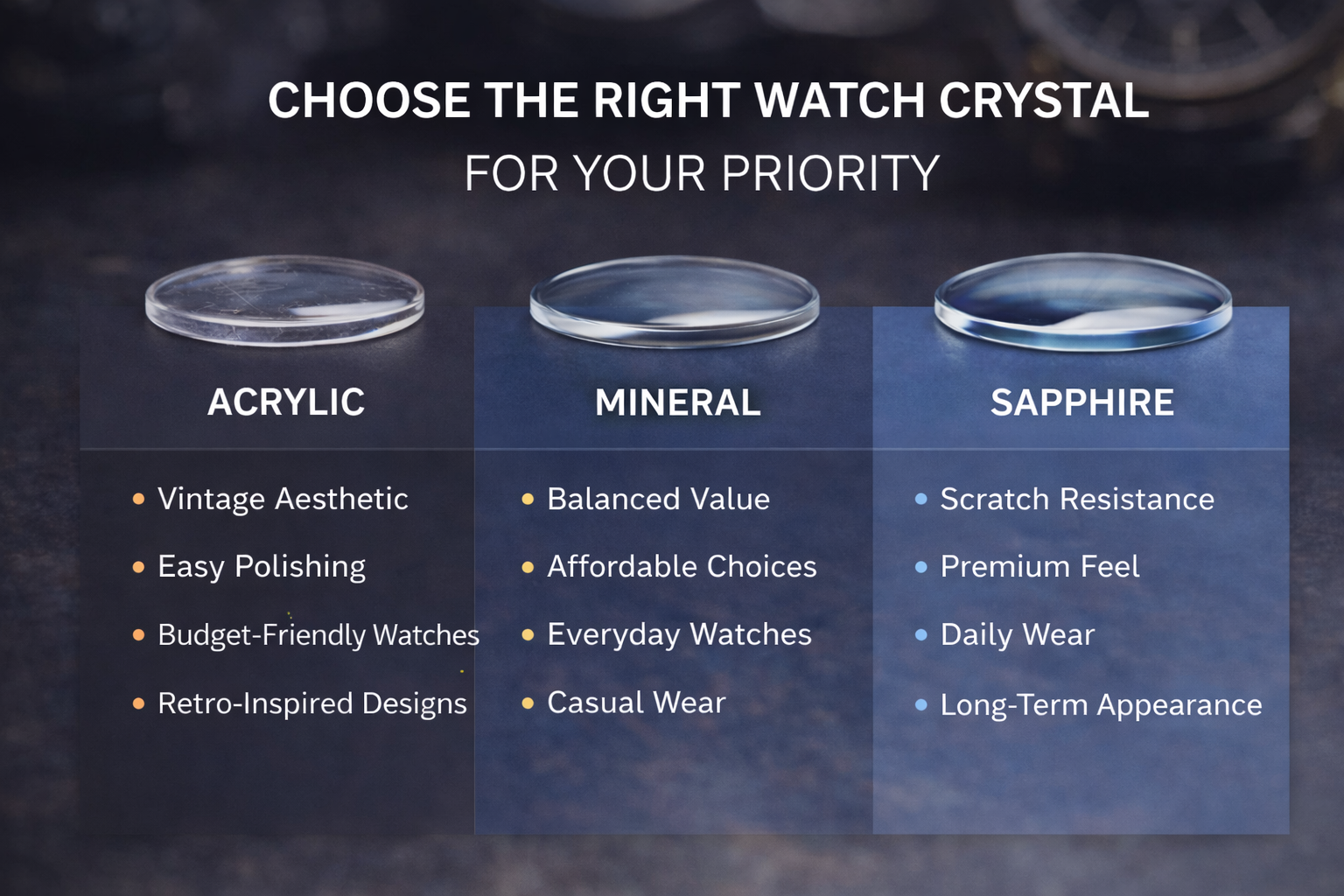
A simple way to choose is to start with your top priority.
Choose Sapphire If:
-
You want the best scratch resistance
-
You wear your watch often
-
You want the watch to keep a premium look over time
-
You are willing to pay more for long-term appearance
Choose Mineral If:
-
You want good all-around value
-
You are shopping in the affordable or mid-range category
-
You want a practical crystal without a premium price jump
Choose Acrylic If:
-
You like vintage aesthetics
-
You prefer an older-school watch feel
-
You do not mind occasional polishing
-
You are buying a retro-inspired or budget-friendly watch
The crystal is only one part of durability, so it also helps to compare the best watch case materials for everyday use when evaluating how a watch will hold up in real life.
Final Verdict
If you want the simplest conclusion:
-
Acrylic is affordable, vintage-looking, and easy to polish, but it scratches the easiest
-
Mineral offers balanced performance and value for many everyday watches
-
Sapphire is the best option for scratch resistance and long-term clean appearance
For most buyers, sapphire crystal is the best overall choice. It helps a watch stay looking newer for longer and adds a more premium feel in daily ownership.
Still, mineral remains a sensible value option, and acrylic is far from useless if you appreciate vintage character or easier polishing. The right answer is not just about what sounds most premium. It is about which material best matches the way you actually wear your watch.
Key Takeaways
-
Sapphire offers the best scratch resistance
-
Mineral gives many buyers the best balance of price and performance
-
Acrylic scratches easily but works well for vintage-style watches
-
The best watch crystal depends on budget, aesthetics, and daily habits
-
For most people, sapphire is the strongest long-term recommendation
FAQ
Which watch crystal scratches the least?
Sapphire crystal scratches the least. It is much harder than acrylic and mineral crystal, which is why it is usually preferred on premium watches and long-term daily wear models.
Is mineral crystal good enough for everyday use?
Yes, mineral crystal is good enough for many everyday watches. It offers a practical balance between affordability and durability, although it will usually scratch more easily than sapphire over time.
Why do vintage watches often use acrylic crystal?
Vintage watches often use acrylic crystal because it is lightweight, impact-friendly, easy to polish, and visually matches the softer look of classic watch designs.
Is sapphire crystal worth the extra cost?
For many buyers, yes. Sapphire crystal usually costs more, but it also resists scratches much better and helps the watch maintain a cleaner appearance over the long term.
Can sapphire crystal break?
Yes. Sapphire is highly scratch-resistant, but strong or sharp impact can still chip or crack it under certain conditions.
