
What Does 5ATM Mean on a Watch? Water Resistance Explained Simply
What Does 5ATM Mean on a Watch? Water Resistance Explained Simply
Quick Answer
A 5ATM watch is generally suitable for everyday water exposure, such as rain, hand washing, and splashes, but it is not the same as a true dive watch. In most cases, 5ATM means the watch has a water resistance rating of 50 meters, but that number does not mean you can safely take it 50 meters underwater in normal use.
The simple rule is this: 5ATM is usually fine for daily life, but it is not ideal for hot showers, diving, or high-pressure water activities.
Why 5ATM Confuses So Many Watch Buyers
Water resistance is one of the most misunderstood parts of watch buying. Many people see “5ATM” or “50M” on a watch and assume it tells them exactly how deep they can take it. That sounds logical, but real-life use is more complicated.
A water resistance rating is based on testing conditions, not on the way most people actually use a watch day to day. That is why many buyers end up confused about what 5ATM really allows.
If you have already wondered whether you can wear a watch in the rain or shower, you are not alone. Our guides on can you wear a watch in the rain and can you wear a watch in the shower explore those situations in more detail.
What Does 5ATM Mean?
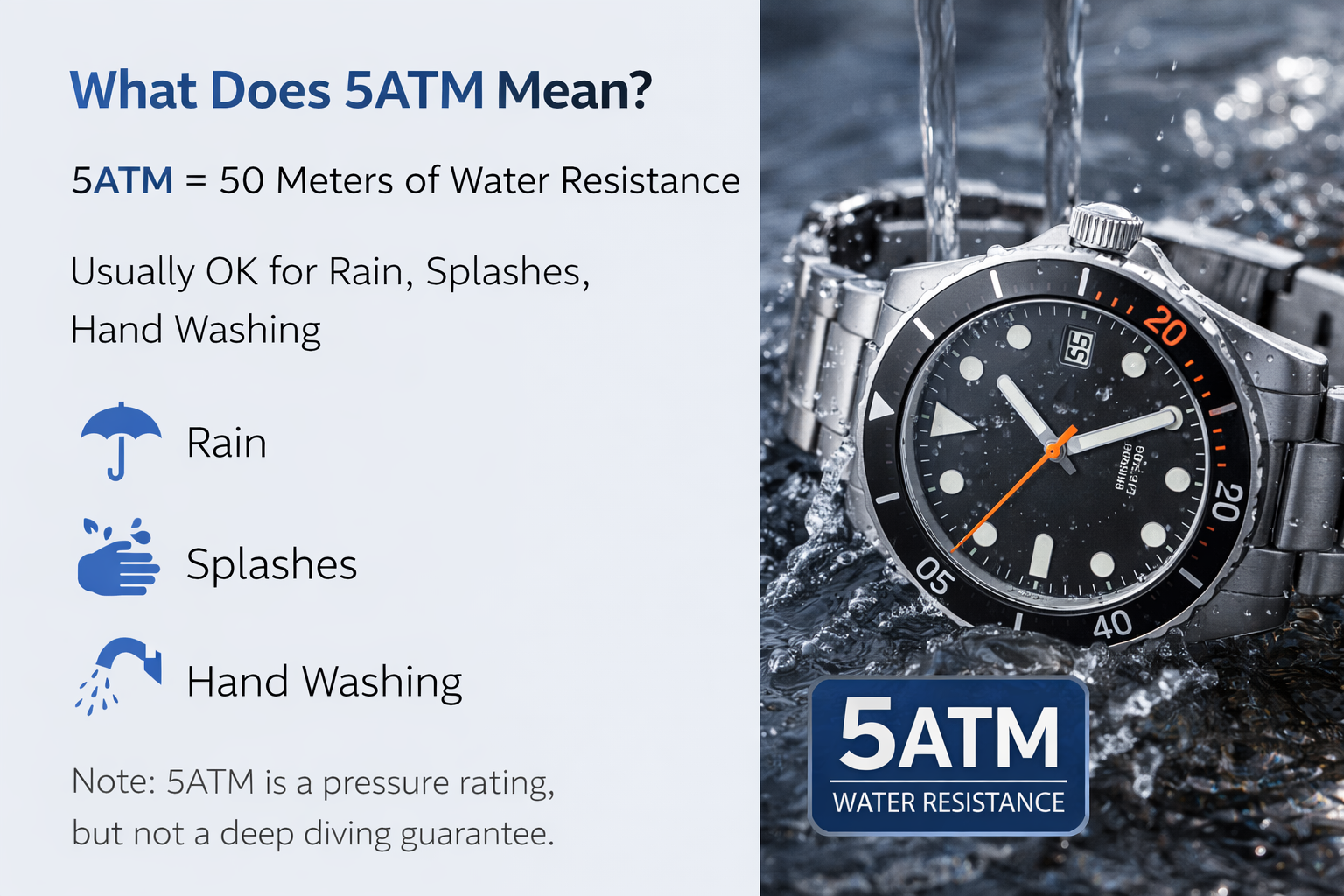
5ATM means the watch has a water resistance rating equal to 5 atmospheres of pressure, which is commonly shown as 50 meters or 50M.
In simple everyday terms, this usually means the watch can handle:
-
splashes
-
rain
-
hand washing
-
light everyday water exposure
What it does not automatically mean is that the watch is built for deep underwater use, diving, or repeated exposure to hot water and steam.
The important thing to remember is that 5ATM is a pressure rating, not a guarantee for every water-related activity.
Is 5ATM the Same as 50M?
Yes, in most cases 5ATM and 50M mean the same rating level.
Brands may write it differently on the caseback, dial, or product page:
-
5ATM
-
50M
-
50 meters water resistance
These usually refer to the same general level of water resistance.
What Can You Do with a 5ATM Watch?
For most people, a 5ATM watch is suitable for normal daily life.
Usually Safe for:
-
rain
-
hand washing
-
splashes while cleaning or cooking
-
occasional brief light water contact
Usually Not Recommended For:
-
hot showers
-
sauna or steam exposure
-
diving
-
snorkeling in rough water
-
strong water jets
-
high-impact swimming situations
That is why 5ATM is often considered a practical daily-wear rating, but not a true sports-water rating.
If daily wear is your main concern, our article on how to protect your watch from daily wear and damage may also help.
Can You Swim with a 5ATM Watch?
This is where things get tricky.
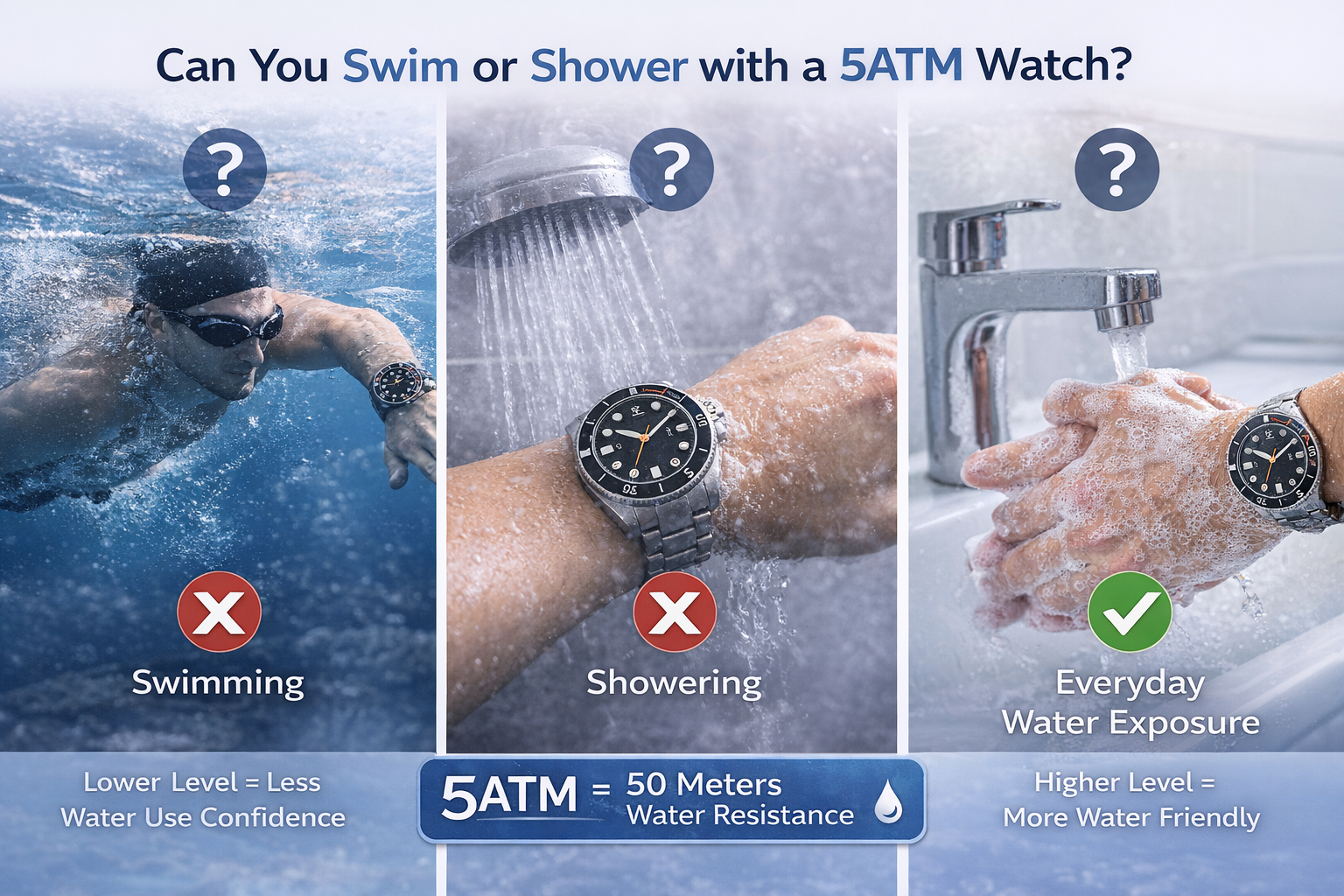
Some brands and sellers suggest that 5ATM may be enough for light swimming, while many watch owners prefer to stay more cautious. The safest practical advice is:
A 5ATM watch may survive light swimming, but it is not the ideal rating if swimming is part of your regular routine.
Why? Because real water use is not just about still pressure. It also involves:
-
movement
-
arm impact in water
-
temperature changes
-
aging gaskets and seals
If you want a watch specifically for regular swimming or water sports, it is usually smarter to choose a higher water resistance rating.
Can You Shower with a 5ATM Watch?
In most cases, it is better not to shower with a 5ATM watch.
This surprises a lot of people because they think “50 meters” sounds more than enough. But showering introduces things that simple water resistance numbers do not fully describe:
-
hot water
-
soap and shampoo
-
steam
-
repeated seal stress over time
That is why even if a 5ATM watch can handle splashes and hand washing, showering is usually not the best idea.
If you want the full explanation, our guide on can you wear a watch in the shower goes deeper into this issue.
Is 5ATM Enough for Everyday Wear?
Yes, for many people 5ATM is enough for everyday wear.
If your daily routine mostly involves:
-
office use
-
commuting
-
casual wear
-
light outdoor exposure
-
normal accidental splashes
then a 5ATM rating is often perfectly reasonable.
For buyers looking for an everyday watch rather than a dedicated sports watch, 5ATM is often a practical middle ground. It gives more peace of mind than very low water resistance, without forcing you into a heavier dive-style watch.
If you are still deciding what kind of watch fits daily life best, our guide on best watch types for beginners may help.
Why Water Resistance Ratings Can Be Misleading
The biggest misunderstanding comes from the meter number.
A buyer sees “50 meters” and naturally thinks:
“Great, I can use this 50 meters underwater.”
In reality, watch water resistance ratings are measured under controlled test conditions. That is not the same as:
-
moving your wrist underwater
-
hitting the water during swimming
-
exposing the watch to hot steam
-
using an older watch with worn seals
This is why a rating that sounds generous on paper may still be more limited in real life.
The safest approach is to read 5ATM as good daily water resistance, not as free use in all water situations.
3ATM vs 5ATM vs 10ATM
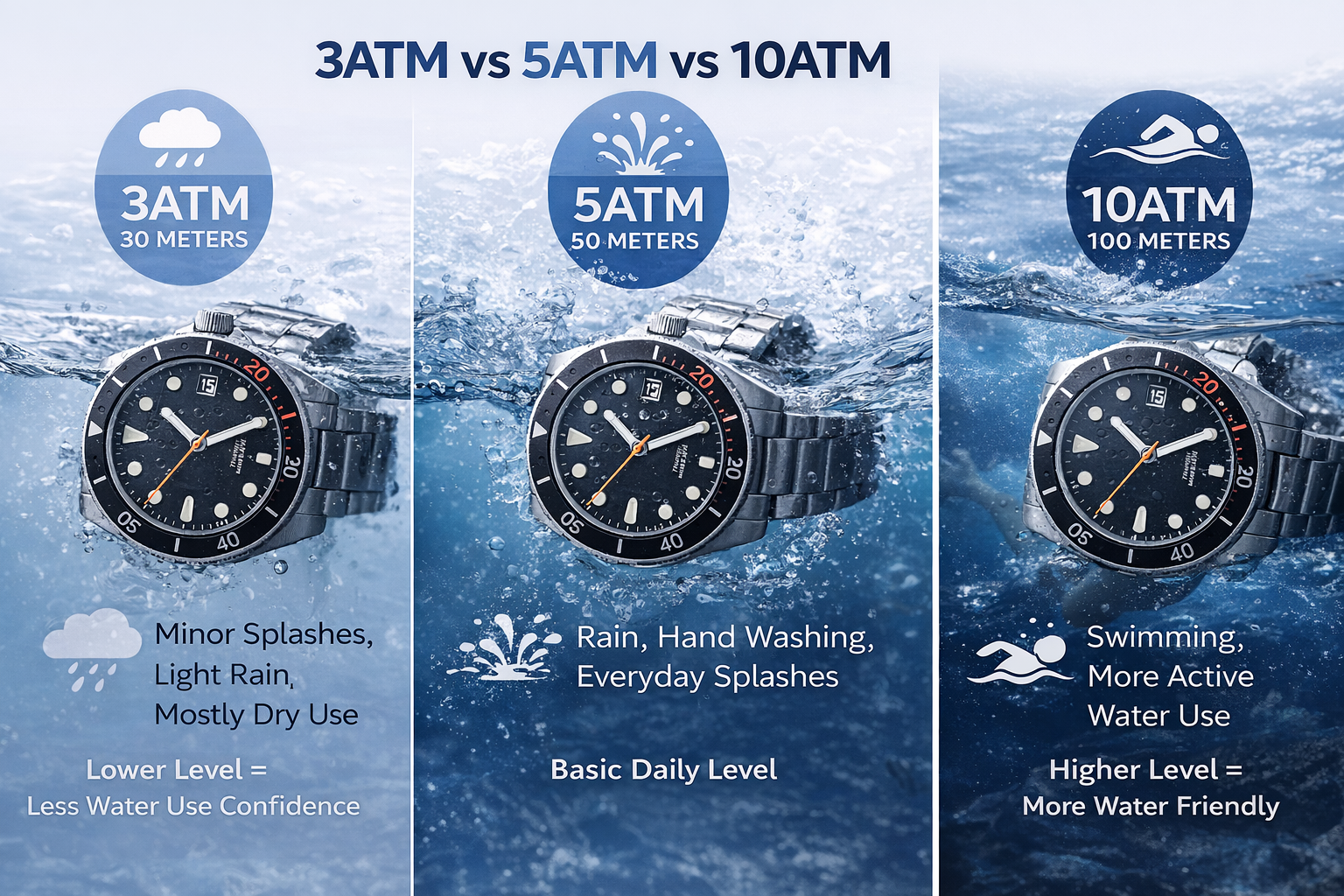
A simple way to understand 5ATM is to compare it with nearby ratings.
3ATM
Usually enough only for:
-
minor splashes
-
light rain
-
ordinary daily dryness
This is a lower level and gives less confidence in active daily use.
5ATM
Usually suitable for:
-
rain
-
hand washing
-
everyday splashes
-
more practical daily wear
This is why many people see 5ATM as a good basic everyday standard.
10ATM
Usually better suited for:
-
swimming
-
more active water use
-
stronger overall water resistance expectations
If you know you want a more water-friendly daily watch, 10ATM is often the more comfortable choice.
What Matters Besides the ATM Rating?
The rating itself is important, but it is not the only factor.
A watch’s real-world water resistance also depends on:
-
how old the seals are
-
whether the crown is pushed in properly
-
whether the case has been opened for battery or servicing
-
how the watch is used
-
whether the watch was designed more as a dress piece or sports piece
That is why a newer, well-maintained watch may handle water better than an older watch with the same rating.
If you are comparing overall durability, it also helps to read what makes a high-quality watch and how to choose a durable watch for long-term use.
Common Mistakes Buyers Make
One common mistake is treating “50M” like a literal underwater use guide. It is not.
Another mistake is assuming that because a watch survives rain, it will also be fine in a hot shower or active swim. Those are not the same conditions.
Buyers also sometimes forget that water resistance can weaken over time, especially if the watch is older or has not been serviced in years.
The smartest way to think about 5ATM is this:
it is a useful daily protection level, not a license to ignore water caution completely.
Should You Buy a 5ATM Watch?
For many buyers, yes.
A 5ATM watch makes sense if you want:
-
a practical daily watch
-
protection from normal splashes and rain
-
more confidence than a lower water resistance rating
-
a versatile watch that is not necessarily a heavy sports model
A 5ATM watch may not be the best choice if you want:
-
regular swimming use
-
frequent beach or pool use
-
a sports-focused water watch
-
maximum peace of mind around water
In that case, a higher rating is usually the better move.
Final Verdict
If you want the simplest answer, 5ATM means a watch is generally suitable for everyday water exposure, but not ideal for showering, diving, or heavy water activity.
For many people, 5ATM is enough. It covers the kind of water contact most daily-wear watches actually face: rain, splashes, and hand washing. But it should not be misunderstood as a full water-sports rating.
The best way to think about it is this:
-
5ATM is good for daily life
-
10ATM or more is better for regular swimming and more active water use
If your goal is an everyday watch with practical water protection, 5ATM is often a perfectly reasonable choice.
Key Takeaways
-
5ATM usually means the same as 50M water resistance
-
5ATM is generally suitable for rain, splashes, and hand washing
-
5ATM is not the same as a true dive or heavy water-use rating
-
showering with a 5ATM watch is usually not recommended
-
light swimming may be possible, but 10ATM is a safer regular-swim choice
-
the meter number should not be read as a literal usage depth
-
real-world water resistance depends on maintenance and usage too
FAQ
What does 5ATM mean on a watch?
It means the watch has a water resistance rating equal to 5 atmospheres of pressure, commonly shown as 50M. In daily use, this usually means protection from splashes, rain, and hand washing.
Is 5ATM enough for swimming?
It may be enough for light swimming in some cases, but it is not the safest choice for regular swimming. A 10ATM watch is usually a better option for that.
Can I shower with a 5ATM watch?
In most cases, no. Hot water, steam, soap, and repeated shower exposure can put more stress on the watch than the rating may suggest.
Is 5ATM better than 3ATM?
Yes. A 5ATM watch usually offers more practical everyday water resistance than 3ATM and is generally the better choice for daily wear.
Is 5ATM good for everyday wear?
Yes. For many people, 5ATM is a very reasonable daily-wear rating because it handles normal splashes, rain, and routine water contact better than lower ratings.
