
Can You Wear a Watch in the Shower? What Really Happens to Your Watch
Can You Wear a Watch in the Shower? What Really Happens to Your Watch
Quick Answer
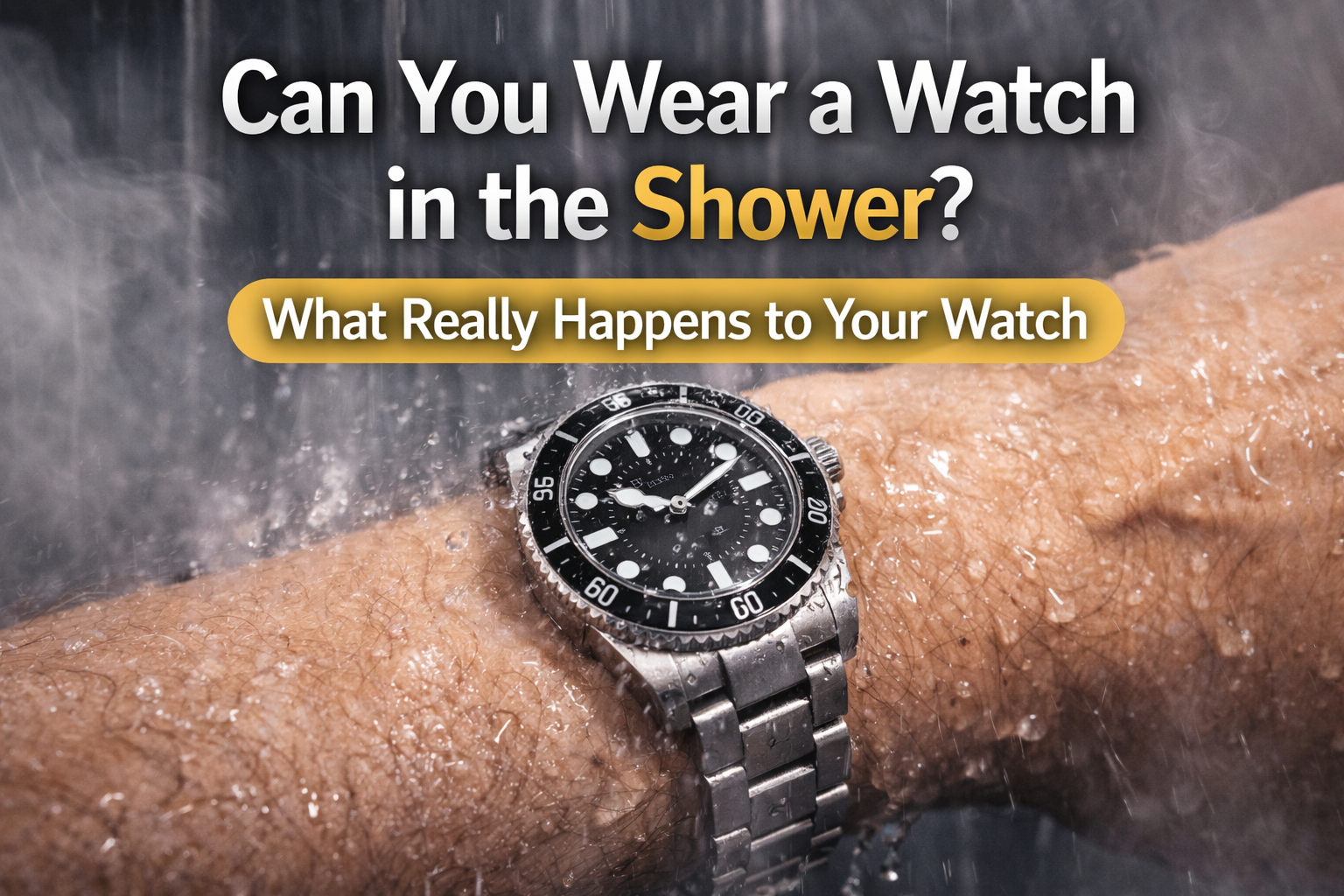
In most cases, you should not wear a watch in the shower, even if the watch has some level of water resistance.
The main problem is not just water. It is the combination of:
- hot water
- steam
- soap and shampoo
- temperature changes
- aging seals
A watch that seems perfectly fine during hand washing or light rain may still be a bad candidate for daily shower use. For most people, taking the watch off before showering is the safer and smarter habit.
Why So Many People Think Showering With a Watch Is Fine
A lot of people assume showering with a watch should be safe for one simple reason:
“If a watch is water resistant, why would a shower be a problem?”
That sounds logical at first, but in real life, showering is different from quick everyday contact with water.
A shower adds more stress than many buyers realize because it involves:
- warm or hot water
- steam
- repeated exposure
- soap, shampoo, and body wash
- moisture around the crown, seals, and case openings
Real Example
Someone may wear the same watch in light rain, while washing their hands, and around the sink with no problem at all. Then after weeks or months of shower use, they start noticing fog under the crystal, strap wear, or reduced seal performance. That is usually when they realize the problem was never just “water” by itself.
If you want the basic starting point first, what does 5ATM mean on a watch is a useful companion because many shower mistakes start with misunderstanding water-resistance ratings.
Why Shower Water Is Different From Normal Daily Water Exposure
This is the part most people miss.
A shower is not the same as:
- washing your hands
- getting caught in light rain
- a few accidental splashes
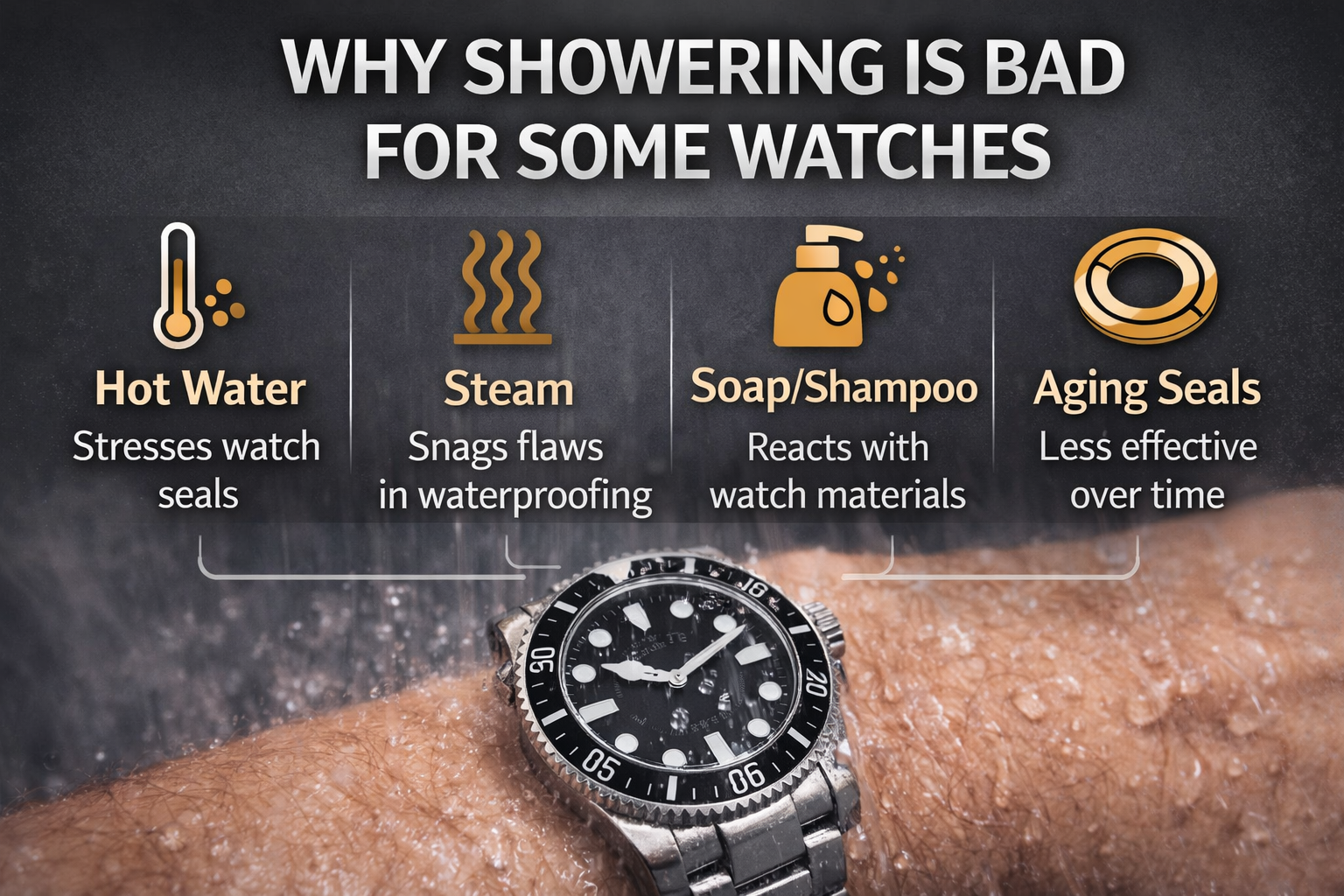
Shower conditions are harsher because they combine heat, steam, pressure changes, and chemicals.
1. Hot Water Affects Seals
Watch seals are designed to help keep moisture out, but repeated hot-water exposure can wear them down over time.
2. Steam Can Be Sneaky
Steam and warm moisture can be more problematic than people expect, especially if the watch already has weak or aging gaskets.
3. Soap and Shampoo Are Not Neutral
Soap residue, shampoo, and body wash can affect:
- rubber seals
- strap materials
- bracelet cleanliness
- long-term case condition
Real Example
A watch that technically survives one shower may still age faster if exposed to that environment regularly. This is especially true for watches that are older, rarely pressure-tested, or not designed for repeated wet use.
Can You Wear a 3ATM Watch in the Shower?
Usually, no.
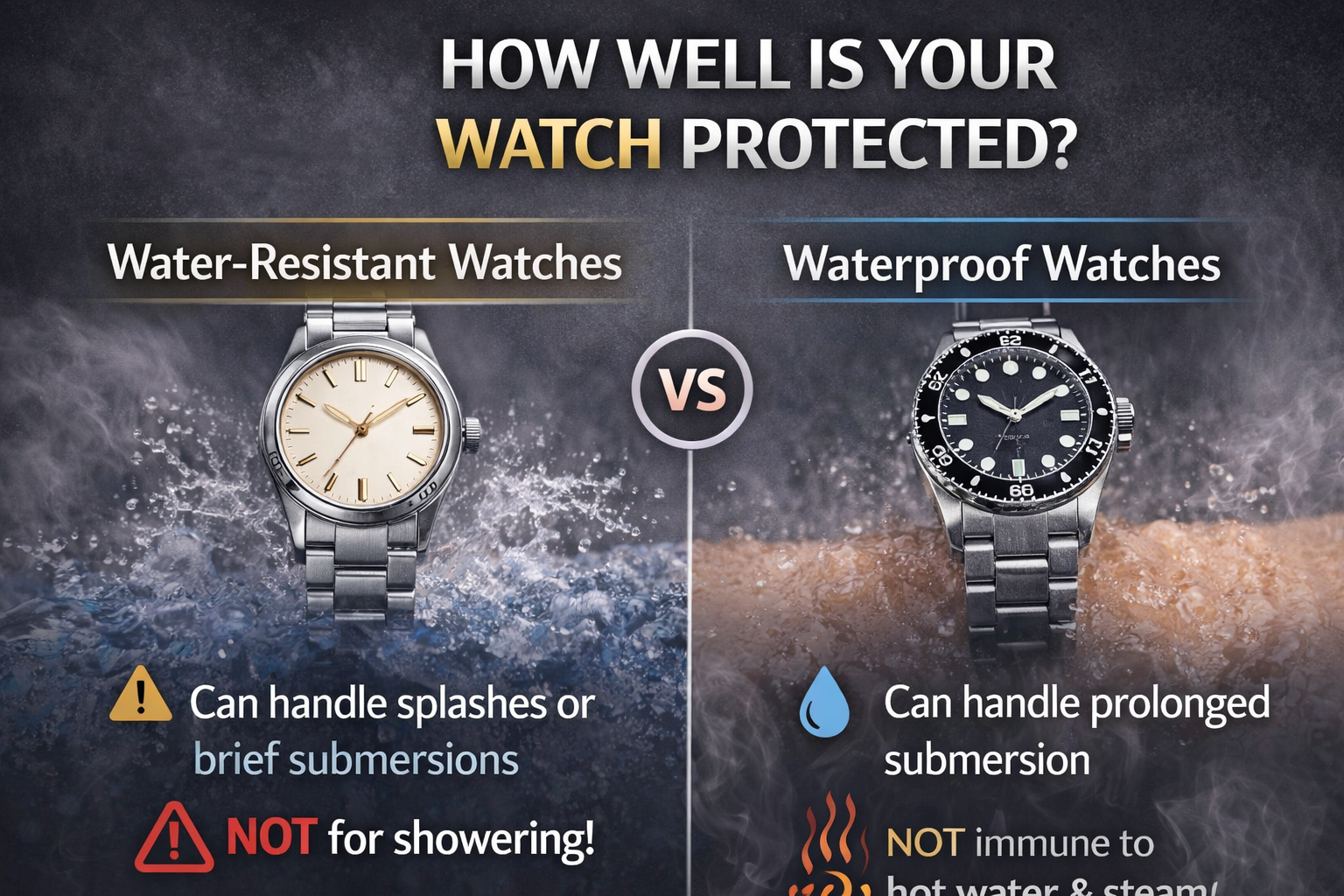
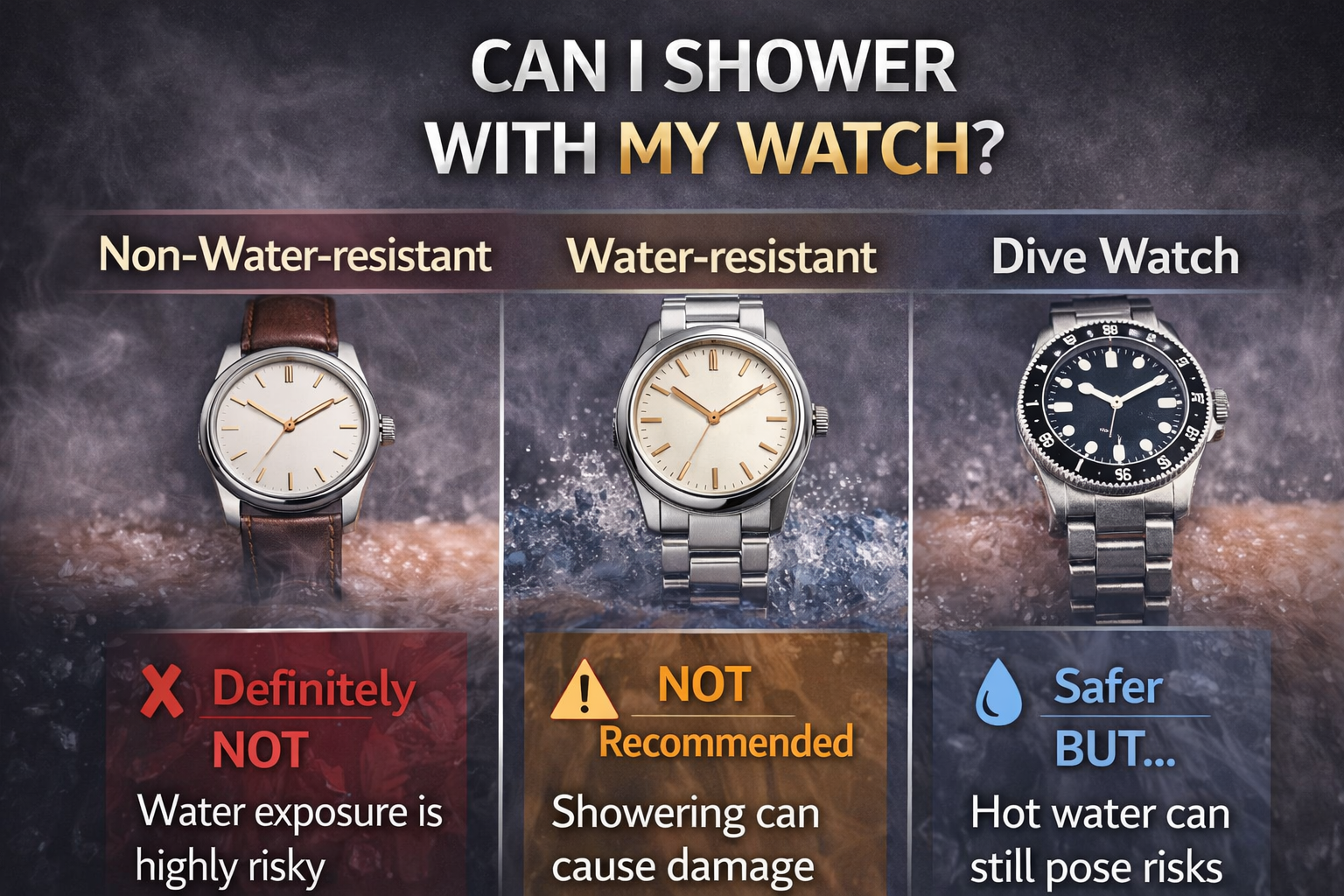
A 3ATM watch is generally not something you should trust in shower conditions. Even if it survives an occasional splash, showering is still a much riskier environment than what most 3ATM watches are meant to handle.
For most buyers, 3ATM means:
- light splashes
- rain
- hand washing with care
It does not mean shower-safe daily use.
Can You Wear a 5ATM Watch in the Shower?
This is where many people get confused.
A lot of buyers think 5ATM should be enough for a shower, but in practice, it is still usually better to avoid it.
Why? Because showering introduces:
- hot water
- steam
- repeated exposure
- soap and chemical contact
Real Example
A 5ATM watch may handle ordinary daily water contact well, but if you wear it in the shower every day, the risk is not zero. Over time, that repeated exposure can be harder on the watch than people expect.
That is why many experienced watch owners still avoid showering even with a 5ATM watch.
If you are comparing daily-use expectations, can you wash your hands with a watch on would naturally connect well here, because hand washing and showering are often wrongly treated as the same thing.
What About 10ATM or Dive Watches?
A better water-resistant watch is definitely stronger, but that still does not automatically make showering a great idea.
A 10ATM watch or proper dive-style watch is much more capable than a basic daily watch. But even then, many owners still prefer not to shower with it because:
- there is no real advantage in doing so
- hot water and soap still add unnecessary exposure
- repeated shower use is not the same as controlled water use
- strap and bracelet condition still matter
Real Example
Someone with a solid dive watch on rubber may get away with shower use more easily than someone wearing a dress watch on leather. But “more capable” is not the same as “best habit.”
For most people, the smarter approach is still:
if you do not need to wear it in the shower, do not.
What Actually Happens If You Keep Wearing a Watch in the Shower?
Not every watch will fail immediately.
That is why the habit keeps spreading.
The problem is that the damage is often gradual, not dramatic.
What Can Happen Over Time
1. Seal Wear
Repeated heat and moisture can put more stress on the gaskets.
2. Condensation Risk
If the watch already has weakened seals, warm moisture can increase the chance of fogging.
3. Strap Damage
Leather straps are especially vulnerable in shower conditions.
4. Residue Build-Up
Soap, shampoo, and body products can collect around:
- the bracelet
- caseback edges
- lugs
- crown area
5. Unnecessary Wear
Even if nothing obvious happens right away, you are still exposing the watch to an environment it usually does not need.
Real Example
A buyer may say, “I have showered with this watch many times and nothing happened.” That can be true. But that does not prove it is a good long-term habit. It just means the negative effect has not become obvious yet.
Is It Worse for Leather, Rubber, or Metal Straps?
Yes, strap type matters a lot.
Leather
Leather is usually the worst choice for shower use.
Why:
- absorbs moisture
- ages faster
- can smell over time
- loses comfort and appearance more quickly
Rubber
Rubber is more tolerant of water, but soap and repeated heat exposure are still not ideal forever.
Metal Bracelet
Metal handles water better than leather, but it can still trap:
- soap residue
- shampoo
- skin buildup
If strap material is part of your decision, best watch for hot weather: leather, rubber, or metal is also very relevant because the same materials that struggle in heat often struggle in shower use too.
What If the Watch Is Expensive?
This is one of the biggest mistakes buyers make.
A more expensive watch is not automatically something you should shower with.
Price does not change the basic issues:
- hot water
- steam
- soap
- seals aging over time
Real Example
Someone may trust a premium watch more because it feels better built. But an expensive watch can still be damaged by poor habits if it is repeatedly exposed to conditions that are unnecessary and avoidable.
If you are judging a watch by feel or price alone, is a heavy watch better is another article that pairs well with this topic because “premium feeling” and “safe to abuse” are not the same thing.
What If the Crown Is Not Fully Pushed In?
Then the risk goes up immediately.
If the crown is not fully secure, or if the watch has any weakness around that area, shower exposure becomes even riskier.
This matters especially on:
- older watches
- watches with recent battery changes
- watches that have not been pressure-tested
- watches with user error around crown position
A watch with even a small sealing weakness is much more vulnerable than its rating suggests.
How to Tell If Showering Has Already Affected Your Watch
Watch for these signs:
- fog or condensation under the crystal
- strap smells worse over time
- bracelet feels dirty faster than usual
- crown area looks grimy
- the watch feels damp after showering
- strap material starts aging faster than expected
Important Warning
If you ever see moisture under the crystal, stop using the watch around water immediately. That is not something to ignore.
If watch condition and daily wear matter to you, how to protect your watch from daily wear and damage is worth reading too because water habits are only one part of long-term ownership.
So When Is It Actually Safe?
The most practical answer is:
Safest Habit
Take the watch off before showering.
That advice works for:
- 3ATM watches
- 5ATM watches
- leather strap watches
- quartz watches
- automatics
- even stronger water-resistant watches if you just want to avoid unnecessary wear
Real-World Rule
If there is no real benefit to wearing it in the shower, there is no good reason to add avoidable risk.
Step-by-Step: What You Should Do Instead
Step 1: Take the Watch Off Before Showering
Make this your default habit.
Step 2: Keep It Away From Steam
Do not leave it sitting right next to a hot shower if the bathroom gets very steamy.
Step 3: Dry the Watch If It Gets Wet
If the watch is exposed to water, dry it properly afterward.
Step 4: Clean Metal Bracelets Occasionally
If you wear your watch in humid conditions often, clean away residue before buildup gets worse.
Step 5: Do Not Assume Old Water Resistance Is Still Perfect
If your watch is older or recently opened for service or battery replacement, be extra cautious.
If maintenance matters to you, how long does a watch battery last can also matter here for quartz owners, because battery changes are one of the times sealing quality can become more important.
Common Mistakes People Make
Mistake 1: Confusing Water Resistance With Shower Safety
These are not the same thing.
Mistake 2: Assuming “Nothing Happened Yet” Means It Is Safe
A habit can still be bad long-term even if it has not caused visible damage yet.
Mistake 3: Wearing Leather in the Shower
This is especially common and especially avoidable.
Mistake 4: Ignoring Heat and Steam
The problem is not just plain water.
Mistake 5: Trusting Old Seals Too Much
Water resistance is not something you should assume lasts forever unchanged.
Should You Ever Shower With a Watch?
For most people, there is no real need.
Even if the watch survives it, the better question is:
Why add unnecessary wear when taking it off is so easy?
That is why the practical answer for everyday buyers is simple:
- hand washing may be fine depending on the watch
- light rain may be fine depending on the watch
- showering is still usually something to avoid
Final Verdict
If you want the simplest answer, you usually should not wear a watch in the shower, even if the watch has some water resistance.
The issue is not just getting wet. It is the combination of hot water, steam, soap, repeated exposure, and the fact that seals do not stay perfect forever. Some stronger watches may handle it better than others, but that still does not make it the smartest long-term habit.
For most people, the safest and easiest rule is this:
Take your watch off before showering.
That one habit prevents a lot of unnecessary risk.
Key Takeaways
- most watches should not be worn in the shower
- hot water, steam, and soap make showers riskier than simple splashes
- 3ATM watches are not good shower candidates
- 5ATM watches may survive, but regular shower use is still not ideal
- leather straps are especially bad for shower use
- stronger water resistance does not mean showering is automatically a good idea
- the safest long-term habit is to remove your watch before showering
FAQ
Can I wear a 5ATM watch in the shower?
It may survive, but it is usually still better not to. Hot water, steam, and soap create unnecessary long-term risk.
Is it okay to shower with a waterproof watch?
Even stronger water-resistant watches are usually better kept out of the shower unless there is a real reason to wear them there.
Can hot water damage a watch?
Hot water and repeated heat exposure can affect seals over time, especially in combination with steam and soap.
Will showering ruin a leather strap?
It can definitely shorten the life of a leather strap and make it age, smell, and wear out faster.
What if I already shower with my watch and it seems fine?
That only means visible damage has not appeared yet. It does not mean it is a great long-term habit.
