
Is a Heavy Watch Better? What Weight Really Says About Quality
Is a Heavy Watch Better? What Weight Really Says About Quality
Quick Answer
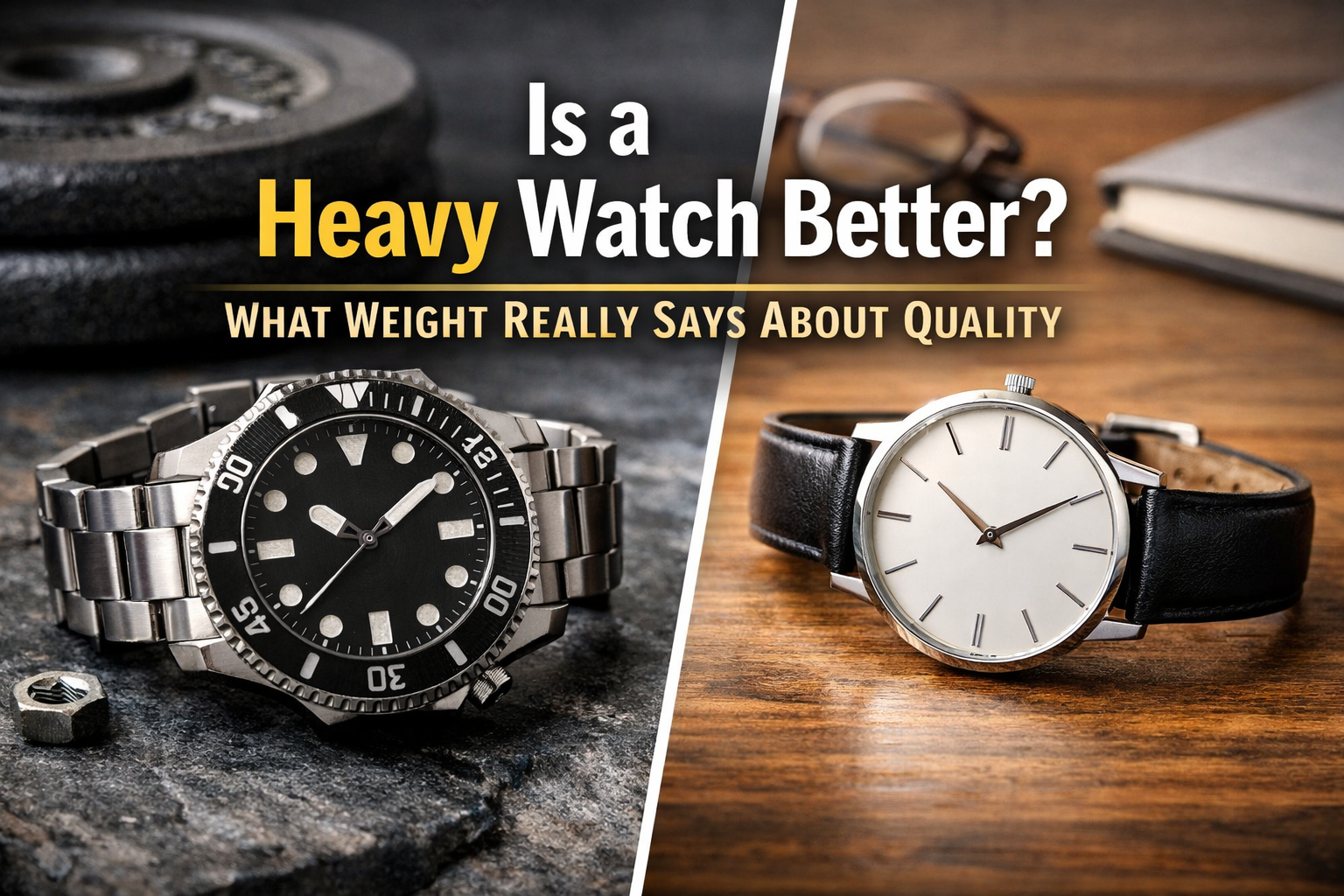
Not always. A heavy watch does not automatically mean better quality. In some cases, extra weight can come from solid materials like stainless steel, thicker construction, or a larger bracelet. But in other cases, a watch may just feel heavy because it is oversized, poorly balanced, or built in a way that adds bulk rather than real quality.
In real life, a good watch should feel well-made and appropriate for its design, not just heavy for the sake of feeling expensive.
Why So Many Buyers Think Heavier Means Better
A lot of people pick up a watch and immediately judge it by feel.
If it feels light, they worry it might be cheap.
If it feels heavy, they often assume it must be better made.
That reaction is understandable. Weight can create the feeling of substance. It can make a watch seem more serious, more durable, or more premium. But that impression is not always accurate.
Real Example
A buyer may hold two watches side by side:
- Watch A is a large, heavy steel model with a thick bracelet
- Watch B is a slimmer titanium watch with better finishing and more thoughtful construction
A lot of people would assume Watch A is “better” just because it feels heavier. In reality, Watch B could easily be the more refined and higher-quality watch.
That is why weight can be a clue, but it should never be the only thing you use to judge quality.
If you want a broader framework for judging build quality, what makes a high-quality watch is a good companion to this article.
What Actually Makes a Watch Heavy?
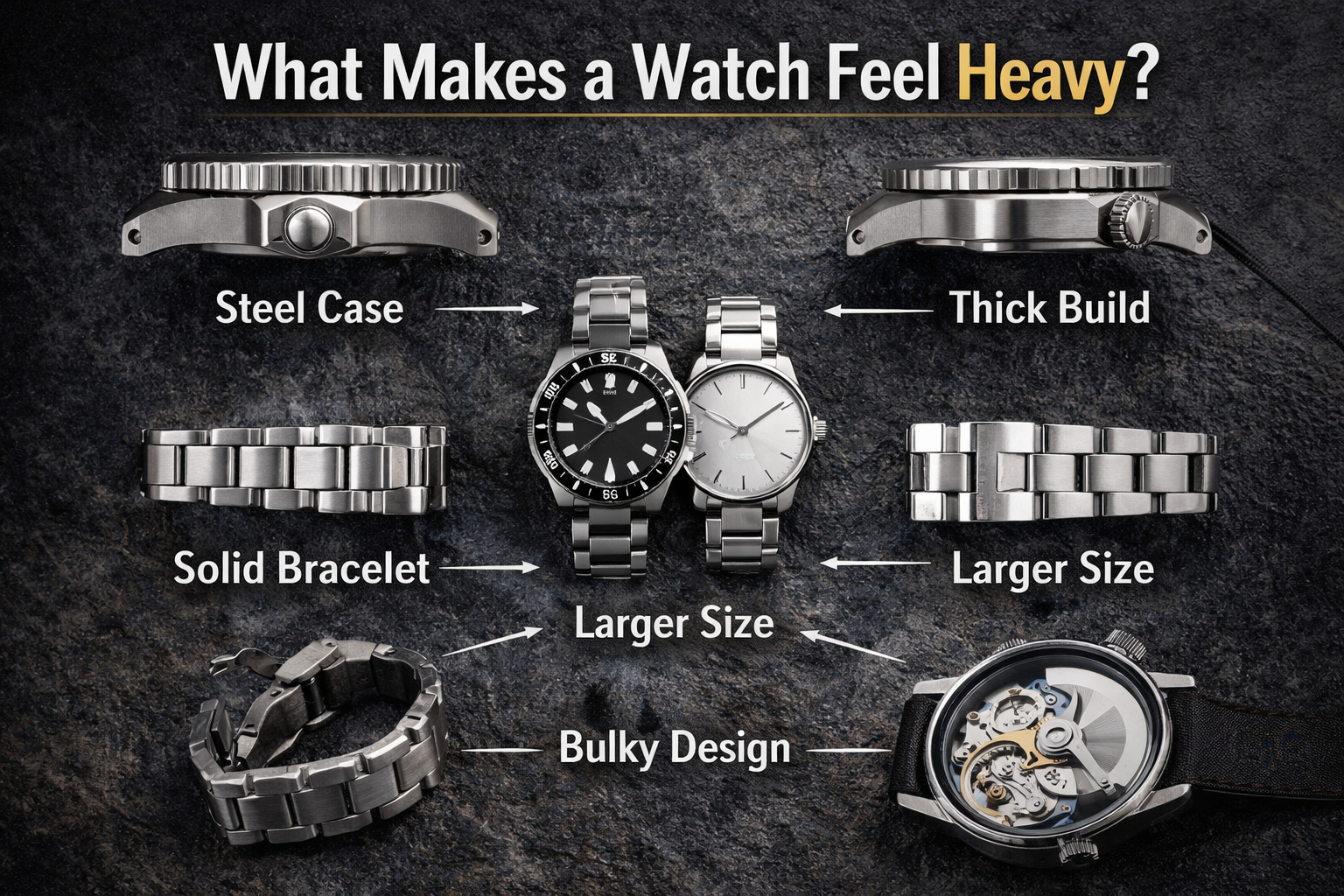
A watch usually feels heavy for one or more of these reasons:
- the case is made from steel or another dense material
- the bracelet is solid and substantial
- the watch is physically large
- the case is thick
- the movement is larger or more complex
- the overall design is bulky
Some of those reasons are positive.
Some are neutral.
Some can actually hurt comfort more than they help quality.
When Heavier Can Be a Good Sign
There are definitely times when extra weight is a positive sign.
1. Solid Materials
A steel watch often feels heavier than a cheaper-feeling hollow or lightweight construction. That can create a better sense of durability and substance.
2. Better Bracelet Construction
A well-made metal bracelet often feels more solid than a flimsy one. If the bracelet links and clasp feel secure and substantial, some added weight can be a good sign.
3. Tool or Dive Watch Design
A serious dive watch or rugged sports watch often carries more weight because of its stronger case, thicker construction, and water-resistant design.
Real Example
A buyer comparing a lightweight fashion watch to a well-built steel diver may immediately feel the difference. In that situation, the heavier watch may in fact be better built.
If durability is part of what you care about, how to choose a durable watch for long-term use can help you judge whether that extra heft is actually supported by real design quality.
When Heavier Is Not a Good Sign
This is where many people get fooled.
A watch can also feel heavy for reasons that do not make it better.
1. Oversized Case Design
Some watches feel heavy simply because they are too large. That says more about size than quality.
2. Poor Balance
A badly balanced watch can feel heavy in an unpleasant way. Instead of feeling solid, it feels tiring or top-heavy on the wrist.
3. Bulk Without Refinement
A thick watch with average finishing and weak comfort can still feel heavy. That does not make it premium.
Real Example
A buyer may wear a chunky 44mm watch and think it feels “substantial” at first. After a few hours, it starts sliding, pulling on the wrist, and becoming annoying. That kind of weight is not a sign of better ownership.
Heavy vs Light: Which One Feels More Premium?
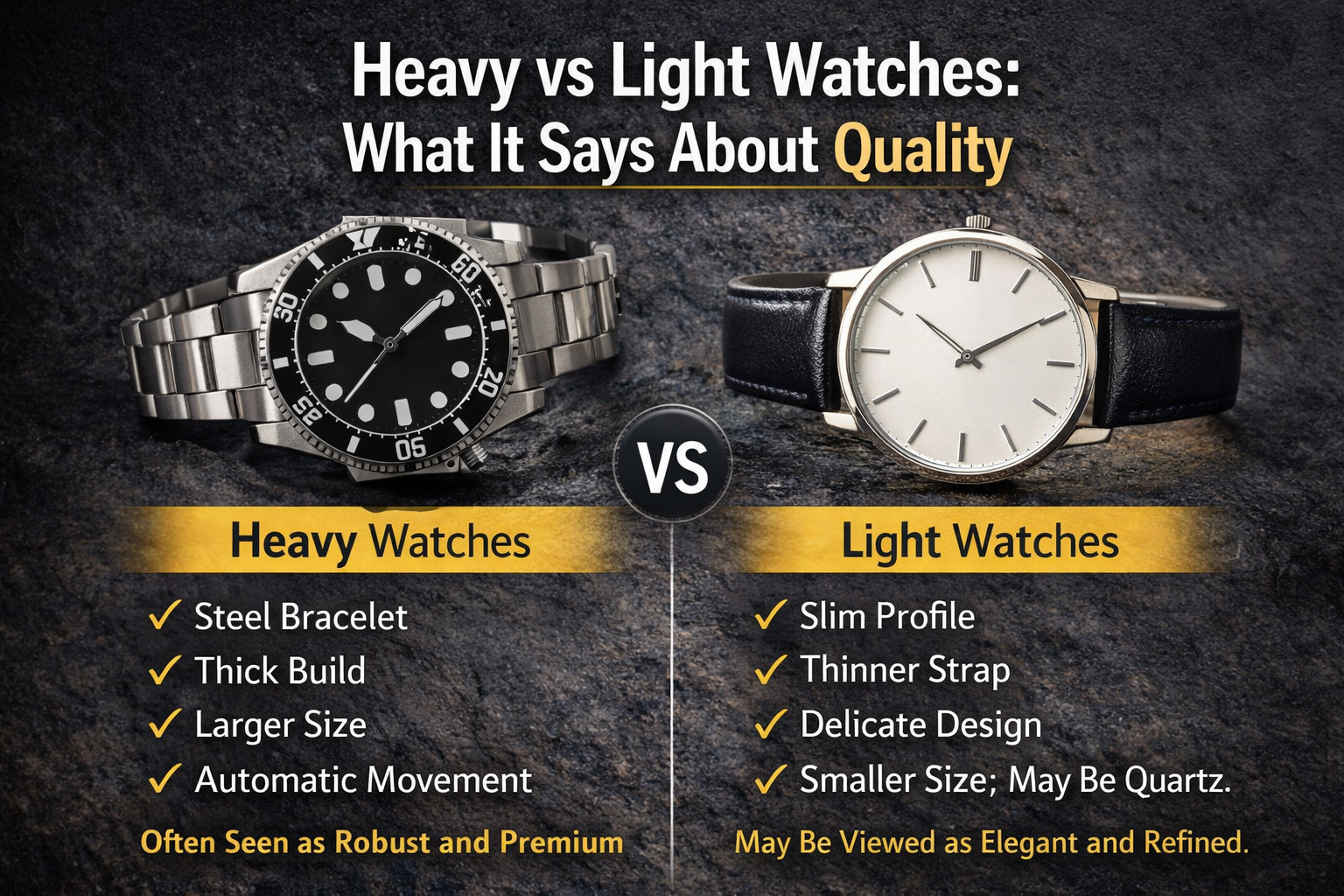
This depends on the watch type.
Heavy Can Feel Premium When:
- it suits the watch style
- the bracelet is well made
- the case feels dense and solid
- the watch stays balanced on the wrist
Light Can Feel Premium When:
- the material is intentionally lighter, مثل titanium
- the watch is slim and elegant
- the fit is excellent
- the finishing and design are refined
A premium watch should feel intentional, not just heavy.
Real Example
A lightweight titanium watch may feel much more sophisticated than a heavy, clumsy steel watch because the comfort, finishing, and design are all better executed.
If you are also comparing materials, stainless steel vs titanium watches is especially relevant here because this is one of the main reasons buyers misunderstand watch weight.
Does a Heavy Watch Mean It Will Last Longer?
Not necessarily.
A heavier watch may feel tougher, but long-term durability depends more on things like:
- case construction
- movement quality
- water resistance
- finishing durability
- bracelet quality
- how the watch is worn and maintained
A very heavy watch can still scratch easily, wear uncomfortably, or age poorly if the rest of the quality is not there.
Real Example
A lighter watch made from better materials and worn carefully may age better than a heavier watch that is bulky, overbuilt, and uncomfortable enough that you avoid wearing it.
If care and longevity matter to you, how to protect your watch from daily wear and damage is worth reading too.
Is a Heavy Watch More Comfortable?
For some people, yes. For many people, no.
Comfort depends on:
- your wrist size
- the watch diameter
- thickness
- case shape
- bracelet or strap type
- how the weight is distributed
A heavy watch can feel reassuring on the wrist, but it can also become tiring over a long day.
Real Example
Someone with a larger wrist may enjoy the feel of a solid 42mm steel watch.
Someone with a smaller wrist may find the same watch exhausting after a few hours.
That is why comfort matters just as much as quality. If the watch is uncomfortable, the “premium” feeling wears off fast.
If fit is part of your concern, how tight a watch should be can help you avoid a watch that feels impressive in the hand but awkward on the wrist.
What Weight Usually Feels Best for Everyday Wear?
For most people, the best everyday watch is not the heaviest one.
It is the one that feels:
- stable
- balanced
- solid
- comfortable enough to forget about during the day
That often means moderate weight, not maximum weight.
Real Example
A 39mm to 41mm steel watch on a balanced bracelet often feels better for daily wear than an oversized heavy sports watch, even if the bigger watch feels more “serious” at first touch.
If daily use is your main goal, how to choose the right watch for everyday wear is closely connected to this question.
Is a Light Watch a Sign of Cheap Quality?
Sometimes, but definitely not always.
A watch can feel light because:
- it uses cheaper materials
- the bracelet is hollow or weak
- the construction is thin in a bad way
But it can also feel light because:
- it uses titanium
- it is intentionally slim
- it is designed for comfort
- it is dressier and more refined
Real Example
A thin quartz dress watch may feel much lighter than a steel sports watch, but that does not make it bad. It just means it serves a different purpose.
This is one reason material and design matter more than raw weight alone.
How to Judge Watch Quality Better Than Just Using Weight
If you really want to know whether a watch is good, look at more than just heft.
Check These Instead:
- case finishing
- bracelet quality
- clasp feel
- dial execution
- hand alignment
- crown action
- balance on the wrist
- movement reputation
- overall comfort
Practical Test
Ask yourself:
- does it feel solid or just heavy?
- does it sit well on the wrist?
- does the bracelet feel secure?
- does the case finishing look sharp and clean?
- do I still like the weight after wearing it for hours?
That tells you much more than picking it up for five seconds.
If you are buying based on feel, how to tell if a watch is well made would be the kind of article that naturally pairs with this topic too, because tactile judgment is only one part of quality.
Who Usually Prefers Heavier Watches?
Heavier watches often appeal more to buyers who like:
- dive watches
- steel sports watches
- large wrist presence
- tool-watch styling
- a stronger sense of substance
People who prefer classic, dressy, or minimalist watches often like lighter pieces more.
So part of the answer is personal preference, not just build quality.
Who Should Be Careful with Heavy Watches?
A heavier watch may not be ideal if:
- you have a smaller wrist
- you wear your watch all day
- you type a lot at a desk
- you want a lighter summer watch
- you dislike wrist fatigue
- you prefer slim, clean styling
Real Example
A buyer who works at a desk all day may love the look of a heavy steel sports watch, but after weeks of wrist contact against the desk, they may find a lighter everyday watch much easier to live with.
If warm-weather comfort matters too, best watch for hot weather: leather, rubber, or metal is relevant because heavy bracelet watches can feel even more noticeable in heat.
Common Mistakes Buyers Make
Mistake 1: Assuming Heavy = Premium
It can, but not always.
Mistake 2: Ignoring Comfort
A watch can feel impressive in the hand and still be annoying in daily life.
Mistake 3: Confusing Size with Quality
A bigger watch is often heavier, but bigger is not the same as better.
Mistake 4: Underestimating Balance
Balance matters more than raw weight.
Mistake 5: Dismissing Lightweight Watches Too Quickly
Some of the best modern watches are intentionally light and refined.
Practical Buying Advice
If you are comparing two watches and one is noticeably heavier, do not ask only:
“Which one feels more premium?”
Also ask:
- which one feels better balanced?
- which one would I actually enjoy wearing longer?
- does the weight match the style of the watch?
- is the bracelet or case quality actually better?
- does the lighter watch use a more advanced material?
That is how you avoid buying with your hand instead of your head.
Final Verdict
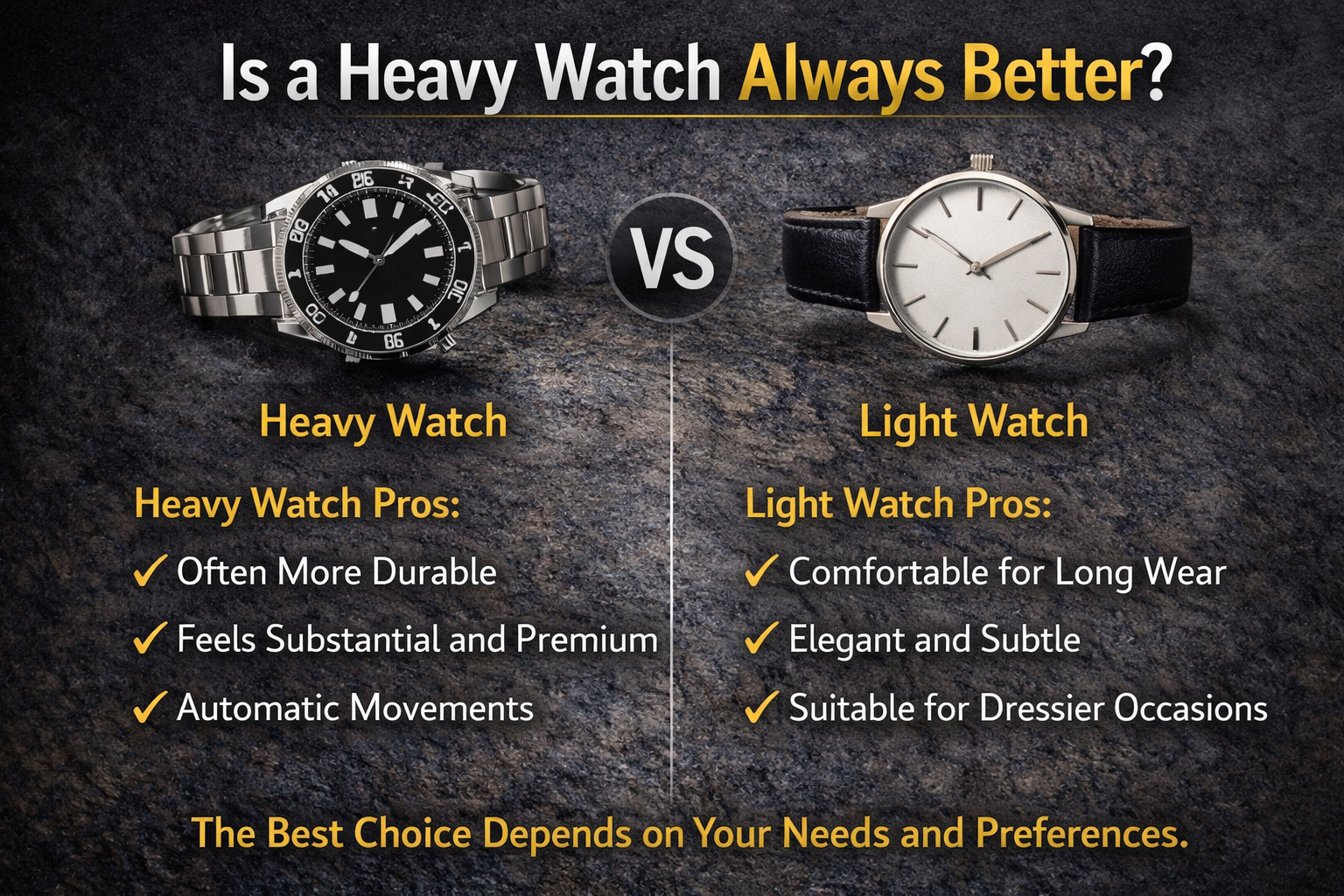
If you want the simplest answer, a heavy watch is not automatically better.
Sometimes extra weight reflects solid materials, better bracelet construction, or a more rugged design. Other times it just reflects bulk, poor balance, or oversized styling. The best watch is not the heaviest one. It is the one that feels well made, well balanced, and genuinely comfortable for the way you wear it.
For most buyers, quality shows up in the total experience:
- finishing
- fit
- construction
- comfort
- design
- long-term wearability
Weight can be part of that story, but it should never be the whole story.
Key Takeaways
- a heavy watch does not automatically mean better quality
- extra weight can come from good materials or just unnecessary bulk
- balance and comfort matter more than raw heft
- lightweight watches can still be premium, especially in titanium or dress designs
- heavy sports or dive watches can feel great if the weight is distributed well
- the best everyday watch usually feels solid and balanced, not just heavy
- judging quality by weight alone is one of the most common buyer mistakes
FAQ
Does a heavier watch mean better quality?
Not always. A heavier watch can feel more substantial, but true quality depends on construction, finishing, balance, and comfort too.
Are light watches cheap?
Sometimes, but not necessarily. Some lightweight watches use premium materials like titanium or are intentionally slim and refined.
Is a heavy watch better for daily wear?
Not for everyone. Many people prefer a balanced moderate-weight watch for everyday comfort.
Why do stainless steel watches feel heavier than titanium?
Steel is denser than titanium, so steel watches usually feel heavier even when the size is similar.
Should I buy the heavier of two watches?
Only if the extra weight comes with better quality, better balance, and better comfort. Weight alone should not decide the purchase.
