
How to Choose the Right Watch for Your Style: A Complete Buyer’s Guide
How to Choose the Right Watch for Your Style: A Complete Buyer’s Guide
Quick Answer
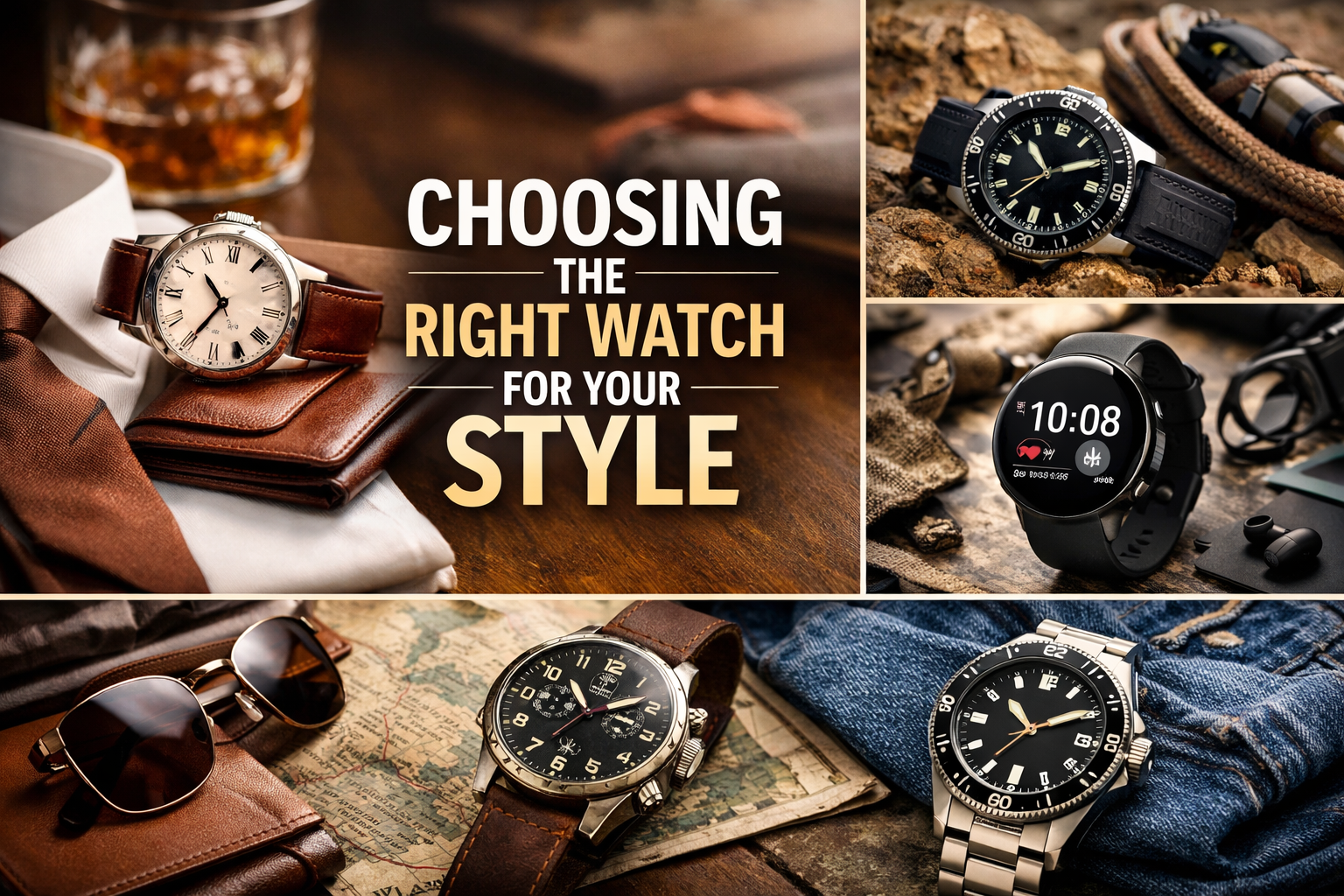
To choose the right watch for your style, start with how you actually live and dress. Think about your daily routine, the clothes you wear most often, the size that fits your wrist, and whether you want your watch to feel classic, sporty, modern, or refined.
For most people, the best choice is not the most expensive or most complicated watch. It is the one that feels natural with your everyday wardrobe and comfortable enough to wear regularly.
Why So Many People Choose the Wrong Watch
A lot of buyers do not really choose a watch for their style. They choose one because it looks good in a product photo, because it is trending, or because someone else wears something similar.
That usually leads to one of two problems:
- the watch looks good on its own, but not on the buyer’s wrist
- the watch works in theory, but does not match the buyer’s real lifestyle
For example, someone who mostly wears T-shirts, jeans, and sneakers may buy a polished dress watch that feels too formal for daily use. Someone else may love classic tailoring but end up with a bulky sports watch that never quite feels right with office clothes.
If you are still building your foundation, our guide on how to choose the right watch for everyday wear is a good place to start because daily wear is usually the most practical baseline.
Start with Your Actual Lifestyle, Not Your Ideal Lifestyle
This is the step most people skip.
Do not choose your watch based on the life you imagine. Choose it based on the life you actually live most days.
Ask Yourself:
- Do you dress casually most of the week?
- Do you work in an office?
- Do you spend a lot of time outdoors?
- Do you want one watch for almost everything?
- Do you care more about comfort, polish, or durability?
Real Example
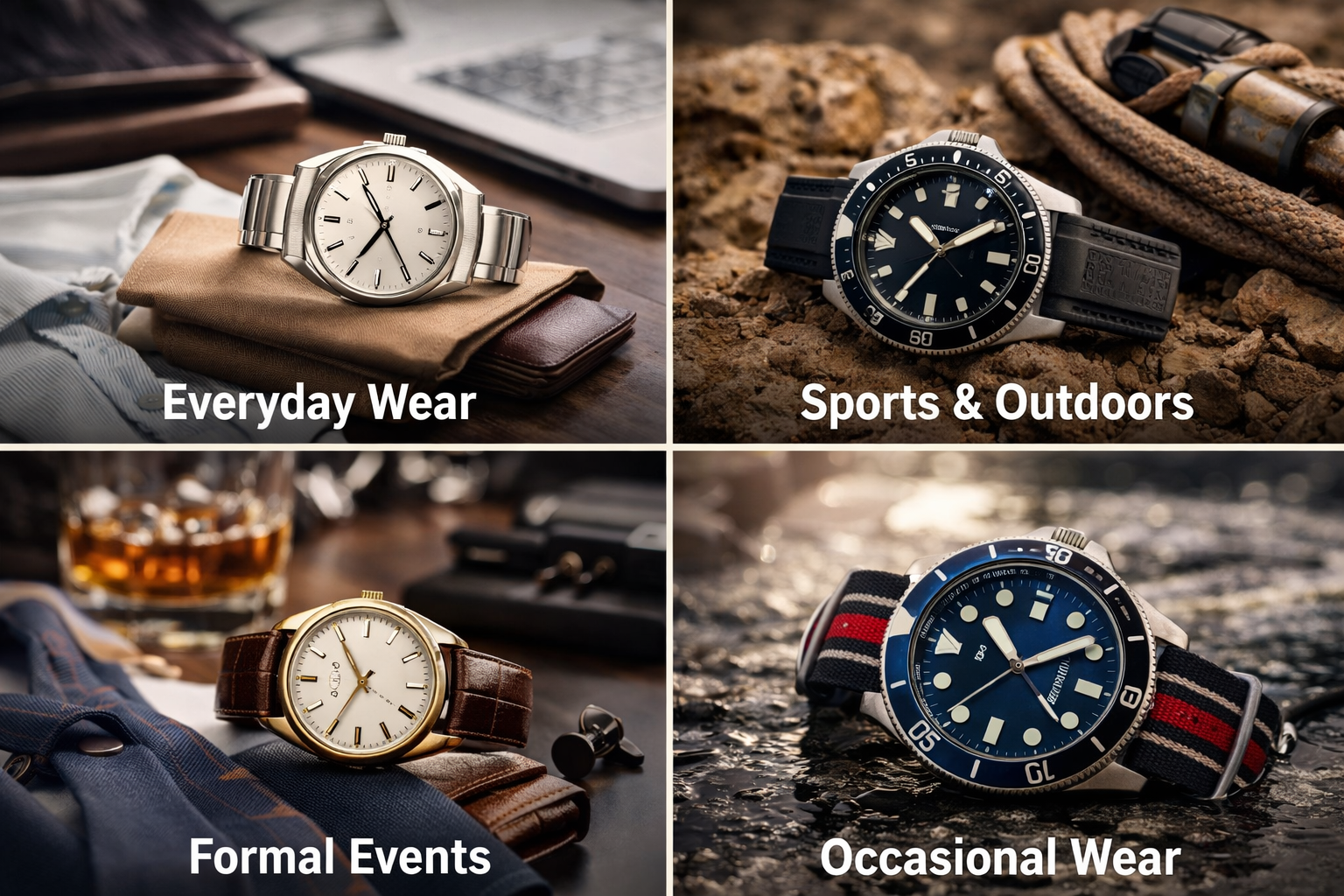
A buyer might say, “I want a classy dress watch,” but if they spend most of the week in casual clothes and rarely attend formal events, a versatile everyday steel watch may be the better fit.
That is why it helps to think honestly about use first, not image first.
If long-term practicality matters to you, our article on how to choose a durable watch for long-term use can help you avoid buying something that looks right but does not fit real daily life.
Match the Watch to the Clothes You Wear Most Often
Your watch does not need to match every outfit perfectly. But it should make sense with the clothes you wear most often.
If You Mostly Dress Casual
Look for:
- field watches
- simple everyday steel watches
- sporty minimalist watches
- casual leather strap watches
These tend to feel natural with:
- jeans
- T-shirts
- polos
- overshirts
- sneakers
- casual jackets
If You Dress Smart-Casual or Office Casual
Look for:
- clean steel watches
- dress-casual watches
- simple automatic or quartz watches
- leather strap everyday watches
These usually work well with:
- chinos
- button-down shirts
- knitwear
- loafers
- blazers
- office-ready casual outfits
If You Dress More Formal
Look for:
- dress watches
- thin cases
- leather straps
- simple dials
- restrained sizes
These work better with:
- suits
- formal shirts
- tailored clothing
- dress shoes
If this is your main concern, our article on how to choose the right watch for formal occasions goes deeper into what looks refined versus what feels too casual.
Choose a Watch Style That Matches Your Personality
This part matters more than people think.
Even if two watches technically fit the same lifestyle, one may still feel more “you” than the other.
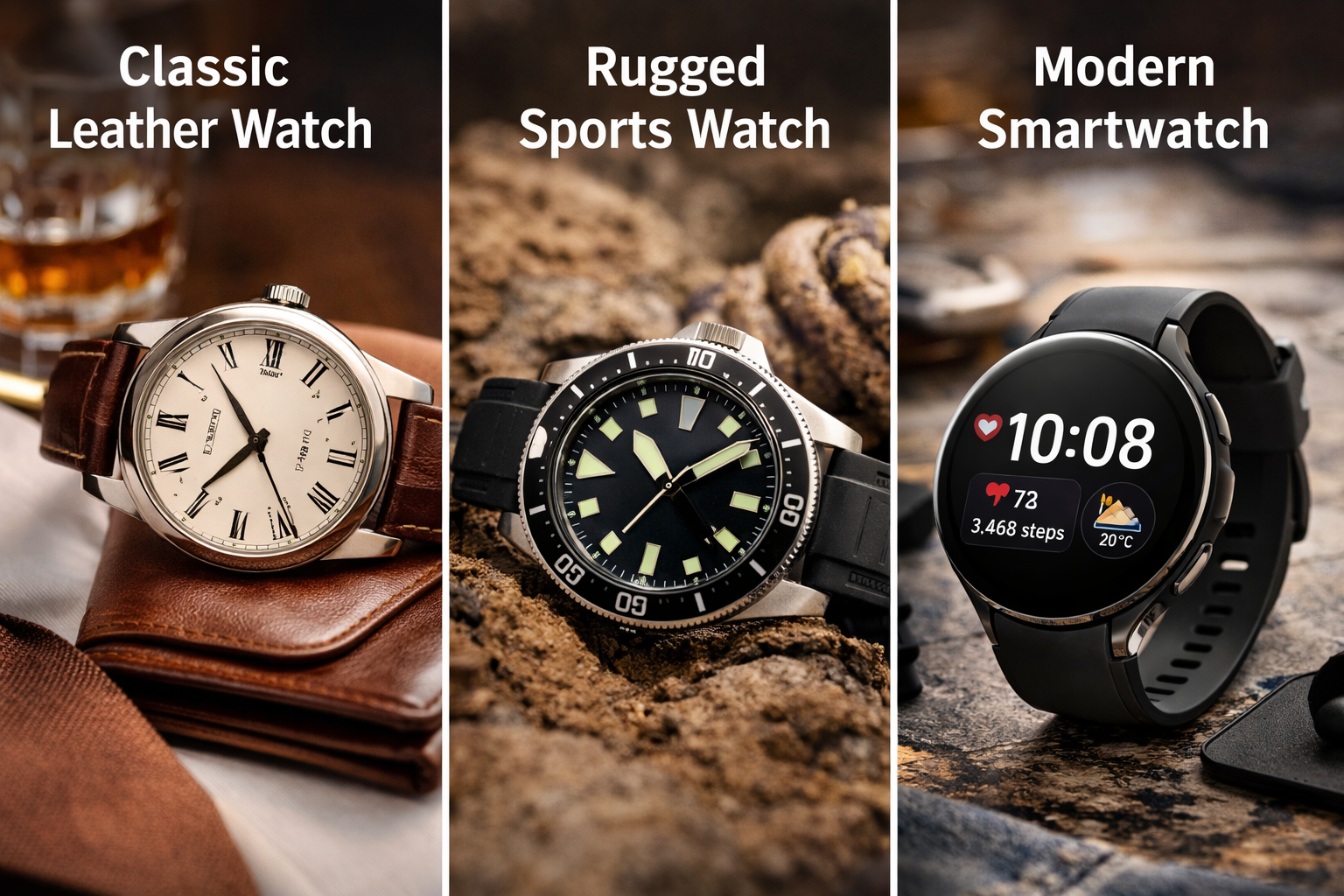
If You Like Classic, Quiet Style
You may prefer:
- silver or white dials
- leather straps
- simple markers
- polished cases
- timeless proportions
If You Like Sporty or Rugged Style
You may prefer:
- dive-style watches
- field watches
- rubber straps
- tool-watch dials
- thicker bezels
If You Like Minimal, Modern Style
You may prefer:
- clean dials
- reduced clutter
- monochrome color palettes
- sleek cases
- more contemporary proportions
If You Like Vintage-Inspired Style
You may prefer:
- smaller sizes
- warm dial tones
- retro numerals
- domed crystals
- aged or classic strap styles
Real Example
Two people can both need a daily watch. One will love a clean 39mm steel watch on bracelet. Another will feel more at home with a 38mm field watch on leather. Both are practical. The difference is personal style.
If you are still comparing beginner-friendly styles, our guide on best watch types for beginners can help you narrow down which categories usually suit different personalities best.
Size Matters More Than Most Buyers Realize
A watch can match your style in theory and still feel wrong if the size is off.
This is one of the main reasons people buy a watch and then quietly stop wearing it.
What to Check
- case diameter
- lug-to-lug length
- thickness
- strap or bracelet width
Real Example
A person with a smaller wrist may love the look of a chunky 42mm dive watch online, but once worn, it may feel too wide and visually heavy. A slightly smaller 38mm to 40mm everyday watch might look much more natural and stylish.
If you are unsure where to begin, our article on how to measure your wrist for the right watch size will help you get your wrist measurement first, which makes every later decision easier.
You can also compare your result with what size watch should you wear if you want a broader sizing reference before buying.
Think About Comfort, Not Just Looks
A stylish watch that is uncomfortable will not become your favorite watch.
That is why comfort should be part of style selection, not something you worry about later.
Things That Affect Comfort
- case thickness
- total weight
- bracelet vs strap
- strap material
- how the watch sits on your wrist
Real Example
A buyer may prefer the look of a metal bracelet, but if they work in warm weather or wear the watch all day, a rubber or leather strap may feel much better in real use.
If strap comfort is part of your decision, our guide on best watch strap material for everyday wear can help you compare leather, rubber, and metal in a more practical way.
Decide Whether You Want One Versatile Watch or Multiple Style Watches
This is an important buying decision.
If You Want One Main Watch
Choose something versatile:
- moderate size
- neutral dial color
- simple design
- comfortable strap or bracelet
- enough durability for daily life
A one-watch collection usually works best when the watch feels balanced rather than extreme.
If You Want Different Watches for Different Uses
Then you can be more specific:
- one cleaner watch for office or formal wear
- one sportier watch for casual use
- one rugged watch for travel or outdoor activity
Real Example
A buyer with only one watch usually does better with a clean everyday steel watch than with a very dressy piece or a very specialized dive watch. But someone building a small collection can afford to be more style-specific.
Practical Step-by-Step: How to Choose the Right Watch for Your Style
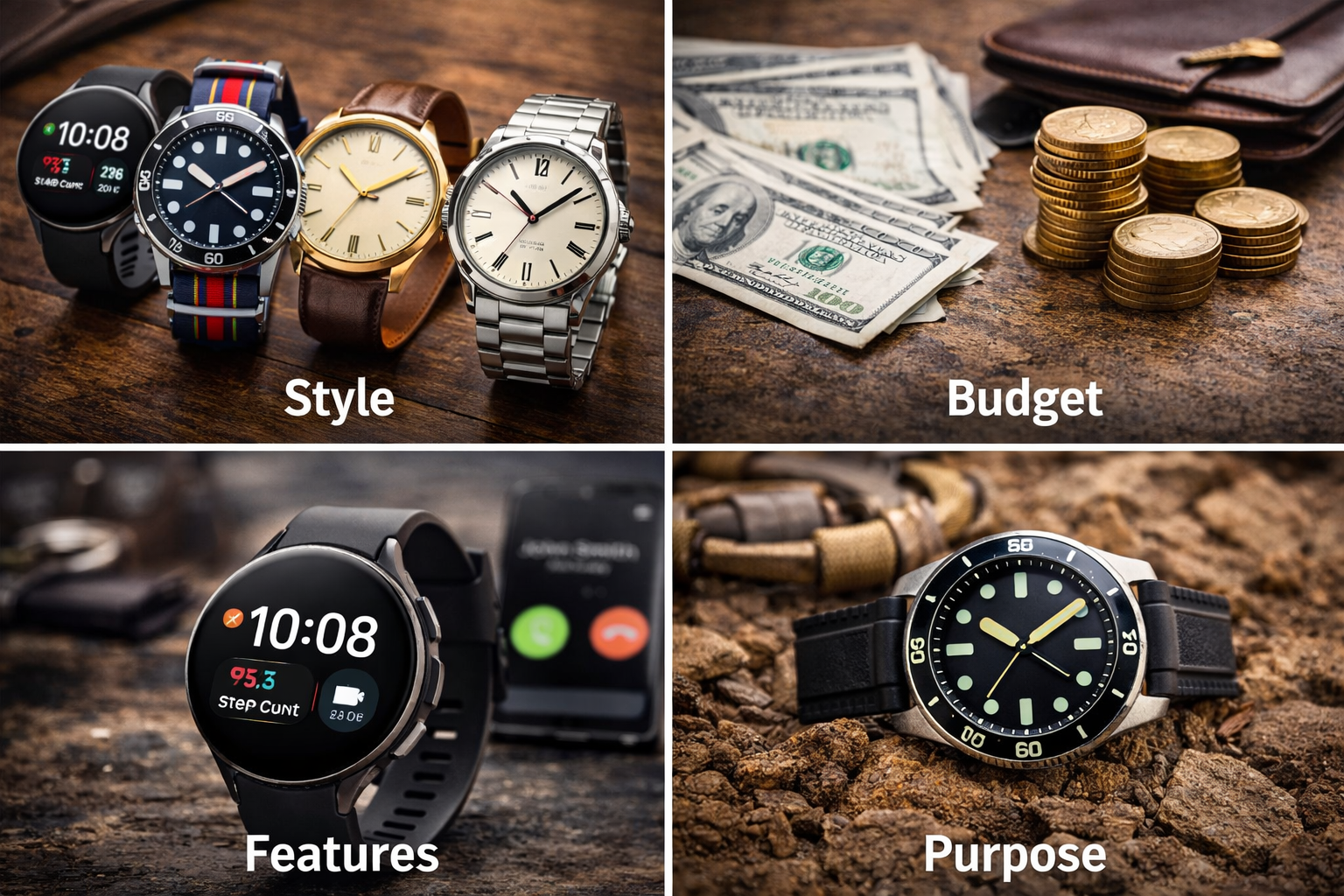
Here is the easiest real-world process.
Step 1: Look at Your Weekly Wardrobe
What do you actually wear most often?
Step 2: Decide Your Main Use
Do you need:
- one daily watch
- one office watch
- one casual weekend watch
- one active/outdoor watch
Step 3: Pick the Style Category First
Examples:
- field
- dress-casual
- dive-style
- minimalist
- classic everyday steel
Step 4: Check Size Before Buying
Do not assume a watch fits just because you like the design.
Step 5: Choose the Strap or Bracelet That Matches Your Use
Leather, rubber, and steel all change how a watch feels and how formal it looks.
Step 6: Ask One Honest Question
“Will I actually want to wear this three or four times a week?”
If the answer is no, it may not be the right watch for your style, even if it looks attractive on its own.
Common Mistakes Buyers Make
Buying for Image Instead of Reality
A watch should fit your real life, not just your fantasy self.
Choosing a Watch That Is Too Specialized
A very formal or very sporty watch can be harder to wear regularly than buyers expect.
Ignoring Wrist Proportion
Even a stylish watch looks wrong if it wears awkwardly on your wrist.
Overvaluing Features
Extra features can sound exciting, but if they make the watch thicker, busier, or less wearable, they may hurt more than help.
Copying Someone Else’s Taste
A watch that looks perfect on someone else may not suit your wardrobe, wrist, or lifestyle.
If you want to understand what separates a watch that only looks good from one that actually feels well-made and satisfying to wear, our guide on what makes a high-quality watch is also worth reading.
A Simple Real-World Way to Think About It
If you feel stuck, use this shortcut:
- Casual everyday life → field watch or simple everyday steel watch
- Office and smart-casual → dress-casual watch or clean steel watch
- Active lifestyle → sporty or rugged watch
- Formal dressing → slim dress watch
- Tech-focused lifestyle → smartwatch
- Classic enthusiast style → vintage-inspired or traditional watch
You do not need a perfect answer.
You just need the watch that feels most natural with the way you actually dress and live.
Final Verdict
If you want the simplest answer, the right watch for your style is the one that matches your real wardrobe, your daily routine, your wrist size, and the image you want to project most often.
The best watch is usually not the loudest, most expensive, or most complicated one. It is the one that feels easy to wear, makes sense with your clothes, and still feels like you after the first excitement wears off.
For most buyers, that means starting with a versatile watch that fits daily life first, then adding more specialized styles later if needed.
Key Takeaways
- choose a watch based on your real lifestyle, not fantasy use
- your wardrobe should guide whether you need casual, sporty, or formal styling
- personality matters just as much as technical features
- size and comfort strongly affect whether a watch feels stylish in real life
- one versatile watch is often a smarter first choice than a very specialized one
- strap choice changes both comfort and overall style
- the best watch for your style is the one you will actually enjoy wearing often
FAQ
How do I choose a watch that matches my style?
Start with your daily wardrobe, main use case, wrist size, and whether you prefer classic, sporty, modern, or refined designs.
What is the best watch style for everyday wear?
For most people, a clean everyday steel watch, field watch, or dress-casual watch is the easiest all-around choice.
Should I choose a leather strap or metal bracelet?
That depends on your style and routine. Leather often feels dressier, while metal usually feels more versatile for all-around daily use.
Can one watch work for both casual and formal outfits?
Yes, a balanced dress-casual or simple steel watch can often work well in both settings.
Is a sports watch a good first watch?
It can be, especially if your wardrobe and lifestyle are casual or active. It is usually less ideal if you mostly dress formally.
