
Watch Bezel Types Explained: Fixed, Rotating, Dive, GMT, and Tachymeter
Watch Bezel Types Explained: Fixed, Rotating, Dive, GMT, and Tachymeter
Quick Answer
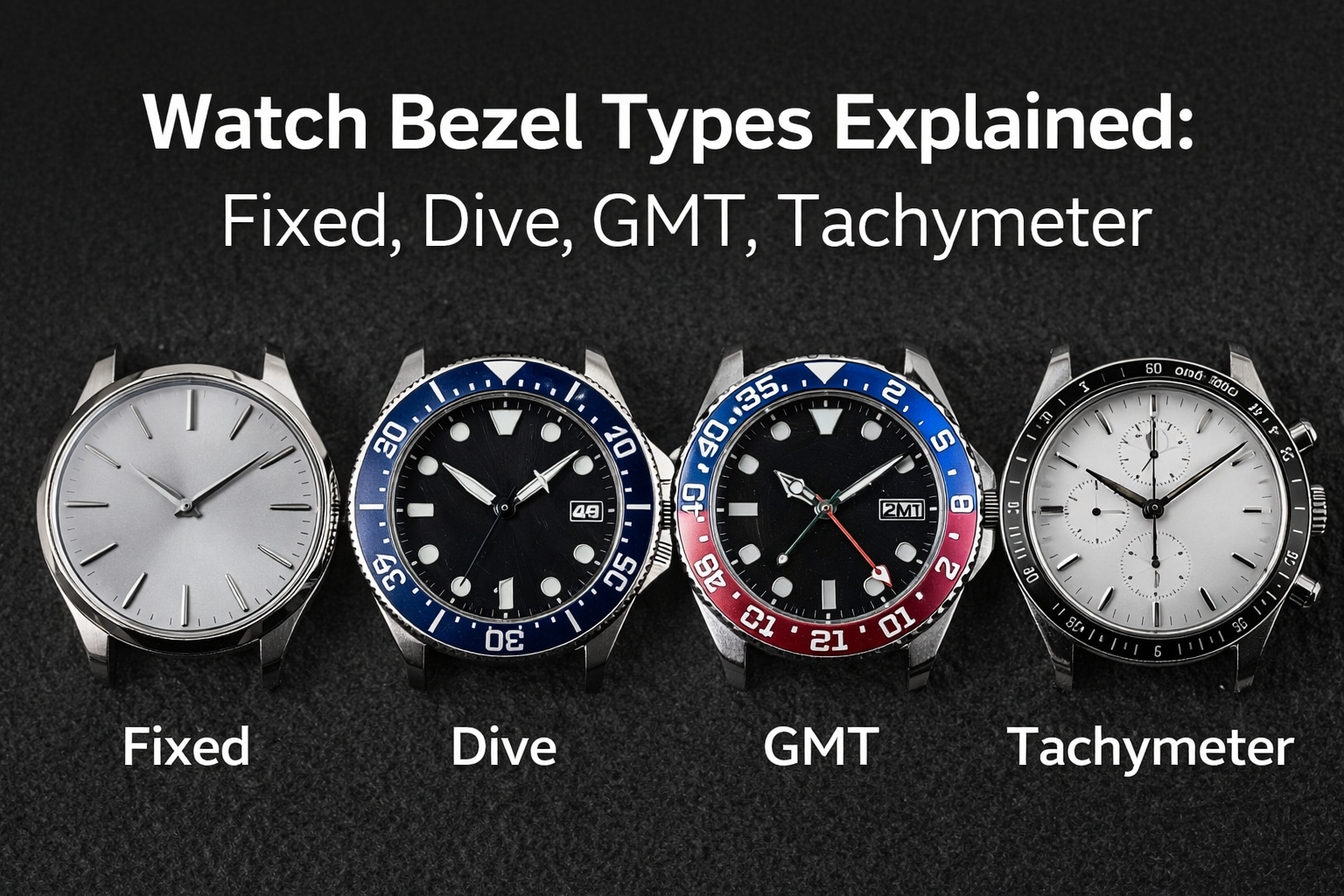
A watch bezel is the ring that surrounds the watch crystal and dial. Some bezels are purely decorative, while others have practical functions such as tracking elapsed time, reading a second time zone, or measuring speed. The most common bezel types are fixed bezels, rotating bezels, dive bezels, GMT bezels, and tachymeter bezels.
For most everyday buyers, a fixed bezel is the simplest option. For more function-focused watches, the right bezel depends on how you plan to use the watch.
Why the Watch Bezel Matters
When people compare watches, they often focus on the movement, case size, crystal, or strap. The bezel gets less attention, but it can have a big effect on both the look and function of a watch.
On some watches, the bezel mainly shapes the design. It can make a watch look more sporty, dressy, technical, or rugged. On other watches, the bezel is an actual tool that helps the wearer track time, read another time zone, or make quick calculations.
That means the bezel is not just a decorative edge around the dial. In many cases, it is one of the clearest signs of what a watch is designed to do.
If you are still learning how different watch parts affect usability, our guide on how to choose your first watch is a helpful place to start.
What Is a Watch Bezel?
A watch bezel is the outer ring that sits around the watch crystal. Depending on the design, it may be fixed in place or able to rotate. It may also carry markings such as numbers, minute scales, city or time zone references, or measurement scales.
In simple terms, the bezel can serve one or both of these roles:
-
Design role: shaping the overall appearance of the watch
-
Functional role: adding a timing or measurement feature
Some watches keep the bezel minimal, while others use it as one of the main practical tools on the watch.
The Main Types of Watch Bezels
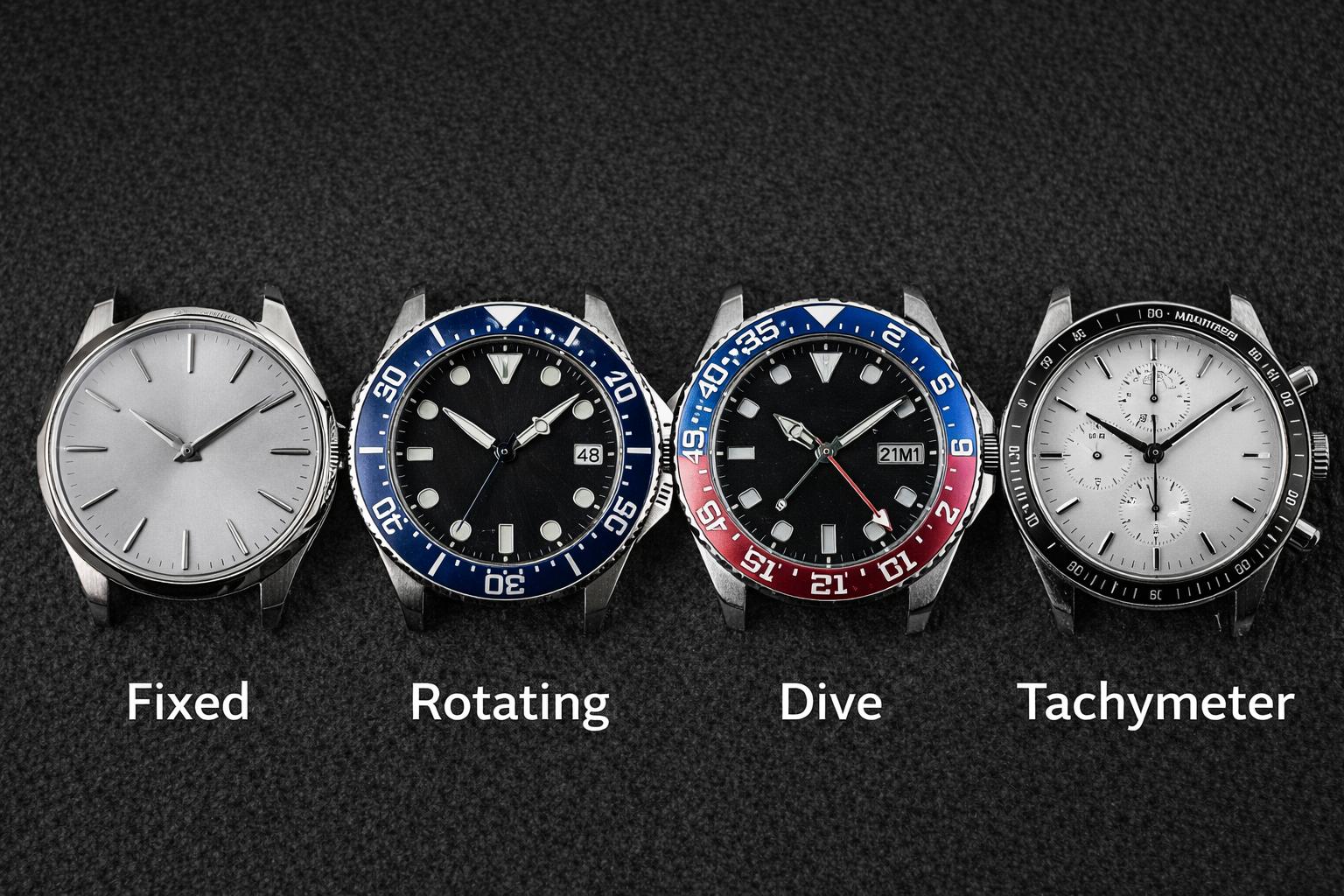
1. Fixed Bezel
A fixed bezel does not move. It is permanently attached to the watch case and serves mainly as a structural or visual element.
What a Fixed Bezel Does
On many everyday and dress watches, the bezel is there to frame the dial and help define the style of the watch. A polished fixed bezel can make a watch look cleaner and more elegant, while a thicker brushed fixed bezel may make it feel more casual or sporty.
Some fixed bezels also include scales or markings, but the bezel itself does not rotate or change position.
Best For
Fixed bezels are best for:
-
Dress watches
-
Everyday watches
-
Minimalist watches
-
Buyers who want a cleaner, simpler design
Main Advantage
The biggest advantage of a fixed bezel is simplicity. It is easy to use because there is nothing to operate, and it often gives the watch a more refined appearance.
2. Rotating Bezel
A rotating bezel can move around the dial. Depending on the watch, it may rotate in one direction or both directions.
What a Rotating Bezel Does
A rotating bezel is designed to help track time or measure intervals. Instead of checking a digital timer or phone, the wearer can align the bezel marker with the minute hand and read elapsed time directly on the watch.
This makes rotating bezels practical for all kinds of everyday timing needs, such as:
-
Timing a short walk
-
Tracking parking time
-
Measuring cooking time
-
Monitoring workouts
Not every rotating bezel is the same, though. Some are general timing bezels, while others are specifically designed for diving or GMT use.
Best For
Rotating bezels are best for:
-
Sport watches
-
Tool watches
-
Casual everyday use
-
Buyers who want practical timing functionality
3. Dive Bezel
A dive bezel is one of the most recognizable bezel types in watches. It is a specific form of rotating bezel designed to measure elapsed time underwater.
How a Dive Bezel Works
A traditional dive bezel has minute markings and a prominent starting marker, often shown as a triangle or luminous pip. The user aligns that marker with the minute hand at the start of an activity, then reads the elapsed minutes as time passes.
Most dive bezels rotate in one direction only, usually counterclockwise. This is a safety feature. If the bezel is moved accidentally, it will usually show less remaining time rather than more, which is safer for actual diving.
Why Dive Bezels Are Popular Beyond Diving
Even people who never go underwater often like dive bezels because they are simple, functional, and visually distinctive. They add a rugged, sporty character to a watch and can still be useful for daily timing tasks.
Best For
Dive bezels are best for:
-
Dive watches
-
Sports and outdoor watches
-
Buyers who like a rugged tool-watch look
-
People who want easy elapsed-time tracking
If long-term durability matters to you, it is also worth reading how to choose a durable watch for long-term use.
4. GMT Bezel
A GMT bezel is designed to work with a GMT watch, which usually has an additional hand for reading a second time zone.
How a GMT Bezel Works
A GMT bezel typically has a 24-hour scale. When paired with a GMT hand, it allows the wearer to track another time zone more clearly and, on some watches, even a third time zone depending on the setup.
This makes GMT bezels especially useful for:
-
Travelers
-
Remote workers
-
People who communicate across time zones
-
Watch enthusiasts who like travel-oriented functionality
Why GMT Bezels Appeal to Many Buyers
A GMT bezel adds visible complexity and utility without making the watch difficult to read once you understand how it works. It also gives the watch a more technical and travel-ready personality.
Best For
GMT bezels are best for:
-
Travel watches
-
GMT watches
-
Buyers who need second time zone functionality
-
People who like practical complications
5. Tachymeter Bezel
A tachymeter bezel is used to calculate speed over a fixed distance. It is most commonly found on chronograph watches.
How a Tachymeter Works
A tachymeter scale is usually printed on the bezel or around the outer dial. When used with a chronograph, it helps the wearer convert elapsed time into units per hour, such as miles per hour or kilometers per hour.
This type of bezel is most strongly associated with motorsport-inspired watches.
Is a Tachymeter Practical for Most People?
For most everyday users, a tachymeter is more about style and watch heritage than daily necessity. It can still be interesting and functional, but many people choose it because it gives the watch an energetic, technical look.
Best For
Tachymeter bezels are best for:
-
Chronograph watches
-
Motorsport-inspired watches
-
Buyers who like technical design
-
Enthusiasts who enjoy watch functions beyond basic timekeeping
Fixed vs Rotating Bezels: What Is the Difference?
The simplest comparison is this:
-
A fixed bezel stays in place and is usually more about design or structure
-
A rotating bezel moves and is usually intended for timing or measurement
If you want a clean and classic watch, fixed is often the better choice. If you want added utility, a rotating bezel is usually more useful.
Which Watch Bezel Type Is Best for Everyday Wear?
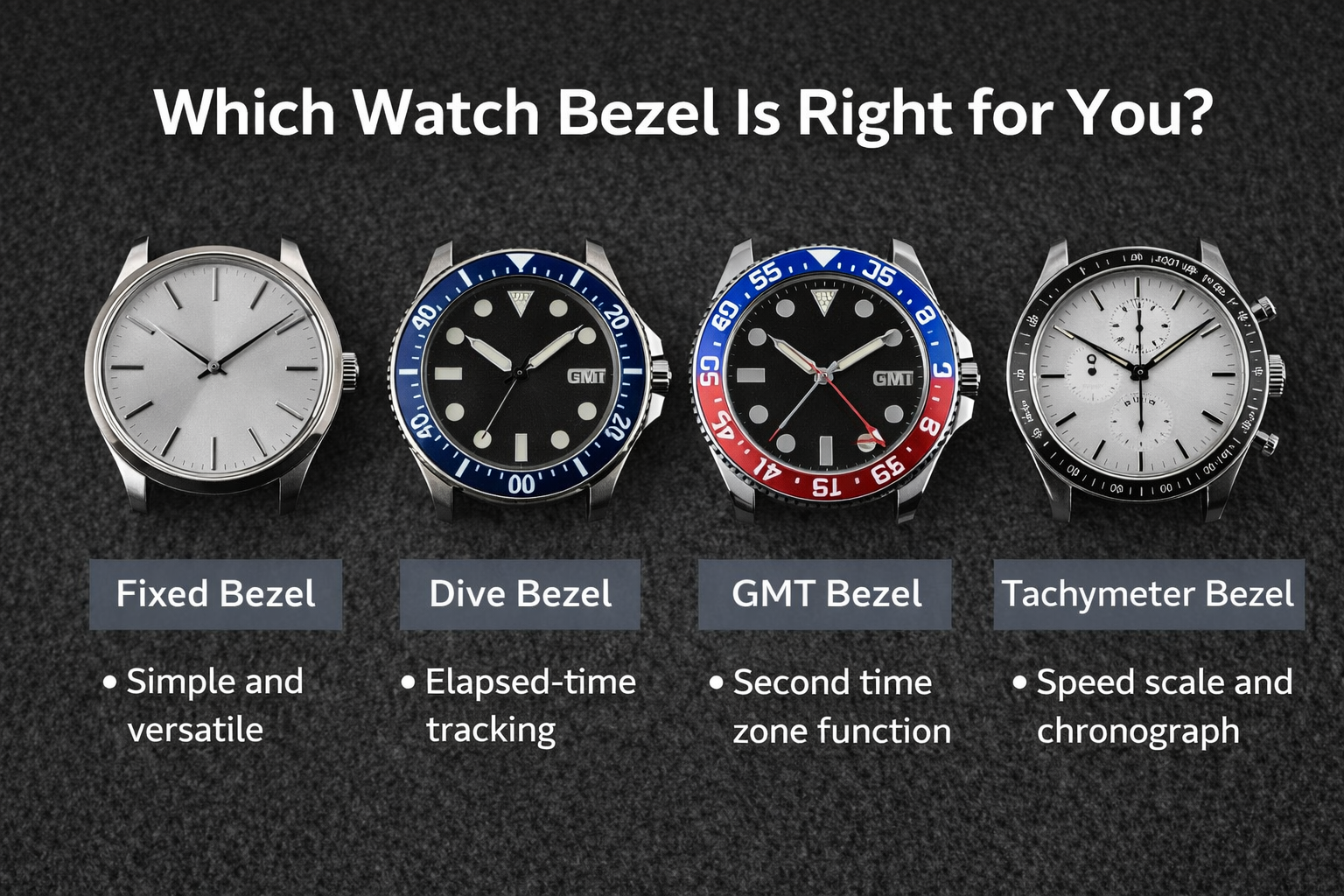
For most people, the best bezel for everyday wear depends on what they want from the watch.
Choose a Fixed Bezel If:
-
You prefer a cleaner and simpler look
-
You mainly want a dress watch or versatile daily watch
-
You do not need extra timing features
Choose a Dive Bezel If:
-
You want easy elapsed-time tracking
-
You like a sporty and rugged aesthetic
-
You enjoy functional design even in daily life
Choose a GMT Bezel If:
-
You travel often
-
You track a second time zone
-
You like more technical features
Choose a Tachymeter Bezel If:
-
You like chronographs
-
You want a motorsport-inspired style
-
You enjoy watch details and visual complexity
A simple way to think about it is this:
fixed for simplicity, dive for timing, GMT for travel, tachymeter for chronograph style and speed measurement.
Does the Bezel Affect Durability?
Yes, to some extent.
A bezel is part of the watch’s outer structure, so its material, finish, and construction can influence how the watch handles daily wear. Some bezels are more resistant to scratches or wear than others, especially depending on whether they use steel, ceramic, or aluminum inserts.
The bezel is only one part of overall durability, though. Case material, crystal type, and general build quality also matter. For that reason, it helps to compare watch crystal types explained and the best watch case materials for everyday use when evaluating a watch more completely.
Common Mistakes Buyers Make with Bezels
One common mistake is assuming a bezel is only decorative. On many watches, it is not. A bezel can be one of the most practical parts of the watch.
Another mistake is choosing a bezel style without thinking about daily use. A tachymeter may look exciting, but if you really want an easy timing function, a dive bezel might be more useful. Likewise, a GMT bezel looks technical and appealing, but it makes more sense for people who actually benefit from time zone tracking.
The smartest choice is to match the bezel to your lifestyle, not just the look you like in photos.
How to Choose the Right Bezel for Your Watch
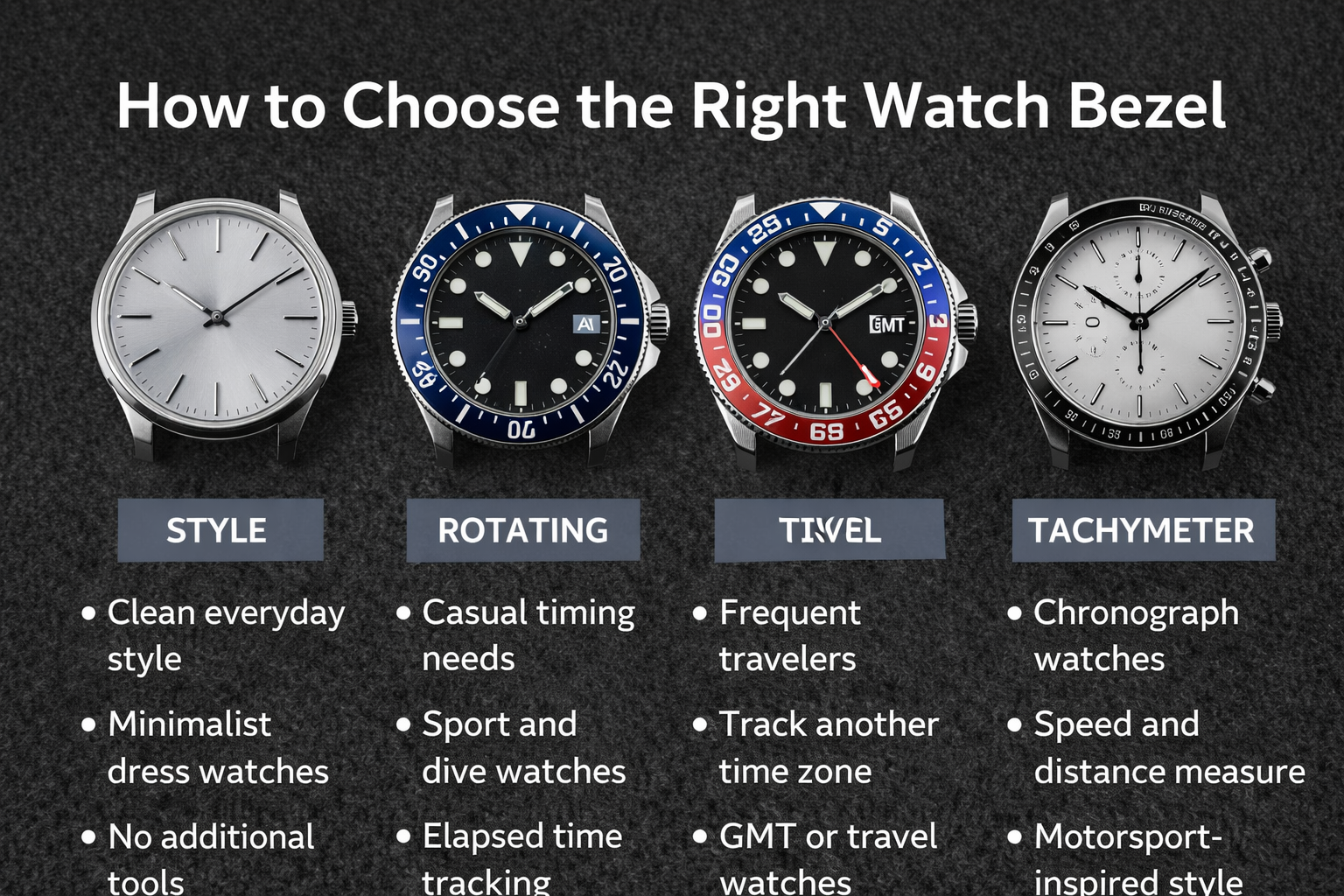
If you are not sure which bezel type fits you best, start with how you plan to use the watch.
For clean everyday style
Choose a fixed bezel.
For casual timing and sportier use
Choose a dive bezel or another rotating bezel.
For travel and multiple time zones
Choose a GMT bezel.
For chronograph styling and motorsport appeal
Choose a tachymeter bezel.
If you are still comparing key watch features, our article on what makes a high-quality watch can help you think beyond just appearance.
Final Verdict
The bezel is one of the most important design and function elements on a watch. Some bezels are simple and elegant, while others turn the watch into a more practical tool.
If you want the shortest possible answer:
-
Fixed bezel = simple and versatile
-
Rotating bezel = practical timing
-
Dive bezel = elapsed-time tracking with rugged appeal
-
GMT bezel = second time zone functionality
-
Tachymeter bezel = speed scale and chronograph style
For most casual buyers, a fixed bezel or dive bezel will be the most practical choice. For travelers, a GMT bezel makes more sense. For enthusiasts who enjoy technical details, a tachymeter can be especially appealing.
The best bezel is not the one with the most markings. It is the one that best matches how you actually wear your watch.
Key Takeaways
-
A watch bezel is the ring around the crystal and dial
-
Some bezels are decorative, while others add real functionality
-
Fixed bezels are best for simplicity and clean styling
-
Dive bezels are useful for elapsed-time tracking
-
GMT bezels help track another time zone
-
Tachymeter bezels are most common on chronographs
-
The right bezel depends on your lifestyle and how you use the watch
FAQ
What is the purpose of a watch bezel?
A watch bezel surrounds the crystal and dial. Depending on the design, it may shape the style of the watch or provide a function such as time tracking, time zone reading, or speed measurement.
What is the difference between a fixed bezel and a rotating bezel?
A fixed bezel does not move and is usually more about design or structure. A rotating bezel moves and is usually used for timing or measurement.
What is a dive bezel used for?
A dive bezel is used to track elapsed time. It is especially associated with dive watches, but many people also use it for ordinary daily timing tasks.
What is a GMT bezel for?
A GMT bezel helps display another time zone, usually by working with a GMT hand and a 24-hour scale.
Is a tachymeter bezel useful for everyday wear?
For most people, a tachymeter bezel is more of a style feature than a daily necessity. It is most useful when paired with a chronograph to measure speed over a fixed distance.
