
What Makes a Watch Comfortable All Day? 7 Details Buyers Often Ignore
What Makes a Watch Comfortable All Day? 7 Details Buyers Often Ignore

Quick Answer
A watch feels comfortable all day when its size, weight, thickness, lug design, and strap material work well together on your wrist. Many buyers focus on case diameter first, but real all-day comfort usually depends more on weight balance, bracelet flexibility, case height, and how naturally the watch sits during normal daily movement.
Introduction
A lot of people assume that watch comfort is simple.
If the watch is not too big, it should feel fine. If the strap looks soft, it should be comfortable. If the case diameter seems normal, there should not be a problem.
But in real life, comfort is more complicated than that.
Two watches with the same size on paper can feel completely different after a full day of wear. One may disappear on the wrist and feel easy to wear from morning to night. The other may start feeling heavy, stiff, top-heavy, or awkward after just a few hours.
That is because all-day comfort is not decided by one measurement alone. It comes from a combination of details that many buyers overlook at first.
If you are still learning how different watch features affect daily wear, it also helps to read How to Choose the Right Watch Size for Your Wrist before going deeper into comfort.
A Real-Life Situation Many Buyers Recognize
Imagine someone buying a watch online for everyday use.
The case size looks safe. The photos look clean. The design seems versatile enough for work, weekends, and casual outfits. At first glance, it feels like an easy choice.
But after wearing it through a full day, the experience changes. The case feels taller than expected under a shirt cuff. The bracelet shifts too much while typing. The watch head starts feeling heavier by the afternoon. Nothing looks wrong in photos, but the watch simply does not feel as easy to wear as expected.
This is exactly why comfort matters.
A watch can look beautiful in product images and still become frustrating in daily life if the wearing experience is not right.
1. Case Diameter Matters, but It Is Not the Whole Story
Most people look at case diameter first, and that makes sense. It is the easiest size number to notice.
But diameter alone does not tell you whether a watch will feel comfortable all day. A 40mm watch with short lugs and a slim case may wear beautifully, while another 40mm watch with long lugs and extra thickness may feel much larger and less stable.
Real-life example
A buyer chooses two different 40mm watches. On paper, they seem almost identical. But one wears compact and balanced during a full workday, while the other feels much larger because the lugs extend too far and the case stands too high on the wrist.
That is why case diameter is only the starting point.
If you want to understand this better, read Watch Size Guide: Case Diameter, Lug-to-Lug, and Thickness Explained.
What to check
- Is the diameter suitable for your wrist?
- Does the watch look compact or wide in real wear?
- Does the case shape make the watch wear larger than expected?
2. Lug-to-Lug Length Often Affects Comfort More Than Buyers Expect
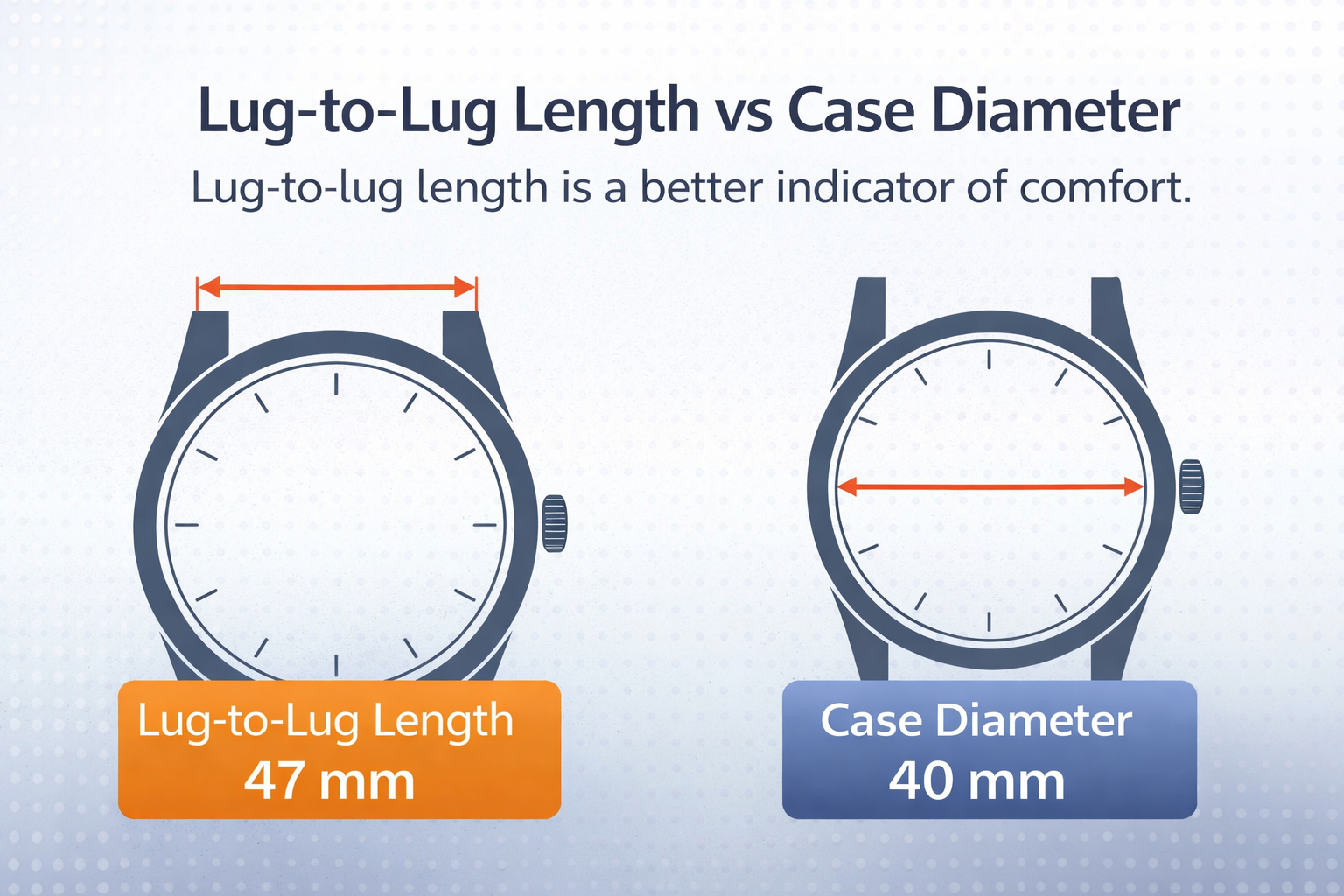
Lug-to-lug length is one of the most overlooked comfort details.
Even if the case diameter seems fine, long lugs can make a watch feel awkward by stretching too far across the wrist. Shorter lugs usually help a watch sit more naturally and feel better during daily movement.
Real-life example
Someone with a medium wrist buys a watch because the case diameter seems reasonable. But after putting it on, the lugs extend too close to the edge of the wrist, making the watch feel less secure and less natural throughout the day.
This is one reason many watches feel larger than their official size suggests.
You can naturally support this topic with How to Choose the Right Watch Size for Your Wrist if that post is already on your site.
What to check
- Do the lugs stay within the wrist?
- Does the watch sit flat or feel stretched?
- Does it remain stable while moving your arm?
3. Case Thickness Changes the Wearing Experience More Than Most People Realize
A watch can have a good diameter and still feel uncomfortable if it is too thick.
Thickness affects how a watch sits, how top-heavy it feels, and how easily it slides under sleeves. Slimmer watches often feel easier to live with during long days, especially in office or smart-casual settings.
Real-life example
A watch may look stylish in photos, but after wearing it to work, the owner notices that it keeps catching on a shirt cuff and feels more noticeable than expected every time they bend their wrist.
This does not mean thick watches are always uncomfortable. Sports watches and dive-style watches are often thicker by design. But for all-day versatility, thickness matters a lot.
What to check
- Does the case sit too high on the wrist?
- Does it slide under a shirt cuff comfortably?
- Does the watch feel top-heavy after several hours?
4. Weight Balance Is More Important Than Weight Alone
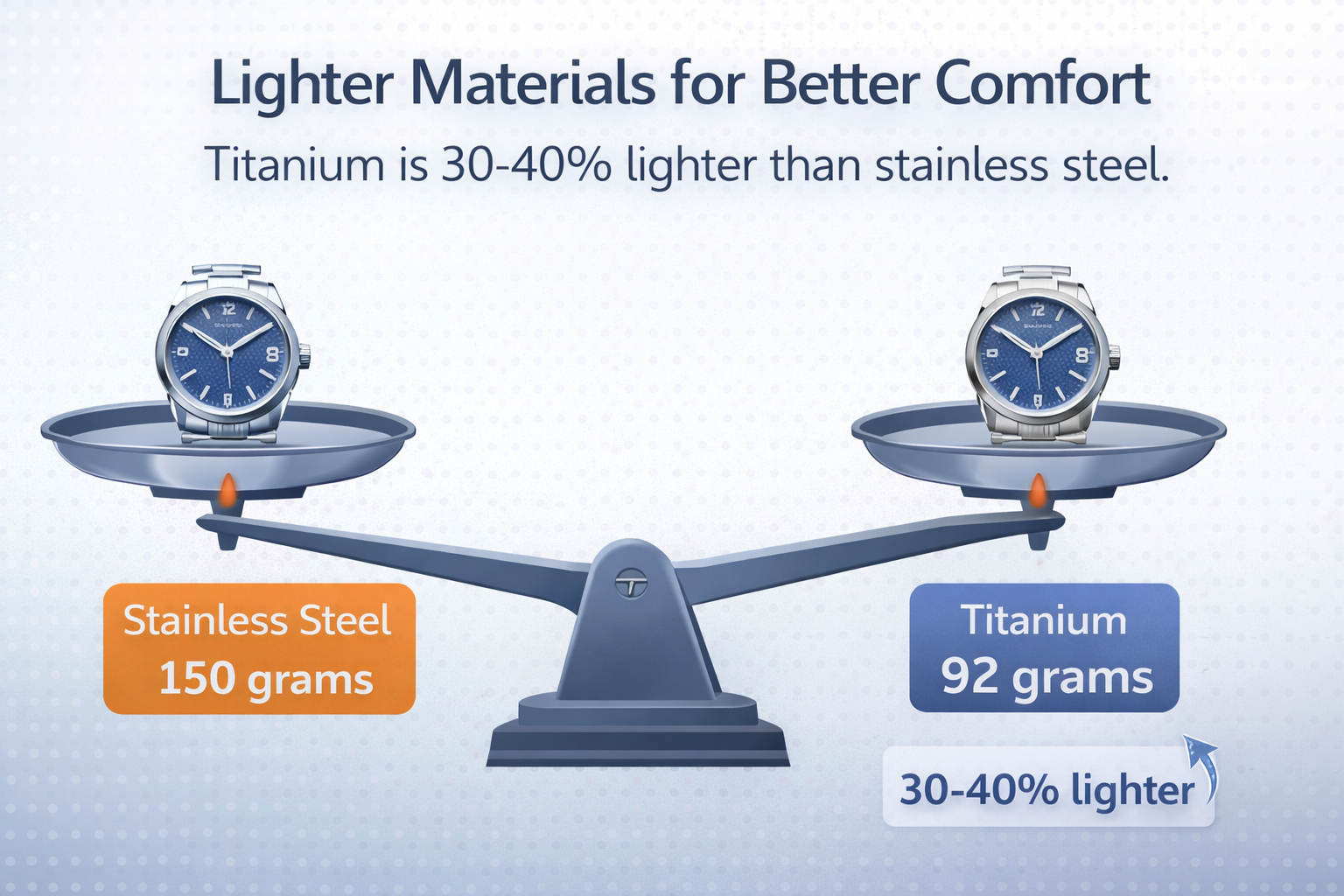
Many buyers assume that lighter always means more comfortable. That is not always true.
A watch can have some weight and still feel excellent if the balance is right. On the other hand, a watch that is not especially heavy can still feel uncomfortable if the watch head is too dominant or the bracelet does not distribute the weight properly.
Real-life example
A buyer wears a metal bracelet watch during a normal office day. The total weight is not extreme, but the watch head feels heavier than the bracelet, so it keeps shifting and needing adjustment. By the afternoon, the watch feels much less comfortable than it did in the morning.
This is why balance matters more than numbers alone.
This section can naturally link to Stainless Steel vs Titanium Watches: Which Material Is Better for Daily Wear? because material often changes both total weight and wearing feel.
What to check
- Does the watch feel balanced on the wrist?
- Does the watch head feel too heavy compared to the strap or bracelet?
- Do you keep adjusting it during the day?
5. Strap or Bracelet Material Can Make or Break Daily Comfort
A comfortable watch head can still become uncomfortable if the strap or bracelet is wrong.
Metal bracelets can feel great when they are flexible, smooth, and properly sized. Leather straps often feel softer and lighter, especially in cooler weather. Rubber straps can be very practical for active days or hot climates, but only when they are well designed and breathable.
Real-life example
Two watches have similar cases, but one is on a stiff bracelet and the other is on a soft leather strap. Even though the watch heads feel close in size, the second watch is much easier to wear through a long day because the strap feels gentler and more natural on the wrist.
This is where personal lifestyle matters a lot.
If you want to compare this in more detail, read Best Watch Strap Material for Everyday Wear: Leather, Rubber, or Metal?.
What to check
- Does the strap feel soft or stiff?
- Does the bracelet pinch or rattle?
- Does the material suit your climate and daily routine?
- Does it still feel good after several hours?
6. The Way a Watch Moves on the Wrist Matters in Real Life
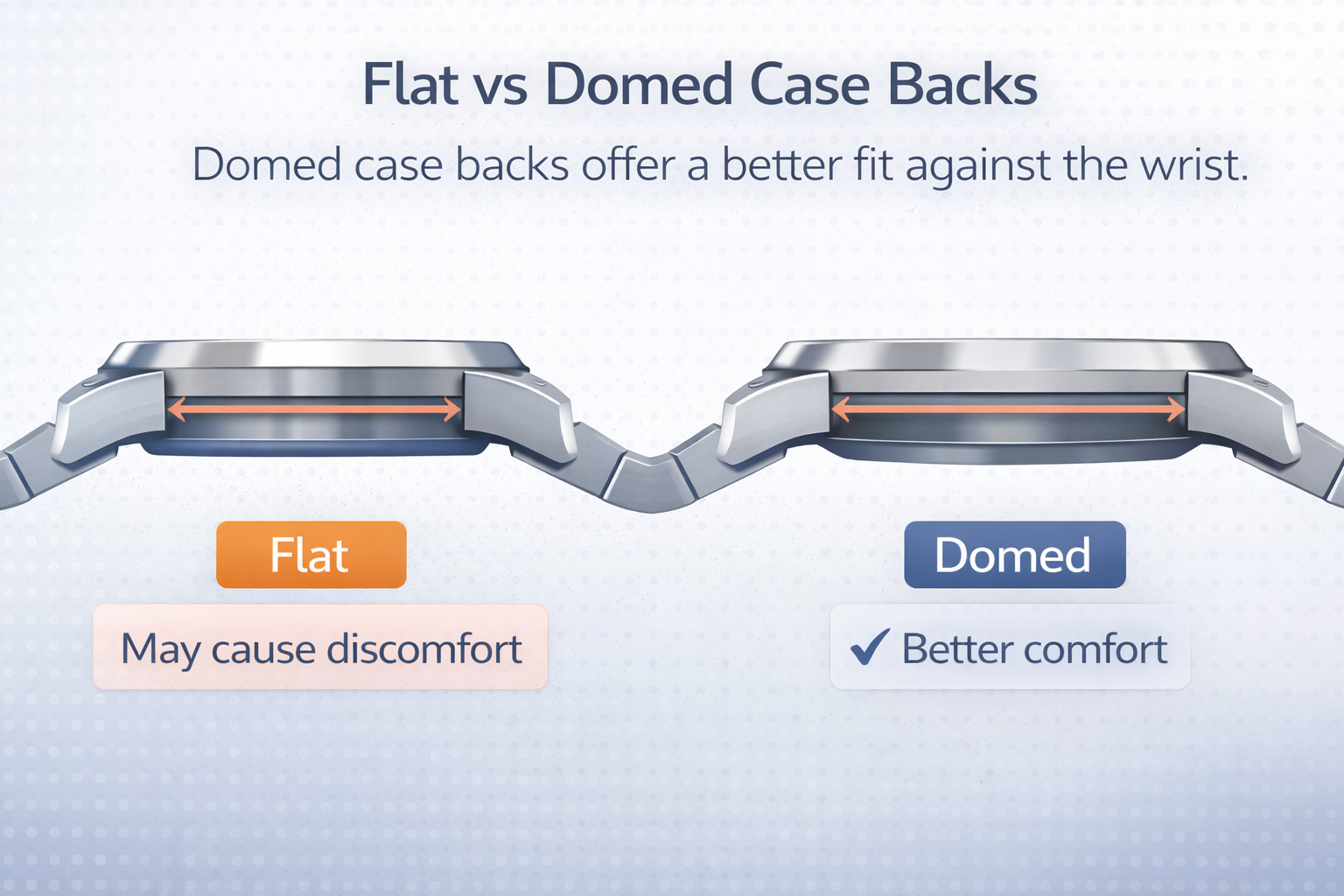
A watch may feel fine when you first try it on, but daily movement reveals much more.
Typing, walking, driving, lifting bags, adjusting sleeves, and moving through a normal day all expose whether the watch really works for long-term comfort.
A watch that shifts too much, slides around, or sits awkwardly during movement can become irritating even if it looks great in still photos.
Real-life example
A buyer tries on a watch for five minutes and likes the look. But after wearing it through commuting, desk work, and dinner, they realize the watch moves too much and never quite settles comfortably into place.
That is why comfort should always be judged in real use, not just the first minute of wear.
What to check
- Does the watch stay stable while moving?
- Does it slide around too much?
- Do you forget you are wearing it, or keep noticing it all day?
7. Good Comfort Usually Comes From Several Small Details Working Together
This is the most important point of all.
There is rarely one single reason a watch feels comfortable all day. In most cases, comfort comes from several details working together: sensible size, manageable thickness, short enough lugs, good weight balance, and a strap or bracelet that suits your lifestyle.
Real-life example
One watch may not have the thinnest case or the lightest weight, yet it still feels better than another watch because everything is balanced correctly. The dimensions make sense together, the strap supports the case well, and the watch feels natural rather than distracting.
That is usually what people mean when they say a watch is “easy to wear.”
This also connects naturally to How to Choose the Right Watch for Everyday Wear if you already have that post live.
What to check
- Do the dimensions feel balanced together?
- Does the watch suit how you actually dress and move?
- Can you wear it from morning to evening without discomfort?
What Buyers Often Focus on Too Much
Many buyers spend too much time looking at:
- case diameter alone
- whether the watch looks big in photos
- whether the dial design feels attractive
Those things matter, but all-day comfort usually depends more on:
- thickness
- lug length
- bracelet flexibility
- weight balance
- real-life movement on the wrist
That is why two watches with similar styles can feel completely different after a full day.
Who Should Care Most About All-Day Watch Comfort?
This matters especially for people who:
- wear one watch most days of the week
- spend long hours at a desk or in meetings
- want a watch that works for both casual and smarter outfits
- dislike constantly adjusting their watch
- want a watch that feels easy rather than impressive for only a short time
For occasional wear, comfort problems may not matter much. But for daily wear, they matter a lot.
Final Thoughts
What makes a watch comfortable all day is not just one simple feature.
It is the way the size, thickness, lug design, strap material, and weight balance all come together in real use. Many watches look good in photos, but true comfort only becomes clear after hours of normal wear.
If you want a watch that feels easy to live with, pay attention to how it sits, how it moves, and how it feels during a full day, not just how it looks in the first few minutes.
In the end, the most comfortable watch is usually the one that fits naturally into your daily life without constantly reminding you that it is there.
FAQ
1. What makes a watch comfortable for all-day wear?
A watch feels comfortable all day when the size, lug length, thickness, weight balance, and strap material all work well together on your wrist.
2. Is a lighter watch always more comfortable?
Not always. Weight balance matters more than total weight alone. A balanced watch can feel comfortable even with some weight, while a poorly balanced watch can feel awkward even if it is lighter.
3. Does case thickness affect comfort?
Yes. A thick watch can feel more top-heavy, more noticeable under sleeves, and less versatile for long daily wear.
4. Why does lug-to-lug length matter so much?
Lug-to-lug length affects how naturally a watch sits across your wrist. Even a moderate case size can feel awkward if the lugs extend too far.
5. Which strap material is best for comfort?
It depends on your routine and climate. Leather often feels soft and easy to wear, metal bracelets can feel excellent when properly fitted, and rubber is useful for active or hot-weather wear.
6. Can two watches with the same size feel different?
Yes. Watches with the same case diameter can feel very different because of lug length, thickness, case shape, and strap design.
7. What is the biggest comfort mistake buyers make?
Many buyers focus only on case diameter and ignore the other details that affect real-life wear, especially thickness, lug-to-lug length, and weight balance.
