
What Do People Actually Notice First About a Watch in Real Life?
What Do People Actually Notice First About a Watch in Real Life?
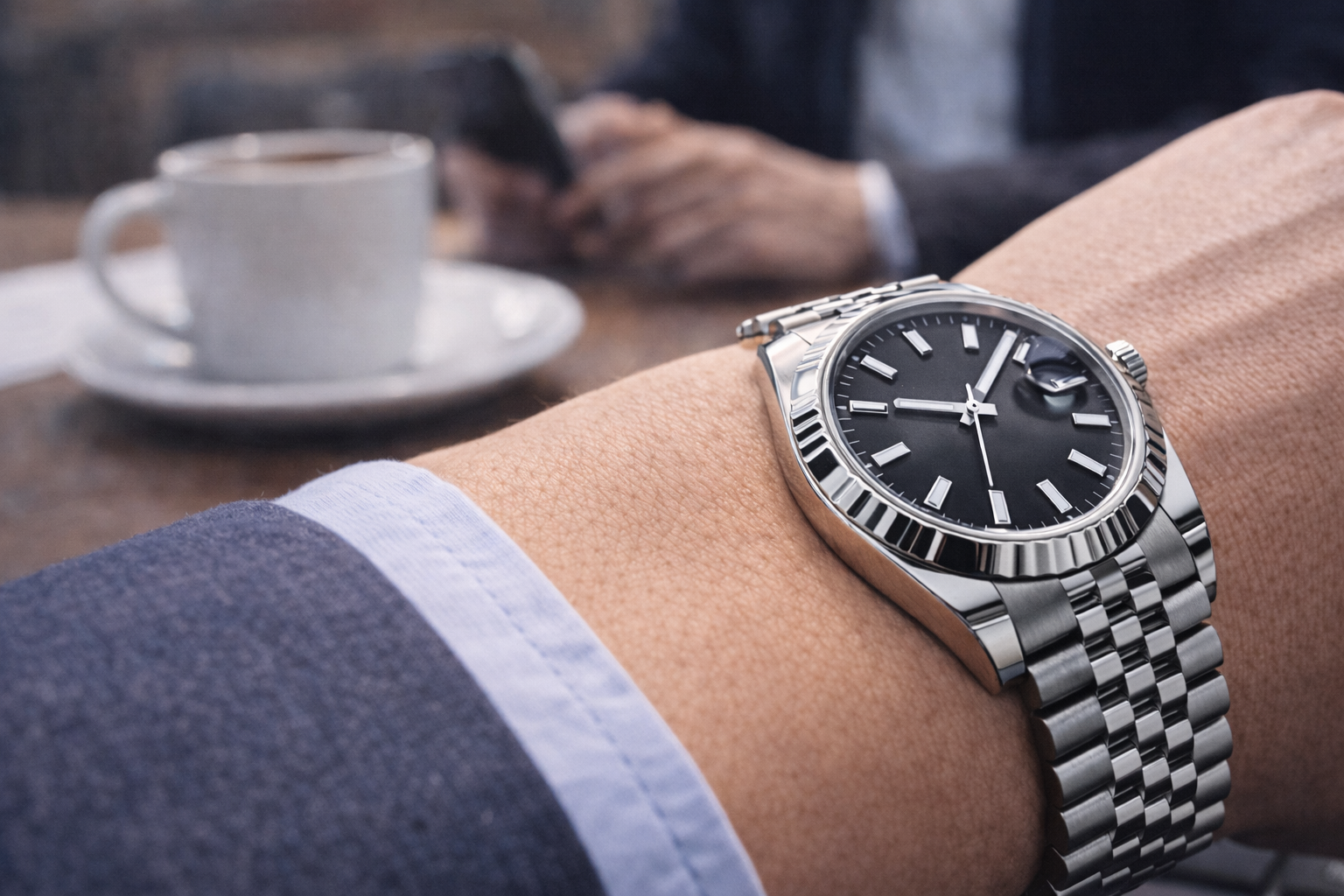
A lot of watch buyers spend time worrying about details that most people never notice first.
They think about the date window, the exact dial texture, the hand shape, the polish on the bezel edge, or small finishing details that only show up in close-up photos. Those things can matter, but in real life, people usually do not notice a watch that way.
They notice it quickly.
Across a table.
During a handshake.
When a shirt cuff moves.
When someone reaches for coffee.
When sunlight hits the wrist for a second.
When the watch simply feels right — or wrong — as part of the whole look.
That is why this question matters more than many buyers expect: what do people actually notice first about a watch in real life?
Because the answer is usually not the tiny detail the buyer has been overthinking.
If you have already read our article on what makes a watch look expensive or our guide on how to choose the right watch for everyday wear, you probably already know that first impression usually comes from the overall feel of the watch, not one technical feature in isolation.
Quick Answer
In real life, most people notice a watch’s overall size, style, wrist presence, dial contrast, and how naturally it fits the wearer before they notice smaller details. Enthusiasts may later spot finishing, alignment, or bracelet quality, but first impression usually comes from balance, proportion, and whether the watch looks appropriate for the setting.
Why First Impression Works Differently in Real Life
Online, people look at watches in a very controlled way.
They zoom in.
They compare photos.
They pause on still images.
They inspect details under perfect lighting.
Real life is different.
Most watches get noticed in motion and from normal distance. That means people are usually reacting to:
- silhouette
- proportion
- dial visibility
- how the watch works with clothing
- how it catches light
- whether it looks natural on the wrist
This is why some watches feel much more impressive in person than they do online, while others disappoint once worn. A watch is not only being judged as an object. It is being judged as part of the person wearing it.
1. Size and Wrist Presence Usually Come First
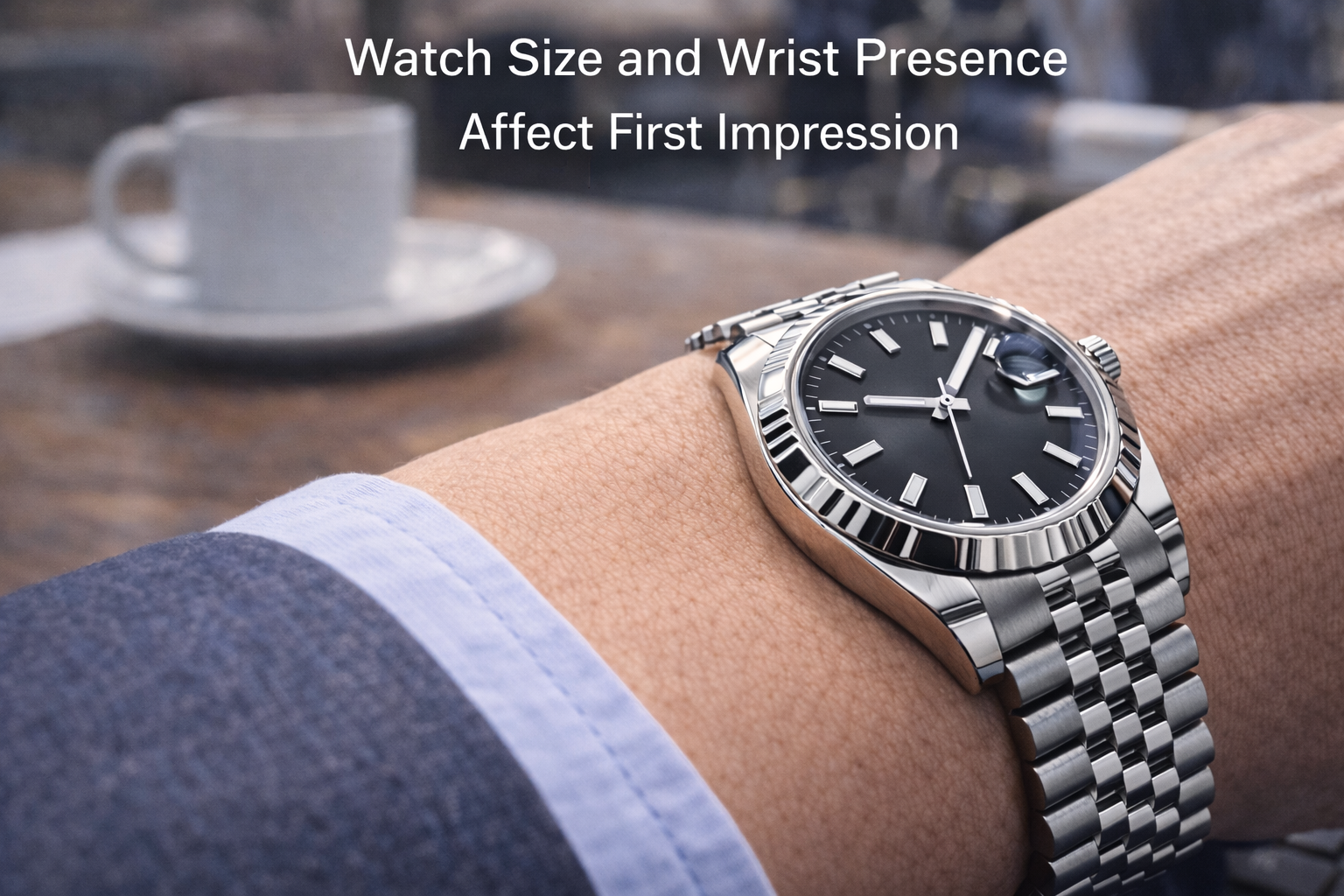
For most people, the first thing they notice is not the dial text or bracelet finishing.
It is size.
Not the exact millimeter size, of course. Just the visual impression:
- does the watch look too big?
- too small?
- balanced?
- heavy-looking?
- natural on the wrist?
This happens almost instantly.
A watch that feels oversized often gets noticed first for the wrong reason. It may dominate the wrist too much, look awkward with the cuff, or create a slightly forced presence. A watch that fits well usually feels easier and more expensive even before anyone consciously knows why.
This is exactly why a good guide to choosing the right watch size matters so much. People do not usually notice the number first. They notice whether the proportions look right.
2. The Overall Style Is Often More Noticeable Than the Details
After size, most people notice the general style of the watch.
Not the tiny parts. The category.
For example, they quickly sense whether the watch feels:
- sporty
- dressy
- bold
- minimal
- flashy
- understated
- modern
- classic
This happens very fast because the brain reads visual language before it reads details.
That is why two watches with similar quality can create very different first impressions. One may feel more refined because the style suits the setting better. Another may feel too aggressive for the office, too polished for casual wear, or too plain for the outfit.
In real life, this matters more than buyers often expect. People do not always notice why a watch feels right. They just notice that it does.
3. Dial Contrast and Readability Stand Out Quickly
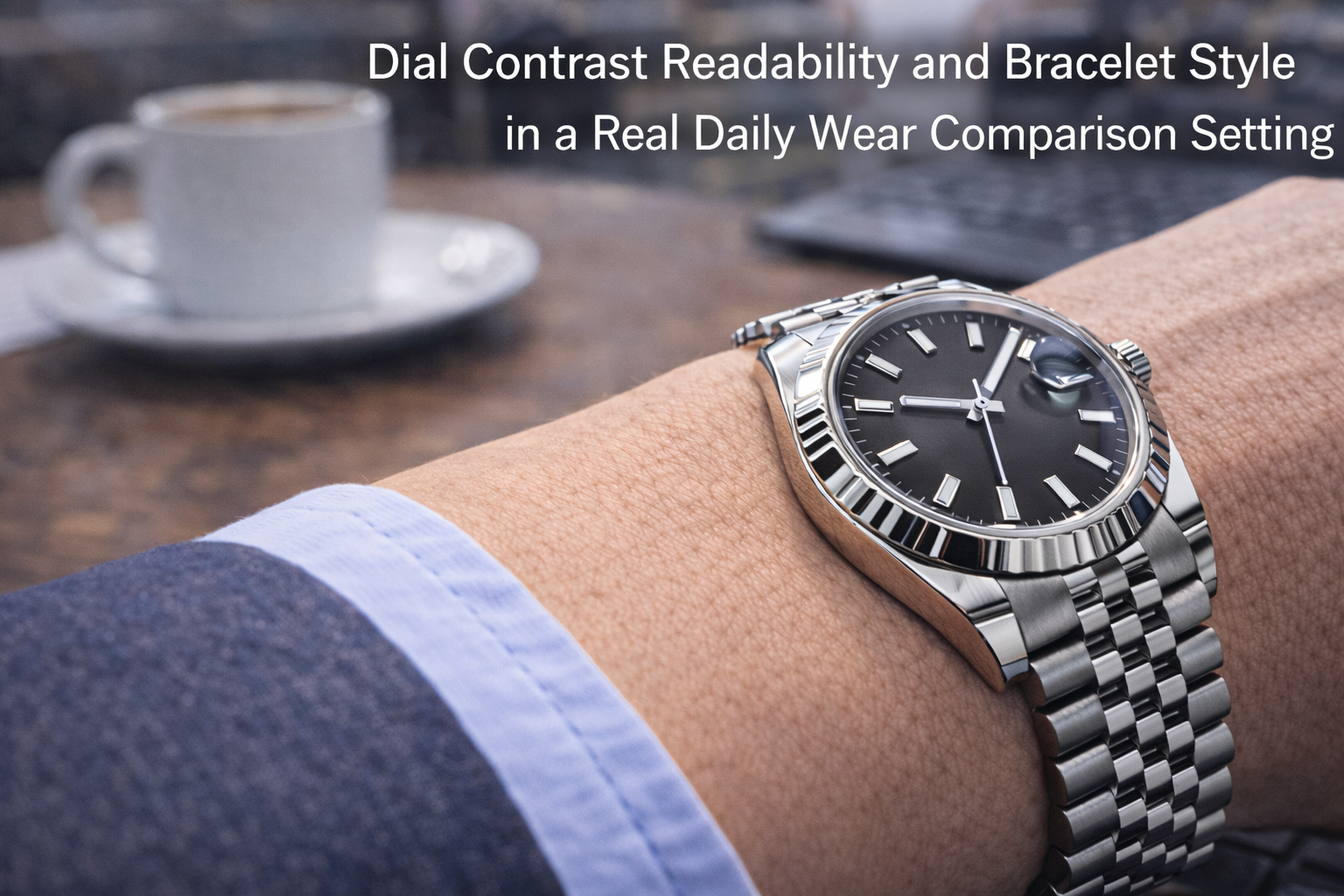
A watch dial does not need to be complex to get noticed. In many cases, it gets noticed because it is easy to read.
Strong dial contrast often helps first impression because the watch feels clearer and more confident at a glance. People may not literally say “this has better readability,” but they often respond more positively to a dial that feels visually controlled.
What stands out fastest tends to be:
- clean marker layout
- good contrast between dial and hands
- simple, readable design
- a dial that is visible even from an angle
- a color that suits the style of the watch
This is why a practical watch dial color and readability guide can be more useful than many beginners think. A watch that reads well often feels more premium in everyday life because it looks more complete and intentional.
4. Bracelet or Strap Changes the Overall Impression More Than Expected
A lot of people assume the case or dial is what gets noticed first, but in many daily situations the bracelet or strap changes the whole visual impression.
This is especially true when the watch is seen while the wrist moves.
People quickly pick up on whether the bracelet or strap feels:
- elegant
- sporty
- too shiny
- too casual
- too stiff
- well matched to the case
- proportionate to the overall design
A bracelet that looks smooth and well integrated usually helps the whole watch feel more expensive. A strap that looks cheap, too padded, or mismatched can lower the first impression even if the watch head itself looks good.
This also explains why some watches feel stronger in photos than in daily wear. In photos the head dominates. In real life, the bracelet or strap becomes part of the moving image.
5. Light Reflection Tells People More Than They Realize
This is one of the most underrated parts of first impression.
People often notice a watch because of the way it handles light, even if they cannot describe that in words.
For example:
- a polished bezel may catch the eye immediately
- a brushed case may feel more controlled and refined
- a crystal with too much glare may make the watch feel less sharp
- a dial that opens nicely under daylight may feel more premium
This is why first impression changes between environments. A watch that feels excellent indoors may look flatter outdoors. Another may suddenly look much more expensive when natural light reveals the quality of the case and dial.
That is one reason daily wear matters so much. First impression is not fixed. It changes with real use.
6. People Notice Whether the Watch Fits the Person
This is a bigger point than many buyers realize.
Most people do not separate the watch from the wearer. They notice the combination.
That means they instinctively react to questions like:
- does the watch suit the person’s wrist?
- does it match the clothes?
- does it feel natural in this setting?
- does it look like the wearer is comfortable in it?
A perfectly good watch can make a weaker impression if it feels out of place on the person wearing it. A simpler watch can look excellent if it feels natural and proportionate.
This is also why learning how to choose your first watch is often less about chasing one “best” model and more about understanding what actually works for your lifestyle and wrist.
7. Enthusiasts and Casual Observers Notice Different Things
This matters because buyers often overestimate how closely most people look.
A casual observer usually notices:
- the size
- the shine
- the general style
- the outfit match
- the overall impression
A watch enthusiast may later notice:
- case finishing
- dial print sharpness
- bracelet quality
- alignment
- thickness
- crystal behavior
- whether the design feels balanced
So yes, detail matters. But usually it matters more after the first impression, not before it.
That is why buyers who only think like enthusiasts sometimes miss how watches are actually experienced in daily life. Most people are not grading the watch. They are absorbing the impression.
8. Office, Travel, and Formal Wear Change What Gets Noticed
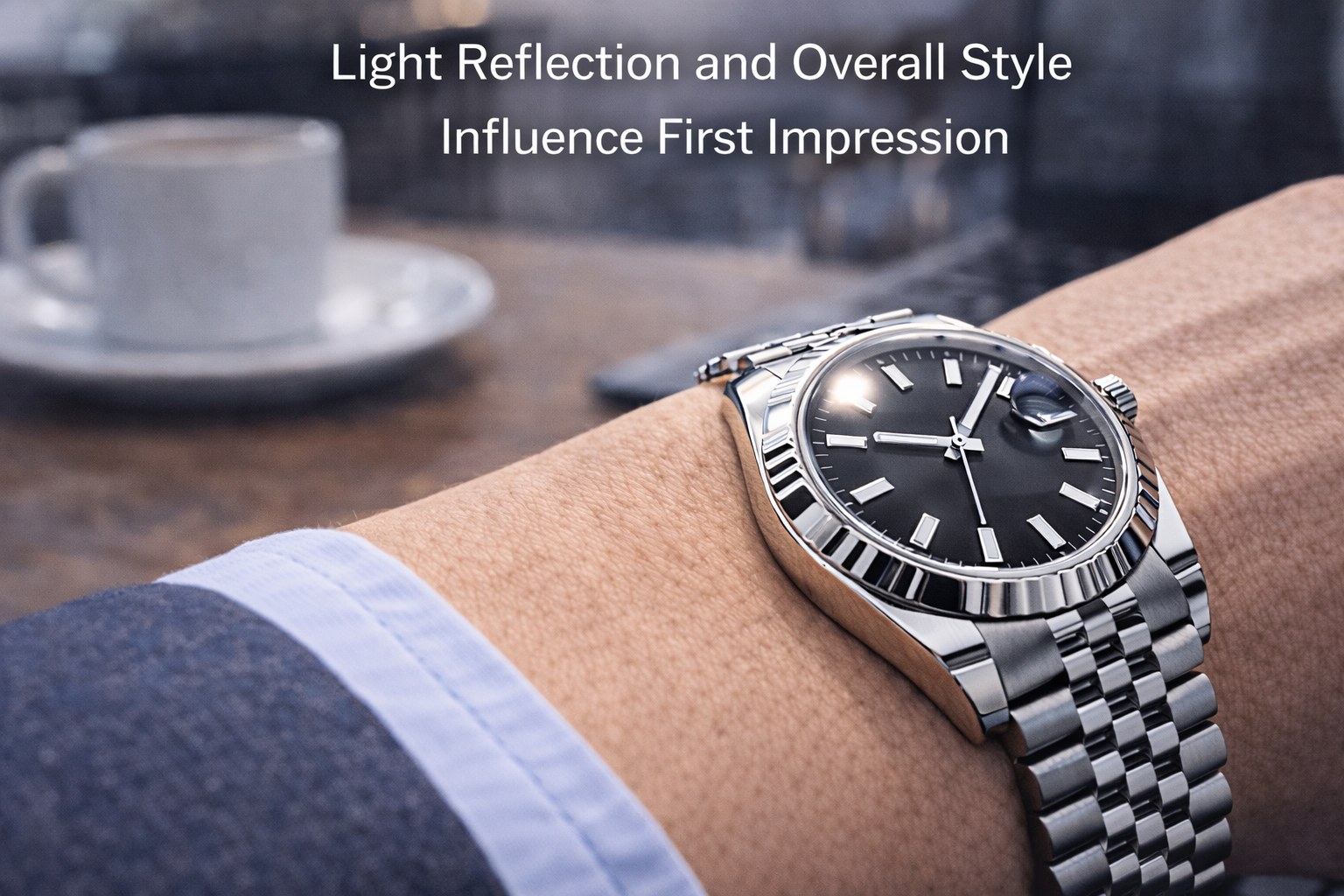
The setting changes first impression.
In an office
People usually notice balance, polish, and whether the watch feels too loud or appropriately refined.
During travel or commuting
They notice comfort, versatility, and whether the watch feels practical or slightly awkward.
In formal settings
They notice proportion, elegance, and whether the shine or design feels controlled.
In casual wear
They often notice personality, wrist presence, and how naturally the watch blends into everyday clothing.
This is why the “same watch” can feel different depending on where it is seen. A piece that feels perfect at dinner might feel too bright at work. One that looks calm in the office might feel slightly plain in a more expressive setting.
9. Small Details Usually Matter More Later, Not First
This does not mean small details are meaningless.
They matter — just usually not at the beginning.
After more exposure, people start to notice:
- whether the bracelet still feels smooth
- whether the dial stays pleasing over time
- whether the watch catches too much glare
- whether the finishing looks refined outdoors
- whether the thickness becomes annoying
- whether the watch still feels premium after repeated wear
This is where longer-term appreciation starts.
The first impression may come from size and style.
The lasting impression often comes from execution.
That is why some watches look strong for a moment but do not hold up over time, while others quietly become more impressive the more they are worn.
What Most Buyers Overthink
A lot of buyers spend too much time worrying about details that are not usually noticed first, such as:
- tiny print differences
- extremely small finishing variations
- very minor case dimension changes
- tiny marker alignment issues only visible close up
- details visible mostly in macro photography
These things can matter to enthusiasts, but in real-life first impression they are usually much less important than:
- fit
- style
- visibility
- comfort
- proportion
- light behavior
- overall coherence
That is why a watch can be technically “better” in one detail and still make a weaker first impression overall.
How to Judge First Impression More Realistically
If you want to judge what people will really notice first, ask better questions:
1. Does the watch look balanced from normal distance?
Not from a macro photo. From where people actually see it.
2. Does it fit the wrist naturally?
A watch that fits well usually wins first impression.
3. Is the style right for the setting?
A good watch in the wrong setting often makes a weaker impression.
4. Can the dial be understood quickly?
Clarity matters more than buyers think.
5. Does the watch feel natural on the person?
This usually matters more than one isolated design detail.
This is also why how to choose the right watch for everyday wear remains such an important question. Real life usually rewards the watch that feels easy, coherent, and natural.
Final Thoughts
What people notice first about a watch in real life is usually not the tiny detail buyers spend the most time worrying about.
They notice the size.
The overall style.
The way it fits the wrist.
The dial clarity.
The wrist presence.
The way it works with the person and the setting.
Later, they may notice the finer details. But first impression usually comes from balance and coherence, not microscopic perfection.
And in real life, that is often what matters most.
FAQ
What do most people notice first about a watch?
Usually the overall size, style, wrist presence, and how naturally it fits the wearer.
Do people notice dial details first?
Not usually. They are more likely to notice readability and overall dial contrast before small technical details.
Is bracelet quality part of first impression?
Yes. In daily wear, the bracelet or strap can change the whole visual impression faster than many buyers expect.
Do enthusiasts notice different things than casual observers?
Yes. Casual observers focus more on general impression, while enthusiasts often notice finishing, alignment, and detail later.
Does the setting change what people notice?
Very much. Office wear, travel, casual use, and formal occasions all change which watch qualities stand out first.
