
How to Choose the Right Watch for Your Wrist Size: A Complete Guide
How to Choose the Right Watch for Your Wrist Size: A Complete Guide
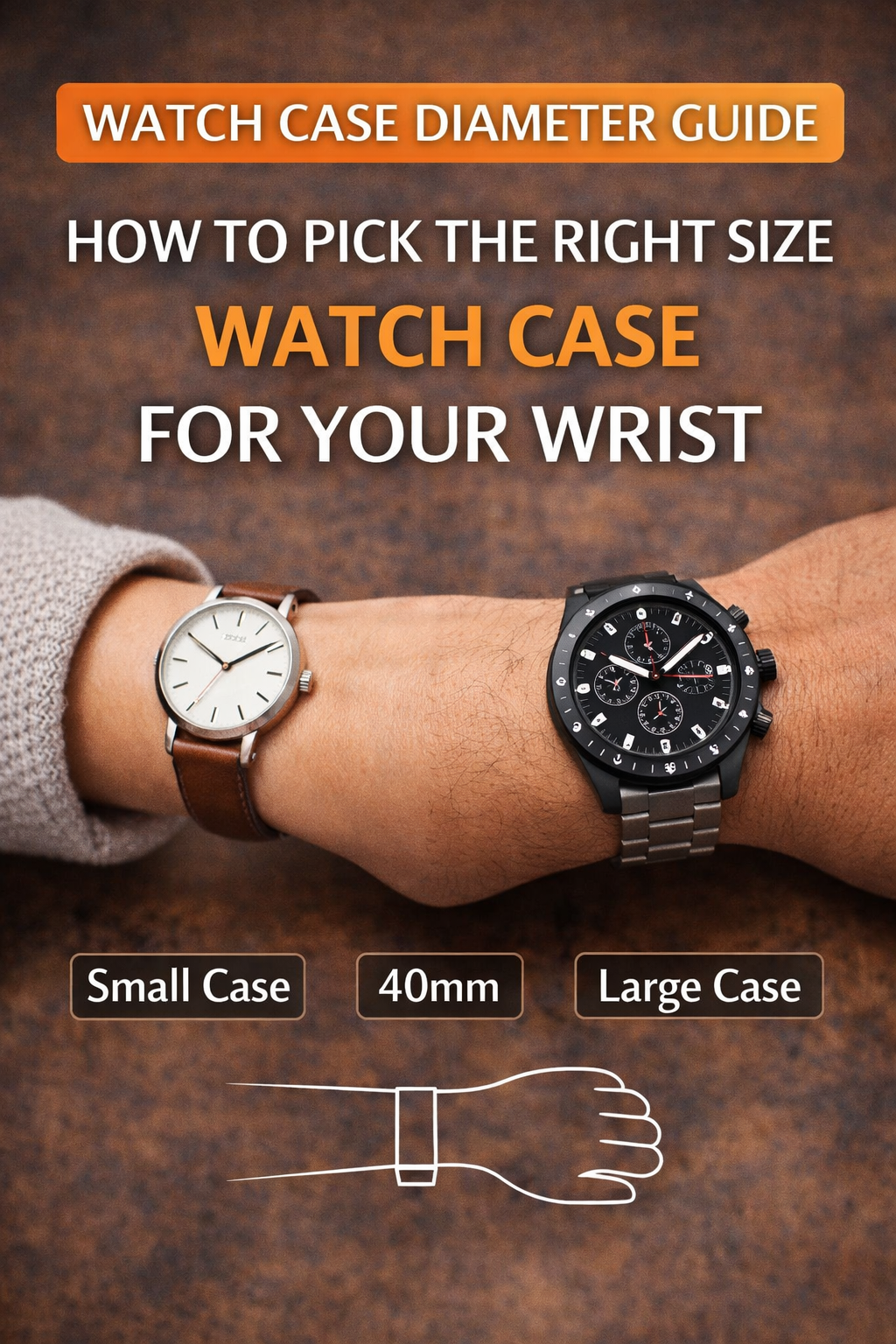
Quick Answer
To find the perfect watch for your wrist size, consider these key factors:
- Wrist Size: Measure your wrist to ensure the watch fits well.
- Watch Case Size: Smaller wrists should opt for a 34mm–38mm case, while medium to large wrists can wear 39mm–44mm.
- Strap Material: Consider comfort and style with leather, rubber, or metal bands.
- Fit: Make sure the watch is not too tight or loose, and the lug-to-lug measurement suits your wrist.
Why Wrist Size Matters When Choosing a Watch
Choosing the right watch for your wrist size is more than just picking a style you like. If the watch doesn't fit well, it can be uncomfortable and less stylish.
A watch that's too big or too small for your wrist can throw off the proportions, and in some cases, it may even look awkward. For example, a large, chunky watch can look out of place on a smaller wrist, while a tiny watch might feel lost on a larger wrist.
If you're still unsure how to measure your wrist and what size watch to get, our article on how to measure your wrist for the right watch will guide you through the process.
1. How to Measure Your Wrist Size
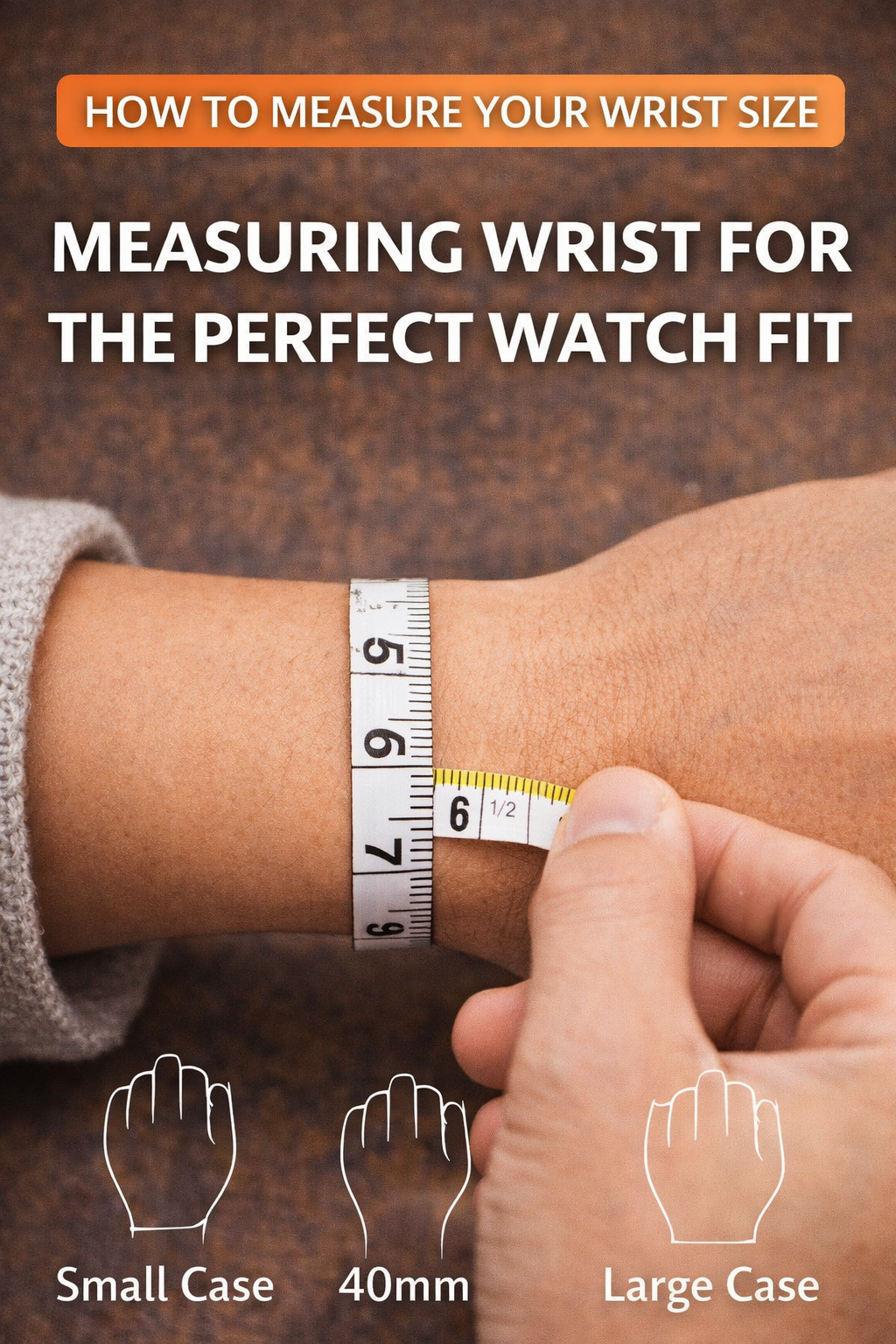
Before buying a watch, you need to measure your wrist accurately to determine the right watch size.
Step-by-Step Guide to Measuring Your Wrist
- Use a Flexible Tape Measure: Find a soft measuring tape or a piece of string.
- Wrap It Around Your Wrist: Measure just above the wrist bone, where the watch will sit.
- Mark the Length: Note where the string or tape overlaps.
- Measure the Length: Use a ruler to find the length in inches or centimeters.
Once you have your wrist size, you can compare it with watch case size recommendations to find the best fit. If you're unsure about sizing, check out our guide on how to measure your wrist for more details.
2. Watch Case Size: How Big Should It Be?
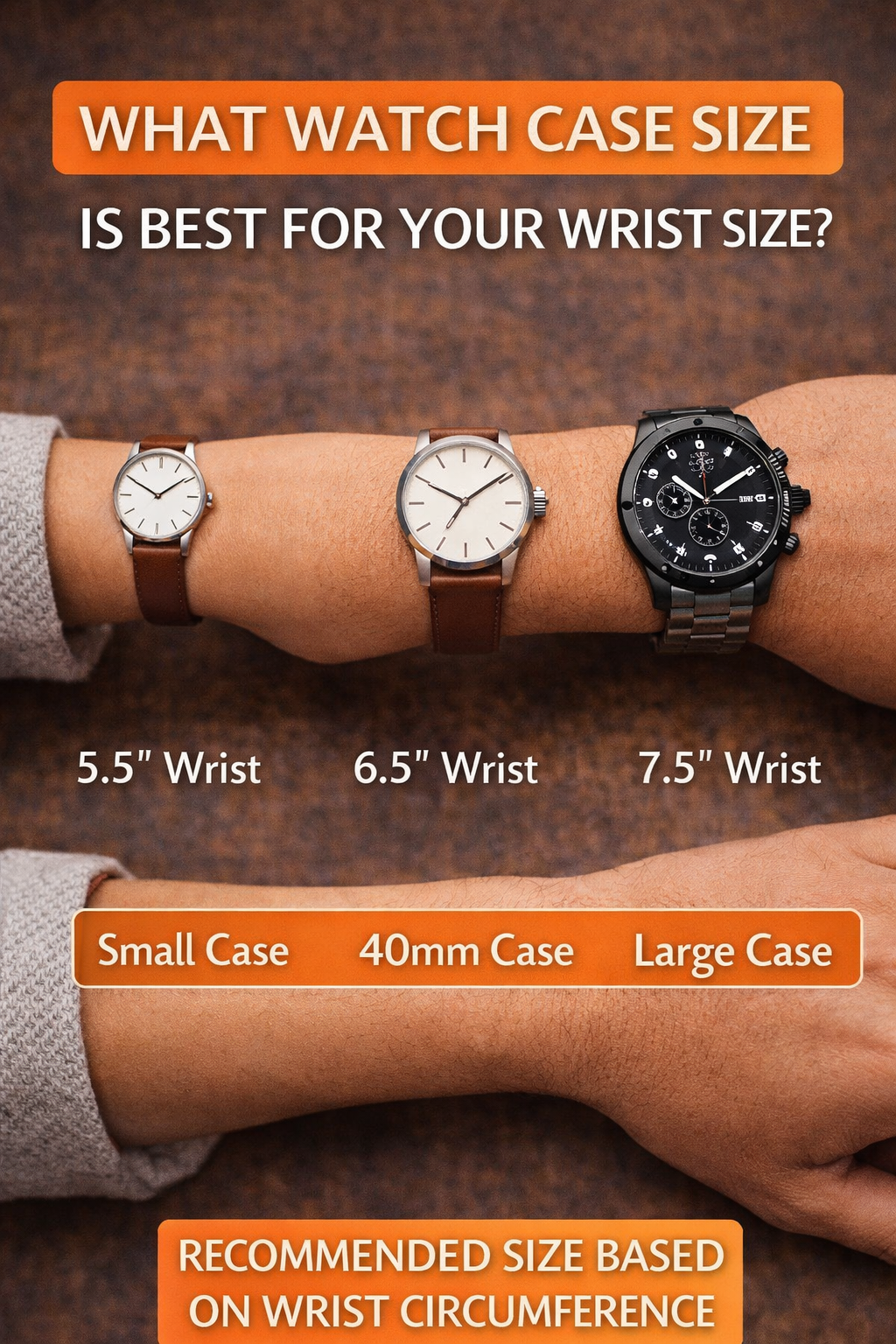
The case size of a watch is a major factor in determining its overall fit. Here's a breakdown of case sizes based on wrist measurements:
- Smaller Wrists (6.5 inches or less): Watches with a 34mm–38mm case diameter are ideal.
- Medium Wrists (6.5 inches to 7.5 inches): Watches with a 38mm–42mm case diameter fit well.
- Larger Wrists (7.5 inches or more): Watches with a 42mm–44mm case diameter are a better choice.
It's important to remember that the case size isn’t the only measurement. The lug-to-lug length (the distance between the lugs of the watch) is also crucial for how well the watch fits on your wrist. If you're unsure about the right size, our article on how to choose the right watch size explains this in detail.
3. Choosing the Right Watch Strap for Your Wrist Size
The watch strap plays a big role in comfort and fit. Different strap materials offer different levels of comfort, durability, and flexibility.
Leather Straps
- Pros: Leather straps are comfortable and stylish, perfect for formal occasions and office wear.
- Cons: Leather can absorb sweat and feel uncomfortable in hot weather. It may also wear out more quickly if exposed to moisture.
Rubber Straps
- Pros: Rubber straps are perfect for sports and outdoor activities. They are sweat-resistant, easy to clean, and very durable.
- Cons: Rubber is usually more casual and might not be appropriate for formal events.
Metal Straps
- Pros: Metal bracelets (like stainless steel) are sturdy, durable, and versatile. They can be worn in both casual and formal settings.
- Cons: Metal straps can feel heavy, especially during warmer months, and may need regular cleaning to avoid rust or tarnish.
If you're still unsure about which strap suits your needs, our article on best watch strap materials covers all the options in-depth.
4. The Importance of Watch Fit: Size and Comfort
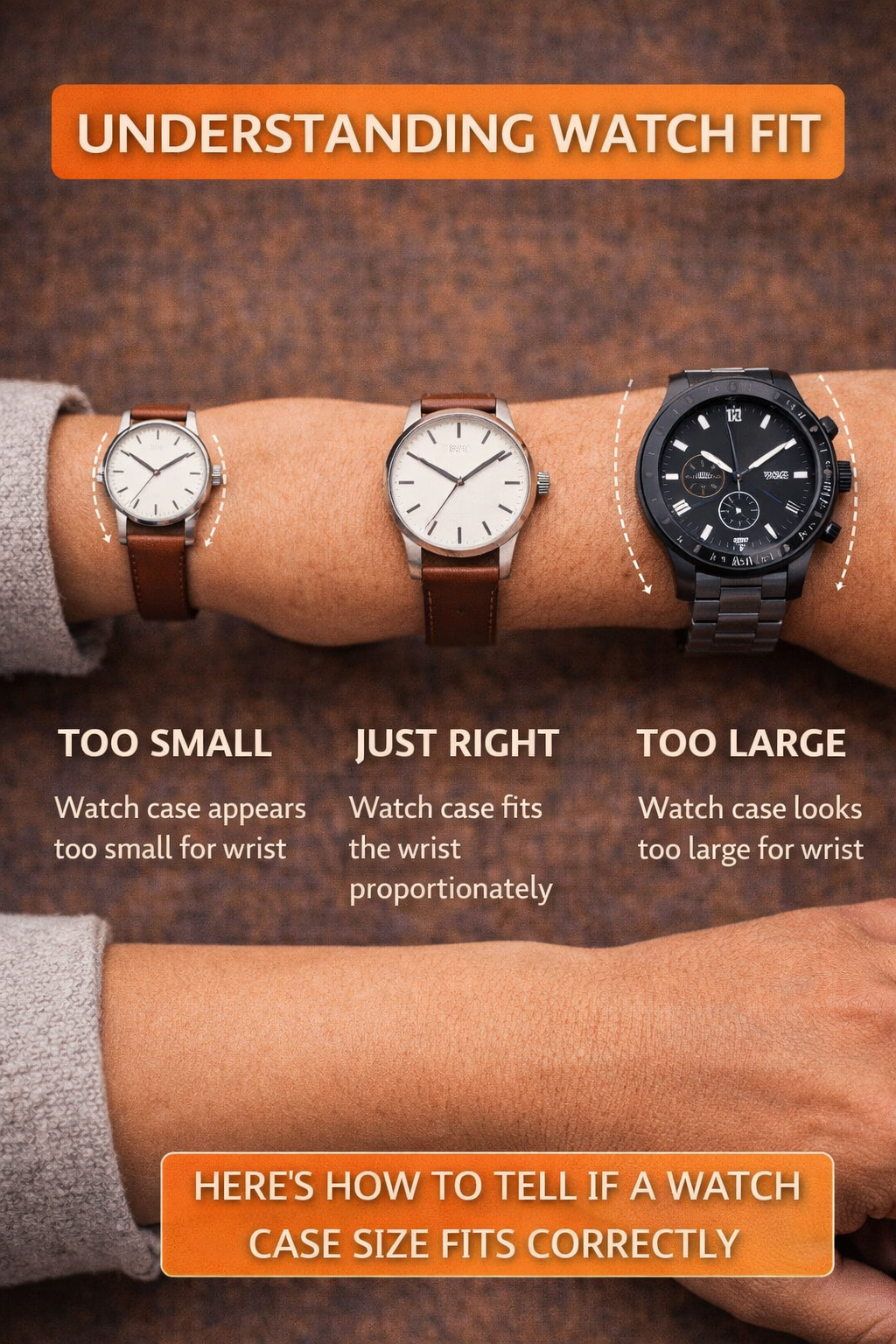
Choosing the right watch size is just the start. Ensuring that the watch fits comfortably is just as important.
Key Elements of Watch Fit:
- Lug-to-Lug Length: Make sure the watch fits your wrist without overhanging.
- Case Thickness: A thick case can feel too bulky on a small wrist, while a thin case might feel fragile on a large wrist.
- Strap Fit: The strap should fit snugly but comfortably, without pinching your skin or leaving marks.
To get the perfect fit, consider adjusting the bracelet length or swapping the strap for one that feels more comfortable.
5. Tips for Choosing the Right Watch for Your Wrist
Here are some additional tips to help you choose the right watch:
- Wrist Shape: People with narrow wrists might want to avoid overly large or thick watches, while those with broader wrists can typically handle bigger cases.
- Watch Style: A dress watch typically requires a smaller, thinner case, while a sportier, more rugged watch can be larger and thicker.
- Activity Level: If you’re active or outdoors often, choose a durable watch with a comfortable strap like rubber or nylon.
6. Best Watches for Small Wrists
If you have a smaller wrist, you’ll need to pick a watch that complements your wrist size without looking oversized. Here are some recommendations for smaller wrists:
- Case Size: 34mm to 38mm
- Strap Material: Leather or thin metal bracelets
- Style: Simple, minimal designs that don't overwhelm your wrist
Check out our article on best watches for small wrists for more options.
7. Best Watches for Large Wrists
If you have a larger wrist, you can wear larger watches without them looking out of place. Here’s what to look for:
- Case Size: 42mm to 44mm
- Strap Material: Metal or rubber straps work best for large wrists.
- Style: Bolder designs with more visual presence
For more information on finding the right size for large wrists, refer to our article on best watches for large wrists.
8. Common Mistakes to Avoid When Choosing a Watch
Choosing the right watch is not always straightforward. Here are some common mistakes to avoid:
- Ignoring Wrist Size: Don't choose a watch just because it looks good on someone else. Make sure it fits your wrist properly.
- Choosing Style Over Comfort: Comfort is key, especially if you plan to wear the watch daily.
- Underestimating Strap Comfort: A strap that looks great may not always be the most comfortable. Make sure to choose one that feels good.
If you're looking for tips on how to avoid these common mistakes, check out our article on how to avoid watch-buying mistakes.
Final Thoughts
Choosing the right watch for your wrist size is an essential part of making sure your watch looks great and feels comfortable. By understanding your wrist size, selecting the appropriate watch case diameter, and choosing the right strap material, you can ensure that your watch complements both your style and your daily activities.
Remember, there’s no one-size-fits-all when it comes to watches. What works for one person may not work for another. So take the time to find the perfect fit and enjoy the watch that suits you best.
Key Takeaways
- Measure your wrist size to ensure the watch fits comfortably.
- Choose a case size that complements your wrist, whether you have a small or large wrist.
- Pay attention to the strap material for comfort and style.
- Opt for a watch that fits your lifestyle and daily activities.
FAQ
Q: What size watch should I wear?
A: For smaller wrists, a 34mm–38mm case is ideal. For larger wrists, a 42mm–44mm case works best.
Q: How do I measure my wrist for a watch?
A: Use a flexible tape measure or string to measure the circumference of your wrist, just above the wrist bone.
Q: Can I wear a large watch on a small wrist?
A: It’s possible, but a larger watch might look out of proportion on a smaller wrist. A smaller case diameter (34mm–38mm) is usually the best choice for small wrists.
Q: Are metal bracelets comfortable for daily wear?
A: Metal bracelets can be comfortable, but they might feel heavy in hot weather. Adjust the bracelet to ensure it fits well.
