
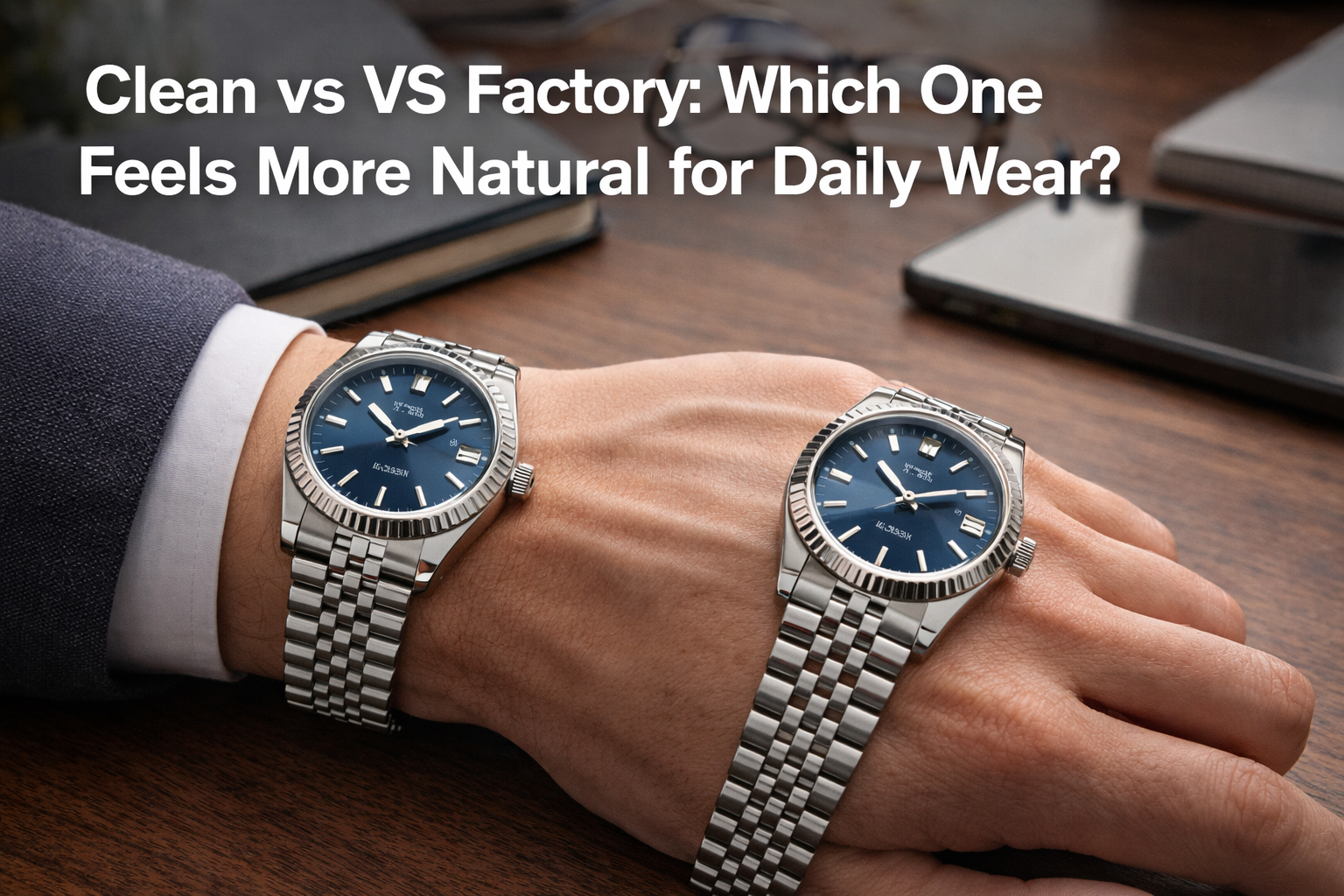
Clean vs VS Factory: Which One Feels More Natural for Daily Wear?
Clean vs VS Factory: Which One Feels More Natural for Daily Wear?
Quick Answer
If you are choosing between Clean and VS Factory for daily wear, the better option is usually not the one with the most talked-about spec on paper. It is the one that feels easier to live with over a full day.
For most buyers, “more natural for daily wear” usually comes down to five things: bracelet comfort, wrist balance, case feel, visual calm in normal lighting, and how quickly the watch stops demanding your attention. Some watches impress in close-up photos. Others simply wear better from morning to night. For a daily watch, the second one usually matters more.
Why This Comparison Matters More Than Many Buyers Expect
A lot of factory comparisons online become too technical too fast.
People start talking about movement details, specific finishing points, or tiny differences that only make sense when the watch is photographed from five inches away. That information is not useless, but it often misses the question most real buyers actually care about:
Which one feels easier to wear every day?
That matters because most people are not buying a watch to inspect it under a lamp every evening. They are wearing it to work, on errands, to lunch, in the car, at dinner, under sleeves, in normal indoor lighting, and during all the little movements that make up a real day.
That is why daily wear reveals things spec lists cannot.
If you have already read our article on why two similar watches can feel completely different in daily wear, this comparison goes one level deeper by focusing specifically on two factories that many buyers end up comparing closely.
“Natural for Daily Wear” Means More Than Just Comfortable
Comfort matters, but it is not the whole story.
A watch can be technically comfortable and still feel slightly unnatural in daily use. Maybe it sits a little too stiff on the wrist. Maybe the bracelet looks good but never quite settles. Maybe the watch feels visually sharper than you want for office use. Maybe it keeps reminding you that it is there.
A natural daily watch usually has a different quality. It blends into your routine. It works with your wrist rather than sitting on top of it. It still looks good when you glance at it, but it does not feel overly performative.
That is often where Clean and VS start separating for different buyers.
The First Impression vs the Real Impression
In the first 10 minutes, both can feel strong.
This is especially true if you are looking at a well-known model and both versions are visually appealing. At first, most people notice the broad things:
- dial color
- overall sharpness
- bezel impression
- bracelet style
- how expensive the watch seems at a glance
That is normal.
But daily wear is not judged in the first 10 minutes. It is judged after typing for two hours, driving, walking outside, resting your wrist on a desk, adjusting a cuff, and checking the time twenty times without thinking about it.
That is where the “real impression” starts replacing the first impression.
And the real impression is usually more important.
1. Bracelet Feel: The Part You Notice First Over Time
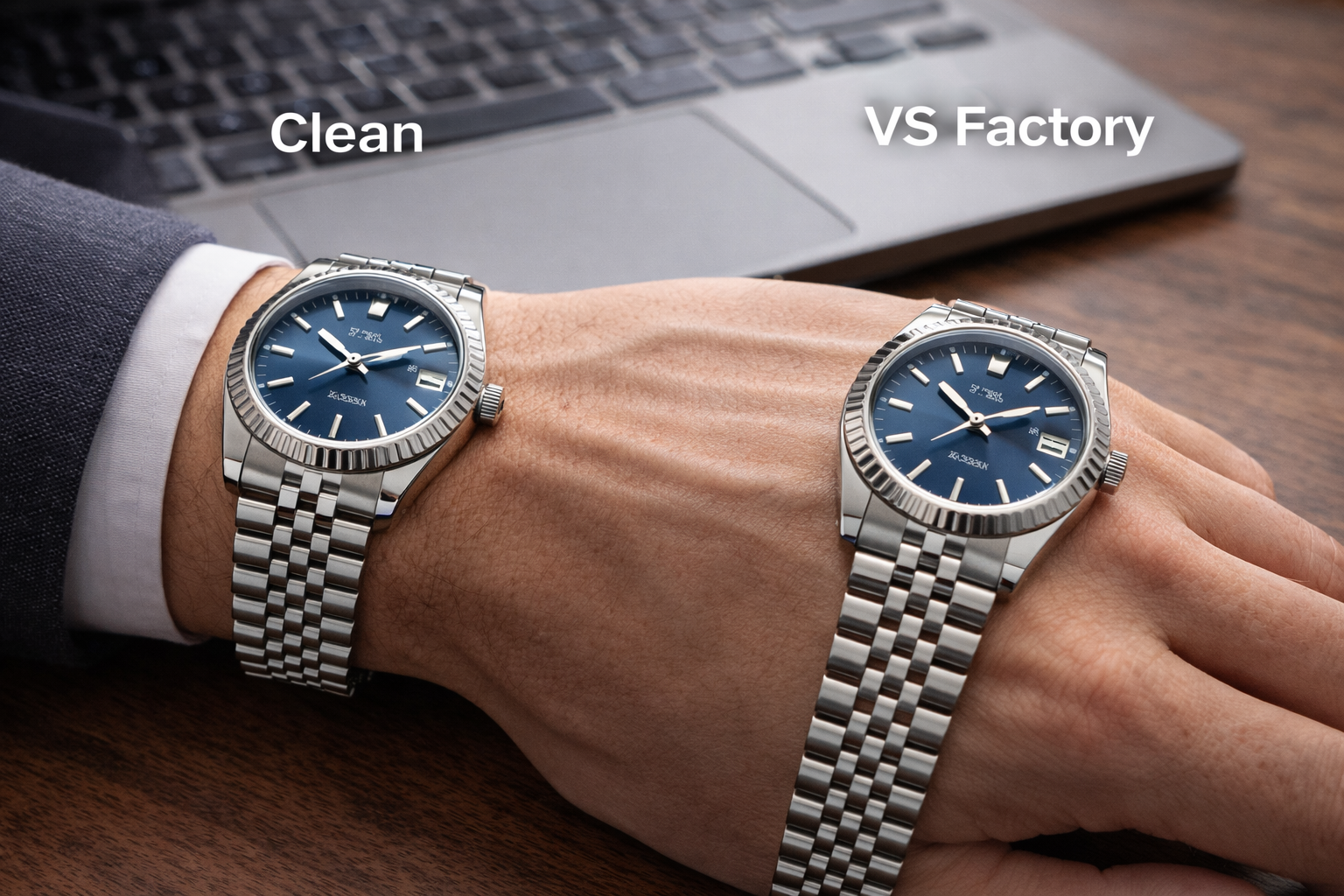
For most buyers, this is where daily-wear differences show up first.
At a glance, two bracelets may seem close enough. But after a few hours, the feel of the bracelet becomes hard to ignore. The links either move with your wrist or they never quite disappear. The watch either settles naturally or keeps shifting in a way that makes you aware of it.
When people say one factory feels “better for daily wear,” they are often talking about this, even if they do not phrase it clearly.
Here is what you want to pay attention to:
- Does the bracelet drape naturally?
- Does it feel smooth when your wrist bends?
- Does it pinch, resist, or feel slightly rigid in motion?
- Does it stay balanced when your arm is moving, not just when standing still?
A lot of buyers focus on how premium a bracelet looks, but looking premium and feeling natural are not always the same thing. That is also why our article Does a Watch on a Bracelet Always Look More Expensive Than One on a Strap? is related, but not enough on its own. For daily wear, comfort and articulation matter just as much as appearance.
In practical terms:
- Buyers who prefer a bracelet that feels more fluid and less distracting across a full workday often care more about daily wear comfort than photo impact.
- Buyers who focus heavily on sharp visual impression may initially prioritize appearance, then later realize bracelet feel matters more than expected.
That shift happens all the time.
2. Balance on the Wrist Matters More Than Raw Weight
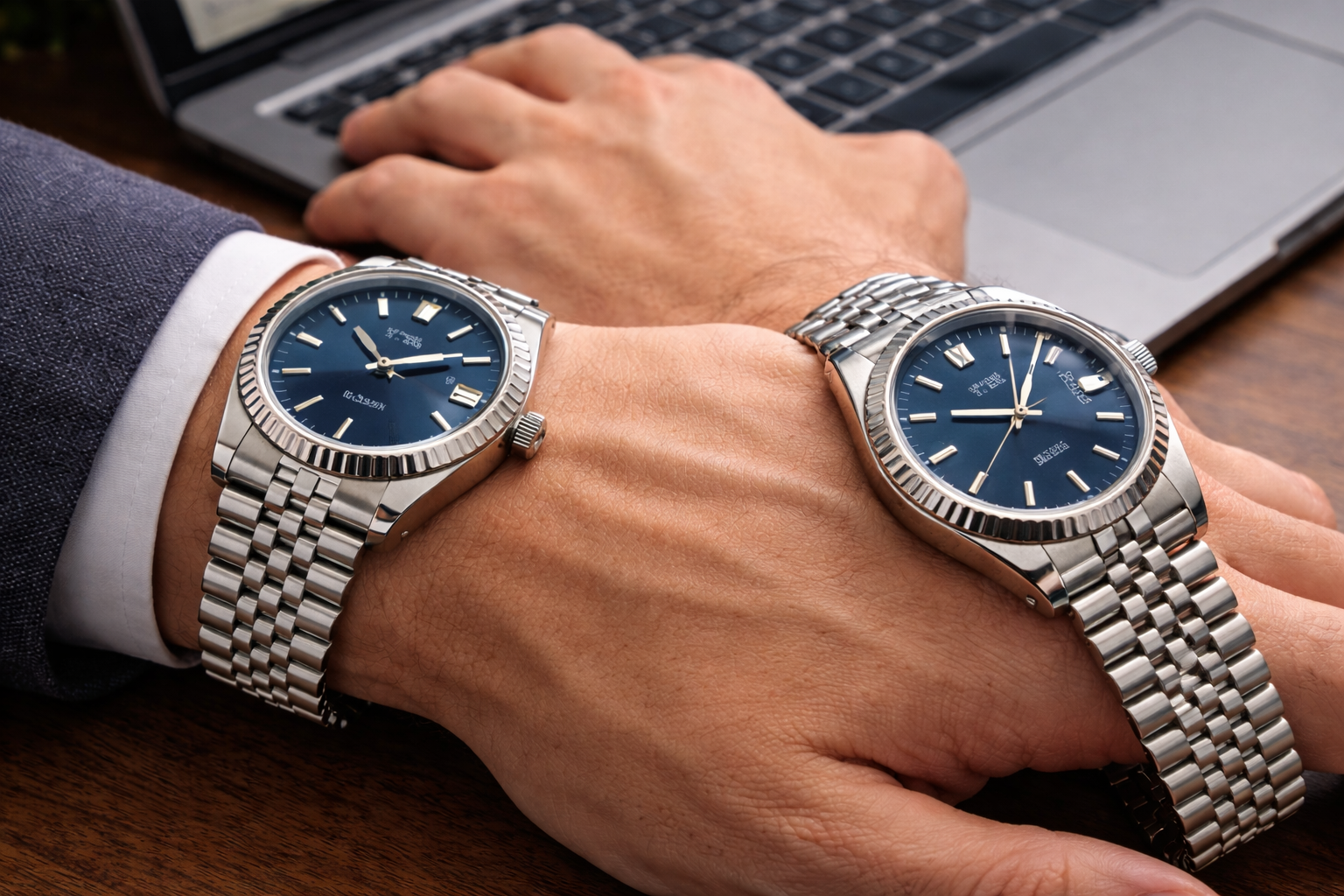
A watch can feel fine in the hand and still feel wrong on the wrist.
That is because balance matters more than total weight. If the watch head feels slightly dominant, or if the bracelet does not counter it well, daily use becomes more noticeable. The watch may not feel “heavy,” but it can feel less settled.
You notice this in ordinary situations:
- typing on a laptop
- reaching for a bag
- driving with one hand on the wheel
- standing and walking for long periods
- wearing the watch under a shirt cuff
A more natural daily-wear watch usually feels centered. It does not keep rotating, shifting, or asking for adjustment. It stays where it should and moves in a predictable way.
If you are comparing Clean and VS, do not only ask which one looks stronger in macro shots. Ask which one is more likely to feel balanced after six or eight hours. That answer usually matters more in real life.
This also connects closely to what makes a watch comfortable all day, because a watch that feels good for 15 minutes is not automatically a good all-day watch.
3. Case Feel and Edge Behavior in Daily Use
This is one of the least discussed but most important parts of daily wear.
A watch can look clean and precise from above but still feel slightly off on the wrist because of how the case meets the skin, the way the lugs sit, or how the edges behave during constant movement.
You usually notice this in office use more than anywhere else.
At a desk, your wrist is bending constantly. The case touches the skin differently. The cuff comes in and out. The watch rests against hard surfaces. Small differences in case shape and finishing become more noticeable over time.
A watch that feels natural in daily wear usually has:
- smoother-feeling transitions
- less distracting edge presence
- better wrist contact during movement
- a case shape that feels stable without feeling bulky
This is where buyers sometimes discover that what looked “crisper” in a product photo does not always feel better on the wrist.
If case feel is one of your priorities, you may also want to revisit Does Watch Thickness Matter More Than Case Size?, because a watch that wears naturally is often helped by proportions, not just finishing.
4. How the Watch Behaves Under Normal Indoor Light
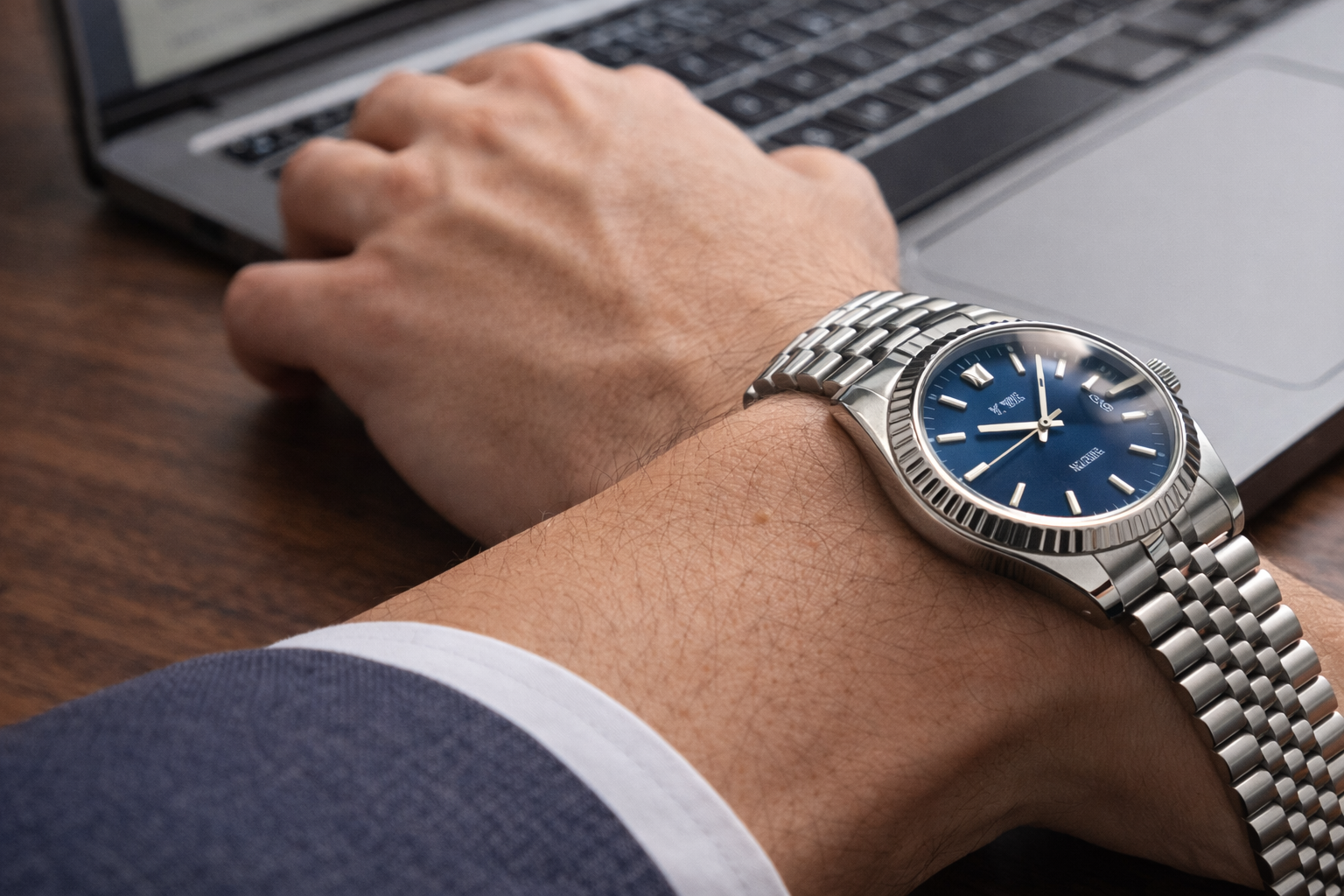
Some watches are very easy to admire in edited photos and less satisfying in normal daily conditions.
This matters more than people think.
A daily watch spends much of its life under:
- office lighting
- indoor café light
- cloudy outdoor light
- evening restaurant light
- quick glances in mirrors, elevators, and car interiors
That is where a watch either feels calm and convincing, or a little too sharp, too flat, too reflective, or too eager to impress.
When comparing factories, this is one of the most honest tests you can apply:
Which one still looks right when the lighting is average and nobody is trying to “present” the watch?
A more natural daily-wear watch usually has a visual rhythm that feels easy. It does not rely only on strong angles or strong reflections. It still looks coherent during normal life.
This is very close to the point we explored in Why Some Replica Watches Look Fine in Photos but Less Convincing in Real Life. Good daily wear is not about winning the first photo. It is about still feeling right in the fifth hour of an ordinary day.
5. Which One Stops Demanding Your Attention Faster?
This may be the best daily-wear test of all.
A watch that feels natural usually disappears in the best possible way. Not visually disappears, but mentally disappears. You stop adjusting it. You stop noticing little discomforts. You stop thinking about how it is sitting. It becomes part of your day.
A watch that is slightly less natural keeps interrupting the experience:
- the bracelet reminds you of itself
- the case never fully settles
- the watch feels a little louder than you want indoors
- small issues start becoming noticeable by late afternoon
That does not mean it is a bad watch. It just means it may not be the easiest one for true daily wear.
This is the difference between a watch that looks impressive and a watch that becomes easy to trust.
A Real-Life Comparison: Office, Commute, Weekend Use
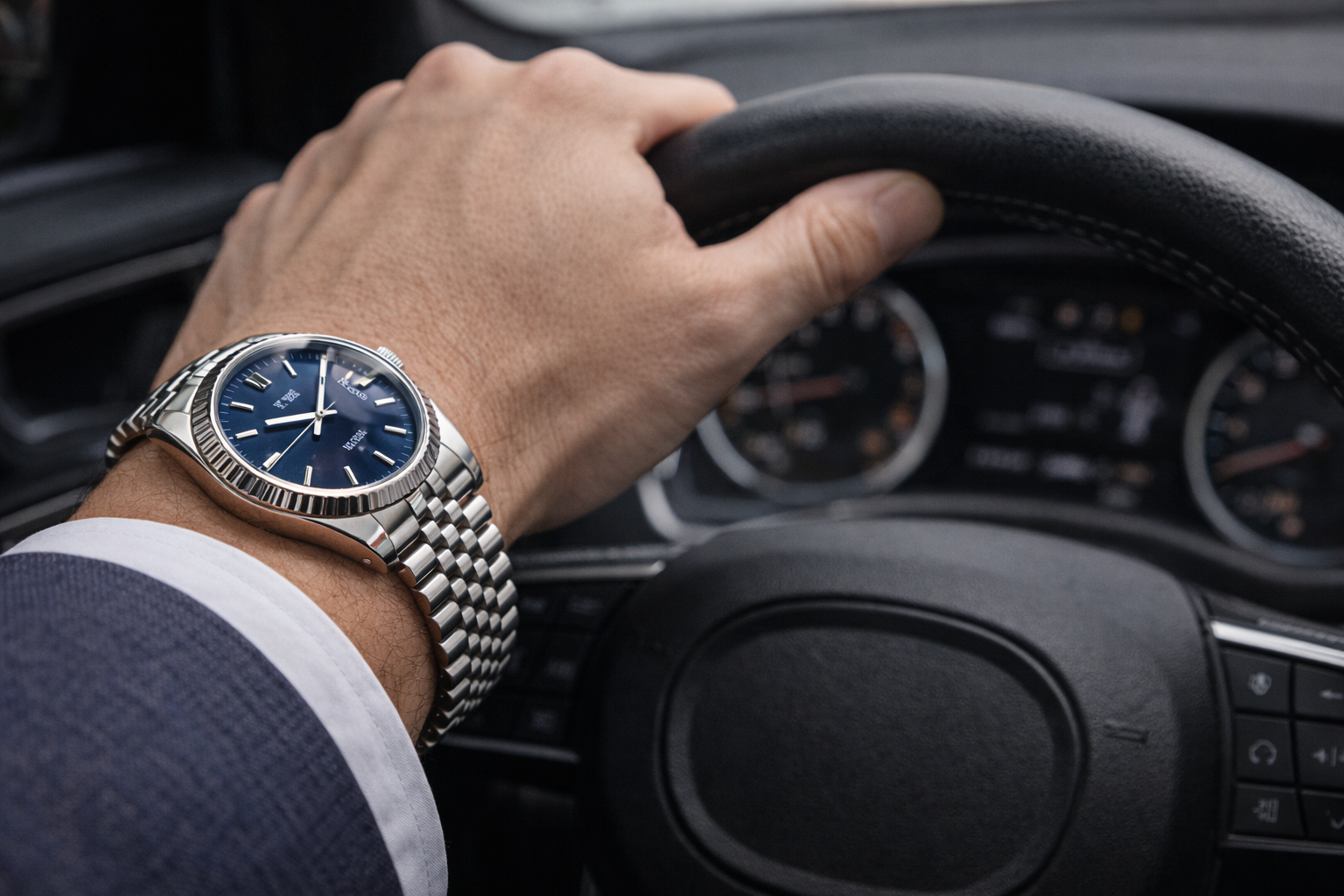
Let’s make this practical.
Office day
If you wear the watch from morning meetings to afternoon desk work, the better daily-wear choice is usually the one that stays comfortable under repeated wrist movement and still looks balanced under indoor lighting. This is where bracelet feel and case comfort matter more than spec talk.
Commute
On the train, in the car, or walking outside, you begin noticing whether the watch feels stable or slightly restless on the wrist. Small differences in balance become more obvious during motion than during still photography.
Weekend casual use
This is where the best daily-wear watch often proves itself. It should still feel right with a T-shirt, knitwear, or more relaxed clothing. A watch that only works in a “posed” outfit may not be the most natural daily choice after all.
That is also why articles like How to Choose the Perfect Everyday Watch for Men and Are Simple Watch Designs More Versatile? connect so well with this comparison. A daily watch has to succeed in more than one setting.
So Which Type of Buyer Usually Prefers Clean?
Without turning this into a spec-heavy argument, the buyers who often lean toward Clean for daily wear usually care about:
- a crisp overall visual impression
- a watch that feels neat and immediately convincing
- a balanced everyday look that works well in office and casual settings
- a design presence that feels familiar and easy to style
For these buyers, “natural for daily wear” often means the watch feels straightforward, wearable, and visually settled without asking them to overthink it.
Which Type of Buyer Usually Prefers VS?
Buyers who lean toward VS for daily wear often care more about:
- wearing feel over photo-first impact
- subtler refinements that show up through use
- how the watch behaves once the day actually starts
- a more experience-based sense of quality rather than a first-glance effect
For these buyers, the watch does not need to shout immediately. It just needs to feel increasingly right as the hours pass.
What Buyers Get Wrong When Comparing Clean and VS
The most common mistake is treating the comparison like a forum checklist.
People compare:
- one still image
- one close-up video
- one dealer description
- a few repeated opinions from comment sections
And then they assume the answer is settled.
But daily wear is not a checklist. It is a long series of small interactions. The better choice is often the one that performs quietly across dozens of ordinary moments, not the one that wins the loudest first impression.
If your priority is daily use, your comparison should reflect daily life.
Not just zoomed-in details.
How to Choose More Accurately for Yourself
If you are deciding between Clean and VS for everyday wear, ask yourself these questions:
1. Do I care more about immediate visual impression or long-wear ease?
This is the biggest divide between buyers.
2. Will I wear this mostly indoors, at work, and under sleeves?
If yes, balance and comfort matter even more.
3. Am I sensitive to bracelet feel?
Some buyers notice this immediately. Others barely care.
4. Do I want the watch to feel sharper, or quieter and easier?
Neither preference is wrong, but they lead to different choices.
5. Am I buying for photos, or for real life?
Be honest here. It will save you time.
Final Thought
When people compare Clean and VS Factory, they often expect the answer to come from specs, finishing talk, or close-up comparisons.
But for daily wear, the more useful question is simpler:
Which one feels easier to forget on your wrist in the best way?
The more natural daily-wear watch is usually the one that stays balanced, feels comfortable, works in normal indoor light, and becomes less noticeable as the day goes on. That is the watch most people end up enjoying more over time.
A watch you wear every day should not only impress you when you first put it on.
It should still feel right by the time the day is over.
FAQ
Is Clean or VS better for daily wear?
There is no universal answer. The better daily-wear choice depends on whether you prioritize first-glance visual impression or long-wear comfort and natural wrist feel.
What matters most in a daily-wear factory comparison?
Bracelet comfort, balance, case feel, and how the watch looks in normal indoor light usually matter more than minor spec differences.
Why do some factory differences feel bigger after a few hours?
Because long wear reveals details that short comparisons miss, especially bracelet movement, wrist balance, and how the case behaves during repeated motion.
Should I choose based on macro photos?
Not by themselves. Macro photos can help, but they do not tell you how the watch feels after a full day of office, commute, and casual use.
Does a more visually impressive watch always feel better daily?
No. Some watches create a stronger first impression but feel less natural over time.
What is the best way to judge which one suits me?
Think about your actual use: office wear, sleeves, wrist sensitivity, lighting conditions, and whether you care more about lived experience or visual punch.
