
Why Two Similar Watches Can Feel Completely Different in Daily Wear A lot of watches look almost th
Why Two Similar Watches Can Feel Completely Different in Daily Wear
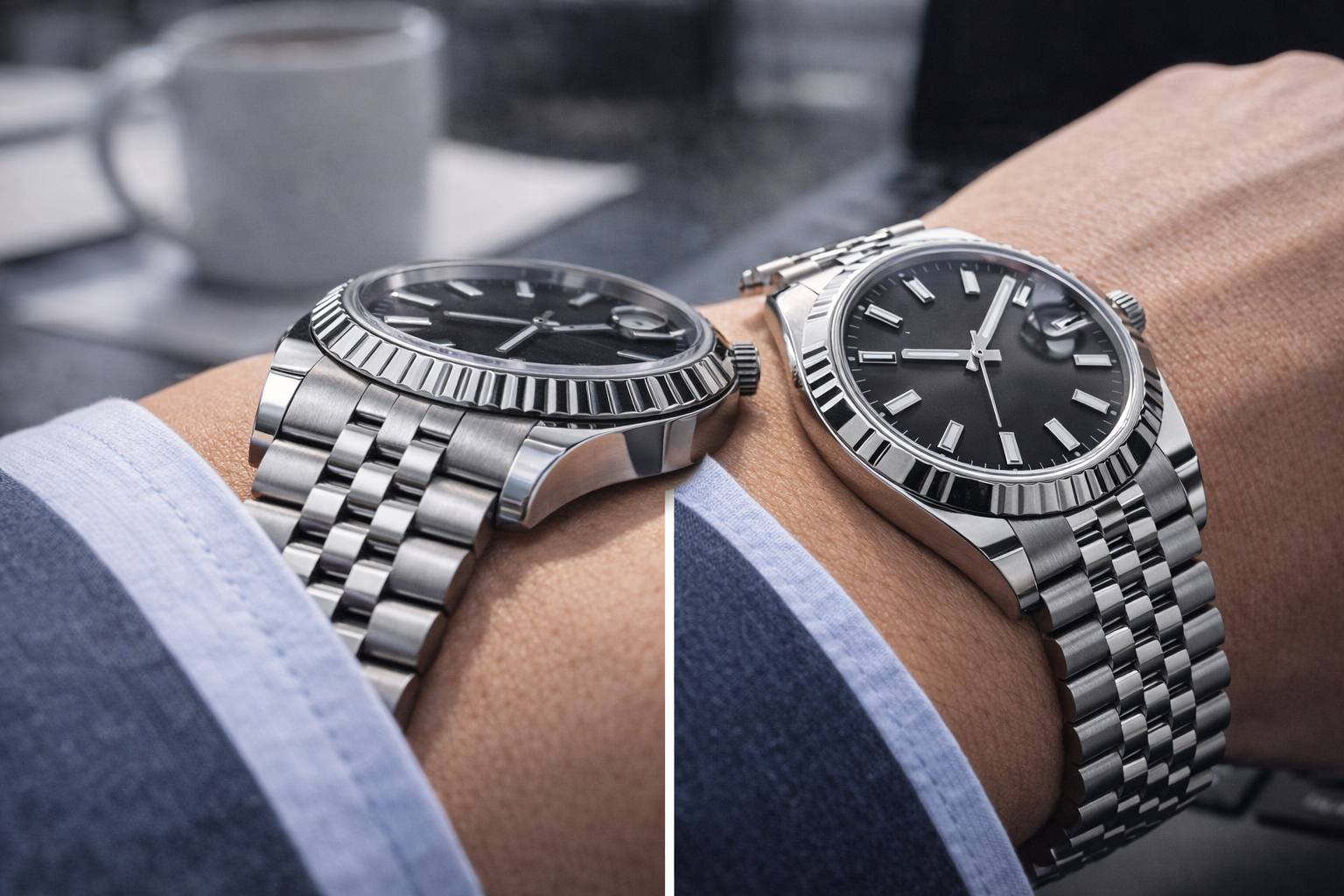
A lot of watches look almost the same at first glance.
The dial color is similar.
The case shape feels close.
The bracelet style looks nearly identical.
Even the size on paper might only be one or two millimeters apart.
But then one goes on the wrist and immediately feels right, while the other somehow feels awkward, heavier than expected, less comfortable, or just less convincing over a full day.
That difference surprises a lot of buyers.
On paper, two watches can seem almost interchangeable. In real life, they often are not. Once you wear them through an actual day — commuting, typing in the office, walking outside, moving under a shirt cuff, sitting at dinner, or traveling — small design choices become much easier to notice.
That is why this question matters: why can two watches that look so similar end up feeling completely different in daily wear?
If you have already read our guide to choosing the right watch size or our article on how to choose the right watch for everyday wear, you already know that daily comfort is rarely decided by one big feature. It usually comes from several small things working together, or not working together.
Quick Answer
Two similar watches can feel completely different in daily wear because small differences in proportion, thickness, weight balance, bracelet flexibility, case shape, crystal glare, and wrist fit often change the experience more than buyers expect. In photos these details may look minor, but during real use they can completely change comfort, confidence, and how refined the watch feels.
Why This Happens More Often Than People Expect
Many buyers assume that if two watches look close, they should wear close too.
That would make sense if watches were judged only from the front. But daily wear is not front-facing and still. A watch is worn while moving. It shifts when you walk, catches different light, slides slightly with sweat, disappears under a cuff, or presses differently against the wrist during long desk hours.
That is when differences start to appear.
In daily life, a watch gets judged in moments like these:
- while typing on a keyboard
- while driving or commuting
- while reaching into a jacket pocket
- while adjusting a shirt sleeve
- while walking outside in warm weather
- while wearing the same watch for eight to ten hours
This is exactly why practical wear matters more than many product pages suggest. Two watches may look close in a still image but perform very differently in ordinary life.
1. Case Shape Often Matters More Than Diameter
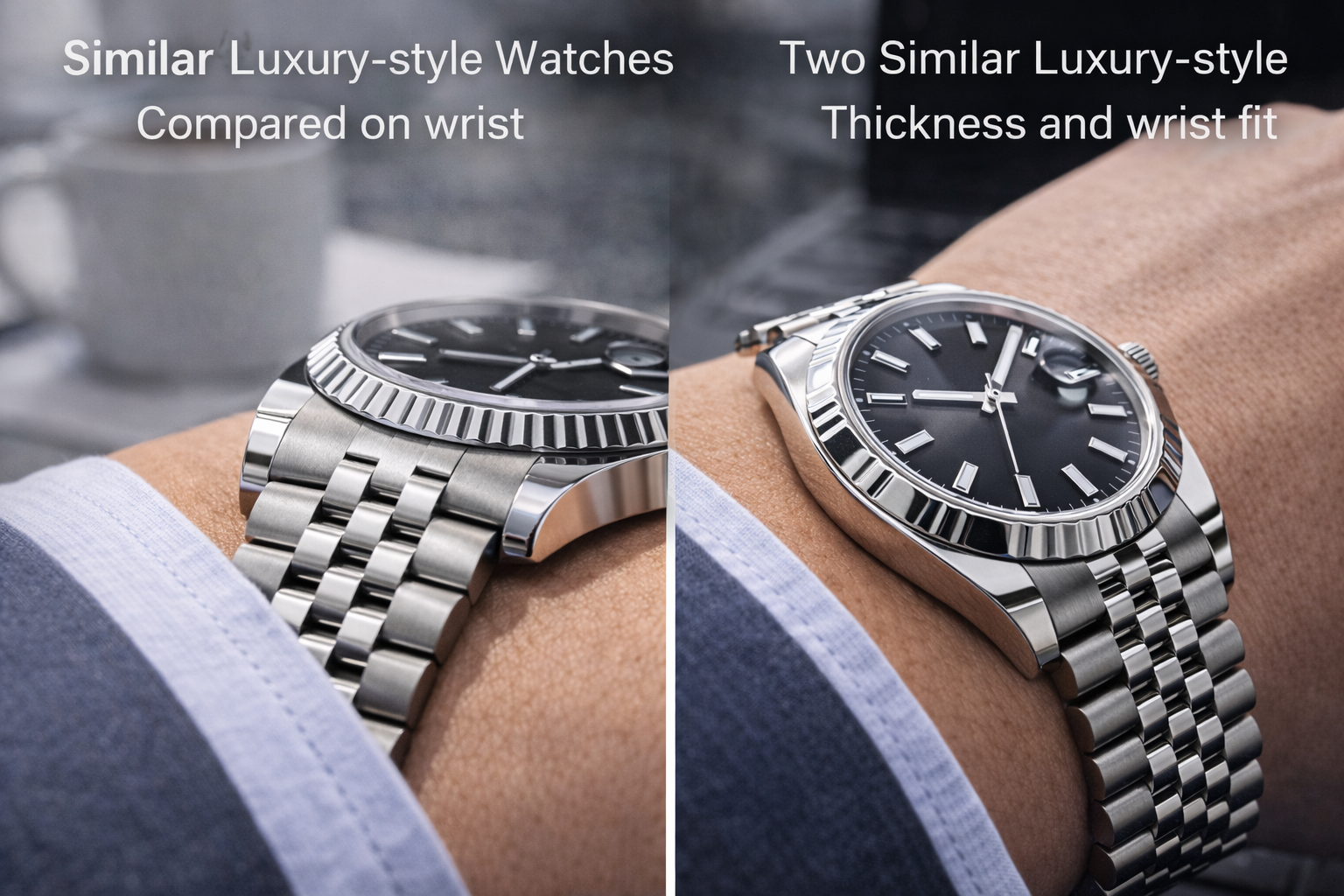
A lot of people focus on case size first, but case shape often changes daily wear more than the diameter number itself.
Two watches can both be 40mm and still feel very different if:
- one has longer lugs
- one has a flatter case back
- one has sharper edges
- one spreads wider across the wrist
- one has a more rounded case profile
This becomes especially obvious on medium or smaller wrists, where shape changes whether the watch feels natural or slightly too wide.
A round, softer case often feels easier in daily use because it sits more naturally and creates less visual tension. A more angular or stretched case can feel more aggressive even if the measurement sounds manageable.
That is why any serious watch size guide: case diameter, lug-to-lug, and thickness matters so much. People often think size is one number, but daily wear is really about shape plus proportion.
2. Thickness Changes Comfort Faster Than Many Buyers Realize
Two watches can look similar from the front and still feel completely different because of thickness.
This is one of the most common reasons a watch feels “wrong” after a few hours.
A slightly thicker watch may:
- sit higher on the wrist
- hit the cuff more often
- feel heavier during typing
- shift more during walking
- seem bulkier than expected in office wear
A slightly thinner watch, even with a similar design, often feels easier and more refined in daily use.
This is why watches that look great in product photos do not always feel great on the wrist. Thickness changes not only comfort, but also how polished the watch feels with real clothing. In smart-casual or office settings, that difference becomes obvious very quickly.
3. Bracelet Feel Can Change the Whole Experience
This is one of the biggest hidden differences.
Two watches may have bracelets that look almost identical in photos, but in real life one may feel smooth, quiet, flexible, and balanced, while the other may feel stiff, noisy, slightly sharp, or less secure.
People usually notice this during:
- all-day desk work
- warm weather
- commuting
- wrist movement while walking
- long periods without taking the watch off
A better bracelet usually:
- follows the wrist more naturally
- balances the case better
- feels smoother during movement
- creates fewer pressure points
- makes the watch feel more complete
A weaker bracelet often makes the whole watch feel cheaper, even if the dial and case still look good. That is why so many buyers are surprised when one watch feels much more premium than another that looked similar online.
4. Weight Balance Matters More Than Total Weight
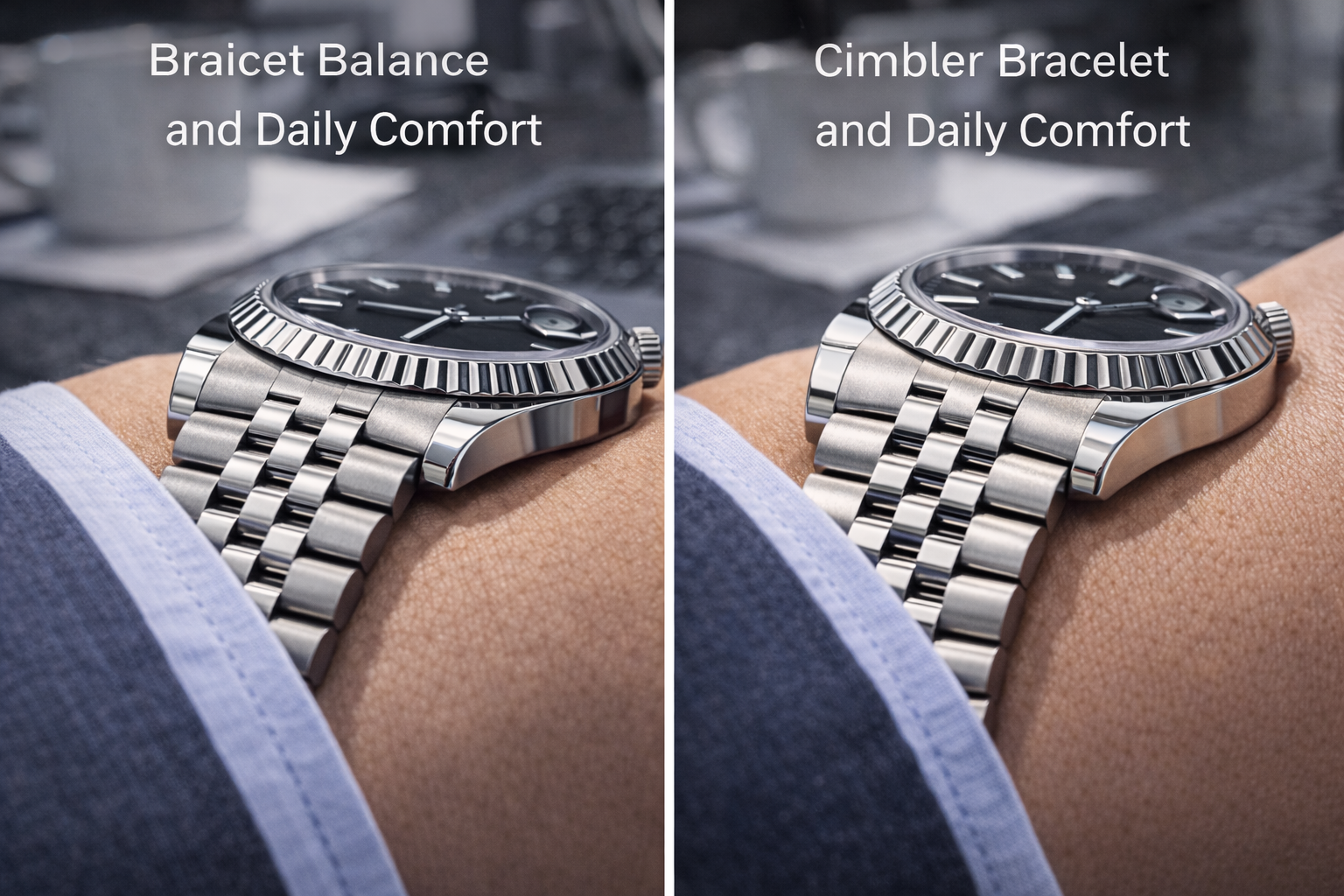
A lot of beginners assume the heavier watch should feel better or more expensive.
That is not always true.
What matters more is whether the weight feels balanced.
A watch can have satisfying weight and still feel uncomfortable if:
- the case is top-heavy
- the bracelet is too light for the head
- the watch rotates too easily on the wrist
- the center of gravity sits awkwardly
- the case shape makes the mass feel concentrated in one area
A well-balanced watch often feels better than a heavier one because it stays more stable through the day. That stability creates confidence, and confidence changes how premium a watch feels in real use.
This is especially noticeable in travel, long office hours, and daily commuting, where the watch is worn without constant adjustment.
5. Dial Similarity Does Not Mean the Same Visual Experience
Two watches can have a similar dial layout and still feel very different once worn.
That is because dial experience is not only about layout. It is also about:
- marker shape
- hand proportion
- dial depth
- surface texture
- print sharpness
- date window integration
- how clearly the dial reads in changing light
One dial may feel calm and easy to read, while the other feels slightly flat or visually busy even if both use the same basic formula.
This difference becomes clearer in close conversation, under office lights, or when quickly checking the time while moving. A dial that is more controlled usually feels better over time, even if it was not the one that first caught the eye online.
That is also why a practical watch dial color and readability guide often matters more than people think. Good daily wear is about how the watch behaves under real viewing conditions, not only how it looks in still photos.
6. Crystal and Light Reflection Quietly Change Everything
This is one of the most underrated daily-wear differences.
Two watches may have almost the same dial, but if one crystal creates more glare or weaker viewing angles, the whole watch can feel less satisfying.
In normal life, this shows up when:
- checking the time outdoors
- sitting under office lighting
- moving between sunlight and shade
- looking at the watch from an angle
- viewing it quickly while walking or commuting
A clearer crystal makes the dial feel more open and more refined. A weaker crystal can make the watch feel more closed, cloudy, or less sharp.
This is one of those details many buyers do not notice on day one, but it often becomes very obvious after repeated wear.
7. Similar Design Does Not Mean the Same Wrist Presence
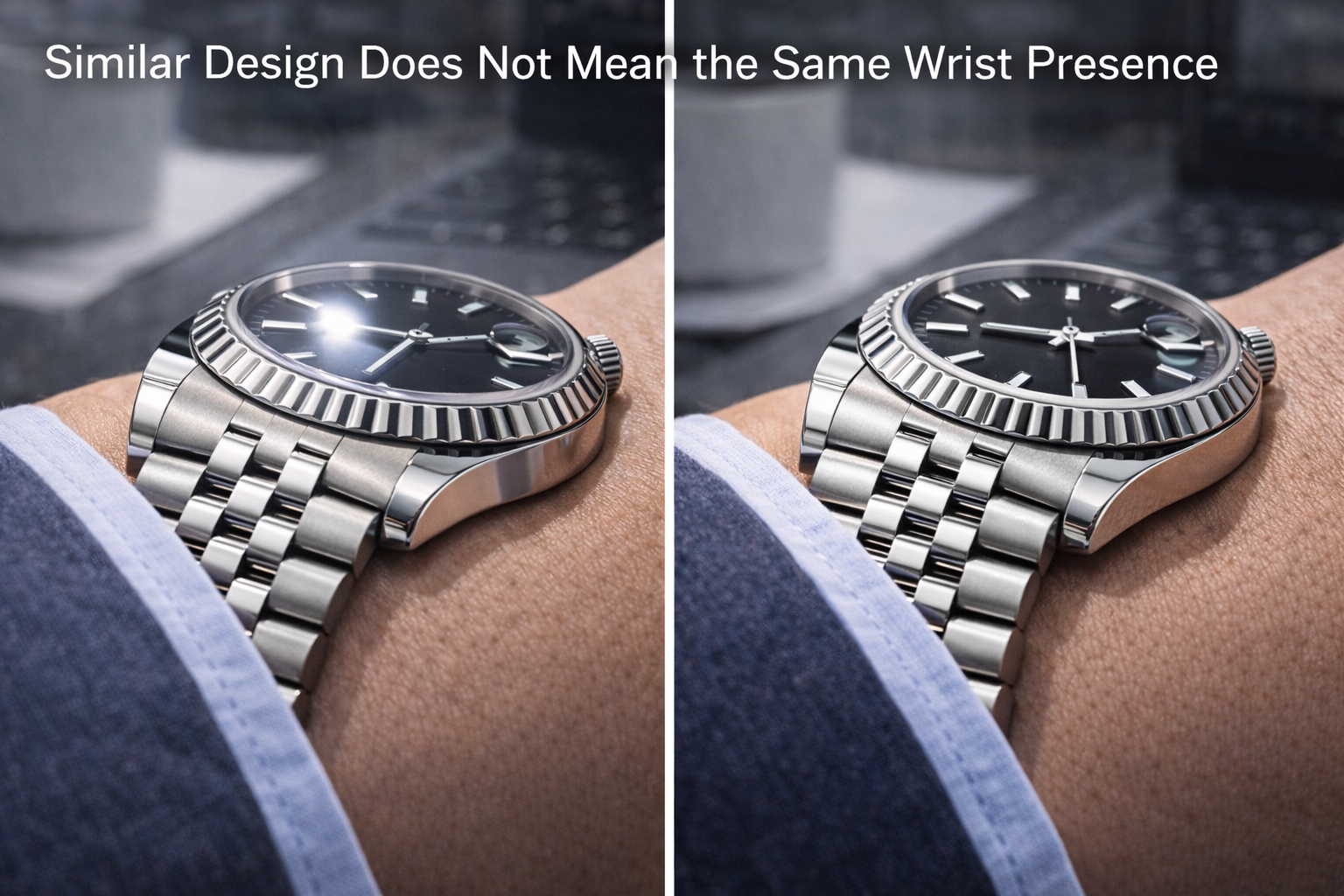
Wrist presence is not only about size. It is also about how the whole watch comes together once it is worn.
Two similar watches may create different wrist presence because one feels:
- more balanced
- more coherent
- more confident without trying too hard
- more natural with daily clothes
while the other may feel:
- slightly too flashy
- slightly too flat
- too thick for the style
- too bright in certain light
- less stable on the wrist
This is why one watch can quietly feel expensive while the other only looks good for a moment. Daily wear usually reveals which watch truly makes sense on the wrist.
That is also closely tied to understanding what makes a watch look expensive in real life. Premium feeling often comes from balance, not one dramatic feature.
8. Clothing Compatibility Reveals Hidden Problems
A lot of watches only get properly judged once they are worn with actual clothes.
This is where two similar pieces can start separating quickly.
One may work smoothly with:
- office shirts
- knitwear
- casual jackets
- travel outfits
- smart-casual dinner wear
while the other may suddenly feel:
- too tall under a cuff
- too bright with certain fabrics
- too sporty for more formal moments
- less comfortable in warm weather
- harder to wear as a one-watch choice
This is why real life matters more than close-up comparisons. Daily wear is never just about the watch. It is about the relationship between the watch, the wrist, and the situations it moves through.
9. Small Differences Become Bigger Over Time
This is one of the most important points in the whole topic.
On day one, two similar watches may feel almost the same.
By day seven or day ten, the differences are often much clearer.
That happens because repeated wear reveals:
- whether the bracelet remains comfortable
- whether the watch keeps shifting
- whether the crystal glare becomes annoying
- whether the thickness starts bothering the wrist
- whether the dial remains pleasing to look at
- whether the watch still feels good with different outfits
The more often you wear a watch, the harder it becomes for small design weaknesses to hide.
That is why buyers often say one watch “grew on them” while another slowly became less enjoyable. Daily wear is a long test, not a first glance.
What Buyers Usually Notice Late
At first, most buyers focus on:
- dial color
- case size
- bezel style
- bracelet appearance
- brand feeling
Later, after real use, they notice:
- stability on the wrist
- how often the watch needs adjusting
- how it behaves under office light
- whether it still feels comfortable after lunch, commuting, and dinner
- how natural it feels under real clothes
- whether it still feels premium without thinking about it
That is why some watches become favorites slowly. They do not just look good. They continue to feel right.
How to Judge Two Similar Watches More Realistically
If you are comparing two close-looking watches, these are usually better questions to ask:
1. Which one feels better after several hours?
Not just the first five minutes.
2. Which one sits more naturally on the wrist?
Stability matters more than many people think.
3. Which one works better with your real clothes?
Not ideal photos. Your actual wardrobe.
4. Which one handles normal lighting better?
Office light, daylight, restaurant light, travel.
5. Which one needs less adjustment during the day?
The easier watch is often the better daily watch.
This is also why learning how to choose your first watch or your next daily piece is usually more about real-life fit than online comparison alone.
Final Thoughts
Two similar watches can feel completely different in daily wear because the details that shape comfort and refinement are often much smaller than buyers expect.
Case shape, thickness, bracelet flexibility, weight balance, crystal clarity, dial control, and clothing compatibility all influence how a watch feels once it becomes part of everyday life.
That is why daily wear usually reveals more truth than product photos. A watch that looks similar on paper can feel much more comfortable, much more premium, and much more natural on the wrist after a full day.
And in most cases, that is the difference that actually matters.
FAQ
Why do two watches of the same size wear differently?
Because case shape, lug length, thickness, and wrist balance often change the wearing experience more than diameter alone.
Does bracelet quality really change daily comfort that much?
Yes. Bracelet flexibility, smoothness, and balance can completely change how a watch feels after hours of wear.
Can crystal quality affect comfort or only appearance?
Mostly appearance, but appearance affects user satisfaction a lot in daily wear. Too much glare can make a watch feel less refined over time.
Why does one watch feel more premium even if it looks similar?
Usually because several small details work better together, including balance, finish, fit, bracelet feel, and dial clarity.
Is first impression enough when comparing two watches?
Not usually. Daily wear often reveals more than the first five minutes ever will.
