
Do Bigger Watches Look More Expensive? What Actually Creates That Feeling
Do Bigger Watches Look More Expensive? What Actually Creates That Feeling
Quick Answer
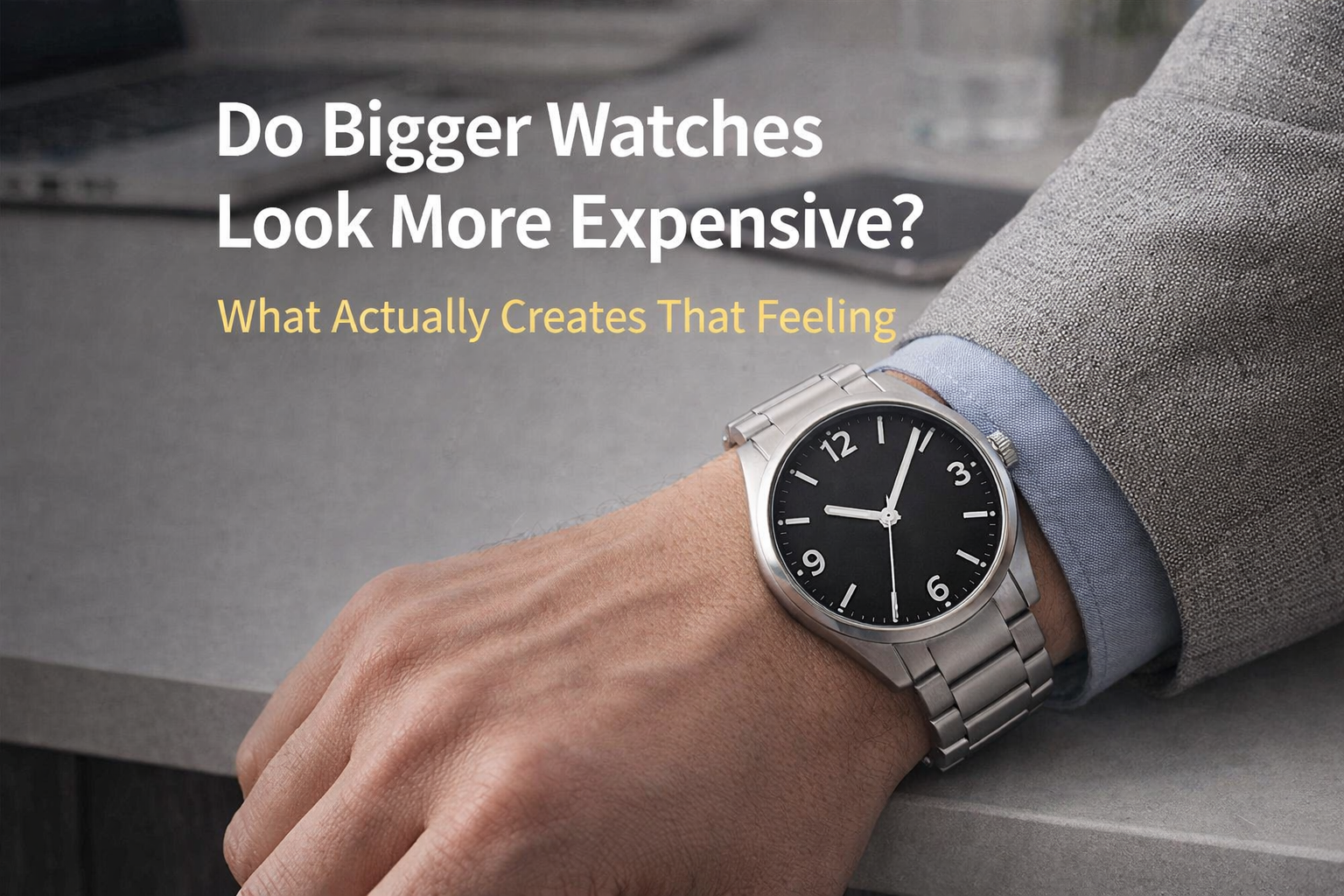
Not always. Bigger watches can look more noticeable and more dominant on the wrist, which sometimes makes them feel more expensive at first glance. But real premium appearance usually comes from balance, finishing, materials, and design quality rather than sheer size alone. A well-proportioned watch often looks more expensive than a larger watch that feels oversized or poorly balanced.
Introduction
A lot of buyers assume size equals value.
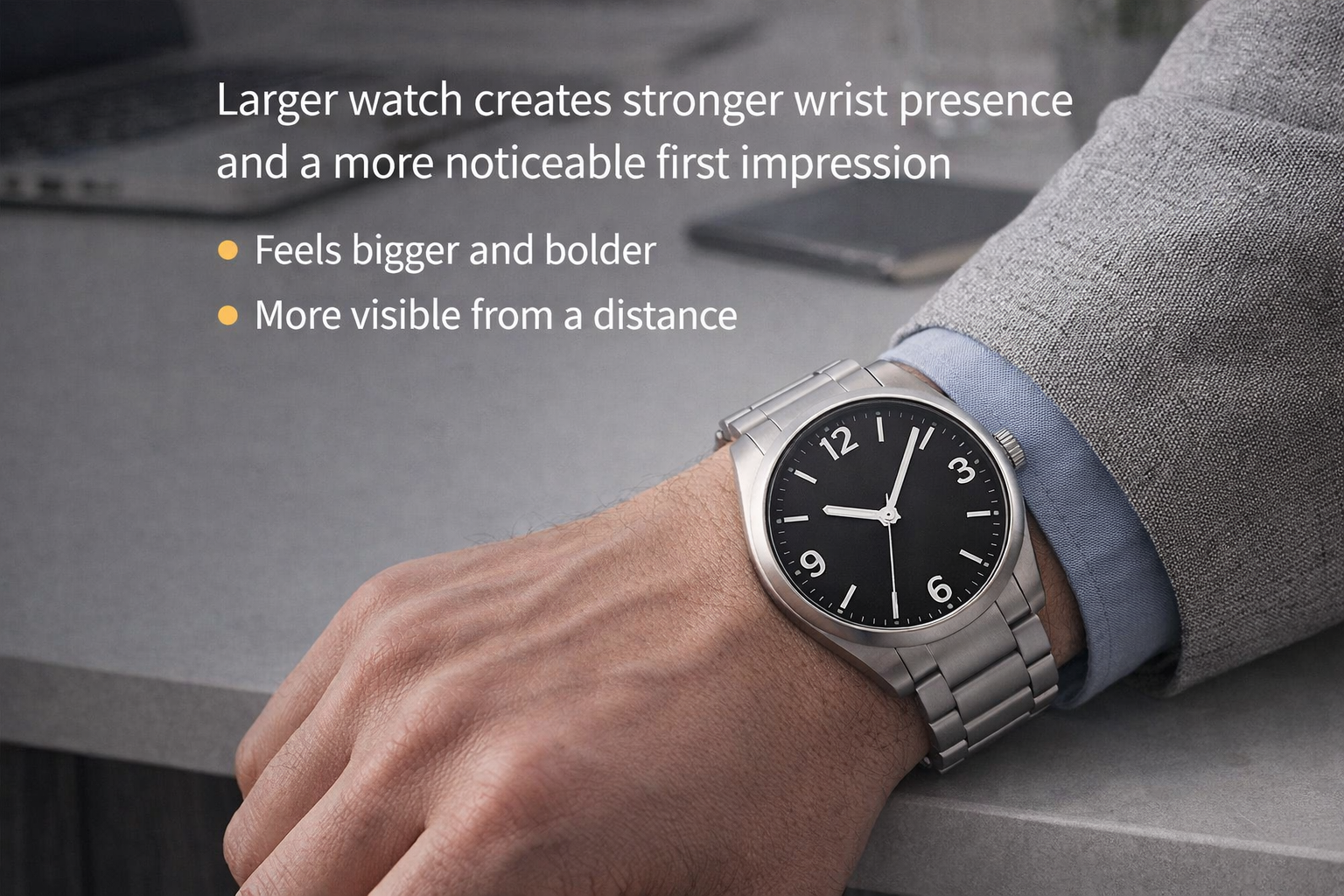
The logic seems simple: if a watch is bigger, it must feel more substantial, more noticeable, and therefore more expensive. A larger case often creates stronger wrist presence, catches the eye faster, and can feel more impressive in product photos. That first impression is one reason bigger watches are often associated with luxury or status.
But real-life watch design does not work that simply.
A larger watch can also look awkward, top-heavy, or less refined if the proportions are off. In contrast, a smaller or more moderate watch can look far more premium if the finishing is better, the dial is cleaner, and the whole design feels balanced on the wrist.
That is why this question matters.
If you are still learning how design affects daily wear, it also helps to read What Makes a Watch Look Expensive? 9 Details Most People Notice before focusing only on case size.
A Real-Life Situation Many Buyers Recognize
Imagine two watches displayed side by side.
One has a bigger 44mm case and immediately feels more noticeable. The other is a cleaner 39mm or 40mm watch with better finishing, sharper markers, and more balanced proportions. At first glance, the larger watch may feel more dramatic. But after looking more closely, the smaller one often starts to feel more premium.
Why?
Because “expensive-looking” is not just about how big a watch appears. It is about how well everything works together.
That is what many buyers only realize later. A watch can look large without looking refined, and it can look refined without needing to look large.
1. Bigger Watches Usually Create More Wrist Presence, Not Automatically More Luxury
The first thing a larger watch does well is create presence.
It occupies more space on the wrist, feels more visible from a distance, and often appears bolder in photos. That extra presence can sometimes be mistaken for a more premium look, especially by newer buyers.
Real-life example
A buyer tries on a 44mm watch and immediately notices how much stronger it looks compared to a 39mm piece. The larger model feels more obvious, and that visibility creates an impression of value at first.
But visibility and luxury are not the same thing.
A watch can stand out simply because it is bigger, while another looks more expensive because it is better designed.
What to check
- Does the larger watch feel refined or just more noticeable?
- Is the bigger case helping the design or overpowering it?
- Does the presence come from quality or only from size?
If wrist impact matters to you, this also pairs naturally with Do Dark Dial Watches Look Smaller? How Color Changes Wrist Presence.
2. Proportions Matter More Than Raw Case Size
This is where many buyers get misled.
A watch does not look expensive just because the case number is larger. What matters much more is whether the size, thickness, lug shape, bezel, and dial opening all feel balanced together.
Real-life example
A 42mm watch with short lugs, controlled thickness, and a clean dial can look polished and premium. Another 42mm watch with a thick case, wide bezel, and awkward proportions may look cheaper even if it is technically the same size.
This is why size alone tells you very little.
What to check
- Do the lugs fit the case well?
- Does the thickness suit the diameter?
- Does the watch feel balanced instead of oversized?
This question fits naturally with Watch Size Guide: Case Diameter, Lug-to-Lug, and Thickness Explained because good proportions matter more than a single measurement.
3. Better Finishing Often Looks More Expensive Than Bigger Dimensions
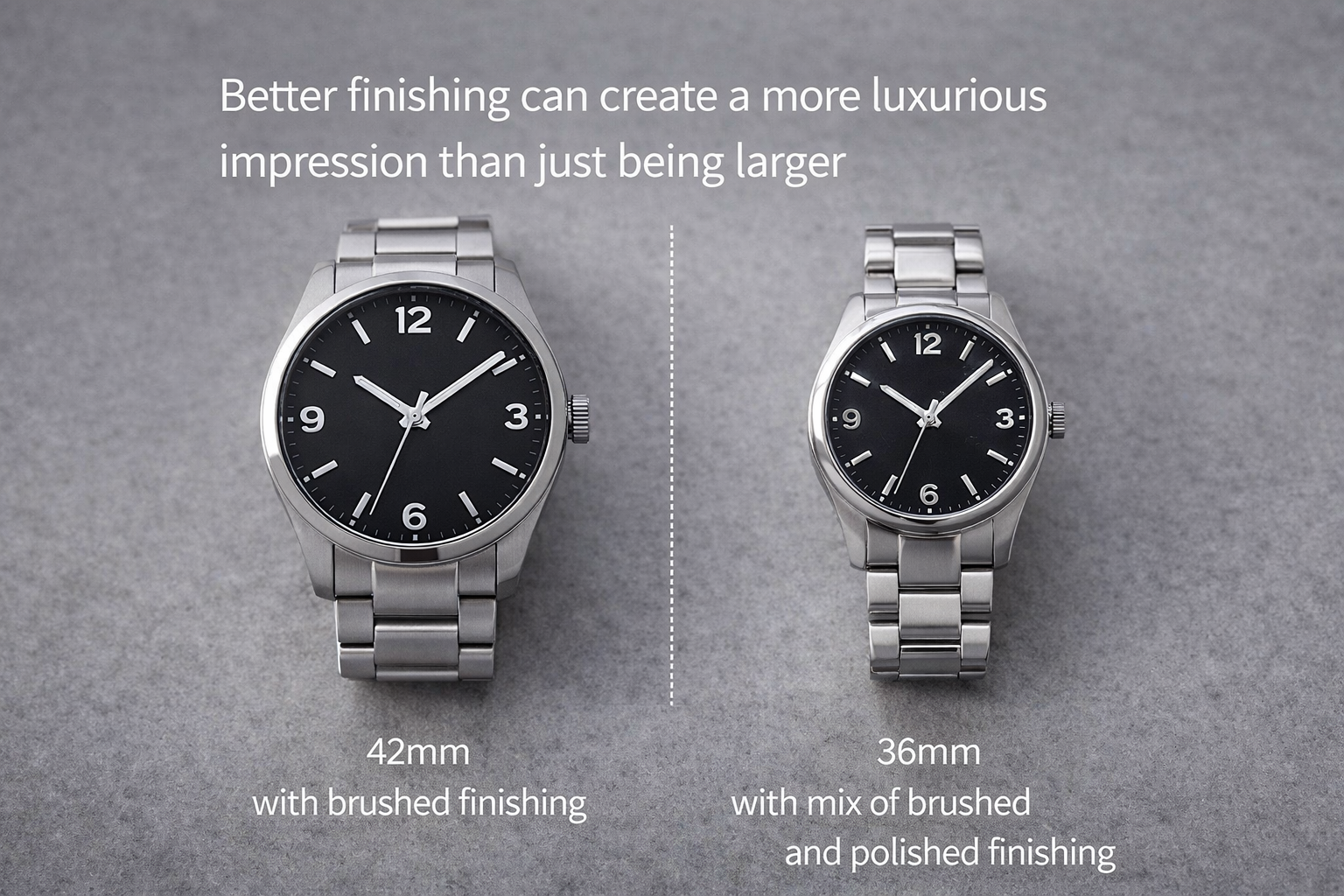
A large watch with rough brushing, weak edges, and flat details rarely looks truly premium.
By contrast, a more moderately sized watch can feel much more expensive if the finishing is clean, the transitions are crisp, and the surfaces catch light in a controlled way.
Real-life example
A buyer compares two steel watches. One is larger, but the finishing feels dull and simple. The other is slightly smaller, yet the brushing, polishing, and dial markers all look sharper and more refined. The smaller watch immediately feels more expensive in person.
That is because finishing creates quality cues that size alone cannot.
What to check
- Are the polished and brushed surfaces cleanly done?
- Do the edges look crisp?
- Does the watch catch light in a refined way instead of a flat way?
This also connects well with What Makes a High-Quality Watch? 7 Key Factors to Consider because finishing is one of the clearest signs of perceived quality.
4. Dial Design Changes the Way Size Is Perceived
Not all large watches look equally expensive, because dial layout changes the effect of size.
A larger watch with a cluttered dial can feel cheaper because the extra space makes the design look busy. A moderate-sized watch with a calm, balanced dial often looks more premium because the visual design feels controlled.
Real-life example
A 43mm watch with too much dial text, multiple elements, and weak spacing may feel less refined than a 40mm watch with a clean layout, better marker placement, and more visual discipline.
This is one reason simpler watches often look more premium than buyers expect.
What to check
- Is the dial clean enough for the case size?
- Does the design feel disciplined or crowded?
- Does the size help the dial breathe, or make it feel empty or messy?
This section pairs naturally with Are Simple Watch Designs More Versatile? What Works Best in Real Life.
5. Materials Often Matter More Than Size in Real Life
Case size may influence first impression, but materials influence whether the watch continues to feel premium over time.
Stainless steel with good finishing, titanium with thoughtful proportions, or a well-made leather strap can create a much better quality impression than an oversized watch with weaker materials or lower detail.
Real-life example
A larger watch on a poor-quality bracelet may look impressive for a moment, but once handled or worn, it can feel less convincing. A smaller watch with a better case, stronger bracelet feel, or cleaner strap quality often wins in person.
That is why “expensive-looking” usually survives through materials, not just size.
What to check
- Does the bracelet or strap feel solid?
- Does the case material look and feel premium?
- Does the overall build quality support the visual impression?
This connects well with Stainless Steel vs Titanium Watches: Which Material Is Better for Daily Wear? and Best Watch Strap Material for Everyday Wear: Leather, Rubber, or Metal?.
6. Bigger Watches Can Look Cheaper if They Wear Too Big
This is one of the biggest things buyers overlook.
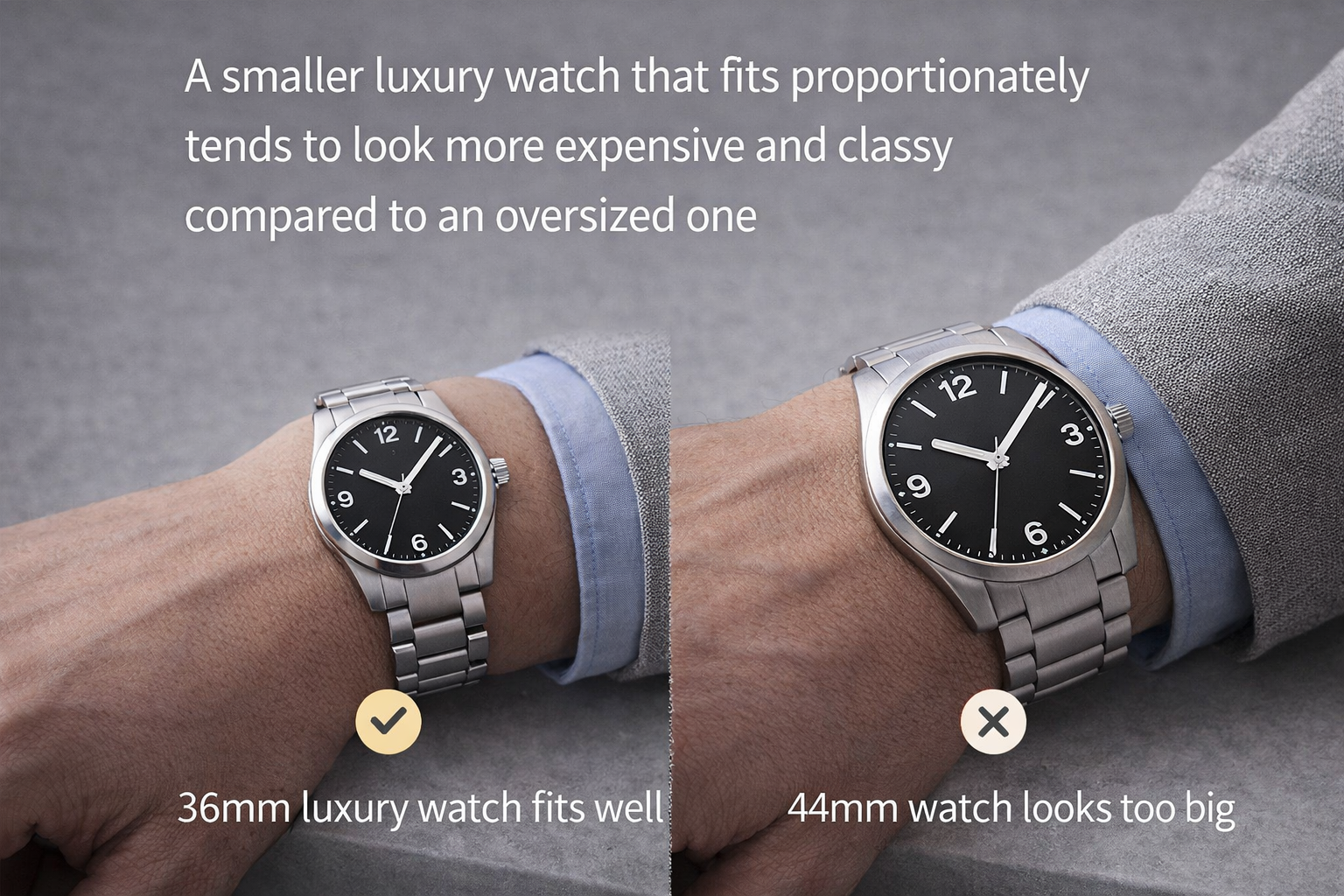
A bigger watch may feel more expensive in theory, but if it wears too large for the wrist, it often starts to look less refined. Oversized watches can lose elegance very quickly because they stop looking intentional and start looking awkward.
Real-life example
A buyer chooses a large watch because it looked impressive online. Once worn, the lugs extend too far, the case sits too high, and the whole watch feels less premium than expected. Another buyer chooses a better-fitting watch, and it immediately looks more polished on the wrist.
Fit changes perception a lot.
What to check
- Do the lugs stay within the wrist?
- Does the watch sit naturally instead of dominating the whole wrist?
- Does the larger size feel intentional or excessive?
This also pairs naturally with How to Choose the Right Watch Size for Your Wrist.
7. The Most Expensive-Looking Watches Usually Feel Intentional, Not Just Large
This is the biggest takeaway.
A watch that looks expensive usually feels deliberate. The size makes sense, the dial makes sense, the finishing makes sense, and the whole piece looks like it was designed with control rather than just scaled up for impact.
Real-life example
A buyer wears a well-balanced 39mm or 40mm watch that never feels flashy, yet people still notice that it looks refined. That usually happens because the watch feels complete, not because it feels oversized.
That is the difference between presence and quality.
What to check
- Does the design feel intentional?
- Does the watch rely on size too much for impact?
- Would it still look premium if it were slightly smaller?
This also connects well with What Makes a Watch Look Expensive? 9 Details Most People Notice because the best expensive-looking watches rarely depend on one single trait.
What Buyers Often Get Wrong
Many buyers assume:
- bigger means better
- bigger means more expensive-looking
- smaller watches always feel less premium
But in real life, buyers often end up preferring the watch that feels more balanced, more refined, and easier to wear.
That is why some larger watches feel impressive for a moment, while better-designed moderate watches continue to feel premium over time.
Who Benefits Most From a Bigger Watch?
A bigger watch may make more sense for people who:
- have larger wrists
- prefer stronger wrist presence
- wear more casual or sportier styles
- like bolder visual impact
- want a watch that stands out quickly
For these buyers, a larger watch can absolutely work.
Who Should Be More Careful With Bigger Watches?
You should be more careful with bigger watches if you:
- have a smaller or medium wrist
- want a cleaner and more refined appearance
- wear a lot of office or smarter clothing
- care more about elegance than boldness
- want long-term versatility
For these buyers, proportions and finishing usually matter more than case size.
Final Thoughts
So, do bigger watches look more expensive?
Sometimes at first glance, yes. Bigger watches often create stronger presence, and that can feel more premium in a very immediate way. But true expensive-looking quality usually comes from something deeper: better proportions, cleaner finishing, balanced dial design, stronger materials, and a more intentional overall feel.
That is why bigger is not always better.
In the end, the watches that look most expensive are usually the ones that feel most complete, not simply the ones that feel largest.
FAQ
1. Do bigger watches always look more expensive?
No. Bigger watches can look more noticeable, but that does not automatically make them look more expensive.
2. Why do some smaller watches look more premium?
Because finishing, balance, materials, and dial design often create a stronger luxury impression than size alone.
3. Does watch size affect perceived value?
Yes, but only partly. Size affects wrist presence, while true perceived value comes from overall design quality.
4. Can a bigger watch look cheap?
Yes. If it is oversized, poorly balanced, or weakly finished, a bigger watch can look less refined rather than more premium.
5. What matters more than size when a watch should look expensive?
Proportions, finishing, material quality, dial layout, and how naturally the watch fits the wrist usually matter more.
6. Are moderate-sized watches better for elegance?
Often, yes. Moderate sizes usually look cleaner, more balanced, and more refined, especially in smarter settings.
7. What is the biggest mistake buyers make here?
A common mistake is confusing visibility with quality. A watch can stand out because it is bigger without actually looking more premium.
