
What Watch Style Fits Your Lifestyle Best? Dress, Sport, or Everyday
What Watch Style Fits Your Lifestyle Best? Dress, Sport, or Everyday

Quick Answer
The best watch style for you depends on how you actually live, not just what looks good online. If you wear formal clothing often, a dress watch may suit you best. If you want versatility for work, weekends, and daily comfort, an everyday watch is usually the safest choice. If your routine is more active and casual, a sport watch may make more sense.
Most people do best with a watch that matches their real wardrobe, daily schedule, and comfort preferences. A watch can look great in photos, but if it feels wrong with your lifestyle, you probably will not wear it as often as you expected.
A lot of people choose a watch based on appearance first.
They see a clean dress watch, a bold sport watch, or a versatile daily watch and immediately focus on which one looks the most attractive. But the better question is not just which style you like. It is which style actually fits your life.
This is where many first-time buyers make a mistake. They buy the watch that looks impressive in isolation, then realize a week later that it does not match how they dress, where they go, or how long they like wearing a watch each day.
The right watch style should feel natural in your real routine. It should work with your clothes, feel comfortable for your schedule, and make sense for the way you move through the day.
If you choose from that point of view, the answer becomes much clearer.
Why lifestyle matters more than people expect
A watch is not just a design object. It is something you wear in real situations.
That means your best choice depends on questions like:
- What do you wear most days?
- Are you usually in formal clothes, smart-casual outfits, or casual wear?
- Do you want one watch for everything or different watches for different situations?
- Do you care more about elegance, comfort, or versatility?
- Will you wear it mostly indoors, outdoors, or across both?
This is why watch advice feels confusing online. A style that works perfectly for one person may feel completely wrong for someone else.
For example, someone who wears dress shirts and tailored clothing most of the week may naturally feel better with a slimmer, cleaner watch. But someone in knitwear, polos, denim, or casual office clothes may get much more use from a balanced everyday watch instead.
The best watch is not always the most impressive one. It is usually the one that fits into your life with the least friction.
What is a dress watch best for?

A dress watch is usually best for people who want a cleaner, more refined, and more elegant look.
These watches often have:
- slimmer cases
- simpler dials
- more restrained proportions
- leather straps
- a more polished overall feel
A dress watch works especially well if your lifestyle includes:
- office wear
- formal dinners
- weddings or events
- tailored clothing
- a preference for minimal and classic design
Real-life example
If you regularly wear button-down shirts, blazers, or formal trousers, a slim dress watch may feel much more natural than a thicker sporty model. It looks cleaner under cuffs, feels more intentional with formal clothing, and usually gives a more refined wrist presence.
This is one reason people comparing more elegant and versatile options often find articles like Dress Watch vs Everyday Watch: Which One Should You Buy First? useful, because the answer often depends less on theory and more on how you actually dress each week.
But a dress watch is not ideal for everyone
A dress watch may feel too formal if:
- most of your wardrobe is casual
- you want stronger wrist presence
- you prefer more robust everyday comfort
- you only want one watch for many different situations
For some people, it becomes a watch they admire more than they wear.
What is a sport watch best for?
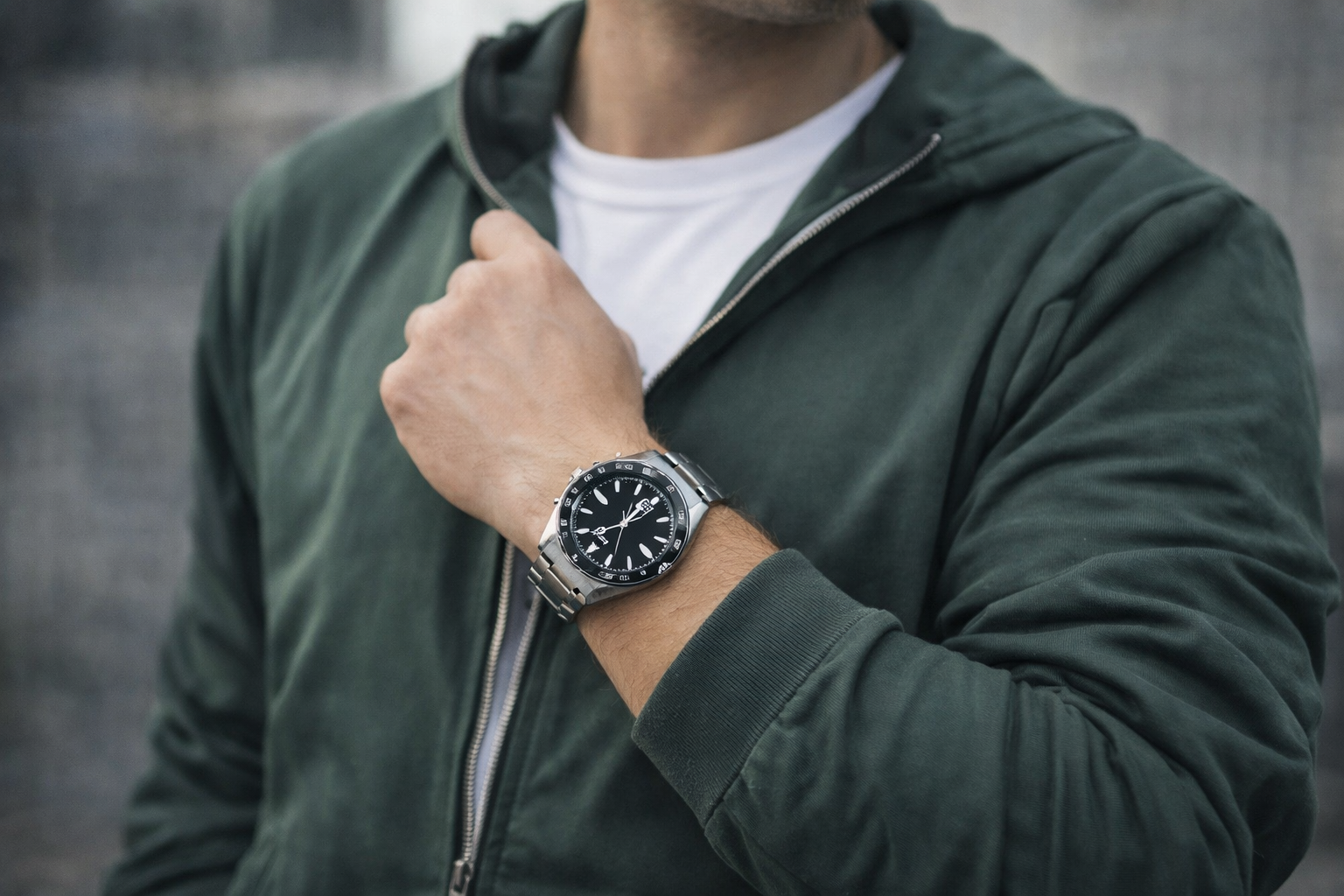
A sport watch is usually best for people who want stronger presence, a more casual look, and a watch that feels visually tougher.
Sport watches often have:
- larger cases
- thicker profiles
- stronger water resistance
- bolder bezels or dial details
- a more rugged or active appearance
They often work well if your routine includes:
- casual dressing
- outdoor movement
- travel
- weekend wear
- a preference for bold styling
Real-life example
Someone who spends more time in casual clothes, drives often, travels, or simply likes a more noticeable watch may feel underwhelmed by a slim dress watch. In that case, a sport watch can feel more fitting because it looks less delicate and more aligned with a relaxed or active routine.
Where sport watches can go wrong
A sport watch can feel like too much if:
- your wrist is smaller
- you wear fitted cuffs often
- you care more about elegance than boldness
- the case is too thick for daily comfort
This is where dimensions matter. A sporty style can work well, but only if the proportions make sense. Posts like Does Watch Thickness Matter More Than Case Size? What Most Buyers Notice Too Late help explain why some sport-inspired watches feel much bulkier than expected once they are worn all day.
What is an everyday watch best for?

For most people, an everyday watch is the most practical choice.
This style usually sits between dress and sport. It is not too formal, not too aggressive, and easier to wear across different situations.
An everyday watch often offers:
- balanced proportions
- versatile styling
- better all-round wearability
- good comfort for long use
- easier pairing with both work and weekend clothes
This is why it is often the safest option for beginners.
Real-life example
If your week includes a mix of office time, casual outings, errands, dinners, and weekends out, an everyday watch usually gives you the most value. You do not have to think about it too much. It simply fits into more situations.
That is also why How to Choose the Right Watch for Everyday Wear matters so much as a reference. Many people do not actually need the most elegant or the boldest watch. They need the one they will genuinely enjoy wearing from Monday to Sunday.
How your wardrobe should guide your choice
A very simple way to choose the right style is to look at your wardrobe first.
A dress watch usually fits best if you wear:
- tailored jackets
- dress shirts
- formal office outfits
- cleaner minimal clothing
- leather shoes more often than sneakers
A sport watch usually fits best if you wear:
- casual jackets
- denim
- polos
- activewear-inspired outfits
- heavier footwear or more relaxed styling
An everyday watch usually fits best if you wear:
- smart-casual clothing
- mixed office and casual outfits
- knitwear, shirts, tees, and relaxed tailoring
- a little bit of everything
A watch should not feel like it belongs to a different version of your life. It should feel like a natural extension of how you already dress.
This is also why outfit-related content such as How to Match a Watch with Different Outfits and Occasions can be useful, because style matching often reveals the right category faster than technical specs alone.
Comfort matters just as much as style
A watch may suit your wardrobe and still feel wrong if it is uncomfortable.
That is why the best watch style is not only about appearance. It is also about:
- case size
- thickness
- weight
- strap feel
- how long you plan to wear it each day
For example, some people love the look of a sport watch until they wear it for eight hours and realize it feels too bulky. Others assume they want a slim dress watch, then find they prefer something slightly more substantial for normal daily use.
This is where balance matters. If you are still learning how measurements affect wear, How to Choose the Right Watch Size for Your Wrist and How Tight Should a Watch Be? Proper Fit Guide both help because lifestyle fit is just as physical as it is visual.
The most common mistake beginners make
The most common mistake is choosing a watch for an imagined lifestyle instead of a real one.
People often buy:
- a dress watch because it looks sophisticated
- a sport watch because it looks bold
- a large watch because it feels impressive in photos
But after a few wears, they realize it does not actually fit their day-to-day life.
Typical beginner examples
Someone who works in a relaxed office and wears casual clothes most of the week may buy a formal dress watch, then notice it feels slightly too polished for everyday use.
Someone with a smaller wrist may buy a large sport watch because it looks exciting online, then find it heavy and awkward in regular wear.
Someone who only wants one watch may choose the most stylish option rather than the most versatile one, then wonder why they keep leaving it at home.
This is why lifestyle should come before impulse.
How to choose the right style for yourself
If you are not sure where to start, ask yourself these questions:
1. What do I wear most often?
Your daily wardrobe tells you more than your wishlist.
2. Do I want elegance, versatility, or bold presence?
That answer often points clearly toward dress, everyday, or sport.
3. Will this be my only watch?
If yes, an everyday watch is usually the safest choice.
4. Do I wear my watch all day?
If yes, comfort and thickness matter more than people expect.
5. Do I want my watch to blend in or stand out?
A dress watch often blends in more quietly. A sport watch stands out more. An everyday watch sits in the middle.
A simple rule that works for most people
If you are still unsure, use this:
- choose dress if your life is more formal and polished
- choose sport if your life is more casual and active
- choose everyday if you want one watch for the widest range of situations
For most beginners, everyday is usually the smartest starting point because it gives you the most flexibility with the least risk.
Final thoughts
The best watch style is not the one that looks best by itself. It is the one that feels right in your real routine.
A dress watch can be beautiful, but not practical for everyone. A sport watch can feel exciting, but too bulky for some lifestyles. An everyday watch may not feel as dramatic at first, but it often becomes the most useful and most worn option.
If you choose based on how you actually live, dress, and move through the week, you are much more likely to end up with a watch that feels right long after the first impression fades.
And in the long run, that is usually the style that fits you best.
FAQ
What watch style is best for daily wear?
For most people, an everyday watch is the best choice for daily wear because it is versatile, comfortable, and easy to match with different outfits.
Is a dress watch good for everyday use?
It can be, especially if your wardrobe is formal or minimal. But for many people, a dress watch feels less flexible than an everyday watch.
Are sport watches too bulky for daily wear?
Not always, but some are. Thickness, weight, and wrist size all affect whether a sport watch feels comfortable enough for all-day use.
How do I know what watch style suits me?
Look at your real routine, wardrobe, comfort preferences, and whether you want your watch to blend in or stand out.
What is the safest first watch style for beginners?
For most beginners, an everyday watch is the safest starting point because it works in more situations than a very formal or very sporty model.
Does wrist size affect watch style choice?
Yes. Wrist size affects how balanced a dress, sport, or everyday watch looks and feels, especially when case size and thickness are involved.
