
Why Is There Fog Inside My Watch? What Condensation Means and What to Do
Why Is There Fog Inside My Watch? What Condensation Means and What to Do
Quick Answer
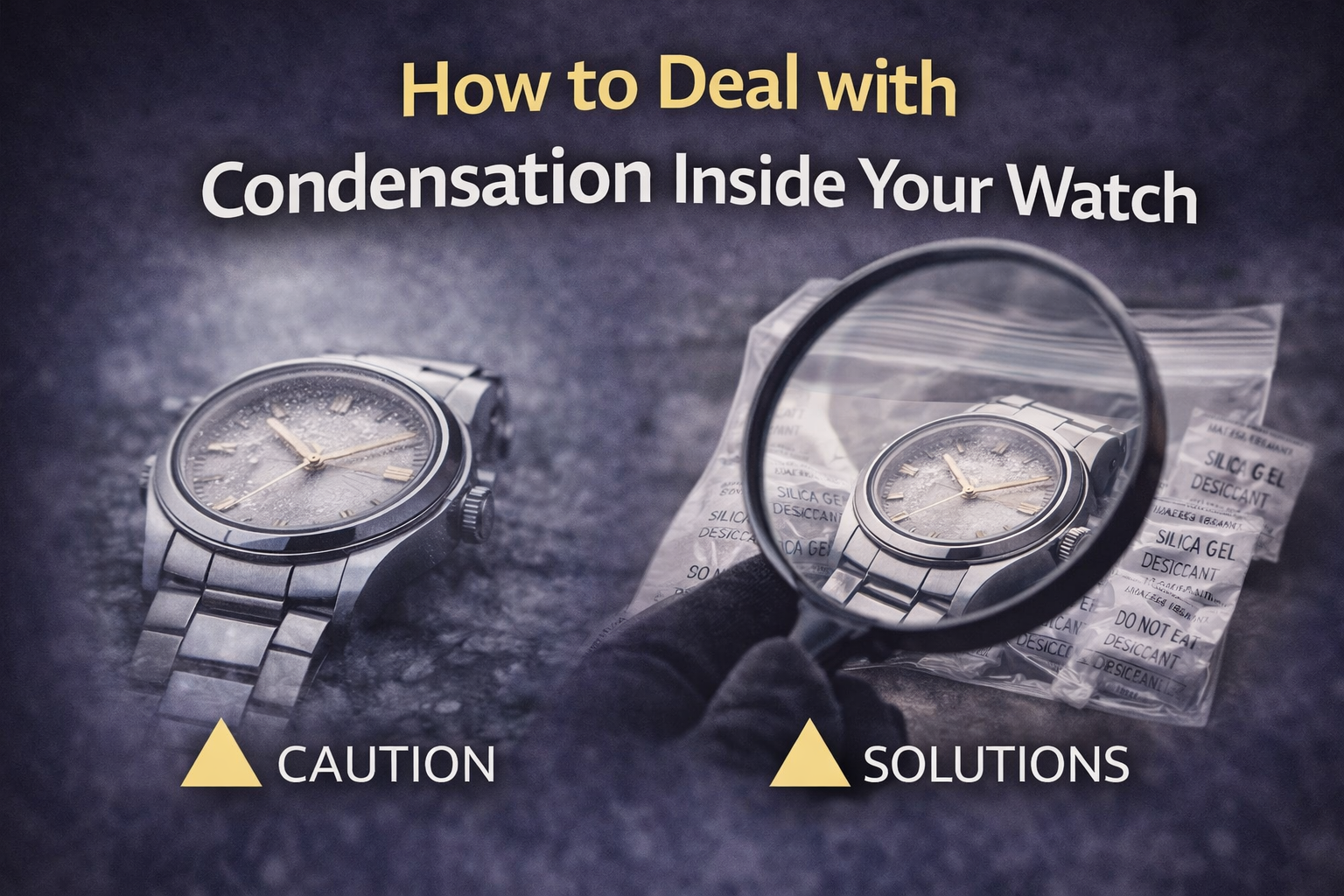
If you see fog inside your watch, moisture has likely entered the case. That is usually a sign that the watch’s seals are no longer fully protecting it, or that the watch was exposed to water, steam, or sudden temperature changes.
A small amount of temporary fog may disappear, but you should not ignore it. In many cases, condensation inside a watch is an early warning sign that can turn into bigger damage if you keep wearing the watch normally.
The safest move is to:
- stop exposing the watch to water
- keep the crown secure
- monitor whether the fog disappears
- get the watch checked if the fog remains or returns
Why Fog Inside a Watch Is More Serious Than It Looks
A lot of people see a little mist under the crystal and assume it is harmless.
That is understandable, because at first it can look minor.
Sometimes it is just a faint haze.
Sometimes it appears after moving from cold air to a warm room.
Sometimes it disappears again within hours.
But the problem is not just the fog you can see.
The bigger issue is the moisture you cannot see.
Once moisture gets inside the case, it can affect:
- the movement
- the dial
- the hands
- internal metal parts
- long-term timekeeping
Real Example
Someone notices slight fog after a shower or after being caught in heavy rain. The next day it seems gone, so they keep wearing the watch as usual. A few weeks later, the watch starts losing time or stopping irregularly. What looked like a small problem was actually an early sign of internal moisture.
If you have already dealt with a stopping watch, why does my watch keep stopping naturally connects here, because moisture is one of the reasons a watch can become unreliable later.
What Causes Fog Inside a Watch?
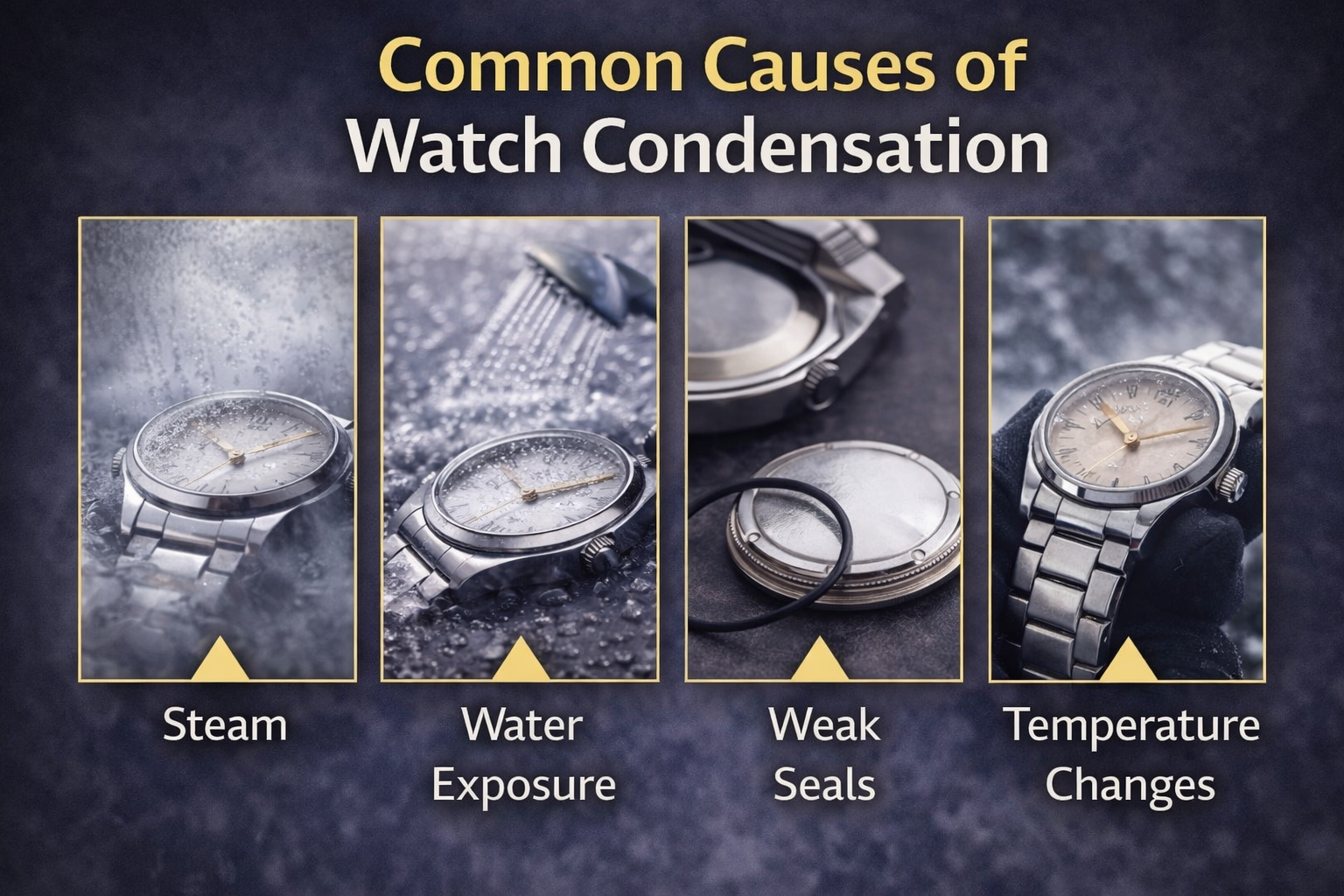
Fog inside a watch usually means moisture got inside the case somehow. That can happen for several different reasons.
1. Water Exposure
This is the most obvious cause.
Moisture may enter after:
- showering with the watch
- swimming with a watch that is not truly suited for it
- hand washing with weak seals
- rain exposure over time
- accidental splashing
A watch does not have to be fully submerged for condensation to become possible.
If water resistance is part of the confusion, what does 5ATM mean on a watch is a helpful companion because many owners overestimate what their rating really protects against.
2. Steam and Hot Water
Steam is one of the most underestimated causes.
Hot showers, saunas, and steamy bathrooms can stress seals more than many people expect. Even if the watch survives normal splashes, hot moisture can still be a problem.
This is one reason can you wear a watch in the shower matters so much. A lot of fogging issues begin with shower habits people thought were safe.
3. Sudden Temperature Changes
A watch may fog if it moves quickly from:
- cold outdoor air to a hot room
- air conditioning to humid heat
- cool water to warm air
This temperature shift can create visible condensation inside the crystal if moisture is already present inside the case.
Real Example
Someone wears a watch outdoors on a cold day, then enters a warm bathroom or heated room and suddenly sees fog. The temperature change did not create the moisture from nothing. It revealed that moisture was already inside.
4. Weak or Aging Seals
Even a watch that used to be fine around water may become more vulnerable over time.
Seals can age because of:
- years of use
- battery changes
- crown wear
- heat exposure
- poor servicing
That is why older watches are often more vulnerable than owners realize.
5. Crown or Caseback Not Fully Secure
If the crown is not pushed in properly, or if the caseback was not sealed well after service or battery replacement, moisture has a much easier way in.
This is one of the first things worth checking.
Is a Little Fog Normal?
This is where people get mixed answers.
The Honest Answer
A tiny amount of temporary fog can sometimes appear and then disappear. But even then, it still suggests moisture got inside or is present inside the watch.
So while it may not always mean immediate disaster, it is never something to treat as ideal or fully normal.
A Better Way to Think About It
- temporary light fog once = warning sign
- fog that stays = more serious warning
- fog that keeps coming back = strong sign the watch needs inspection
A healthy watch case should not normally be collecting visible condensation under regular daily use.
When Fog Inside a Watch Is Most Serious
There are certain situations where you should treat condensation as a bigger problem.
Be More Concerned If:
- the fog stays for hours or days
- it returns repeatedly
- it appears after water exposure
- the watch also starts stopping
- the hands or dial look affected
- you see actual droplets, not just mist
Real Example
If you can see small beads of water under the crystal instead of just haze, that is much more serious than a brief light fogging. At that point, the moisture level inside is high enough that you should stop using the watch immediately.
If you care about preventing avoidable long-term damage, how to protect your watch from daily wear and damage is also relevant here, because fogging is often the result of repeated habits, not just one bad moment.
Can Condensation Damage a Watch?
Yes, absolutely.
Moisture inside a watch can lead to:
- rust on movement parts
- dial damage
- hand corrosion
- lubricant contamination
- inaccurate timekeeping
- stopping or erratic running
This is true for both quartz and automatic watches.
Real Example
A quartz watch with moisture inside may continue running for a while, which makes the owner think everything is fine. But corrosion can still be developing quietly inside. By the time the watch actually stops, the damage may already be more expensive than it needed to be.
What Should You Do Immediately If You See Fog?
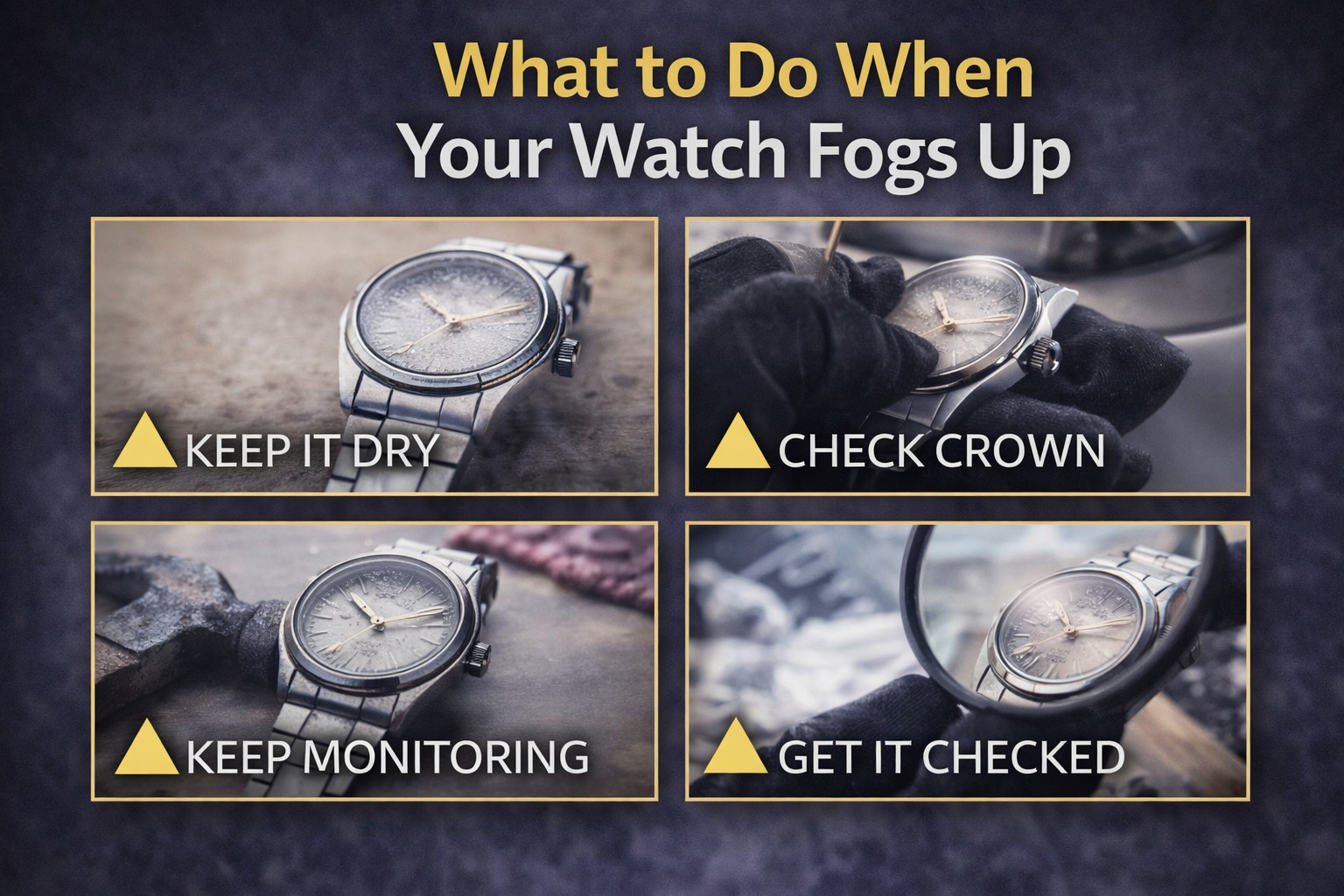
This is the most important part.
Step 1: Stop Wearing the Watch Around Water
Do not keep testing it.
Do not rinse it.
Do not wear it in the shower, sink, or rain.
Step 2: Make Sure the Crown Is Fully Secure
If the crown is not fully in, correct that immediately.
Step 3: Keep the Watch in a Dry Environment
Place it somewhere dry and safe, away from humidity and heat.
Step 4: Watch Whether the Fog Clears
If it disappears quickly and never comes back, the situation may be less severe. But it is still worth being cautious.
Step 5: Get It Checked If the Fog Stays or Returns
If the fog remains, returns, or becomes droplets, you should stop guessing and get the watch inspected.
What Not to Do
- do not keep wearing it normally
- do not intentionally heat it aggressively
- do not assume it fixed itself forever just because the fog disappeared
- do not expose it to more water to “test” it
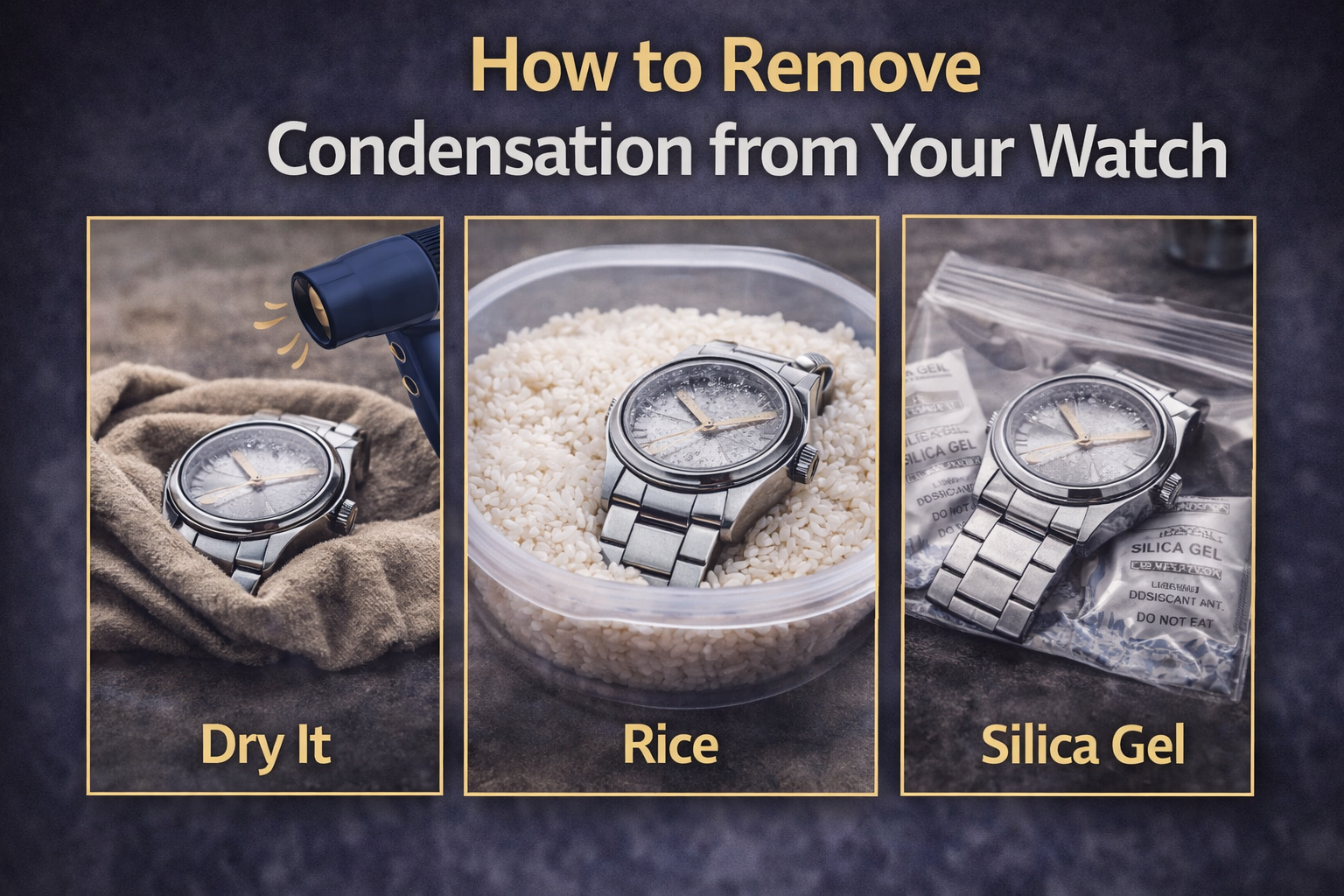
Should You Put a Foggy Watch in Rice?
A lot of people ask this because rice gets treated like a universal moisture fix.
The reality is: rice is not a reliable watch solution.
It may make people feel like they are doing something, but it does not solve the real problem:
- moisture already inside the case
- possible seal weakness
- possible internal corrosion risk
At best, it is an uncertain temporary attempt.
At worst, it delays proper attention while damage continues.
Can a Watch Recover If the Fog Goes Away?
Sometimes the visible fog goes away, but that does not always mean the problem is gone.
The moisture may have:
- evaporated from the visible crystal area
- moved elsewhere inside the case
- left behind longer-term risk
Real Example
An owner sees fog at night, then nothing the next morning, and assumes all is well. But weeks later the watch develops inconsistent timekeeping. That can happen because visible condensation left before internal effects did.
So the real question is not only:
“Did the fog disappear?”
It is:
“Why did moisture get in at all?”
Is This More Likely on Older Watches?
Yes, usually.
Older watches are more vulnerable because:
- seals age
- past servicing quality may vary
- previous battery changes may not have been perfect
- long-term wear around the crown and caseback adds up
This does not mean new watches are immune.
It just means older ones often deserve more caution.
If your watch has recently had a battery change, how long does a watch battery last can matter indirectly here too, because every battery replacement is also a moment where sealing quality becomes important.
Can Fog Happen on Expensive Watches Too?
Yes.
Price does not make a watch magically immune to:
- bad habits
- old seals
- poor servicing
- crown mistakes
- shower steam
- temperature shocks
An expensive watch may be better built, but it can still fog if moisture gets inside.
Real Example
Someone trusts an expensive sports watch too much, wears it in hot showers repeatedly, and later notices condensation. That is not because the watch was “cheap.” It is because no watch benefits from unnecessary exposure and aging seals.
Common Mistakes People Make
Mistake 1: Ignoring Light Fog
Small fog can still be an early warning.
Mistake 2: Assuming Water Resistance Means No Risk
Water resistance helps, but it does not make a watch invincible.
Mistake 3: Wearing the Watch Again Too Soon
If moisture got in once, repeated exposure can make things worse fast.
Mistake 4: Thinking Steam Is Harmless
Steam is one of the most common hidden causes.
Mistake 5: Waiting Too Long to Act
The longer moisture stays inside, the more chance it has to do damage.
A Practical Way to Judge the Situation
Use this quick rule:
Lower Concern
- very light fog
- disappears quickly
- happened once
- no recent water exposure
- no repeat issue
Higher Concern
- fog lasts
- fog returns
- droplets appear
- watch was in shower, rain, pool, or steam
- watch timing changes
- watch starts stopping
If the problem falls into the second group, it is time to take it more seriously.
What Is the Best Long-Term Prevention?
The best prevention is mostly simple habits:
- avoid showering with the watch
- keep the crown fully secure
- do not overtrust old water resistance
- be more careful after battery changes or service
- avoid unnecessary steam exposure
- get repeated fogging checked instead of ignoring it
If you also wear different strap types, best watch for hot weather: leather, rubber, or metal connects here too, because conditions that feel hard on straps often also hint at humidity and heat that are hard on the watch itself.
Final Verdict
If you want the simplest answer, fog inside a watch usually means moisture got in, and that is not something you should ignore.
A little temporary mist may not always mean immediate disaster, but it is still a warning sign. If the fog stays, comes back, or turns into visible droplets, the risk becomes much more serious. The most important thing is not just making the fog disappear. It is figuring out why moisture entered the case in the first place.
For most owners, the safest approach is:
- stop water exposure immediately
- keep the watch dry
- secure the crown
- get it inspected if the fog remains or returns
That is how you stop a small warning sign from becoming a bigger repair problem.
Key Takeaways
- fog inside a watch usually means moisture entered the case
- steam, hot water, aging seals, and crown issues are common causes
- even light fog should not be treated as fully normal
- persistent or repeated fogging is more serious
- visible droplets inside the crystal are a strong warning sign
- the fog disappearing does not always mean the problem is solved
- the safest response is to keep the watch dry and get repeated fog checked
FAQ
Why is my watch fogging up inside?
Usually because moisture has entered the case through weak seals, water exposure, steam, or an insecure crown.
Is a little fog inside a watch okay?
It can happen temporarily, but it is still a warning sign and should not be ignored completely.
Will watch condensation go away on its own?
Visible fog may disappear, but that does not always mean the moisture problem is solved.
Can condensation ruin a watch?
Yes. Over time it can damage the movement, dial, hands, and internal metal parts.
What should I do if I see fog inside my watch?
Keep the watch dry, make sure the crown is secure, avoid more water exposure, and get it checked if the fog stays or returns.
