
Does a Black Dial Watch Really Go With Everything? What Buyers Should Know
Does a Black Dial Watch Really Go With Everything? What Buyers Should Know

Quick Answer
A black dial watch usually goes with most outfits and situations because it feels clean, neutral, and easy to style. It often works well for office wear, casual outfits, and many smarter settings. But it does not automatically go with everything. The overall versatility still depends on the case design, strap material, watch size, and whether the watch feels more sporty, formal, or balanced in real life.
Introduction
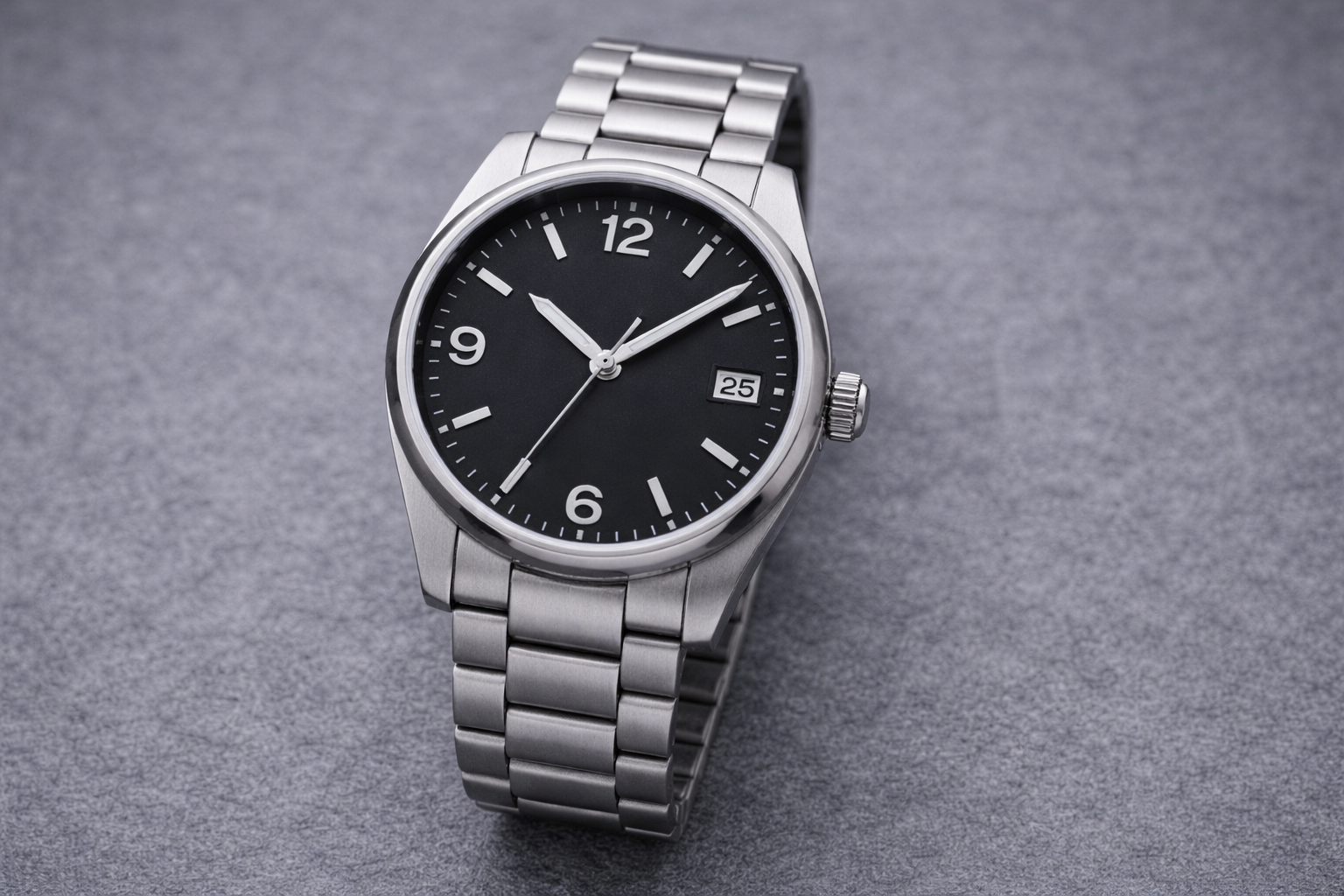
A black dial watch is often treated like the safest possible choice.
If you are unsure what dial color to buy, many people immediately say black. It feels practical, neutral, and easy. Black dials are common in everyday watches, sports watches, office watches, and even more refined dressier designs. Because of that, buyers often assume a black dial will automatically solve the whole versatility question.
And in many cases, it does come close.
A black dial watch usually feels easier to style than brighter colors, and it often looks more controlled on the wrist. It can work with jeans, knitwear, office shirts, jackets, and many formal outfits without drawing too much attention. But black is not magic. A black dial on the wrong watch can still feel too sporty, too aggressive, or too heavy for certain situations.
That is why this question matters.
The real answer is not just about dial color. It is about how black works inside the whole watch design. If you are still thinking about overall daily versatility, it also helps to read How to Choose the Right Watch for Everyday Wear before deciding whether black is the best dial color for you.
A Real-Life Situation Many Buyers Recognize
Imagine someone choosing their first truly versatile watch.
They want something safe, wearable, and easy to match. After comparing blue, silver, white, and black, they choose black because it feels like the most practical option. At first, the decision seems obvious.
And most of the time, it works.
The black dial looks good with casual outfits, feels solid in an office setting, and never really clashes. But after a while, small differences start to appear. A cleaner black-dial watch on a bracelet still looks great with smart casual clothing, while another black-dial watch with a chunkier case and sportier bezel feels much less flexible.
That is the key point many buyers only notice later:
It is not just the black dial that makes the watch versatile. It is the whole design around it.
1. Black Dials Usually Feel Safer Because They Are Easy to Style
The biggest advantage of a black dial is how easy it is to wear.
Black tends to work with most clothing colors, most seasons, and most daily situations. It usually looks controlled rather than flashy, which makes it a comfortable choice for buyers who want one watch that can do many things.
Real-life example
A buyer wears the same black-dial steel watch with a T-shirt on weekends, a sweater during the week, and a collared shirt at work. The dial never feels out of place because black blends naturally into almost any wardrobe.
That is one reason black dials remain so popular.
What to check
- Does the watch feel neutral enough for most of your wardrobe?
- Are you looking for something safer rather than more expressive?
- Would you rather have easy matching than a more standout color?
This idea pairs naturally with How to Match a Watch with Different Outfits and Occasions.
2. A Black Dial Often Looks More Controlled Than a Lighter Dial
Black dials usually reduce visual expansion.
Compared with silver, white, or champagne dials, black tends to make the watch feel a little more compact, a little more serious, and a little less visually loud. That can make it easier to wear in mixed settings.
Real-life example
Two watches have the same case size, but the black-dial version feels slightly more restrained while the silver-dial version feels more open and noticeable. For someone who wants lower visual pressure, the black dial often wins.
That is why black dials are often chosen for daily versatility rather than just style.
What to check
- Do you want the watch to feel slightly more compact?
- Would you rather the watch blend in than stand out?
- Does a calmer wrist presence matter to you?
This also connects well with Do Dark Dial Watches Look Smaller? How Color Changes Wrist Presence.
3. Black Does Not Automatically Mean Formal or Universal
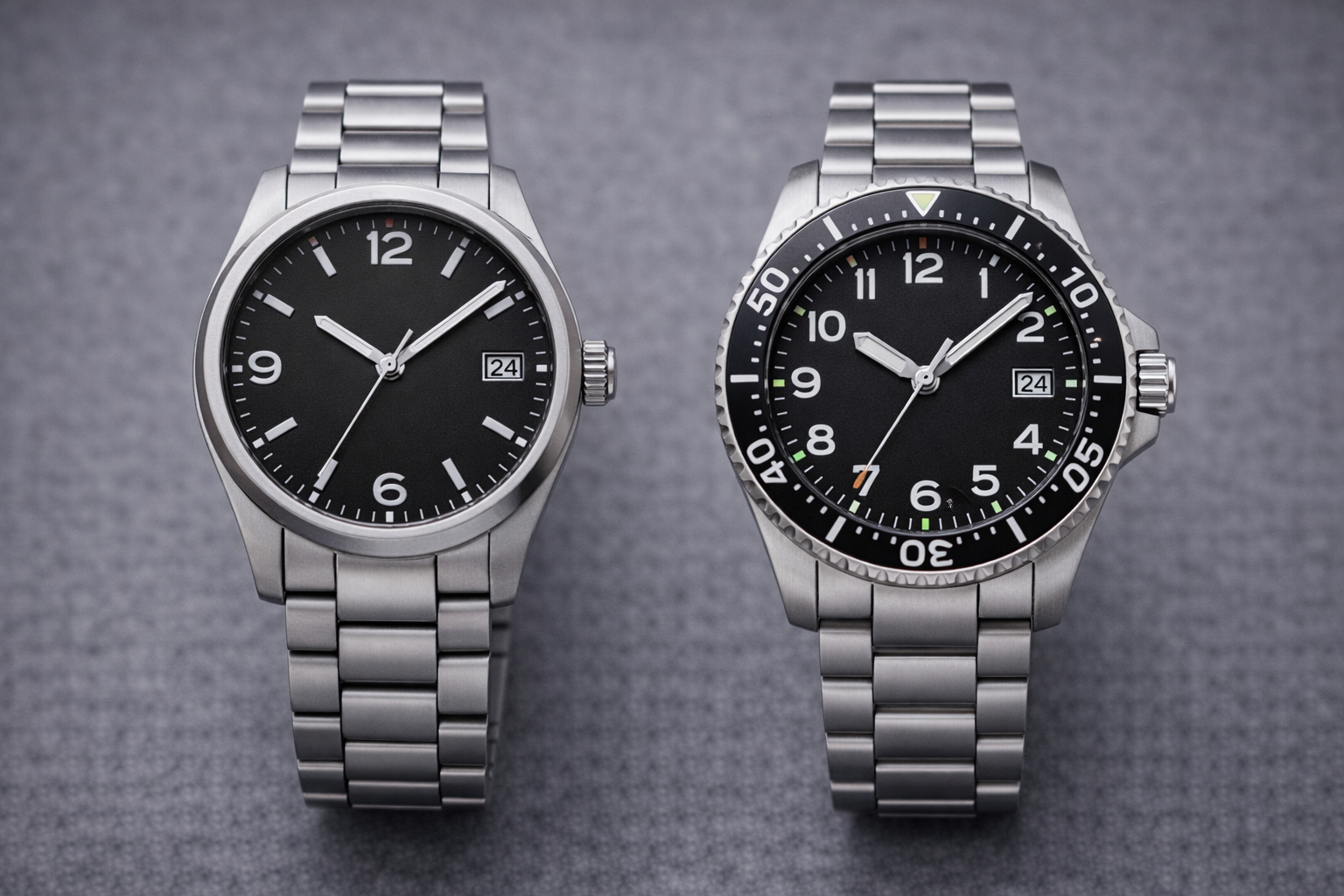
This is where buyers often oversimplify things.
A black dial can be versatile, but that does not mean every black-dial watch works everywhere. A black dial on a slim, clean watch may feel elegant and refined. A black dial on a chunky diver or aggressive sports watch may still feel strongly casual or tool-oriented.
Real-life example
A buyer assumes any black-dial watch will work for office, dinner, and formal use. But once worn, a large black-dial sports watch still feels too bold with smarter clothing, while a simpler black-dial watch feels much easier in those same settings.
The dial color helps, but the design category still matters.
What to check
- Is the watch clean enough for smarter situations?
- Does the case feel balanced or too sporty?
- Is the black dial helping versatility, or is the rest of the watch limiting it?
This section pairs naturally with Do You Really Need a Dress Watch? What Most Buyers Realize Later.
4. Strap and Bracelet Choice Change the Feeling of a Black Dial Watch
The same black dial can feel very different depending on what it is paired with.
On a steel bracelet, a black dial often feels practical, balanced, and everyday-friendly. On leather, it may feel more refined or dressy. On rubber, it usually becomes more casual and sporty.
Real-life example
A black-dial watch on a bracelet works comfortably for office and everyday wear, but the same dial on a rubber strap may feel too casual for smarter settings. Another black-dial watch on brown or black leather may suddenly feel much more formal and classic.
That means the dial is only part of the equation.
What to check
- Is the strap helping the watch stay versatile?
- Does the bracelet or strap fit your routine?
- Would a different strap make the same watch more useful?
This connects well with Best Watch Strap Material for Everyday Wear: Leather, Rubber, or Metal?.
5. Black Dials Usually Age Well in Long-Term Wear
One of the most practical strengths of a black dial is how rarely it feels dated.
Bright dial colors can feel fun, but they sometimes become more situational over time. Black usually stays stable. It tends to feel relevant year after year, and it usually remains easy to wear even as your style changes.
Real-life example
A buyer chooses a black dial because it felt like the safest choice, and years later still finds it easy to wear across changing routines and outfits. Another buyer chooses a more unusual dial color and later notices it feels less flexible than expected.
That long-term reliability is one reason black remains such a common recommendation.
What to check
- Do you want a dial color that still feels easy in a few years?
- Are you buying for long-term daily wear?
- Would you rather have timelessness than novelty?
This idea also pairs well with Are Simple Watch Designs More Versatile? What Works Best in Real Life.
6. Some Buyers May Still Be Better Off with Silver, White, or Blue
Black is versatile, but it is not always the best answer for everyone.
Some people prefer lighter dials because they feel more elegant, more open, or easier to read. Others find dark dials too severe or too understated, especially if they wear lighter clothing most of the time or prefer a brighter look.
Real-life example
A buyer who mostly wears lighter tailoring and softer colors may discover that a silver dial feels more natural than black. Another buyer who prefers contrast, darker clothing, and stronger structure may still find black the easiest choice.
That is why “goes with everything” always depends on the person.
What to check
- Does black actually suit your wardrobe and taste?
- Would a lighter dial feel more natural for your style?
- Are you choosing black because you like it, or because it feels like the default answer?
This also connects naturally with Are Simple Watch Designs More Versatile? What Works Best in Real Life and How to Choose the Right Watch for Formal Occasions.
7. The Best Black Dial Watches Usually Succeed Because Everything Else Is Balanced
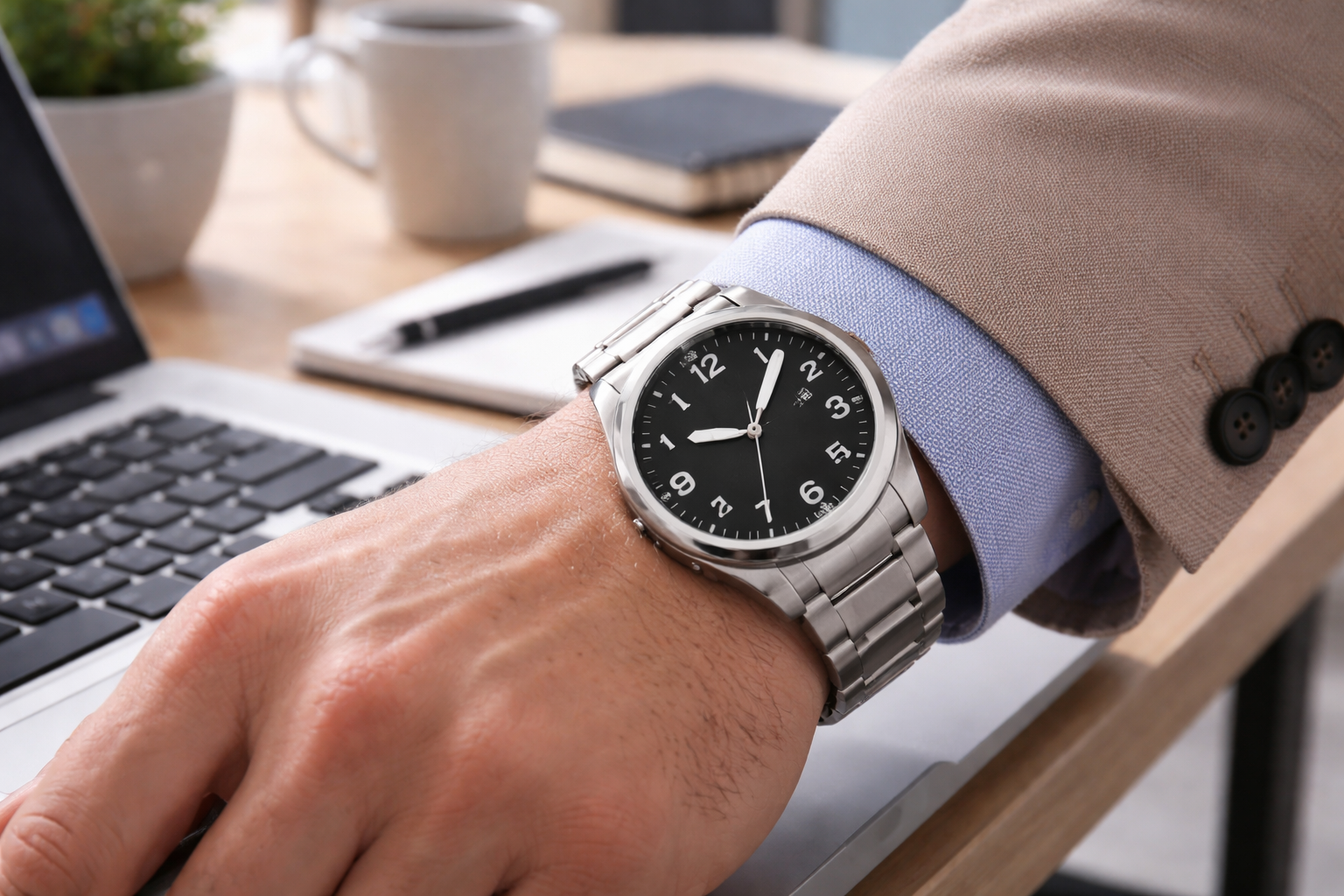
The most versatile black dial watches are rarely just “black.”
They work because the size is right, the case feels balanced, the finishing is controlled, and the strap or bracelet fits daily life. The dial color helps, but the whole watch is what makes the result truly useful.
Real-life example
A well-sized black-dial steel watch keeps getting chosen again and again because it feels easy in almost every setting. Not because black alone solved everything, but because the whole design was balanced enough to work without effort.
That is what buyers should pay attention to.
What to check
- Is the whole watch balanced for your lifestyle?
- Does the black dial support the design instead of trying to carry it alone?
- Would the watch still feel versatile if you looked beyond the dial color?
This also pairs naturally with One Watch or Several? Which Choice Makes More Sense for Everyday Life because many buyers want one watch that can cover as much as possible.
What Buyers Often Get Wrong
Many buyers assume:
- black automatically means the most versatile choice
- any black-dial watch will work with everything
- dial color matters more than case shape, size, or strap
But in real life, black helps most when the rest of the watch is already well judged.
That is why some black-dial watches feel almost universal, while others still feel too sporty or too specific.
Who Is a Black Dial Watch Best For?
A black dial watch often makes the most sense for people who:
- want one safe and versatile watch
- wear mixed outfits during the week
- prefer lower visual noise
- want a timeless everyday look
- value easy matching more than color personality
For these buyers, black is often a very strong choice.
Final Thoughts
So, does a black dial watch really go with everything?
Not literally everything, but in many cases it comes close.
A black dial usually works well because it feels clean, neutral, and easy to style. It often performs better than brighter dial colors in mixed daily life, especially if you want one watch that can move between casual and smarter settings. But the dial alone does not guarantee versatility. The case design, strap, size, and overall balance still matter just as much.
In the end, the best black dial watch is not just black. It is a well-balanced watch that uses black in the right way.
FAQ
1. Is a black dial watch the most versatile option?
Often, yes. Black dials are usually among the most versatile because they feel neutral, controlled, and easy to match with many outfits.
2. Do black dial watches work for formal occasions?
They can, but it depends on the overall design. A clean, balanced black-dial watch can work well in smarter settings, while a chunkier sports watch may still feel too casual.
3. Are black dial watches better than blue or silver for everyday wear?
For many people, black is the safer and more practical choice. But blue or silver may suit some wardrobes and style preferences better.
4. Do black dial watches look smaller?
Usually, yes. Dark dials often feel slightly more compact and less visually expansive than lighter dials of the same size.
5. Does a black dial work with casual and office outfits?
Yes, in most cases. That is one reason black dials are so popular for daily wear.
6. Can a black dial watch still feel too sporty?
Yes. If the case, bezel, strap, or overall design are strongly sporty, the watch can still feel specific even with a black dial.
7. What is the biggest mistake buyers make here?
A common mistake is assuming dial color alone determines versatility, when the whole watch design matters much more.
